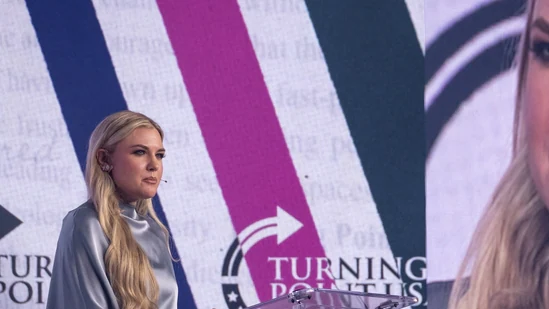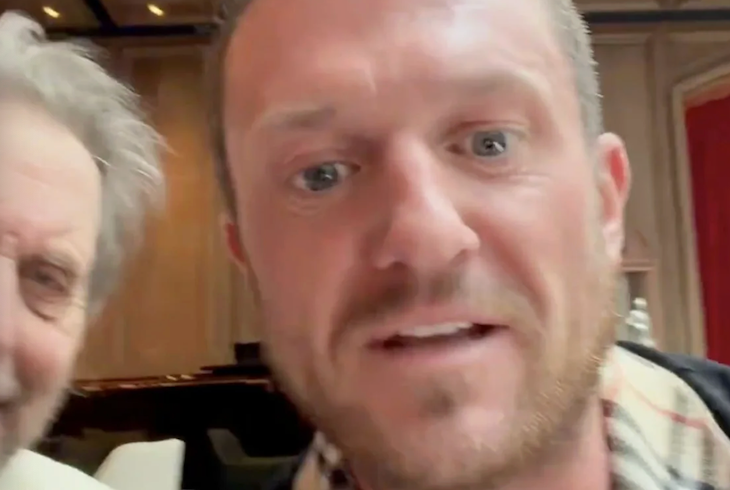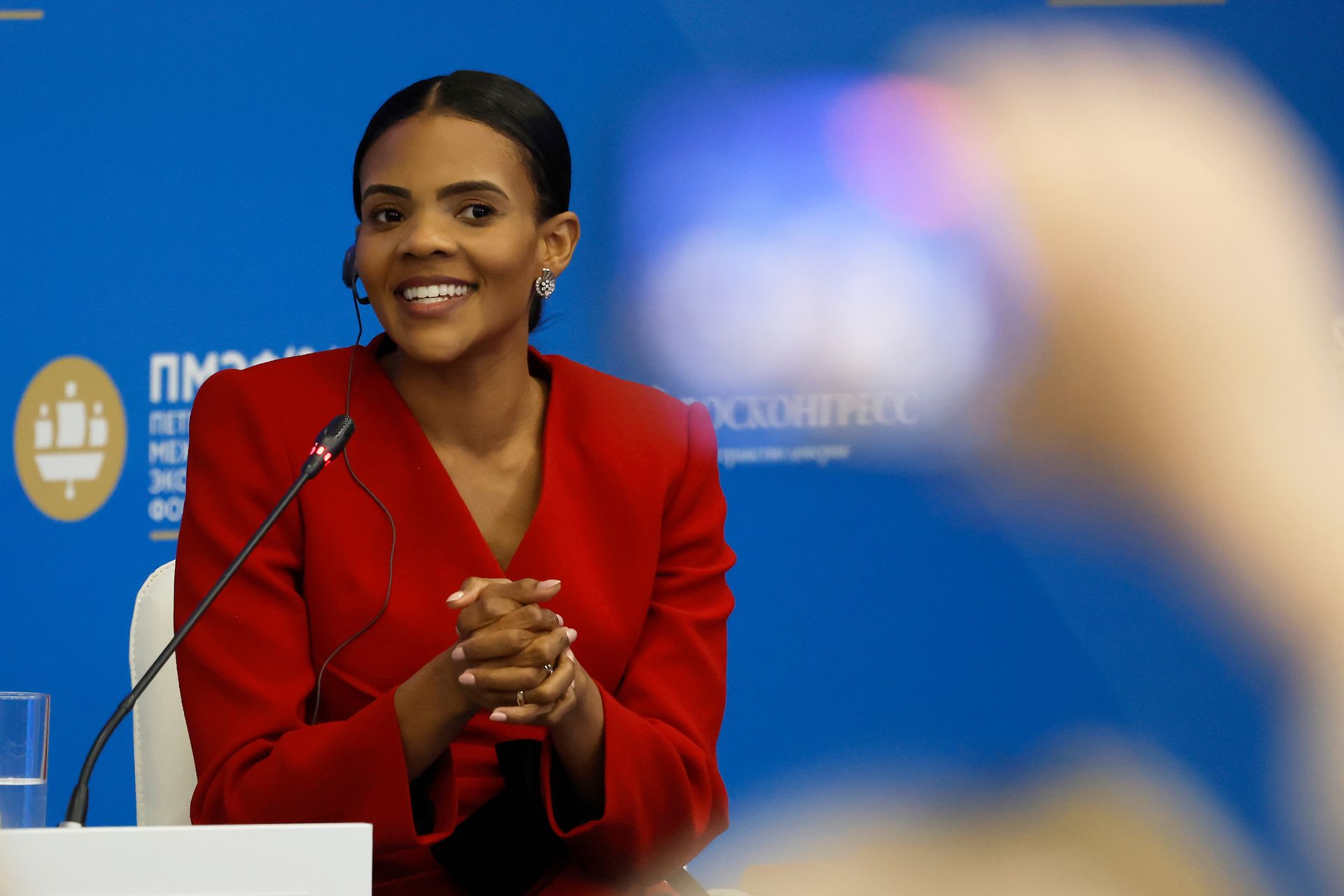
U.S. far-right conspiracy theorist Candace Owens attends the St. Petersburg International Economic Forum in St. Petersburg, Russia, on June 4, 2026. (Anatoly Maltsev / Pool Photo / AP)Candace Owens billed her trip to Russia last week as a family vacation. It turned into something far more useful for the Kremlin.The U.S. far-right conspiracy theorist — boasting 35 million followers across all social media platforms — ended up appearing at Russia's flagship economic forum, talking to Russian propaganda outlets, and praising the country's "traditional values" while dismissing Western coverage of it as lies.Her visit also exposed a fresh fault line within the MAGA movement, drawing sharp rebukes from prominent Trump allies, with some describing her trip as a "propaganda tour."L: Candace Owens with her husband George Farmer in Moscow, Russia, in a photo posted on June 1, 2026. (Candace Owens / X) R: Candace Owens near the Kremlin walls in Moscow, Russia, in a photo posted on May 31, 2026. (Candace Owens / X)While known primarily for railing against Israel and spreading conspiracy theories about France's first lady, Owens now tried her hand at whitewashing Russia for U.S. audiences.The Kyiv Independent explains why her arguments do not hold water.The outdated Ukraine aid argumentAccording to Owens, Americans are not interested anymore in funding Ukraine's resistance against Russia — even though U.S. President Donald Trump cut almost all of that funding more than a year ago.Talking to reporters on the sidelines of the St. Petersburg Economic Forum, Owens alleged that the U.S. public is "getting tired of funding" the war in Ukraine, "not knowing where the money is going, learning that oligarchs are buying yachts."The remarks echo a familiar Biden-era refrain among American Ukraine skeptics, who have long questioned whether taxpayer dollars are being spent effectively.But the argument does not make much sense since Trump took office in January 2025.The Trump administration has ended nearly all new aid allocations to Ukraine, mostly agreeing to only sell arms via NATO and leaving Europe to shoulder the financial burden.U.S. President Donald Trump speaks with reporters aboard Air Force One en route to Chippewa Falls, Wisconsin, on June 5, 2026. (Samuel Corum / Getty Images)The Pentagon has even slowwalked the disbursement of the $400 million in Congress-approved funds for Ukraine's arms contracts in 2026 — a sum that is only a drop in the $1-trillion bucket of the U.S. defense budget.European partners, in turn, allocated about $30 billion to Kyiv last year, according to the Kiel Institute's Ukraine aid tracker.Western officials have been closely monitoring the provided aid. And while Ukraine has grappled with major corruption scandals during the war — including one that allegedly involved former presidential chief of staff, Andriy Yermak — there has been no confirmed case of Western aid being siphoned off to buy yachts for Ukrainian officials or oligarchs, despite such disinformation surfacing at times.The grocery store illusionSince her arrival in Russia, Owens has been gushing about how "unbelievably beautiful" Moscow is and how much more affordable life seems there than in the U.S.This largely mirrors a visit by fellow conservative pundit Tucker Carlson, who marveled at how cheap Russian grocery stores are during his own trip in February 2024."Gas is cheaper, food is cheaper, and they have less debt," Owens said on X. "Our media lies day in and day out and pretends Russia is on the brink of collapse to justify our own citizens struggling to afford basic necessities."Numbeo, an online service that collects data on costs of living around the world, estimates that groceries are about 82% more expensive in the U.S. than in Russia.However, the local purchasing power — that is, what an average person can afford to actually buy, adjusted for local prices — is 140% higher in the U.S., according to the same portal.And while the average wage in the U.S. is about $65,000 per month, in Russia, it is only around $12,000.Owens also omitted that the two cities she visited — Moscow and St. Petersburg — are among the wealthiest in Russia, far above much of the country, particularly regions in the North Caucasus, Siberia, and the Far East.People pass by a digital screen displaying an image of Russian President Vladimir Putin in Saint Petersburg, Russia on March 13, 2024. (Olga Maltseva/AFP via Getty Images)She also did not mention that inflation, taxes, and other impacts of the war have driven prices higher in recent months, leading to complaints about rising living costs since early 2026.An analysis by the independent news outlet Important Stories says that items like wine, milk, bananas, bottled water, tomatoes, cheese, apples, and oranges are now mostly cheaper in European capitals, despite a much higher median wage.While an average Russian spends 32% of their total expenses on food, in Poland it is only 18.5%, 15.7% in Czechia, and 11.6% in Germany, according to the analysis.Regions across Russia and the Ukrainian territories occupied by Moscow have also grappled with fuel shortages due to Ukrainian strikes against oil refineries, with some gas stations even capping the amount of fuel per driver.Russia, the 'Christian bastion?'Another motif in Owens' tour has been the image of Russia as a family-friendly Christian bastion, an image that Russian propaganda — and its Western allies — often contrast with the "decadent West.""The Christian expression and heritage here is unmatched," Owens said on X in a post accompanied by interior footage of the Main Cathedral of the Russian Armed Forces, an Orthodox temple dedicated to the Russian military.During her panel debate at the St. Petersburg forum, Owens lauded the Russian government's pro-family policies.
Here's what Candace Owens gets wrong on Russia
Candace Owens billed her trip to Russia last week as a family vacation. It turned into something far more useful for the Kremlin. The U.S. far-right conspiracy theorist — boasting 35 million followers across all social media platforms — ended up appearing at Russia's flagship economic forum, talking to Russian propaganda outlets, and praising the country's "traditional values" while dismissing Western coverage of it as lies. Her visit also exposed a fresh fault line within the MAGA movement, d
1,617 words~7 min read