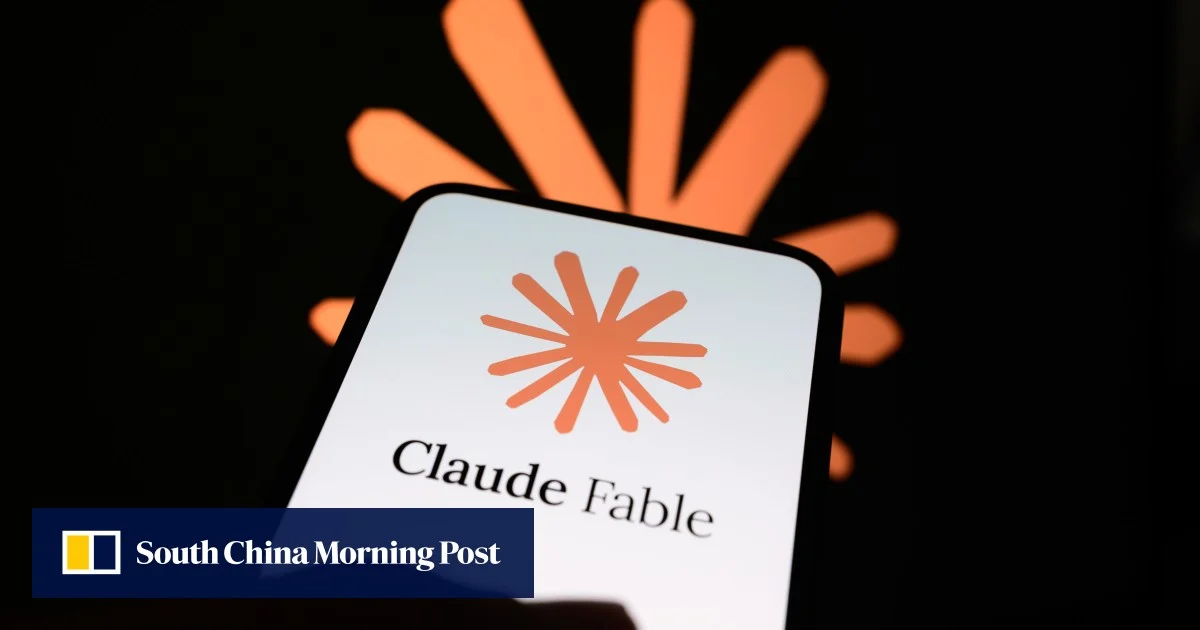
Anthropic’s move to restrict access to its cutting-edge model, Claude Fable 5, is expected to create new hurdles for Chinese artificial intelligence labs, experts say, even as the US firm walks back part of its enforcement plan following a backlash from the global AI research community.Earlier this week, Anthropic released Claude Fable 5, the public-facing version of Mythos – the company’s most powerful model to date. First announced in April but withheld from general use, Mythos alarmed industry insiders with its unprecedented capacity to spot and exploit cybersecurity vulnerabilities, intensifying the global debate over AI safety.While Fable 5 was designed to deliver Mythos-class performance in complex tasks like software engineering and scientific research, Anthropic said the model featured strict built-in “safeguards” to prevent misuse.Anthropic’s Claude series had long been officially inaccessible in China, but domestic developers and users routinely found workarounds. Fable 5’s new restrictions, however, were much harder to circumvent, according to Kyle Chan, a fellow at the Brookings Institution.“Chinese AI developers might find it nearly impossible now to use Anthropic’s latest model to accelerate their own model development,” Chan said.The restrictions relied on “classifiers” that flagged queries related to cybersecurity, biology, chemistry and frontier large language model development – including “distillation” attempts. When a flagged query was detected, Fable 5 automatically downgraded the request to Anthropic’s second-best model, Claude Opus 4.8, the company said.
Anthropic’s Claude Fable 5 poses a challenge for China’s AI developers
Restrictions on access to the powerful model, ‘targeted at Chinese AI labs’, are sparking debate about safety, innovation and open research.
226 words~1 min read