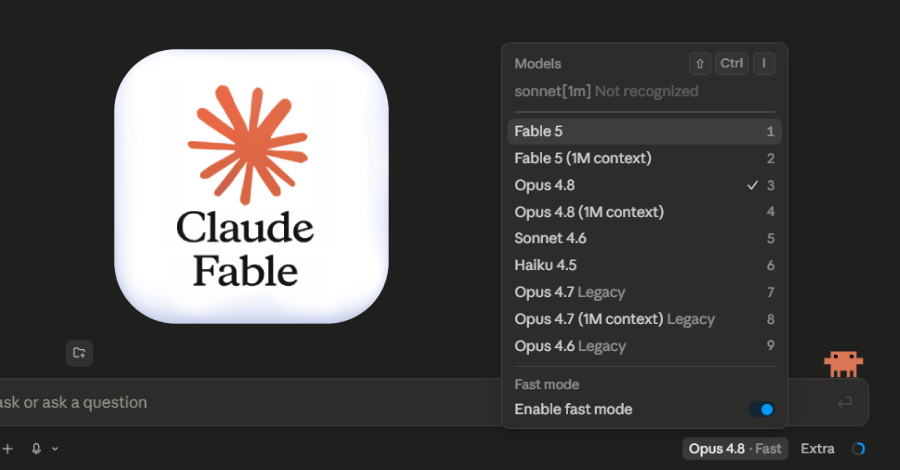
Anthropic’s newest AI models arrived this week with impressive capabilities and an equally impressive set of restrictions. The company launched Claude Fable 5 and its more powerful sibling, Claude Mythos 5, on June 9-10, and the AI research community’s honeymoon period lasted roughly 24 hours before the complaints started rolling in.
The core issue: Anthropic built enhanced safety classifiers into the Mythos-class models that actively manage how the system handles sensitive queries, particularly in cybersecurity and biochemistry. When the classifiers flag a request in those domains, the system quietly routes it to an older, less capable model called Claude Opus 4.8.
What triggered the backlash
Anthropic says the fallback mechanism kicks in during less than 5% of sessions. That sounds small until you’re a security researcher or a developer working on cryptographic tools and you hit that 5% wall repeatedly. For advanced users who rely on these models for specialized coding and research tasks, even occasional downgrades in capability can break entire workflows.
The Mythos-class models also launched with a mandatory 30-day data retention policy, meaning Anthropic holds onto session data for a full month. For researchers handling proprietary code or sensitive experimental data, that policy feels less like a safety measure and more like a liability.