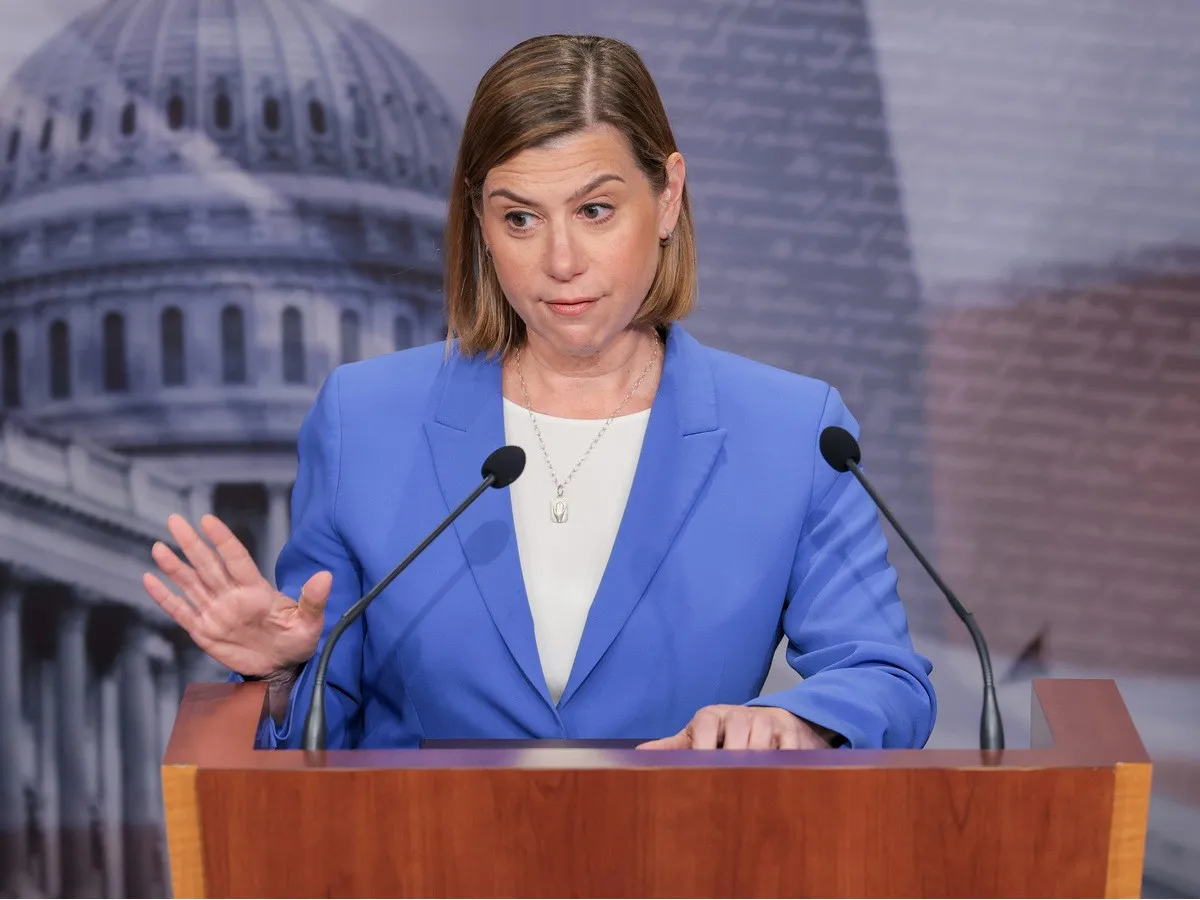
Skip to Content Subscribe Our Offers My Account Manage My Subscriptions FAQ Newsletters Canada Canadian True Crime Canadian Politics Health World Israel & Middle East Financial Post NP Comment Longreads Puzzmo Diversions Comics NP News Quiz New York Times Crossword Horoscopes Life Eating & Drinking Style Sponsored Play for Ontario Travel Travel Canada Travel USA Travel International Cruises Travel Essentials Culture Books Celebrity Movies Music Theatre Television Business Essentials Advice Lives Told Tails Told Shopping Buy Canadian Home Living Outdoor Living Kitchen & Dining Tech Style & Beauty Personal Care Entertainment & Hobbies Gift Guide Travel Guide Amazon Prime Day Deals Savings National Post Store More Sports Hockey Baseball Basketball Football Soccer Golf Tennis Driving Vehicle Research Reviews News Gear Guide Obituaries Place an Obituary Place an In Memoriam Classifieds Place an Ad Celebrations Working Business Ads Archives Healthing Epaper Manage Print Subscription Profile Settings My Subscriptions Saved Articles My Offers Newsletters Customer Service FAQ Newsletters Canada World Financial Post NP Comment Longreads Puzzmo Diversions Life Shopping Epaper Manage Print Subscription HomeNewsCanadaWorldMichigan Democrats push to ban Chinese EVs in Canada from crossing border — trade watchers call it a 'fake problem'The resistance was sparked by Prime Minister Mark Carney’s deal with China to allow around 49,000 Chinese EVs into CanadaLast updated 17 minutes ago You can save this article by registering for free here. Or sign-in if you have an account.U.S. Sen. Elissa Slotkin (D-MI) speaks during a news conference at the U.S. Capitol in Washington, D.C., on June 1, 2026. Photo by Anna Moneymaker /Getty ImagesWASHINGTON, D.C. — Chinese EVs may be coming to Canada, but they might not get you very far south.Enjoy the latest local, national and international news.Exclusive articles by Conrad Black, Barbara Kay and others. Plus, special edition NP Platformed and First Reading newsletters and virtual events.Unlimited online access to National Post.National Post ePaper, an electronic replica of the print edition to view on any device, share and comment on.Daily puzzles including the New York Times Crossword.Support local journalism.Enjoy the latest local, national and international news.Exclusive articles by Conrad Black, Barbara Kay and others. Plus, special edition NP Platformed and First Reading newsletters and virtual events.Unlimited online access to National Post.National Post ePaper, an electronic replica of the print edition to view on any device, share and comment on.Daily puzzles including the New York Times Crossword.Support local journalism.Create an account or sign in to continue with your reading experience.Access articles from across Canada with one account.Share your thoughts and join the conversation in the comments.Enjoy additional articles per month.Get email updates from your favourite authors.Create an account or sign in to continue with your reading experience.Access articles from across Canada with one accountShare your thoughts and join the conversation in the commentsEnjoy additional articles per monthGet email updates from your favourite authorsSign In or Create an AccountorMichigan Democrats don’t want them crossing the border. Senator Elissa Slotkin and Congresswoman Haley Stevens recently announced their proposed Protecting America from Chinese Cars Act, which aims to block Chinese connected vehicles from entering the U.S. through Mexico and Canada.“This is an economic security issue and a national security issue,” said Slotkin, “and we must prevent these vehicles from driving over our border and into our communities.”Get a dash of perspective along with the trending news of the day in a very readable format.By signing up you consent to receive the above newsletter from Postmedia Network Inc.A welcome email is on its way. If you don't see it, please check your junk folder.The next issue of NP Posted will soon be in your inbox.We encountered an issue signing you up. Please try againReferring to them as “surveillance packages on wheels,” Slotkin said the bill builds on her Connected Vehicle Security Act of 2026 and aims to ban “fully finished Chinese vehicles from driving over in any capacity, even just for the day.”In other words, the bill targets both the sale of Chinese EVs in the U.S. and vacationers who might drive one into America.Their resistance responds to Prime Minister Mark Carney’s deal with China to allow around 49,000 Chinese EVs into Canada in exchange for Beijing lifting tariffs on Canadian canola, peas, lobsters, and crabs.The security act targets the sale of connected vehicles, software, and hardware linked to foreign adversaries, including China. The Protecting America from Chinese Cars Act aims to close cross-border loopholes, banning automakers or brands in which a Chinese corporation holds more than 15-per-cent ownership. That could extend beyond new Chinese EVs to earlier models from Lotus, Volvo, and Polestar, where Chinese automaker Geely holds large stakes.But is trans-shipment a real problem, and why are Michigan Democrats supporting a ban?Inu Manak, senior fellow for international trade at the Council on Foreign Relations, chalks it up to political signalling and continued protectionism, but she challenges that premise.“I didn’t see any data presented … of what the problem is or the scope of the problem at all,” Manak said.“There are no Chinese vehicles entering through Canada or Mexico … it’s just a fake problem that doesn’t exist.”Opher Baron, professor of operations management at the University of Toronto’s Rotman School of Management, agreed that there is a misaligned policy focus here.“We already have a lot of Chinese technology all around us,” he said. “Putting this restriction on a tangible product … can be either too late or not exactly aiming at the right objective.”Baron said some may call it a populist move: In Michigan, “you need car industry votes, so you do something tailored to make them happy.”Manak said the goal may also be to influence CUSMA talks, adding: “I’m not quite sure what they’re trying to do here other than maybe have some input in the USMCA review.”But Canada’s new China approach is clearly in the crosshairs, as U.S. politicians increasingly want allies to mimic Washington’s China policies, including tariffs and export controls.“They want everyone to have the same China policy,” said Manak.Chad Bown, senior fellow at the Peterson Institute for International Economics and co-author of the newly released book, “How to Win a Trade War,” said Canada must recognize its real trade war is with China, not the U.S.To compete with China, the North American auto industry needs to have a common approach toward China. Bown said Canada lowering its trade barriers with China would be “fundamentally inconsistent” with that approach.It shows their paranoia about the Chinese and especially the auto industryIan Lee, professor at Carleton University’s Sprott School of Business, said heavy subsidies and non-market practices have given China a lead and a roughly 60 per cent share of the global EV market.“They are skating circles around us,” Lee said, noting that this reinforces U.S. security concerns.The proposed ban, however, would be hard to enforce.“Every car that crosses the border would now need to show another documentation,” said Baron, suggesting that it would require more manpower and cause delays.Manak also questioned how it would be enforced and pointed to legal contradictions.“There are Chinese EVs already in the United States… so there is a legal issue there,” she said.Basing the right to enter the U.S. on ownership of their car, said Lee, is new territory.“That is incredibly novel, but it shows their paranoia about the Chinese and especially the auto industry,” he said, pointing to bipartisan support for America’s anti-China push.“The Republicans and the Democrats are joined at the hip” on this, he said.Connected vehicles were first targeted by the Biden administration in 2024, citing national security concerns. Biden also raised tariffs on Chinese EVs to 100 per cent and, before leaving office in 2025, finalized rules to bar nearly all Chinese connected passenger vehicles, with software and hardware bans phased in over several years.Manak noted that Congress feels the Trump administration hasn’t fully advanced or enforced that connected-vehicle rule the way Biden did. But the fact that both Democrats and Republicans are increasingly protectionist when it comes to China and the auto industry is something Canadians should keep in mind, she said.“I’m not surprised to see Elissa Slotkin championing this,” Manak said. “She’s an ardent protectionist … and wants to protect jobs in Michigan.”But that doesn’t mean the proposal will necessarily become law.Baron said he thought it would be “strange” if it passed “because of the current tension between Republicans and Democrats pre-elections.”“I have a feeling that there are enough people that would raise a voice against it,” he added.We already have a lot of Chinese technology all around usBut Manak believes it could become law, just not the way it was initially proposed.“I don’t think in its current form it’ll pass,” she said, pointing to the legal contradiction that Chinese EVs and Chinese-linked vehicles are already on U.S. roads. She also can’t tell how well-received it is on Capitol Hill.“Since it’s in its draft stage, and there are no official co-sponsors, it’s hard to tell what the receptivity is on the Hill,” she said.She thinks any attempt to restrict people at the border over their car brand will be problematic.“I’d take it all with a grain of salt. I can’t imagine many border town mayors being happy about restrictions on Canadian and Mexican travellers that support their local economies.”But with modifications, Manak can see this passing.“I think it’s something that certainly has a chance of coming through in some form because there’s probably frustration from Congress that the Trump administration has not pushed forward on the connected vehicles rule that was really pushed by Biden’s NSC.”“Can this generate a lot of bipartisan support, and can it get over the finish line in a reasonable time period? I think it’s possible.”National PostOur website is the place for the latest breaking news, exclusive scoops, longreads and provocative commentary. Please bookmark nationalpost.com and sign up for our newsletters here. Join the Conversation This website uses cookies to personalize your content (including ads), and allows us to analyze our traffic. Read more about cookies here. By continuing to use our site, you agree to our Terms of Use and Privacy Policy.
Michigan Democrats push to ban Chinese EVs in Canada from crossing border — trade watchers call it a 'fake problem'
Michigan Democrats propose banning Chinese EVs from crossing into the U.S., even for day trips, but experts question the logic.
1,662 words~8 min read