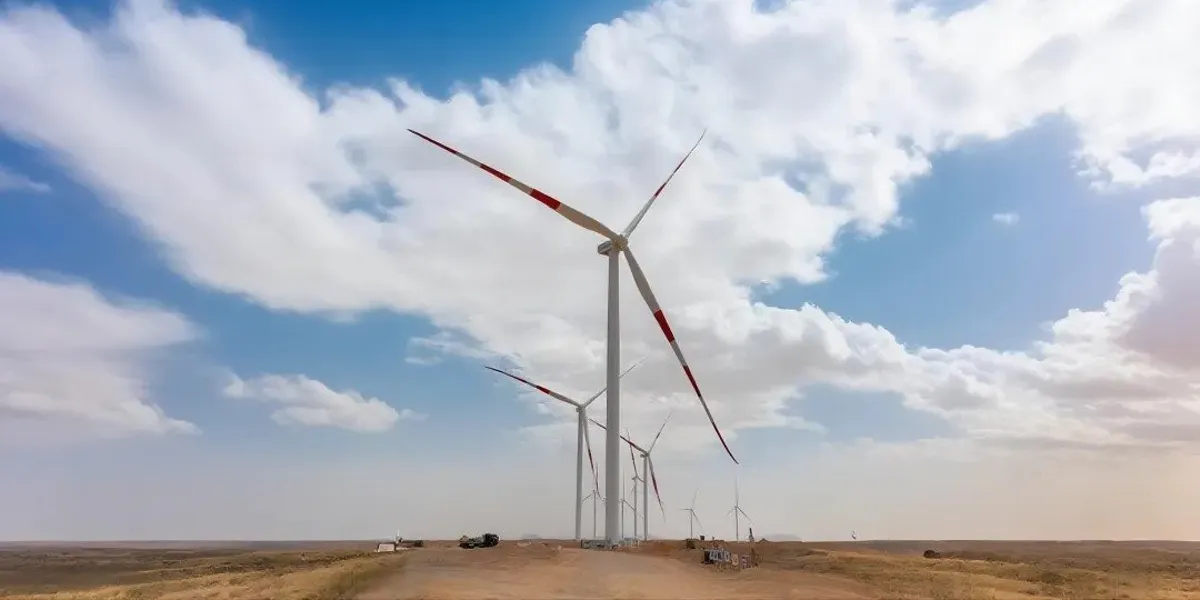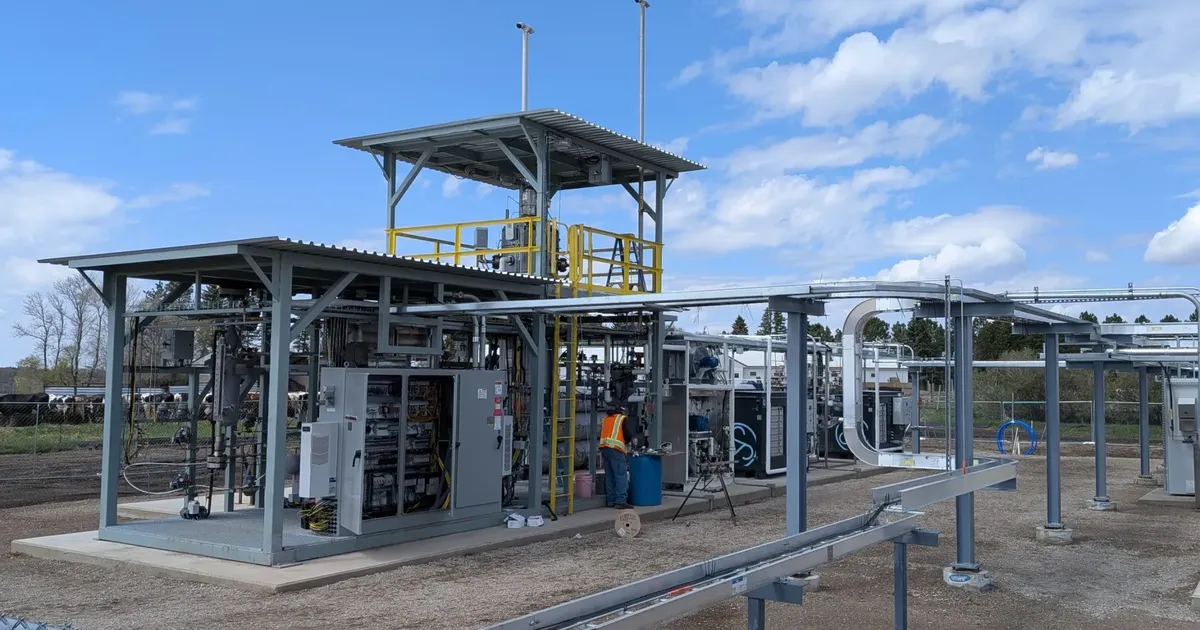
In the shadow of a wind turbine on a low rise just outside the western Minnesota town of Morris, a cluster of tanks, pipes, and sheds holds what some believe is the key to a more self-sufficient future for the region’s agriculture and heavy industry.
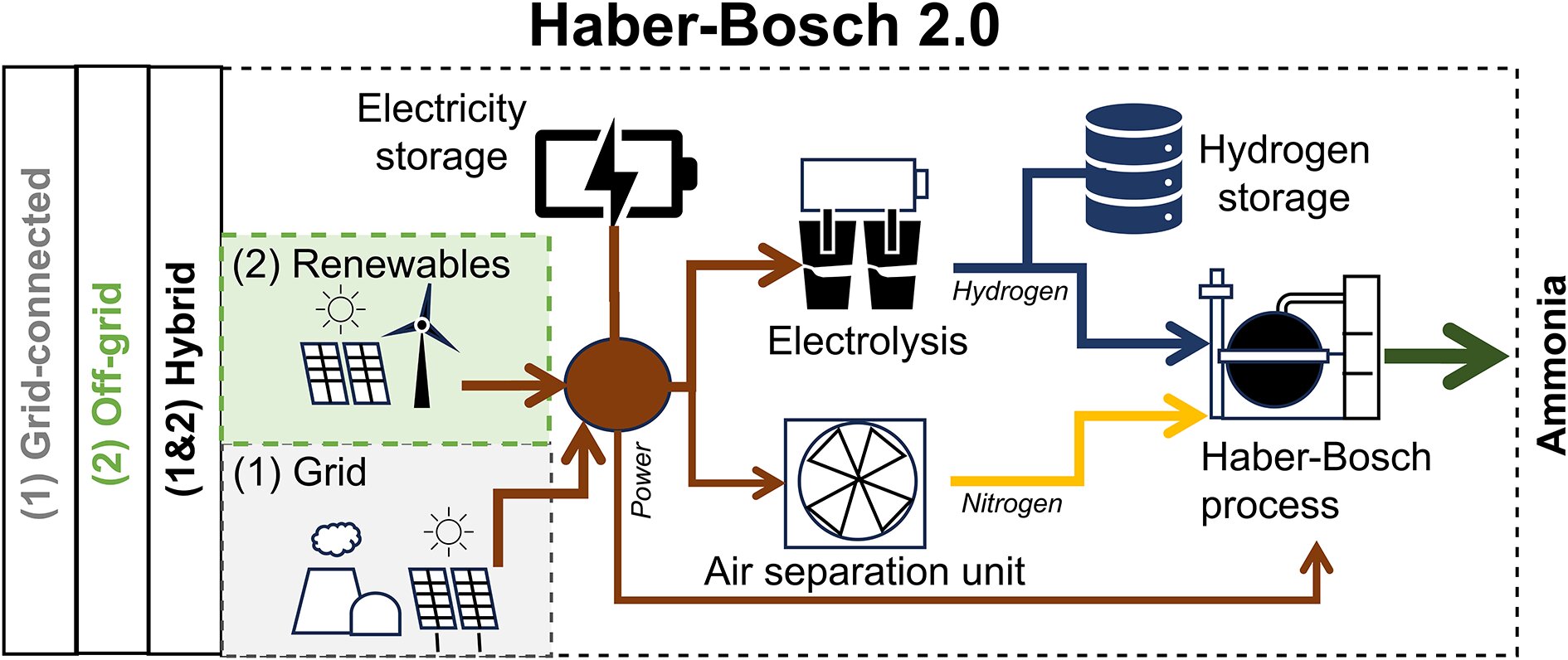
When the wind is blowing — and it often is, out here — the turbine powers two electrolyzers that cleave hydrogen from water, another system that separates nitrogen out of the air, and a third that binds the two elements to form anhydrous ammonia, a critical input for corn farming. The University of Minnesota West Central Research and Outreach Center commissioned the plant earlier this spring and can produce hundreds of kilograms of homegrown ammonia daily.
As a stable, efficient carrier of hydrogen, the homegrown ammonia could eventually supply raw material for other types of fertilizers, transportation fuels, and high-temperature industrial processes like ironmaking.
“It’s about 100 times cheaper to store and transport ammonia than hydrogen … so this is a gateway for other hydrogen-based industries,” Michael Reese, green ammonia research lead at WCROC, said on a tour of the facility this spring.
“Gateway” is the operative word here. Reese said WCROC plans to add a third electrolyzer to the project in a “future phase,” bringing daily production capacity to about 1 metric ton and annual production between 300 and 400 tons. That sounds impressive, but it’s a rounding error in a highly consolidated industry that produces around 250 million tons of ammonia annually. Minnesota alone imports up to 900,000 tons per year.