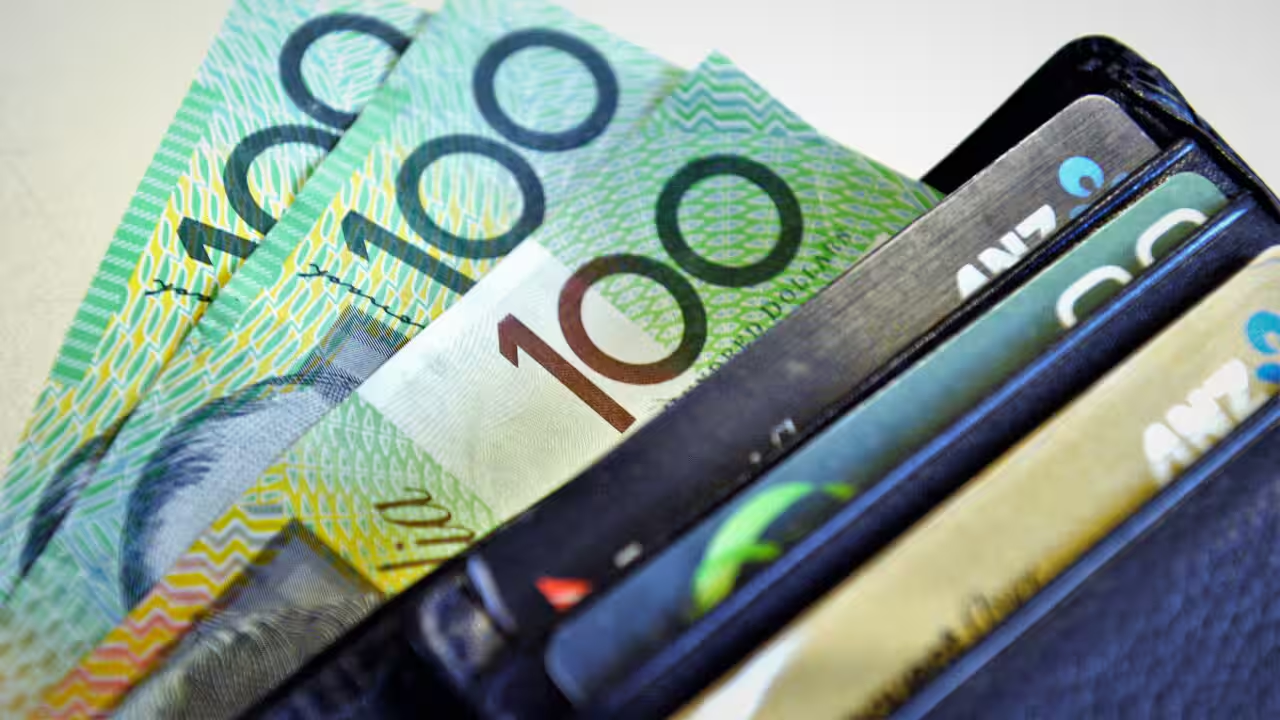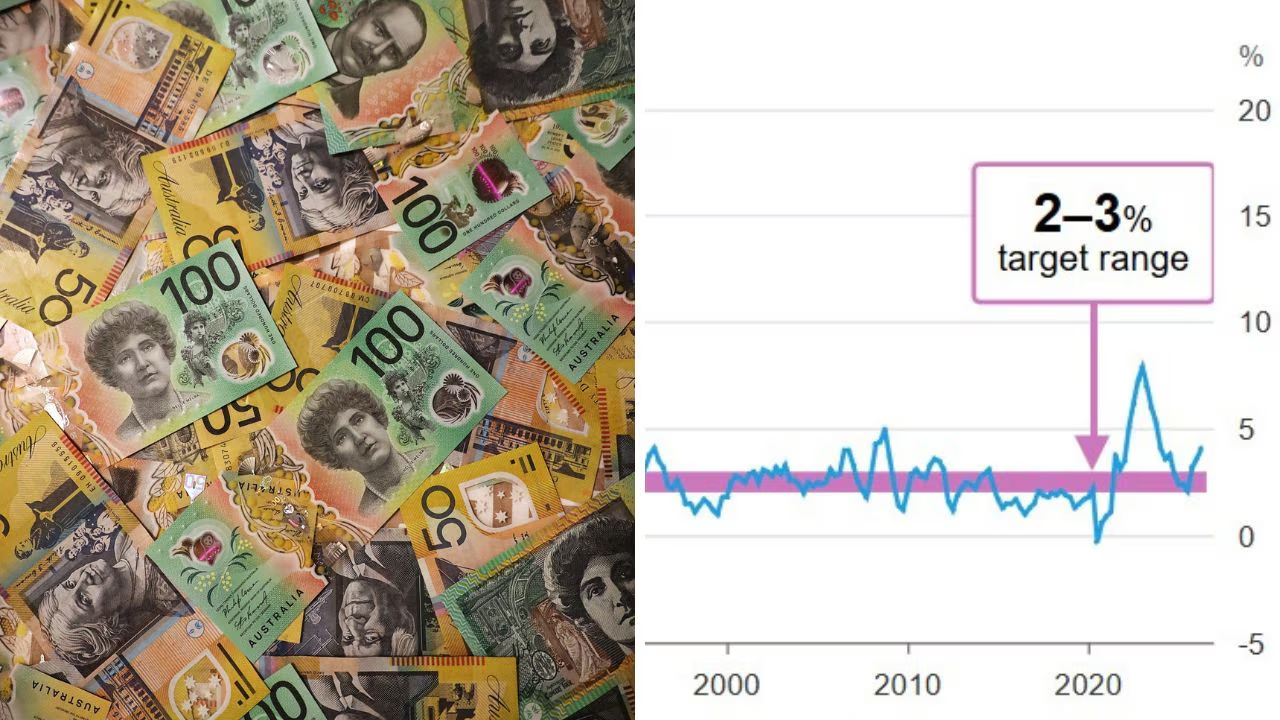
Cost-of-living pressures has led to Australians turning back to cash as a budgeting tool - bucking the trend of a cashless society. Despite repeated pushes towards a cashless society, the latest Global Payments Report found Australians are still using hard currency, which is expected to account for 9 per cent transactions by 2030.Australians aged 55 and above will use cash for nearly 20 per cent saying cash is their most frequent in-store payment method, according to the report.The numbers fall for younger Australians, with around 13 per cent of those aged 35-44 using cash as their most frequently used in-store payment method.Another 8 per cent of those aged 25-34 and 6 per cent of those aged 18-24 prefer to use cash. Global Payments Australia and New Zealand country manager Colin Baines told NewsWire cash usage is remaining due to giving Australians a unique way to budget.“Personally, I think in more difficult economic times, cash becomes a very useful budgeting tool,” he said.“A person draws out a certain amount every week, they stick to that amount, the person can look into their wallet and see how much money they have.Mr Baines says it is an effective budget mechanism as once the funds are exhausted the person is unable to keep spending, unlike in a digital world where they can keep tapping a card. The findings come as Australia faces a new wave of cost-of-living pressures, caused by the Middle East crisis. Australian Bureau of Statistics figures show yearly headline inflation fell from 4.6 per cent in March to 4.2 per cent in April.This was due to rapidly rising oil prices in March and a temporary halving of the fuel excise in April.By June 30, oil prices could rise again when the fuel excise runs out, depending on the US/ Iran conflict. The all-important trimmed mean inflation rate – which the RBA watches because it strips out volatile and seasonal items – rose to 3.4 per cent for the 12 months to April, showing underlying price pressures are still in the Australian economy.Both numbers are still well above the RBA’s inflation target of between 2-3 per cent.“It is an easy and effective way of budgeting and my guestimate is what they are starting to do,” he said. “(Using cash) is an effective budgeting tool because once the funds are exhausted there is no more money, whereas in a digital world you can keep on tapping and costs rack up.”Digital payments remain as the ‘backbone’ of the economyAt the same time Australians are embracing new technologies with card transactions providing the “backbone” for the national economy.According to Global Payments, 64 per cent of point of sales transactions are now on card.Digital wallets – including mobile phones and wearables – are also surging and is expected to rise from 43 to 50 per cent of all online transactions by 2030.Australia, alongside New Zealand, leads the Asia Pacific region in buy now pay later use – accounting for 13 per cent of e-commerce transaction value in 2025.“The transformation of Australia’s payments landscape continues, with digital wallets growing fast, cards remaining dominant and BNPL now an expected option at the checkout,” Mr Baines said. “With cash still expected to have its place, Australian businesses best placed to grow are those that can provide the greatest flexibility of payment methods for their customers.”
Proof more Aussies are turning to cash
Cost-of-living pressures has led to Australians turning back to cash as a budgeting tool - bucking the trend of a cashless society.
TL;DRAI
Australians are returning to cash for budgeting amid inflation, with cash projected at 9% of transactions by 2030. Payment infrastructure teams must support multi-channel flexibility (cash, cards, wallets, BNPL) to remain competitive.
556 words~3 min read