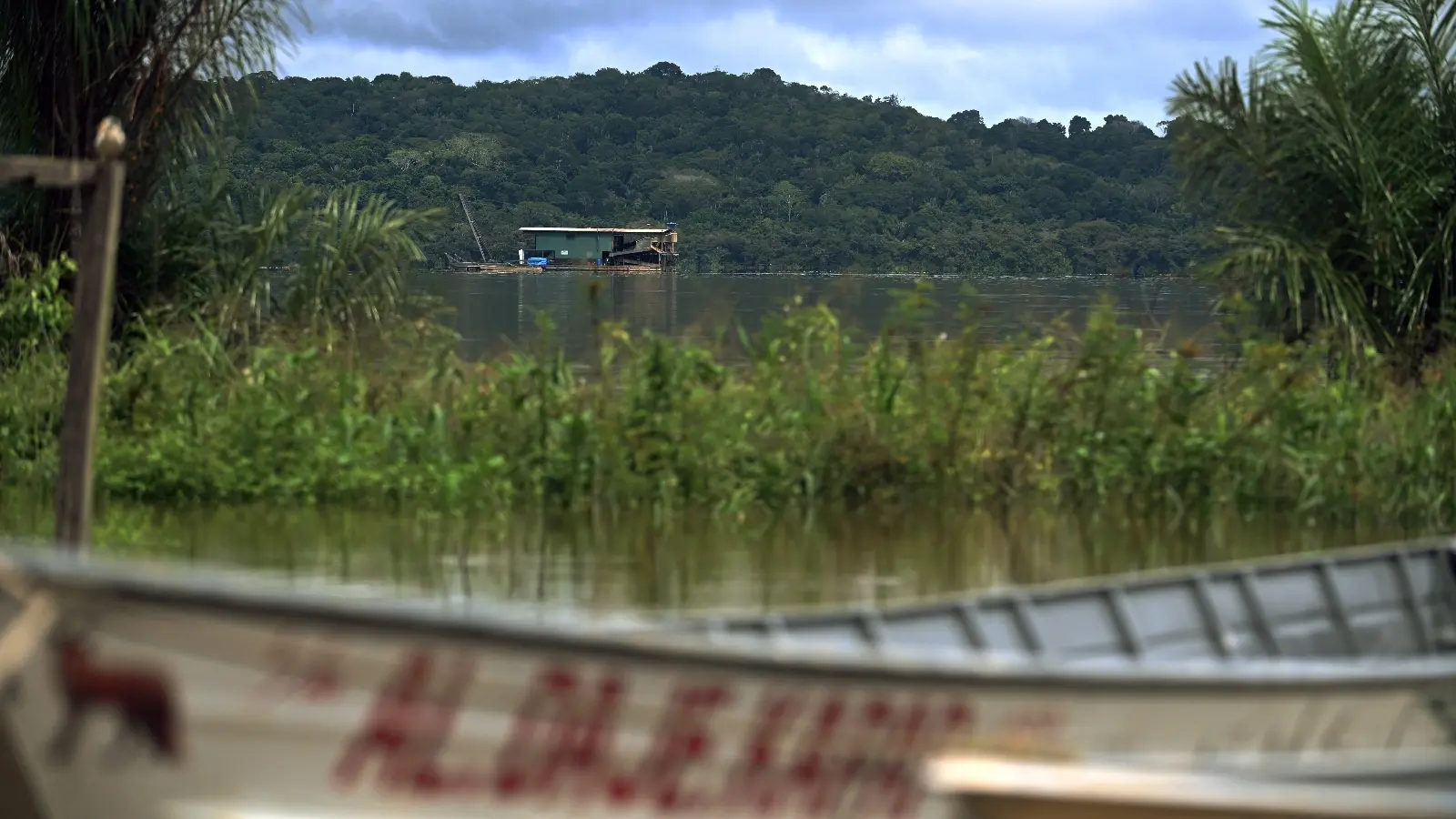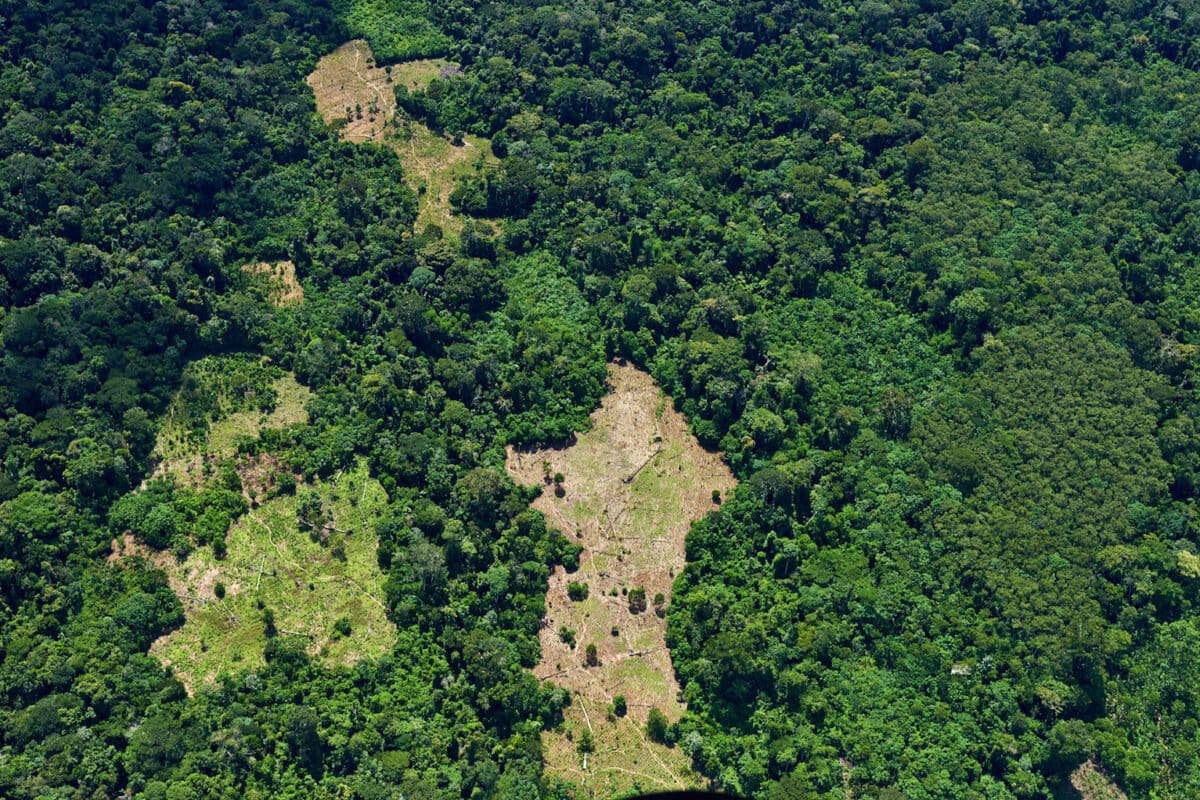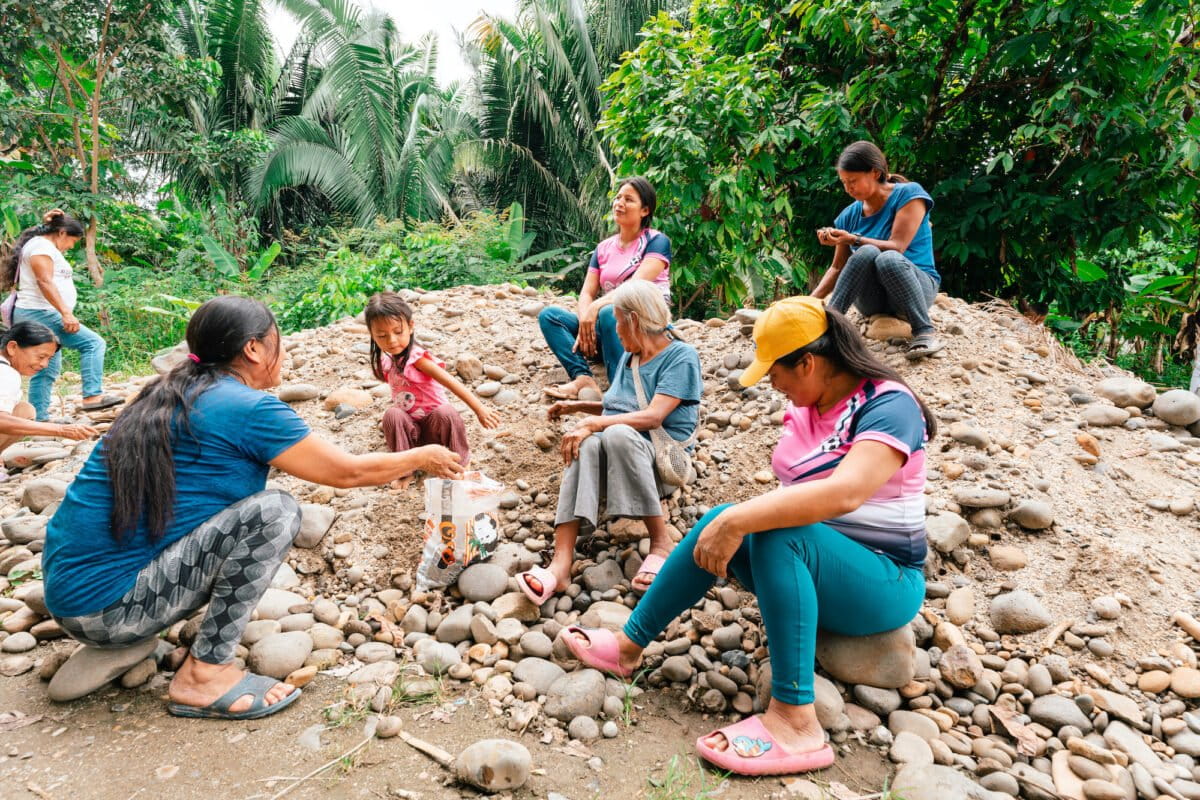
On the banks of the Puní River’s middle basin, in the Ecuadorian Amazon, illegal mining has increased by 2,700% over seven years, contaminating the main water source for the ancestral Kichwa community of Capirona.Residents of Capirona say that, by 2021, the color of the Puní River started to change, turning brownish. Meanwhile, problems such as skin rashes, fungal infections, and itching became frequent.In samples of mining ore collected by Ecuadorian authorities from an illegal mining camp on the banks of Puní, signs of mercury were found at levels far exceeding the permitted limit for this metal in agricultural soils.Industrial farming activity has also polluted the waters of the Shalkana River, another watercourse located within the community. Despite being surrounded by two rivers, residents of Capirona rely on two water tankers sent weekly by municipal authorities, which is enough for barely half of the families for just a few days.
The man’s cheekbones are painted with achiote, a red pigment extracted from the seeds of the Bixa orellana plant. He wears a thin headband over his gray hair, and a traditional green shirt with yellow and blue trim on the collar and sleeves. In his right hand, he holds a wooden spear, 2.5 meters long, or just over 8 feet, made from the chonta palm (Bactris gasipaes). He stares at the journalist. His dark eyes widen as he laments the occurrence of several cases of community residents, including children, suffering from fungal infections. “Even two people have already died from stomach pain, and at the hospital, they said: ‘Maybe it’s the water.’”