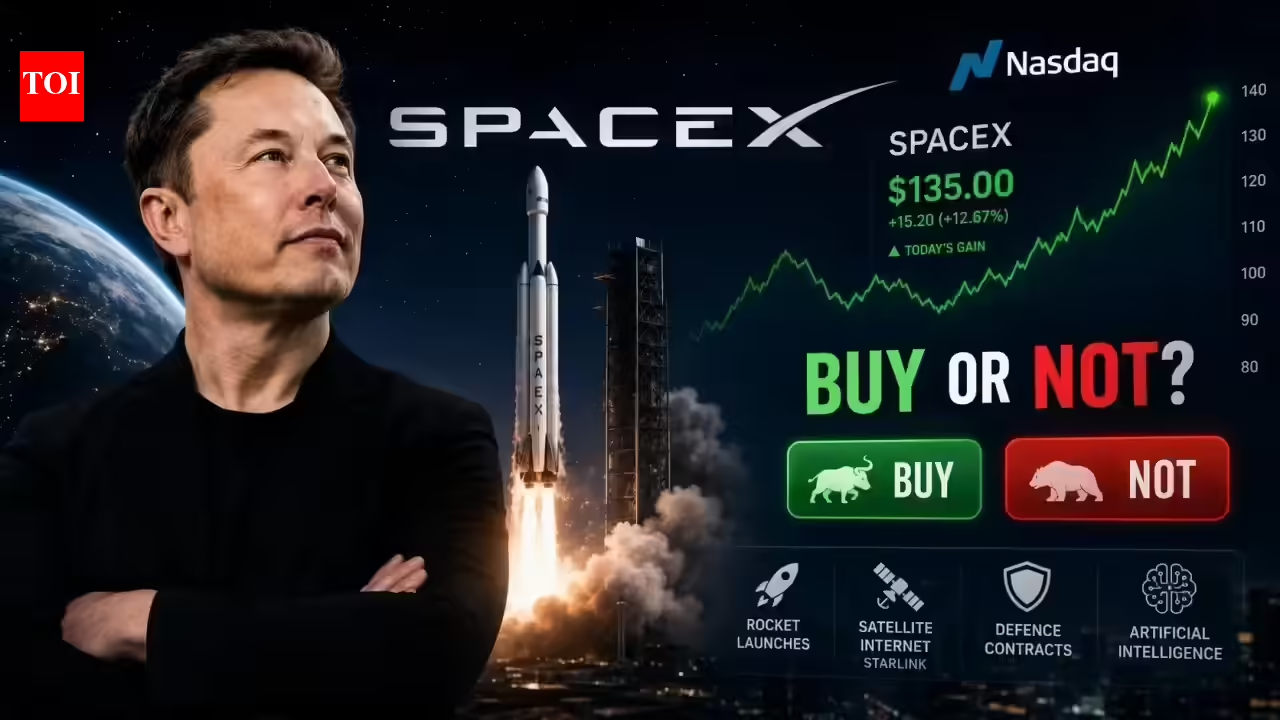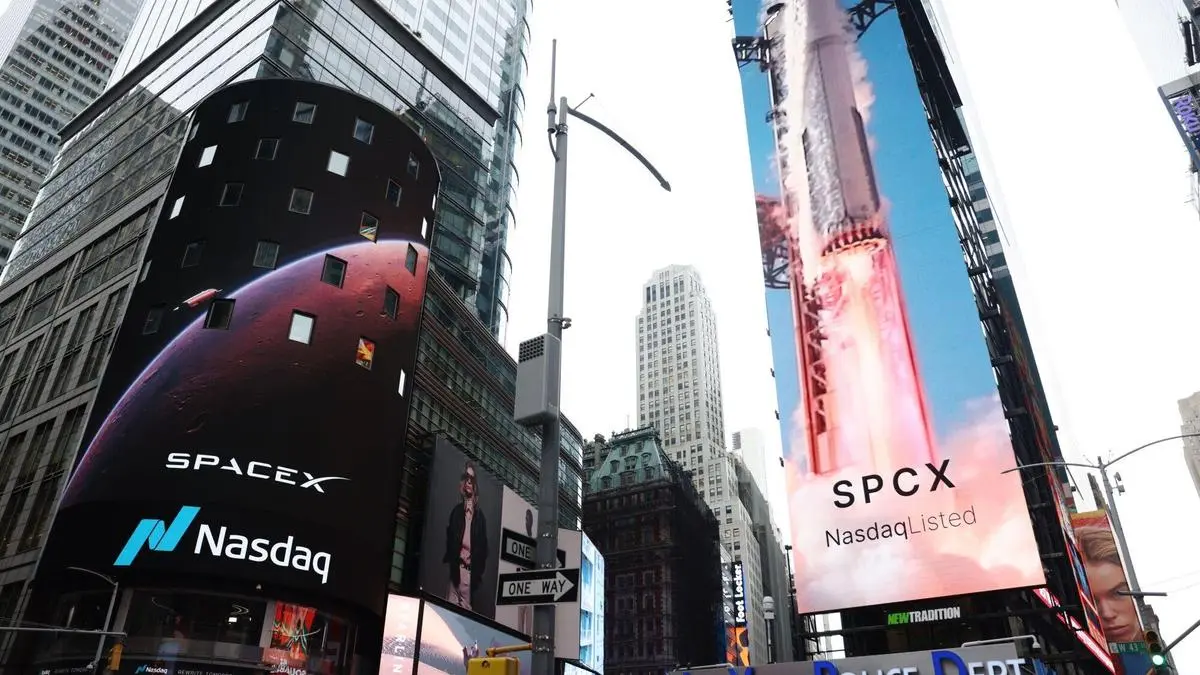
Elon Musk-led SpaceX is set to make its stock market debut on Nasdaq on Friday after raising a record $75 billion in what is the largest IPO in history. The listing has generated robust investor interest globally. Demand reportedly touched nearly $250 billion as investors rushed to gain exposure to SpaceX's businesses spanning rocket launches, satellite internet, defence contracts and artificial intelligence.For Indian investors, however, the IPO itself was largely out of reach. Unlike Indian public issues, US IPOs do not provide a direct allotment mechanism for Indian retail investors. The only practical route now is buying shares after listing through international investing platforms or GIFT City's NSE IX.The question many investors are asking is whether they should buy the stock immediately after listing.Analysts remain divided. Some see SpaceX as a unique long-term business with exposure to industries that few public companies can offer. Others believe the valuation has run far ahead of fundamentals and could leave little room for error.At the IPO price of $135 per share, SpaceX is valued at roughly $1.75 trillion, placing it among the world's most valuable listed companies despite remaining loss-making.The company reported revenue of $18.67 billion in 2025 and a net loss of $4.94 billion. For investors looking to diversify internationally, the attraction is obvious.SpaceX has built dominant positions in commercial space launches and satellite communications through Starlink. The company also offers exposure to artificial intelligence through its xAI business, making it one of the few listed names straddling multiple high-growth themes."SpaceX is a rare asset with world-class technology and multiple long-duration growth drivers," said Ishan Tanna, Senior Associate at Ashika Capital. However, he cautioned that investors are paying heavily for future expectations."At a $1.75 trillion valuation, investors are betting more on future execution than current fundamentals. It may make sense as a small diversification allocation, but chasing the stock after a euphoric listing could expose investors to significant valuation risk," Tanna said.Niteen Dongare, Director and CEO of Anand Rathi International Ventures IFSC, said the listing provides Indian investors access to a business that is difficult to replicate elsewhere in global markets."The business of SpaceX is unique as the company is a global leader in commercial space launch and satellite communication through its Starlink venture. The company offers exposure to sectors beyond technology," he said.However, Dongare pointed to several risks that investors should not ignore. A large portion of SpaceX's revenues comes from contracts with US federal agencies. The company also faces execution risks inherent in the aerospace business, where launch failures can have significant operational and financial consequences.Dongare believes investors should view SpaceX as a satellite position rather than a core portfolio holding. "I recommend 5-6% allocation to SpaceX if an investor is interested. The broader portfolio should continue to include diversified ETFs, technology leaders and other blue-chip companies," he said.Others are far more cautious. Sunny Agrawal, Head of Fundamental Research at SBI Securities, believes investors should stay away from the stock at current levels."Looking at the loss-making business and exorbitant valuations, investors should avoid taking exposure to SpaceX post listing," Agrawal said.One concern is that the IPO valuation appears to be pricing in years of future growth. The company is being valued at nearly 94 times its 2025 revenue, a multiple that exceeds many established technology giants.The excitement around artificial intelligence is also playing a role. Investors are increasingly viewing SpaceX not just as a rocket company but as a broader technology platform that includes satellite connectivity, data infrastructure and AI capabilities.Vinit Bolinjkar, Head of Research at Ventura, believes the underlying business remains compelling despite valuation concerns. "SpaceX is genuinely one of the most compelling businesses going public in a generation," he said.According to Bolinjkar, Starlink generated about $11.3 billion in revenue during 2025, up roughly 50% from the previous year, while delivering operating profit of around $4.4 billion. "The long-term thesis involving space infrastructure, satellite internet and AI integration is structurally sound," he said.Still, he warned that investors buying after listing face a disadvantage compared with IPO subscribers.The combination of a small free float and elevated valuation could lead to sharp price swings during the initial weeks of trading. "Treat the opening days as price discovery, not a verdict on the company," Bolinjkar said.Instead of rushing in, he recommends a staggered approach. "For genuine diversification, waiting 30-60 days for price discovery is more prudent. Investors can also gain exposure through global technology and space-related funds that eventually include SpaceX, reducing single-stock concentration risk."That may be the most balanced takeaway for Indian investors. Few companies can match SpaceX's technological leadership, growth opportunities and strategic positioning across multiple industries. Yet few companies have also listed at such an ambitious valuation.(Disclaimer: Recommendations, suggestions, views and opinions given by the experts are their own. These do not represent the views of Economic Times)
SpaceX to list today: Should Indian investors buy shares of Elon Musk's biggest bet after missing the IPO?
SpaceX is set to list on Nasdaq today, marking the largest IPO in history with a $75 billion valuation. While Indian investors missed the IPO, they can now buy shares post-listing. Analysts are divided on whether to invest, citing SpaceX's unique business model and high valuation.
TL;DRAI
SpaceX IPO at $135/share, $1.75T valuation, from $18.67B 2025 revenue across commercial launches, Starlink, and xAI. At 94x revenue, market prices future space infrastructure + AI growth; rare diversification but significant valuation risk—staggered buying over 30-60 days advised.
799 words~4 min read