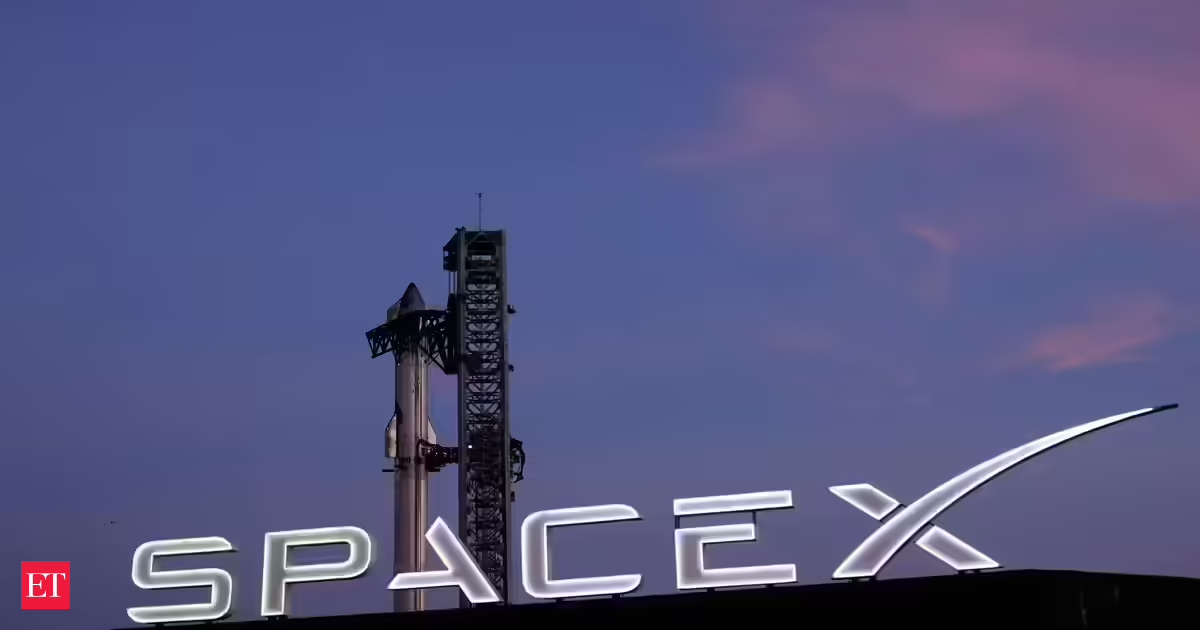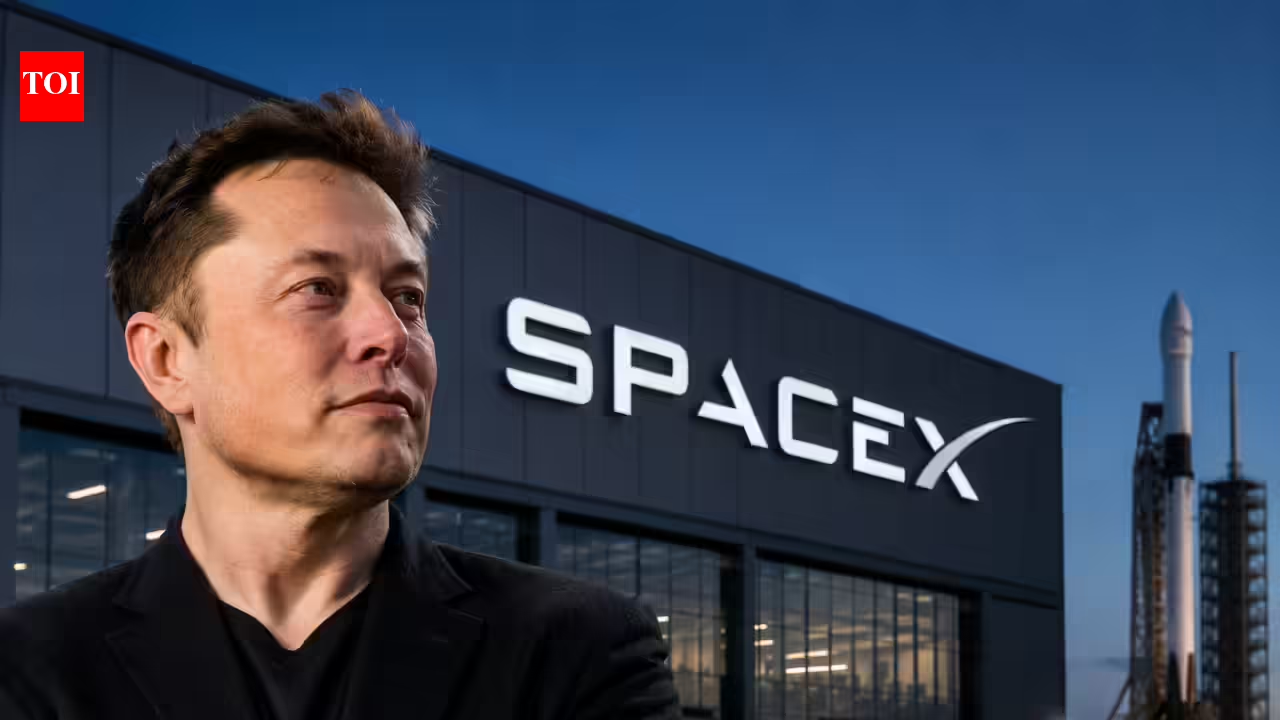
Elon Musk's SpaceX is expected to become one of the largest stock market listings in history. The company plans to raise $75 billion through the IPO. The IPO values SpaceX at around $1.75 trillion. Investor demand has reportedly been several times higher than the number of shares available. SpaceX is scheduled to begin trading on the Nasdaq on June 12, 2026. The stock will trade under the ticker symbol SPCX.SpaceX is set to begin trading on June 12 (REUTERS/Dado Ruvic/Illustration) (REUTERS)SpaceX has set its IPO price at $135 per share. However, this price is mainly available to investors who receive shares before trading starts. Most regular investors will likely have to buy the stock after it begins trading publicly.Wall Street decides who gets IPO sharesRequesting IPO shares does not guarantee an allocation. Demand for SpaceX shares is expected to be much higher than supply. Because of this, many investors may receive fewer shares than they asked for or none at all.Investment banks do not simply divide shares equally among all investors. They consider factors such as client relationships and whether investors are likely to hold the stock long term. Banks also try to create a stable shareholder base that can support future fundraising efforts, as per the report by Yahoo Finance.Also read: Investing $5,000 in SpaceX IPO? Here’s what it could be worth in five yearsRetail investors are getting a bigger chance than usualSpaceX's IPO includes a larger allocation for retail investors than many traditional IPOs. Retail investors can include everyone from ordinary individuals to wealthy private banking clients. JPMorgan CEO Jamie Dimon praised Musk for helping "democratize finance" by giving individuals more access to IPO shares.Brokerages are playing a bigger roleSpaceX has reserved shares for brokerages that serve everyday investors. These brokerages include Charles Schwab, E-Trade, Fidelity Investments, Robinhood, and SoFi, as per the report by Yahoo Finance. Robinhood recently received approval to act as an underwriter in future IPOs, allowing it to work directly with companies bringing shares to market.Once public trading begins, market demand will determine the stock price. If investor excitement remains strong, shares could open above the IPO price. Investors who miss the IPO allocation may have to buy at a higher price in the open market.Early market signals show strong demandPre-IPO perpetual futures linked to SpaceX on the Hyperliquid platform were recently pricing the stock about 20% above the IPO price.. This suggests traders expect strong demand when the stock begins trading. Renaissance Capital strategist Matthew Kennedy said a first-day gain of less than 10% could disappoint investors because expectations are very high, via Yahoo FinanceSpaceX is still losing moneyDespite its huge valuation, SpaceX is not currently profitable. The company reported revenue of $18.67 billion in 2025. It also reported a net loss of $4.94 billion for the year. Investors are betting on future growth in satellite internet, rocket launches, defense contracts, and artificial intelligence businesses, as per the report by Moneycontrol.SpaceX reportedly secured a $20 billion bridge loan in April before the IPO, as per the report by Reuters. The loan was used to refinance a large portion of the company's debt. If the debt is not refinanced or repaid through other means within six months, some IPO proceeds may need to be used for repayment.SpaceX is investing heavily in artificial intelligence and other growth areas. Wall Street bankers believe the company could require additional fundraising in the future to stay competitive, notes Yahoo Finance. Building a strong shareholder base now could make future capital raises easier.
SpaceX IPO nears launch: What regular investors need to know before buying
SpaceX IPO launches at $135 per share. Learn about stock demand, share allocation, risks, debt, valuation, and what regular investors should know.
TL;DRAI
SpaceX IPO June 12, $135/share, $75B raise, $1.75T valuation—$4.94B net loss 2025. Retail allocation via Robinhood and +20% pre-market demand signal strong appetite for AI/defense/satellite moonshots despite unprofitability.
584 words~3 min read