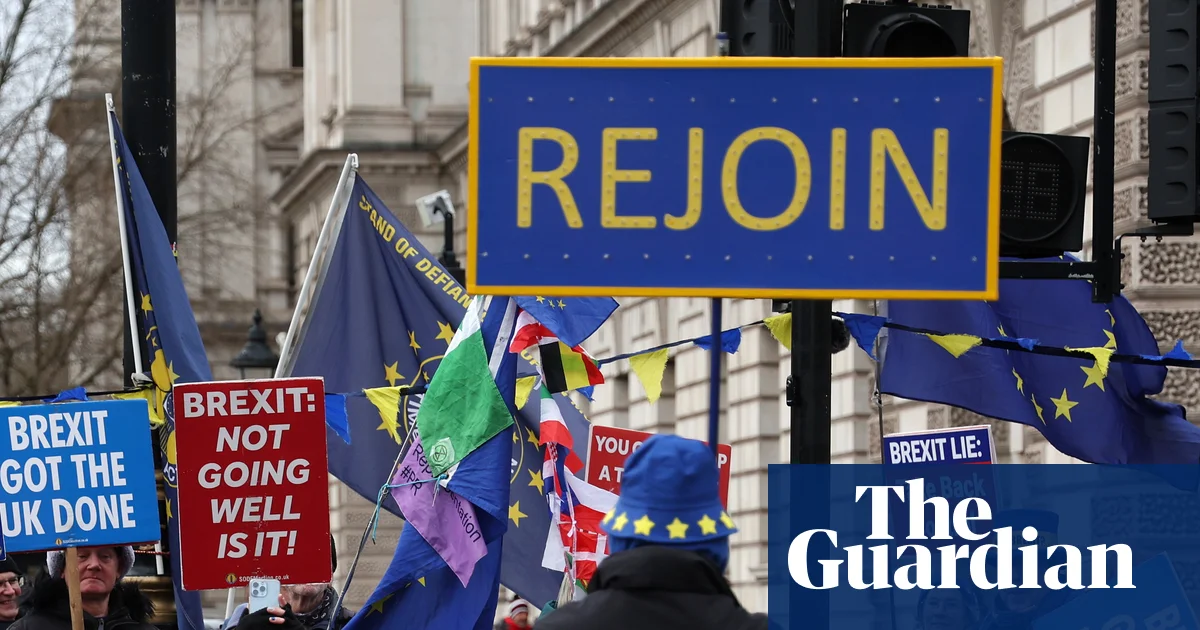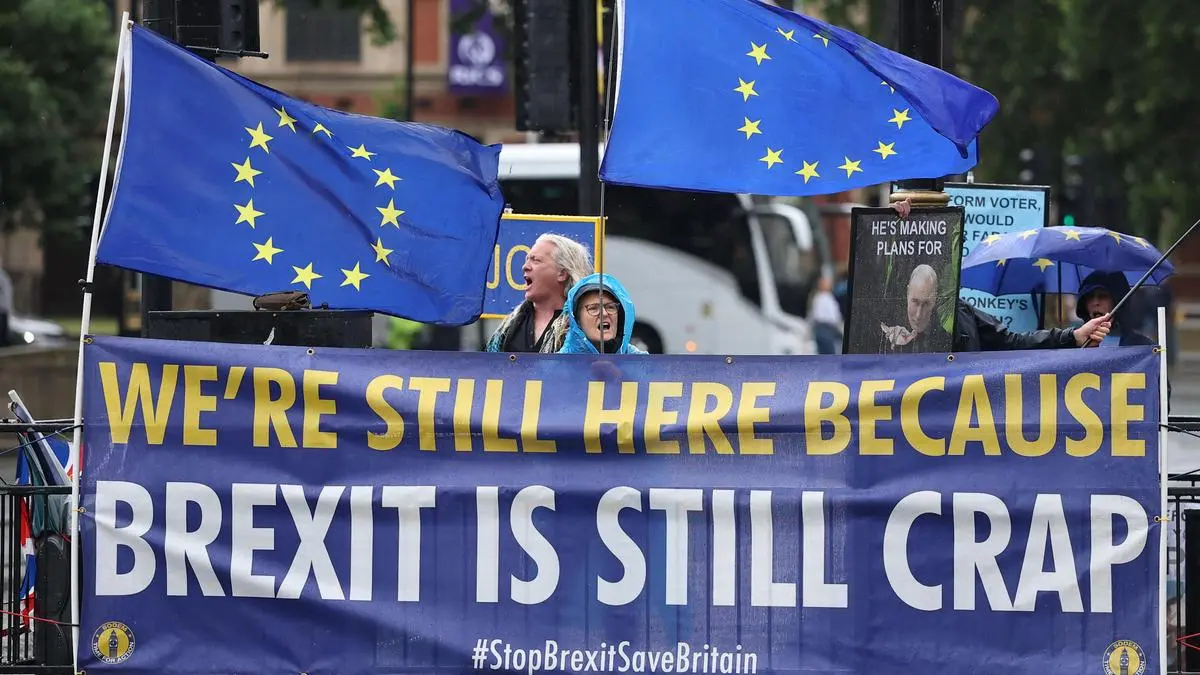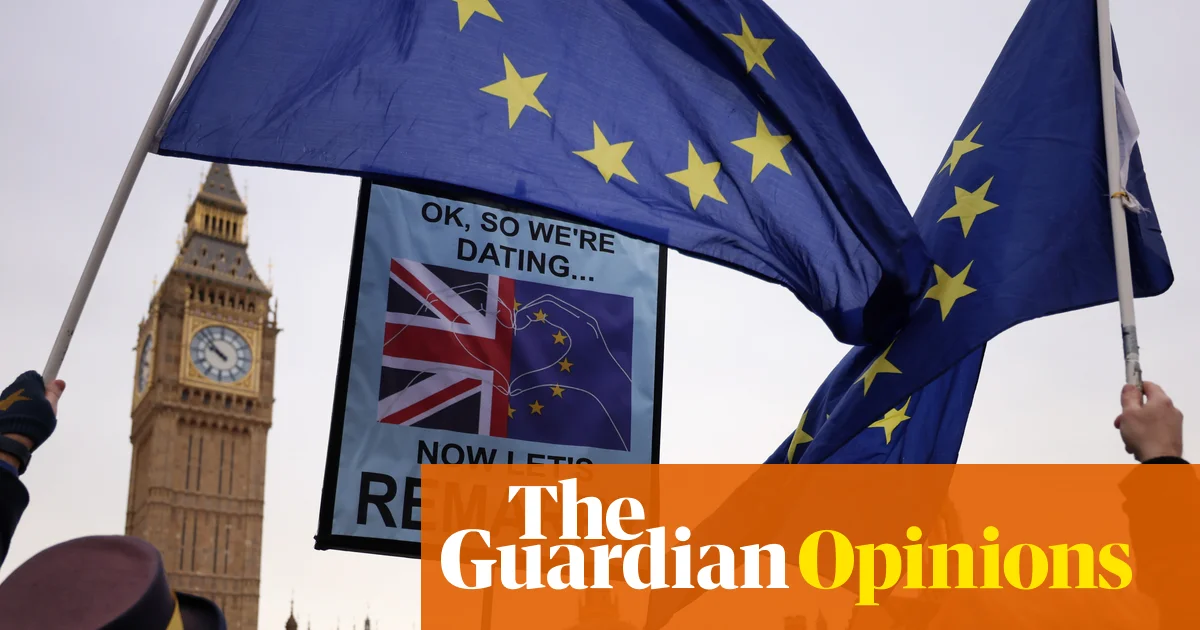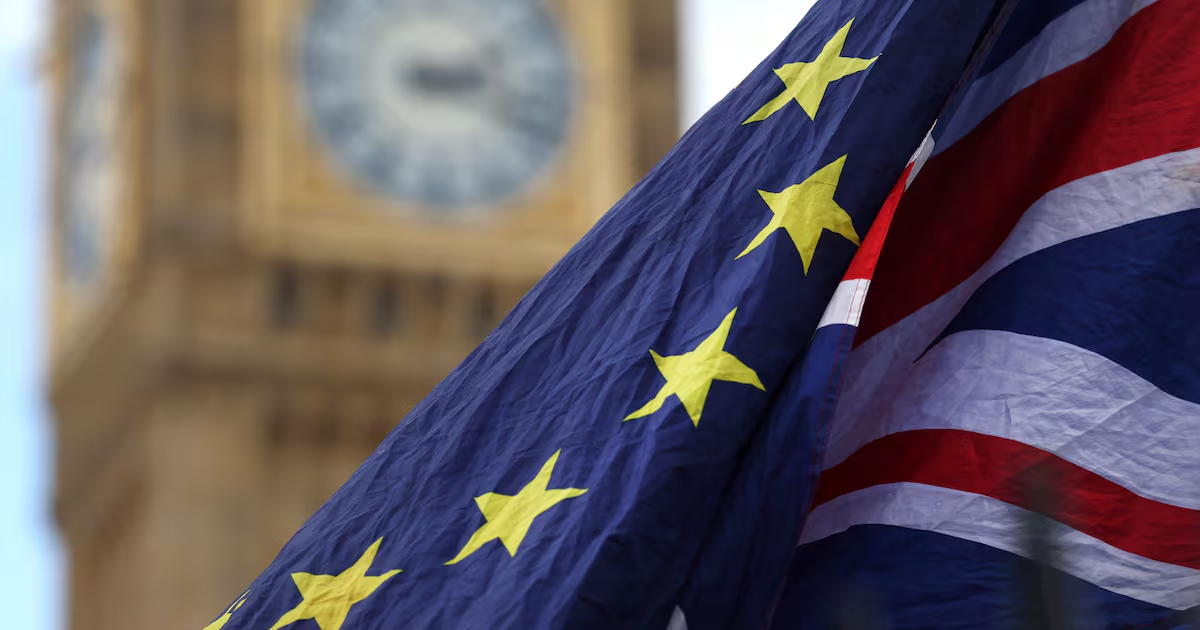
A week ago, I attended a large conference organised by the Cercle d’Economia in Barcelona. On several different occasions, participants, mostly people in business, asked me whether the United Kingdom would rejoin the European Union (EU).My reply was the same as the one I gave on December 10th, 2023, in my column “Britain won’t rejoin the EU for decades – if ever”. Brexit was stupid; but no, it cannot just be reversed. Heraclitus said, “You cannot step into the same river twice”. The EU and UK cannot go back to where they were before June, 2016. Moreover, the attempt to rejoin would create a great waste of energy on both sides. Above all, it is unnecessary.‘No profit and crap governance’ – is Elon Musk’s SpaceX actually worth $1.75 trillion? Listen | 41:54I thought Brexit would be a big mistake. What has happened since then has certainly not made it look any better. Has the result been a dynamic economy, a country contented with the decision or a steep reduction in overall immigration? No, no and no. Today, the country is more politically divided and poorer than it would otherwise have been. It is also far from happy with its decision.Most of what went wrong was predictable. But some is because the world has moved in a Brexit-hostile direction. In 2016, the idea of “global Britain” was not quite as absurd as it is today, with globalisation in retreat, the US unreliable, Russia at war in Europe and China even more autocratic and mercantilist.[ Brexit - A Very British Civil War review: Ghastly portrait of ruling classes having a larkOpens in new window ] Europe is not just the UK’s home. The EU also remains its most important economic partner: in 2025, 45 per cent of UK trade in goods was still with the EU.Even so, going back would create some big new problems. Another referendum would surely be needed, which would be highly divisive and re-embittering. Then there would have to be a new set of negotiations. Moreover, the terms of accession would be different from those in place when the UK left. Opt-outs? Highly unlikely this time. All this would exhaust a parliamentary term in the UK. This would not just divert attention from other priorities at home. It would do the same in the EU itself, which confronts far more important economic and security challenges. Moreover, the EU could reasonably wonder whether the UK would change its mind all over again.Heraclitus was right. Fortunately, there is an alternative: let us call it the “Swiss option”, namely, a patchwork of treaties that cover the most important parts of the relationship. As Anton Spisak noted in a study of the latest EU-Swiss deal for the Centre for European Reform, the result is rather messy. But it may be workable. Without going into all the gory details, it seems clear that the UK needs to be as closely aligned with EU trade policy and the single market as it can be.[ UK government is still paying the cost of BrexitOpens in new window ]It also needs to be as fully engaged as possible in EU security, scientific, educational, financial and phytosanitary policies. The price of not being a member would be that the UK would be a rule-taker. But the supposed benefits of autonomy have turned out to be exaggerated. Ideally, in my view, the UK would join the customs union, EU free trade areas and single market. It would also make financial contributions to essential EU programmes.The most obvious hurdle would be the need to accept free movement of labour. But there are three reasons why this should be less of a problem than it was before Brexit. The first is that it is by now evident that migration will need to continue: the UK’s demography compels this. The second is that the two main reasons for the influx of immigrants from the EU before Brexit – the enlargement to the east and the Euro zone crisis – are now in the past. The third is that it is clear that immigrants from the EU have integrated into the UK with relative ease. Moreover, a large further enlargement is unlikely, except perhaps for Ukraine. Would that be so difficult?The big advantage of such a patchwork is that it would not require another referendum. Yes, it would be demanding to negotiate and would create frictions. But it would also cement further what is highly likely to remain the most important relationship the UK has. Will the old relationship with the US return, even once Donald Trump is gone? I doubt it. If it did and this new relationship with the EU did not work, it could be changed. If, on the other hand, it worked well in the decades ahead, the decision to rejoin could be made from a vastly better and more established platform than that of today, but also after the country has experienced Brexit. We now know the reality. Brexit is not just a promise now.We cannot sensibly reverse Brexit in the short to medium run. But there is also no reason to stay where we are. In this new and difficult time, the UK must get closer to its European partners again. It should do so, bit by careful bit. – Copyright The Financial Times Limited 2026
A ‘big bang’ reversal of Brexit is unrealistic and unnecessary
Switzerland provides an alternative model for the UK
890 words~4 min read