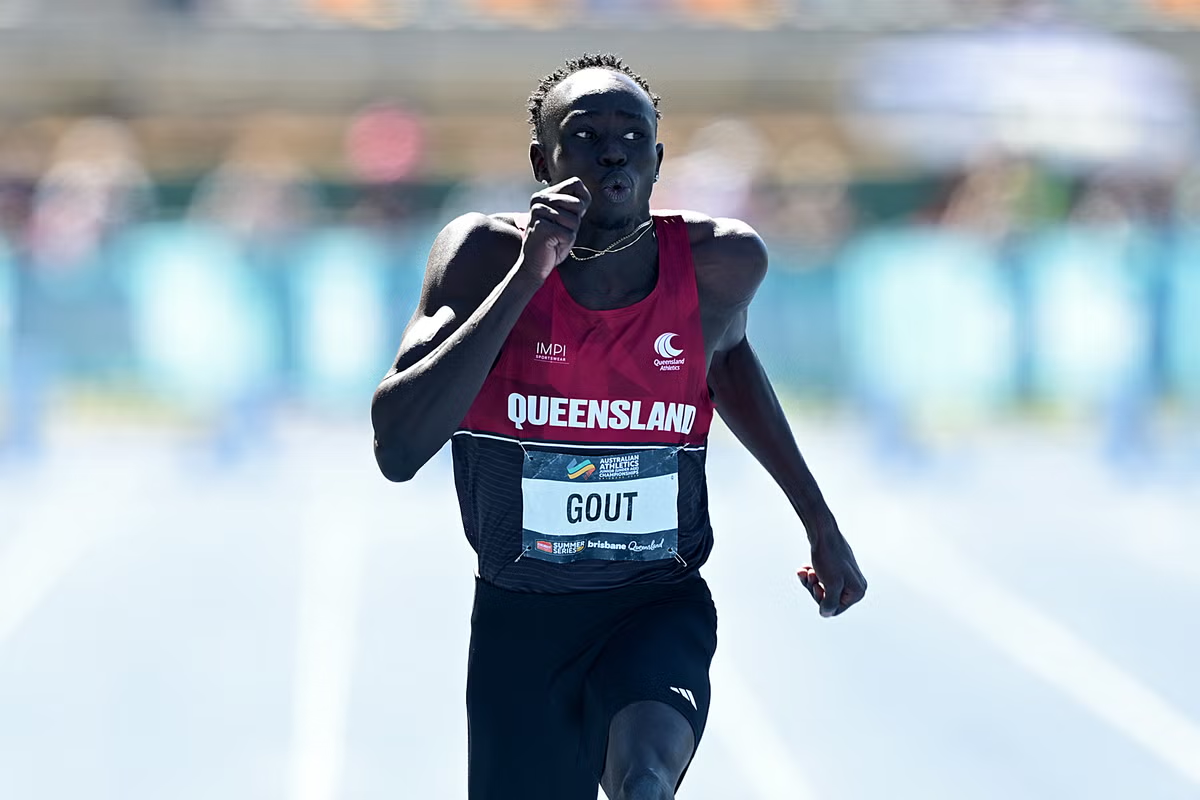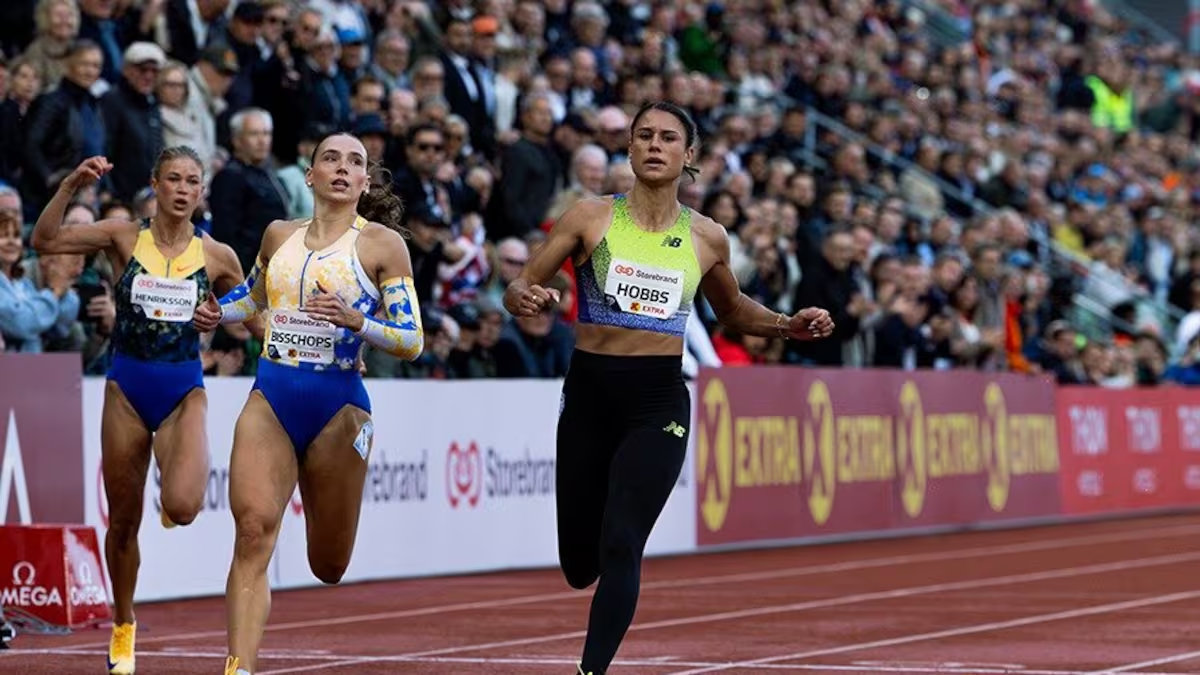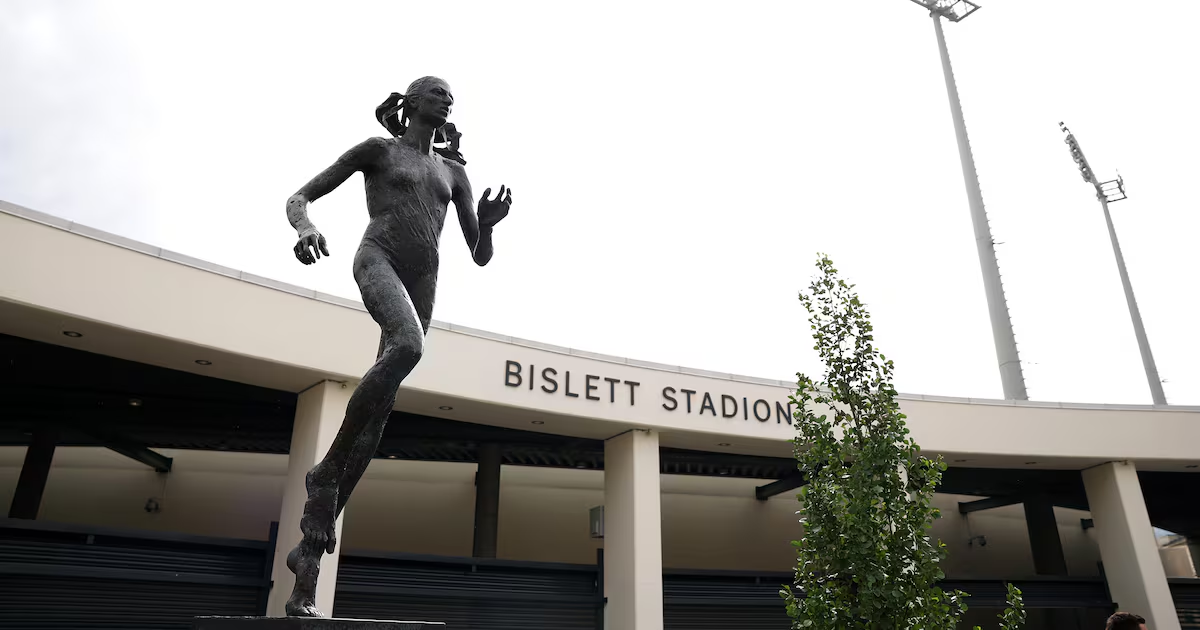
Of all the athletics meetings around the world, I’ve always felt a tight connection with the Bislett Games in Oslo. Everything about walking back inside the stadium for this year’s meeting on Wednesday evening reminded me why, even if it’s a slightly different place now compared to when I first ran there.That happened to be 33 years ago, to the day, when the meeting was part of the old IAAF Golden League, and I won the 3,000m and broke my Irish record. It made for a particularly memorable evening because I’d grown up watching the Bislett Games, during that period when Seb Coe, Steve Ovett and Steve Cram would frequently trade the world record in the headline event that still is the Dream Mile.Back then it was a six-lane track, the spectators frequently banging the trackside hoarding to further spur on the runners. There was a sort of mystical aura about the place, and there still is. It’s been the setting for 70 world records going back to 1924, and I can still vividly recall walking into the athletes’ hotel for that first time back in 1993. A little bit in awe, but determined to make the most of my chance.I’ve been back on several occasions over the years since, but Wednesday evening was my first time since they’ve fully revamped the stadium, with new seats and an eight-lane track. Oslo also looks a lot more sparkling now than it did in the early 1990s. But once you step inside the Bislett stadium and the meeting starts, it’s the same, intimate feeling of the past, and still one of the best meetings on the circuit.Sonia O'Sullivan competing in the women's 1,500m at the 2000 Bislett Games. Photograph: Patrick Bolger/Inpho It’s now part of the Diamond League, the highest level of meetings outside of the World Championships and Olympics. Blessed with another near perfect Scandinavian summer evening, it also provided a proper look at many of the stars of athletics right now.Naturally, these athletes are getting younger every year I go back. Most of them weren’t even born in 1993, and from the moment of my arrival in Oslo this time round, there was a particularly youthful look about the big stars they had displayed on billboards and signs around the city, such as Gout Gout from Australia, Cooper Lutkenhaus from the US, and Norway’s own Henriette Jaeger.At just 22, Jaeger is now one of the best women’s 400m runners in the world, delighting the home crowd with her second Diamond League win of the season in 49.52 seconds. The top four women were all European, a reminder perhaps of the challenge facing Rhasidat Adeleke once she does get back competing next month.Then came Lutkenhaus in the 800m, who at just 17, became the youngest ever winner of a men’s event in the Diamond League in Stockholm last Sunday. This time he took on the World and Olympic champion Emmanuel Wanyonyi from Kenya, holding on in a frantic dive for the line and clocking a lifetime best of 1:42.08.USA's Cooper Lutkenhaus wins the men's 800m final at this year's Bislett Games ahead of Kenya's Emmanuel Wanyonyi. Photograph: Sona Maleterova/Getty Images What impressed me most about Lutkenhaus is that he just seems to have the ability to get in the perfect position, and rarely looks overstretched, even against the older, more experienced athletes. When Wanyonyi came back at him, Lutkenhaus didn’t panic.It’s not unlike what Jakob Ingebrigtsen was doing at a similar age, but in the longer distances. Everyone seems to be running so much faster now, and Lutkenhaus also appears more mature then he is. Speaking with the media for almost an hour afterwards, he seemed well in control of things.It’s hard to fathom that Lutkenhaus is still in high school, but I can imagine the excitement back home and among high schoolers all over the US where track and field is one of the most popular sports. Between Lutkenhaus and Wanyonyi it seems the race is on to better the world record of 1:40.91, which has belonged to David Rudisha since 2012.Five Irish athletes got to experience the Bislett Games this time around, although Mark English was well off his best in the 800m and dropped out shortly after the 600m point. Talking to him afterwards he just wasn’t feeling right, but hopes to be back racing in Ostrava next week.The Dream Mile once again delivered, the top 10 all breaking the 3:50 barrier, but Andrew Coscoran had to settle for eighth place in 3:49.68, just off his Irish record of 3:49.26. Even if it gets a little lost when you’re back in eighth, Coscoran is running consistently well. Kenya’s Timothy Cheruiyot was given the win in 3:48.21, the same time as Yared Nuguse from the US.Ireland's Andrew Coscoran finished eighth in this year's Dream Mile at the Bislett Games. Photograph: Christian Petersen/Getty Images Orla Comerford enjoyed an emphatic win the multi-category 100m para race, running 11.78 seconds, with Orla Sutton fourth in 12.88, while Eimear Maher from Dundrum South Dublin also finished second in the National 1,500m in 4:09.93.Gout made his Diamond League debut in the men’s 200m, although the 18-year-old Australian isn’t quite at this level yet. Olympic champion Letsile Tebogo from Botswana won comfortably in 19.84, while Gout finished back in sixth in 20.60.The others are simply bigger and stronger right now, and it’s very different field to the athletes he’s been running against in Australia. When these runners get a head start, it’s hard to relax and run your own race. People ask Gout about the pressure and expectation and he always downplays it, but you must feel something when you show up at your first Diamond League and your face is plastered all over the city. You’d be thinking ‘have I earned this?’ He doesn’t seem to be bothered, and I think he will come good over time.But there’s certainly a new generation of athletes fast filtering through, forcing more of the experienced athletes to try to defend their space. In the men’s 5,000m, the top 11 all ran under 13 minutes, a feat no Irish athlete has achieved. There is talk of an attempt at the Morton Games in Santry in July, and if they can recreate some of the Bislett Games magic, that just might be possible.
Sonia O’Sullivan: Revisiting the Bislett Games shines a light on the new generation of star athletes
Thirty-three years on from my first outing at the Oslo meet, there’s still a mystical aura about the place
1,054 words~5 min read