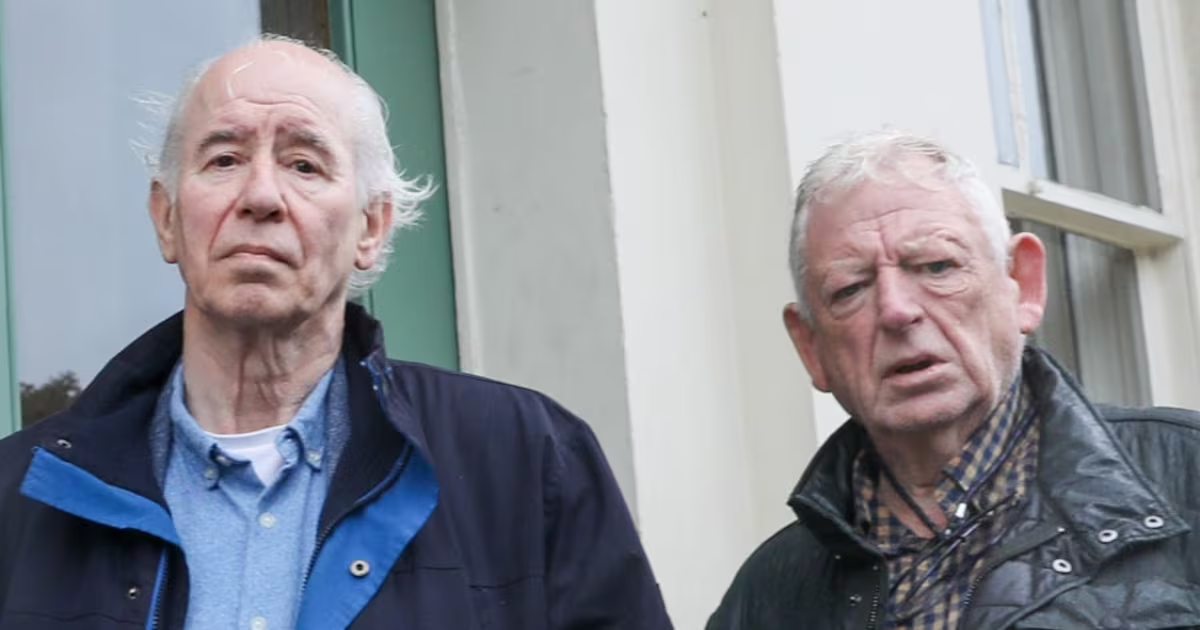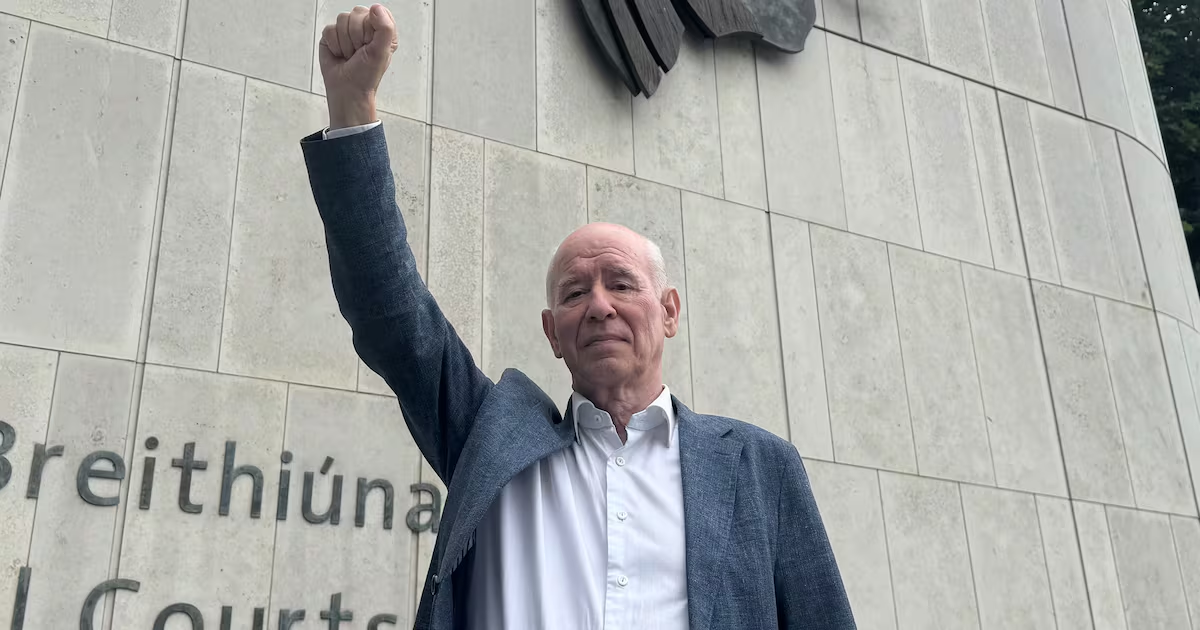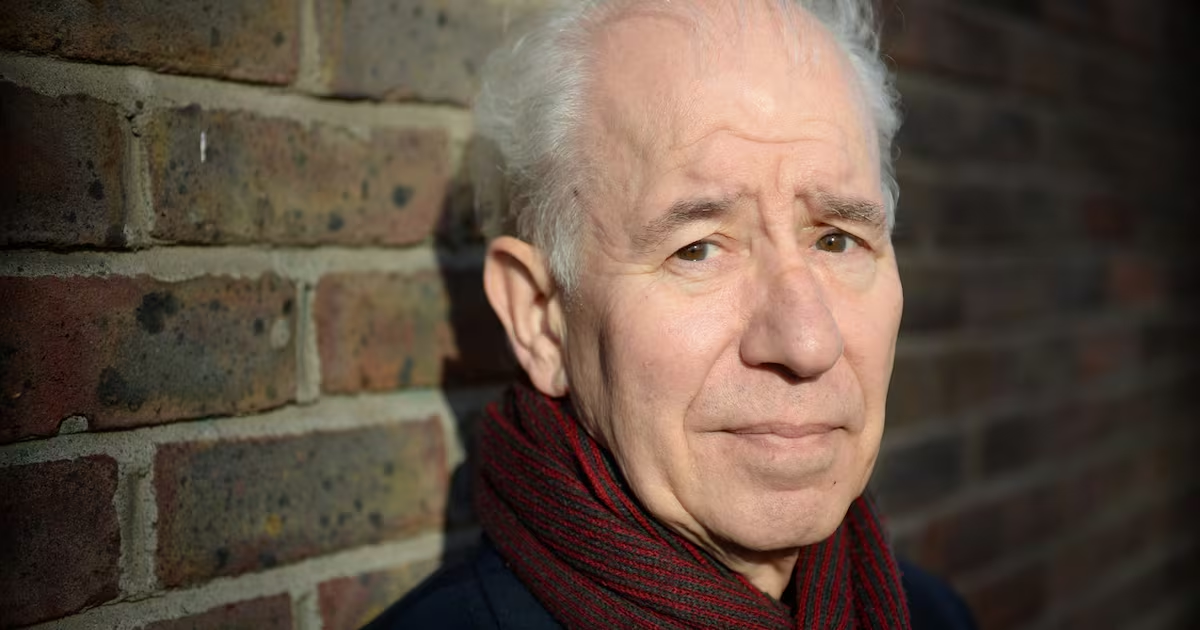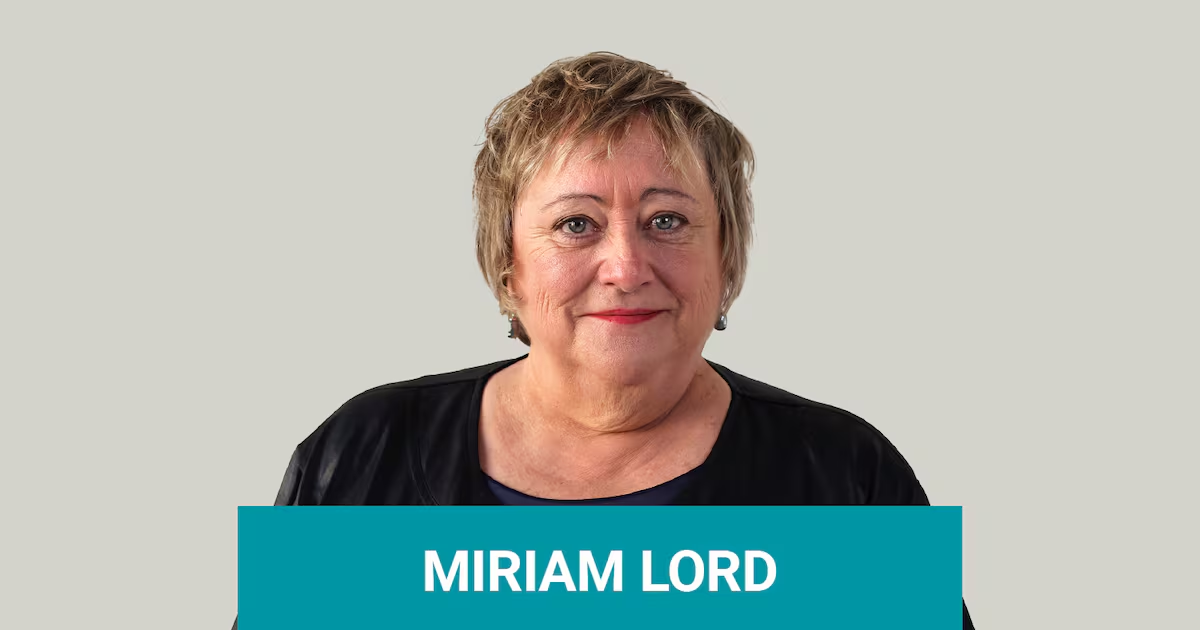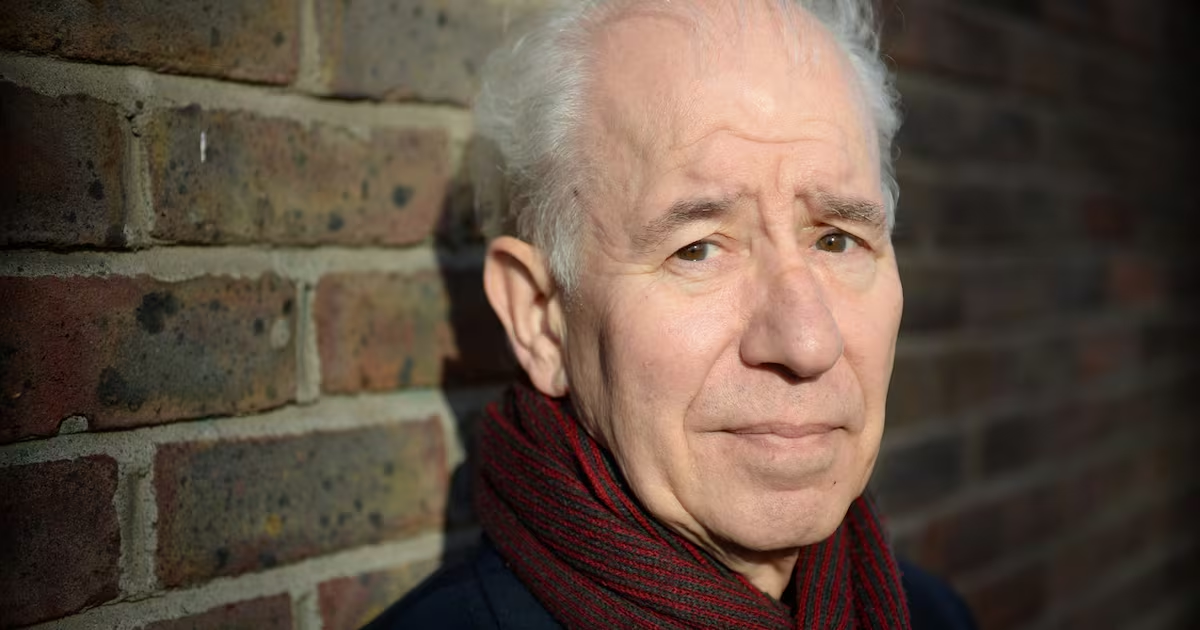
Brian McNally, who was 83, is being laid to rest today. When Osgur Breatnach (75) awakes on this funeral day, he will be seized by a terrible panic, as happens every time he opens his eyes from sleep. It is touch-and-go whether Nicky Kelly (75) will be well enough to attend the funeral as he spends much of his time in hospital nowadays. Fifty years ago, gardaí forced these three men to sign false confessions to a crime they had nothing to do with, culminating in their wrongful convictions and collective prison sentences of 33 years’ penal servitude. Half a century later, after a court of law and a president of Ireland accepted their innocence, the State still cannot bring itself to say sorry.If being beaten, deprived of sleep, threatened and terrorised amounted to their cruel and inhuman treatment in the 1970s, the same description applies to how successive governments and ministers for justice have denied the men an apology and the independent public inquiry they have continued to seek. Franz Kafka could hardly have imagined such outlandish forces of the law as haunt them.It was a case of rounding up some suspects fast after a gang lying in wait in Sallins, Co Kildare flagged down the mail train from Cork to Dublin in March 1976 and robbed it of £200,000 or £300,000, according to differing reports. Among those arrested were Kelly and Breatnach, both then members of the fledgling Irish Republican Socialist Party, and McNally, a previous member. Their interrogators have gone down in history as the gardaí’s notorious Heavy Gang.The men were put on trial in the non-jury Special Criminal Court, their “confessions” being the only evidence against them. Despite medical testimony that they were beaten in custody, the court ruled their injuries were self-inflicted or mutually inflicted. When one of the trial judges was seen to be asleep in court, he and the other two judges decreed he was awake. Only when he died did the trial collapse. During the second trial, when the “confessions” were accepted as evidence, Kelly fled Ireland. He was convicted in his absence and sentenced to 12 years in jail, as was Breatnach. McNally got nine years. When the latter two were freed in 1980 after an appeal court found their confessions were obtained “under oppression” and the IRA, at last, admitted responsibility for the robbery, Kelly thought it safe to return from America. He was arrested on arrival at Shannon Airport and incarcerated in Portlaoise jail. [ From the archives: Early report of the 1976 Sallins train robberyOpens in new window ]For four years, he lodged appeal after appeal in the courts and went on hunger strike for 38 days until he was released on “humanitarian grounds”. In 1992, the government decided to give him a presidential “pardon” and, in 1993, made payments to the three men without any admission of liability or contrition.In the 50 years since, they have suffered physical and psychological consequences from the injustice done to them. Their financial health and their families have also been affected. Walking and speaking with difficulty, Kelly briefly attended a benefit concert last March in Vicar Street for the Sallins Inquiry Now campaign. He had just been discharged from hospital after a five-month stay. “A hunger strike will catch up on you,” he said.Breatnach is applying to the Court of Appeal for formal certification of a miscarriage of justice. The State has said it will not oppose it but, beyond the courtroom, it is sticking to its nothing-to-see-here position. A spokesman said the Minister for Justice “is satisfied that a public inquiry in relation to these matters is not warranted”.The Sallins Train Robbery: Will the wrongly accused ever get justice? (2023 podcast) Listen | 22:34Former presidents Mary Robinson and Michael D Higgins have endorsed the call for an inquiry, along with the Irish Council for Civil Liberties, the Pat Finucane Centre, retired Circuit Court judge Pat McCartan, Amnesty International and former UN assistant secretary general Dennis Halliday. The response of governments has been that the men have been paid, it was all a long time ago and there is nothing to be gained from an inquiry because there is institutional Garda oversight in place to ensure another Sallins cannot happen. Were governments always to adhere to that ancient-history principle, there would not have been the seminal Ryan commission on institutional child abuse, or a Morris commission on Garda wrongdoing in Donegal, or a Murphy Commission on Catholic church failures to safeguard children in Dublin and Cloyne. What Ireland learned from those inquiries made it a safer country. [ Judiciary – not just gardaí – face questions about past actionsOpens in new window ]It is never too late for the truth. Garda misbehaviour did not miraculously end when the Heavy Gang left the stage. This week’s inquiry report on Garda failure to investigate the politically connected paedophile Bill Kenneally is testament to that. Transparency and accountability are essential to maintaining public confidence in the force, as former president of the High Court Mary Irvine observed in 2002. She was referring to some gardaí removing their identifying numbers and baton-charging Reclaim the Streets protesters, and to the colleagues who initially refused to name them. Seminal questions about the Sallins case remain unanswered.Why, for instance, did no Garda commissioner or government put a stop to the Heavy Gang when its violent tactics were an open secret in the force?Why were no charges brought against gardaí who assaulted the men in custody?Why were the interrogators’ names removed from Garda station evidence?Some reports have suggested there was a secret 1983 review of the case by the DPP, which implicitly undid the case against Kelly, but it was withheld. Is this correct? Is it true that several witnesses corroborated a fourth arrested man, John Fitzpatrick, was with them 160km away in Limerick on the night of the robbery, thus contradicting Kelly’s “confession” that Fitzpatrick was robbing the train with him in Kildare at the time?Writing in the Judicial Studies Institute Journal in 2007, the late Supreme Court judge Adrian Hardiman said of the Sallins case “we have never, as a country or as a community, internalised the lessons of that event or of the other declared miscarriages of justice that have taken place since”.As Brian McNally is laid to rest today, there could be no more fitting epitaph than the motto inscribed on the Bridewell Garda station where he, Breatnach and Kelly were beaten into making their false confessions. “Fiat Justitia Ruat Caelum”: let justice be done though the heavens fall.
Justine McCarthy: Ireland’s refusal to say sorry to men convicted of Sallins train robbery is shameful
The men wrongfully convicted have suffered physical and psychological consequences from the injustice done to them
1,094 words~5 min read