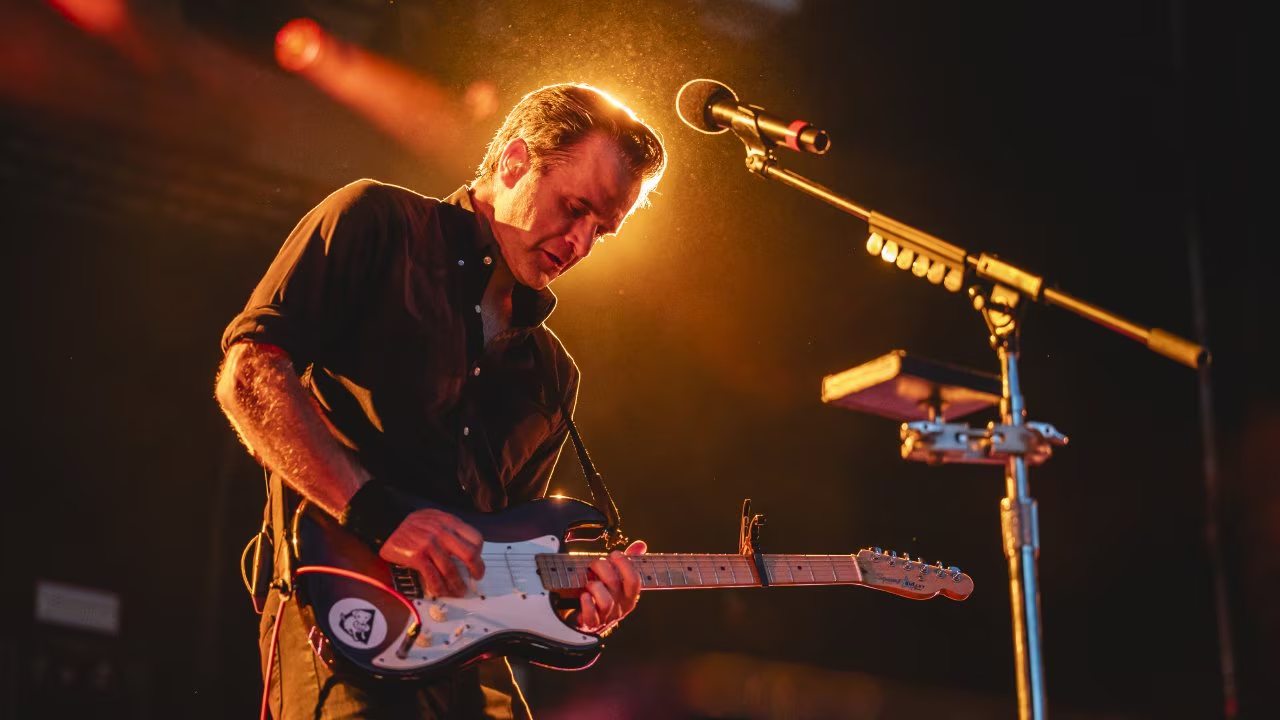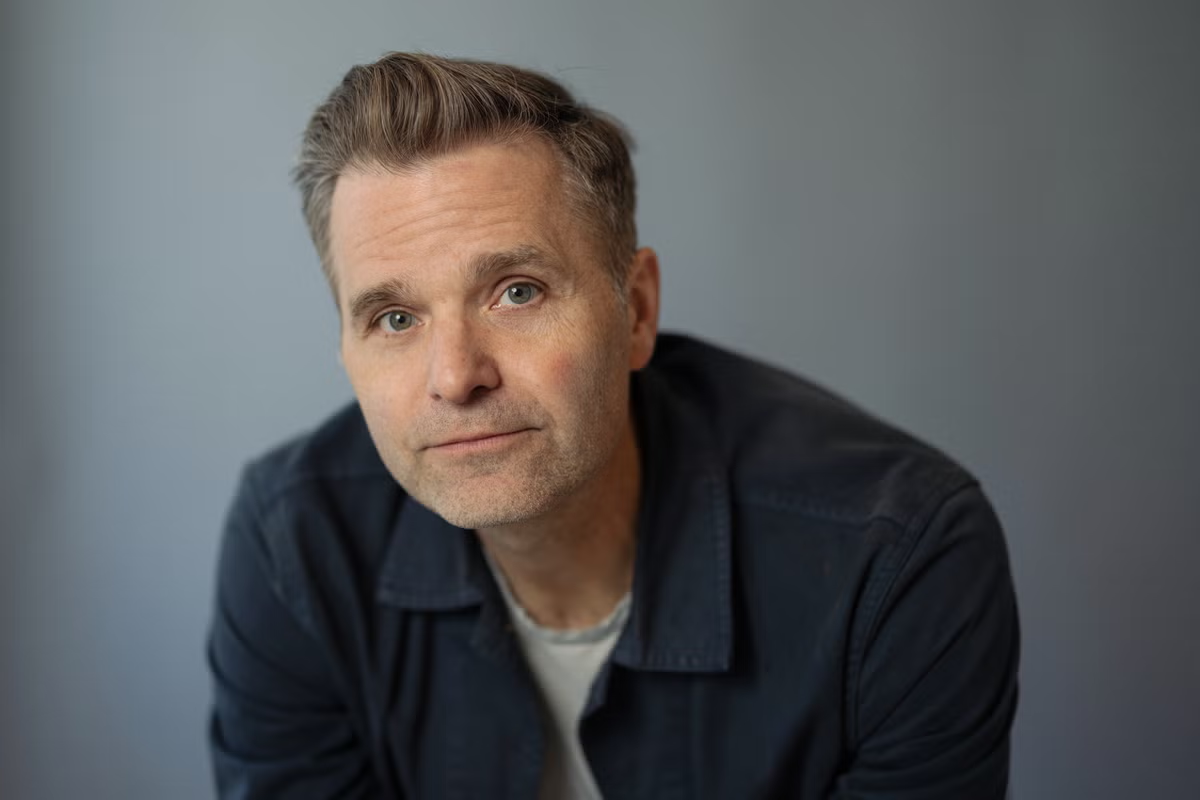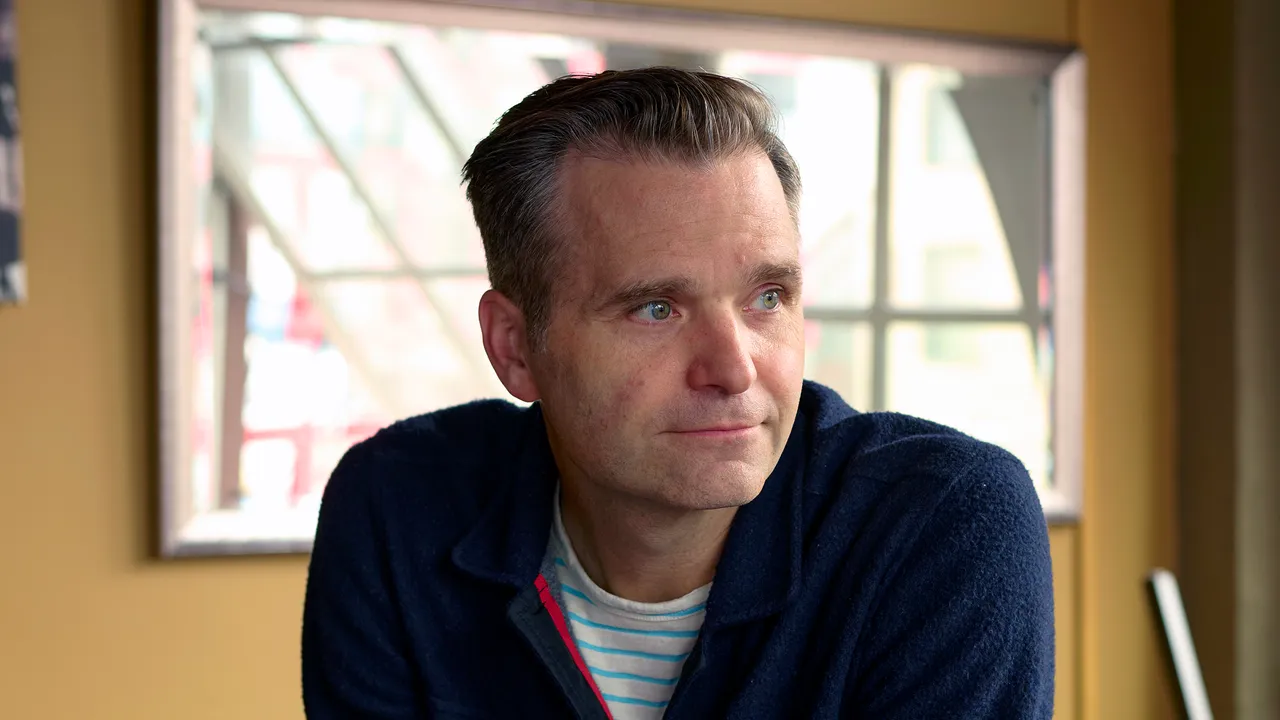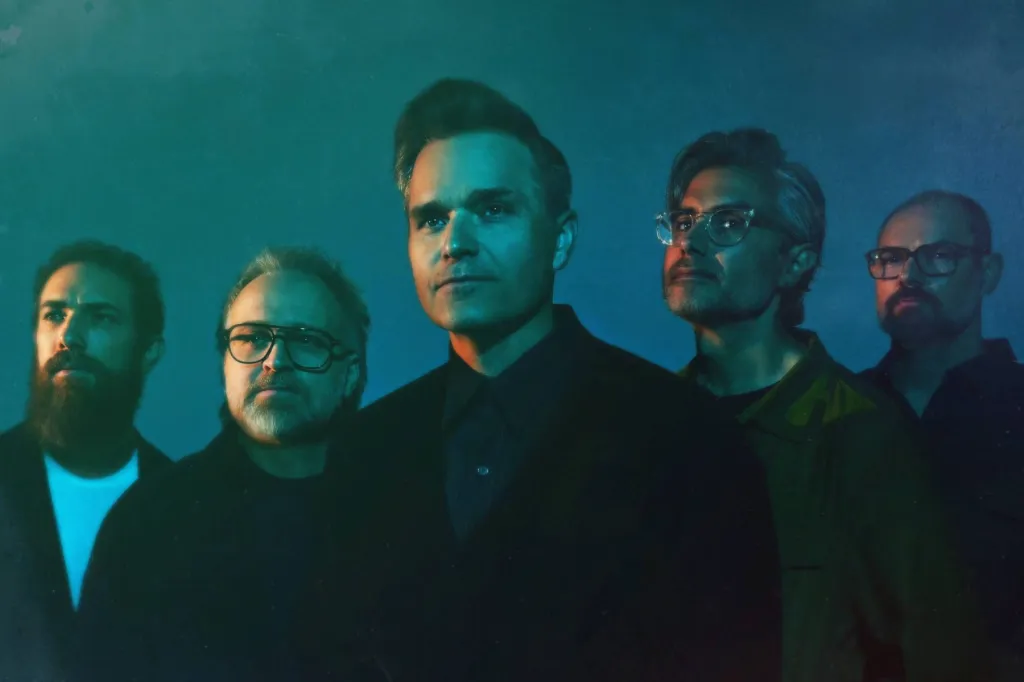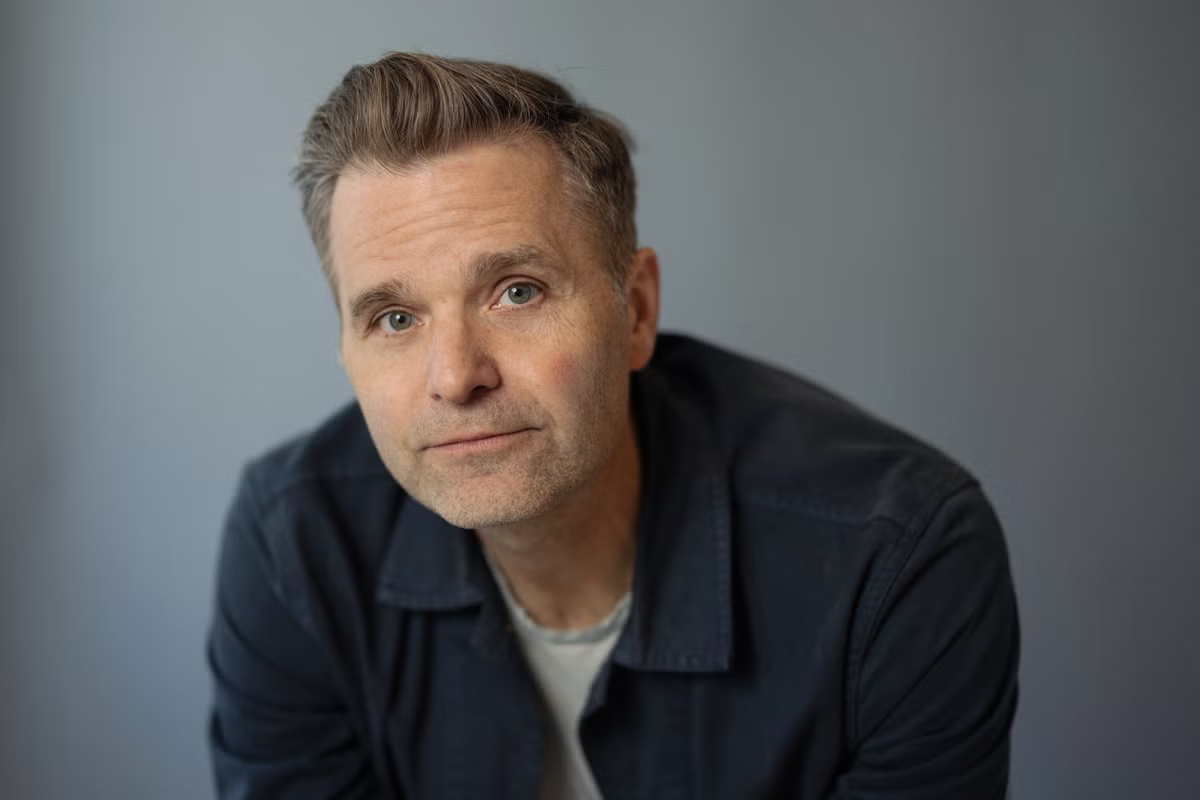
If anyone can write a great breakup album, it’s Ben Gibbard. For almost 30 years, the Death Cab for Cutie frontman has channelled misery into such emotionally ruinous songs as 2003’s “Tiny Vessels”, with its cool and cruel detached lover, to “The Sound of Settling”, a lesson in unending, unrequited pining. Today, though, Gibbard is reluctant to call the band’s new project a “divorce record”, despite the fact that, yes, it was written in the aftermath of his marriage ending. “Oftentimes those records are someone saying, ‘I’m going to bring this into the court of public opinion and tell my one-sided story about how this went down,’” he says. “You know the phrase, only a fool goes to court thinking the jury are bound to see it their way?”Gibbard is the first to admit he’s played the fool before. “I’ve certainly taken that tactic before, when I was younger,” he says, citing 2015’s Kintsugi, written in the wake of his split from actor and musician Zooey Deschanel – to whom he was married for three years – as the most obvious example. “I’ve long since realised that painting yourself as the aggrieved narrator... well, there is a time and place for that, but at a certain moment in life, you’ve got to grow out of it.” Anyway, he adds wryly, “Does anyone really think the biggest pop star in the world is always the innocent bystander in their own life? I don’t think so.”Nearing 50, Gibbard has grown out of it and then some. Released last week, the band’s 11th album, I Built You a Tower, opens with mellow, melancholic guitar and the line: “Please forgive me.” It’s as much a plea to himself as it is to the person he’s speaking to. Later, on the jittery “Punching the Flowers”, Gibbard sings of words “sharpened like axes” that a man swings around “blindly”. Lyrically, Gibbard appears ready to look inward, to hold his hands up and own his mistakes. It’s not you, it’s me, he seems to be saying. Or at the very least, it’s both of us. Death Cab for Cutie have released their 11th album, ‘I Built You a Tower’ (Provided by label)The songs are no less potent for their maturity; age has given them a hard-won patina. Even after they aged out of it, Death Cab have always tuned into that high frequency of youth, when everything is either the end or the beginning of the world. The confessional lyricism and assured sound of their Grammy-nominated fifth studio album Plans, released in 2005, proved to be their breakthrough from the Pacific Northwest music scene. It was also the first record they released on a major label (Atlantic), and the first time they’d recorded outside of their hometown. “I felt less comfortable in my own skin in the world,” Gibbard says of their cultural “peak”, a time when their music was inescapable thanks to relentless syncing by hit shows such as The OC, Grey’s Anatomy, and One Tree Hill. “Trying to go about my life the way I’d gone about it before, I felt that more people were staring at me in places I was not used to being stared at. It’s kind of a headf*** when you feel like your presence is a topic of conversation whereas before nobody gave a s***.” Increasingly, celebrity felt like anathema to Gibbard, both living his life, and later, making music. Those feelings were amplified when he began dating Deschanel. Pre-New Girl but post-500 Days of Summer, she was considerably more famous than Gibbard, who had to adapt. Gibbard with Zooey Deschanel in 2009 (Getty)“Without going into detail, there were some scary people around, and that changed how I had to live my life,” he says. “I felt like I was living my life in public like a Secret Service agent.” When they went out on dates, Gibbard would locate the exits by second nature; he and Deschanel had code words for emergencies. Enjoy unlimited access to 100 million ad-free songs and podcasts with Amazon MusicSign up now for a 30-day free trial. Terms apply.Try for freeADVERTISEMENT. If you sign up to this service we will earn commission. This revenue helps to fund journalism across The Independent.Enjoy unlimited access to 100 million ad-free songs and podcasts with Amazon MusicSign up now for a 30-day free trial. Terms apply.Try for freeADVERTISEMENT. If you sign up to this service we will earn commission. This revenue helps to fund journalism across The Independent.That feeling of being surveilled 24/7 invariably had an impact on Gibbard’s songwriting: “When you’re with someone who’s recognisable, you start taking on some of that reticence as well. I found myself deferring to her level of reticence because, well, it was different for her than it was for me. I think I retreated as a writer as a result of that.” We’re speaking over a video call, but Gibbard’s screen is dark. “I’m a pacer when I talk,” he explains, and I get the sense that he is more open because of it. The absence of video, though, does mean I have to rely on recent photographs to know that he is no longer sporting that age-old emo signifier: the side fringe. Instead, the hairs sweep up, optimistic and hopeful. Without going into detail, there were some scary people around, and that changed how I had to live my lifeAs we get older, we find new ways of coping. I Built You a Tower refers to Gibbard’s penchant for compartmentalisation, a process in which he assigns the memories and people in his life – whether wonderful or painful – a place in his psychological skyline. Death Cab, for example, looms large on the horizon, like a skyscraper. The tower was erected after his last marriage: “But sometimes the memories, the people, find their way out of the structures. You hear a song, or smell something, and all of a sudden you’re back in that time of your life,” he says. The album’s title track explores exactly this: “’Cause I needed you/ I needed you contained.” But nothing stays contained for ever. His second divorce, from tour manager and photographer Rachel Demy, spilled over into a 2023 anniversary tour for both Death Cab and Gibbard’s other longtime band, Postal Service. In some ways, performing became a salve, he says. “To be back in my 26-year-old self, so to speak, for two hours a night, and play these songs from a very different time in my life...” Other times, the clashing of his two lives felt disorientating: “One moment you’re emailing with a lawyer, dealing with the ugly elements of divorce – I wouldn’t recommend it, of course – and then, all of a sudden, it’s time to go on stage.’” It helped that everyone – from his bandmates to the crew – knew what was going on. “Everyone understood the pressure that was on me,” he says. “The timing of it was not ideal, but at the same time, there really couldn’t have been a better group of people to be around.” In truth, playing anniversary shows is weird even without the divorce element, says Gibbard. Coming face-to-face with your 20-year-old self isn’t always flattering. But it can also be funny. “I’ll be listening to songs on the first record about some girl I dated for two months, and it’ll be like, ‘Oh my God! I can’t believe this happened!’ and then you get older and it’s like, yeah, s*** happens. Life is a series of s*** happening. That’s how life works.” Gibbard: ‘The girl I wrote “Tiny Vessels” about... We laugh about it now’ (Getty)Gibbard sees the gulf between himself now and himself back then as a sign of emotional growth, reassurance that he isn’t the same mercenary lover who whined “you are beautiful but you don’t mean a thing to me” on “Tiny Vessels” more than 20 years ago. “The girl I wrote that song about... We laugh about it now,” he says. “ I just think, ‘Oh my God. I was really being such a little b**** about this.’”On I Built You a Tower, he’s as candid as he was when the band first started. It’s their first release since going independent again – the original plan was one more album with Atlantic, until a personnel change prompted them to leave. “It was like an episode of Succession,” says Gibbard, recalling how former CEO Julie Greenwald left in 2024. “This nepo baby [Elliot Grainge, son of Universal Music Group CEO Lucian Grange] was given the label,” he says critically. “We took one look at this guy’s picture and we were like, ‘This guy didn’t have a Transatlanticism phase in college. This guy didn’t rock with Plans. I think we can safely say that this isn’t our guy.” And so they left. At Anti, Death Cab are in good company with fellow artists MJ Lenderman, Waxahatchee, Fleet Foxes, Slow Pulp, The Beths. “I mean, f***ing Tom Waits,” continues Gibbard. “It felt like the perfect place for us. We’re not being put out to pasture on a retirement label.” He has no interest in giving in to the pull of Noughties nostalgia; beyond the lyrical evolutions, I Built You a Tower is expansive and diverse in sound, too. That said, he knows what it means to fans to hear their old stuff live, because he is a fan first and foremost himself. “What’s the point of playing a show if you’re not going to honour the connection that people have with that music?” he asks. It’s further evidence of how Gibbard has matured. He cares how the other side feels.‘I Built You a Tower’ is out now via Anti
Death Cab’s Ben Gibbard: ‘I felt like I was living life like a Secret Service agent’
Across a career built on lyrical introspection, Death Cab for Cutie frontman Ben Gibbard has rarely shied away from emotional candour. The indie rocker speaks to Annabel Nugent about growing up, resisting the safety of nostalgia – and why he doesn’t like the term ‘divorce album’
TL;DRAI
Questo articolo esula dallo scope di Warptech Tech News. È una intervista culturale su un musicista e non ha rilevanza per decisioni tech, stack, AI, o mercati digitali che interessano manager IT e CTO. Non rientra nei nostri criteri editoriali. Se ritieni che ci sia un angolo tech/trend rilevante (es. music streaming, AI in creative industries), segnalamelo e rivediamo la decisione.
1,618 words~7 min read