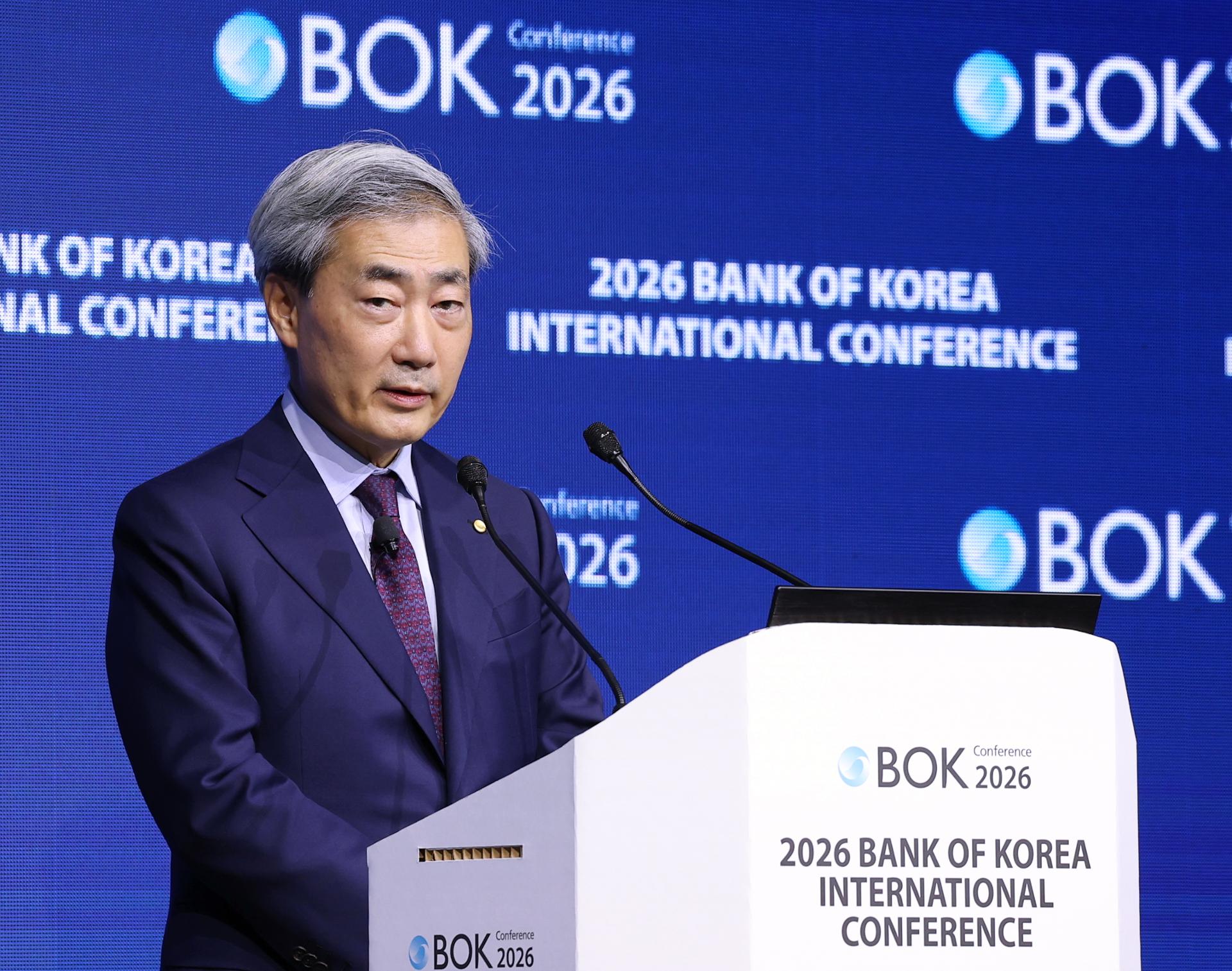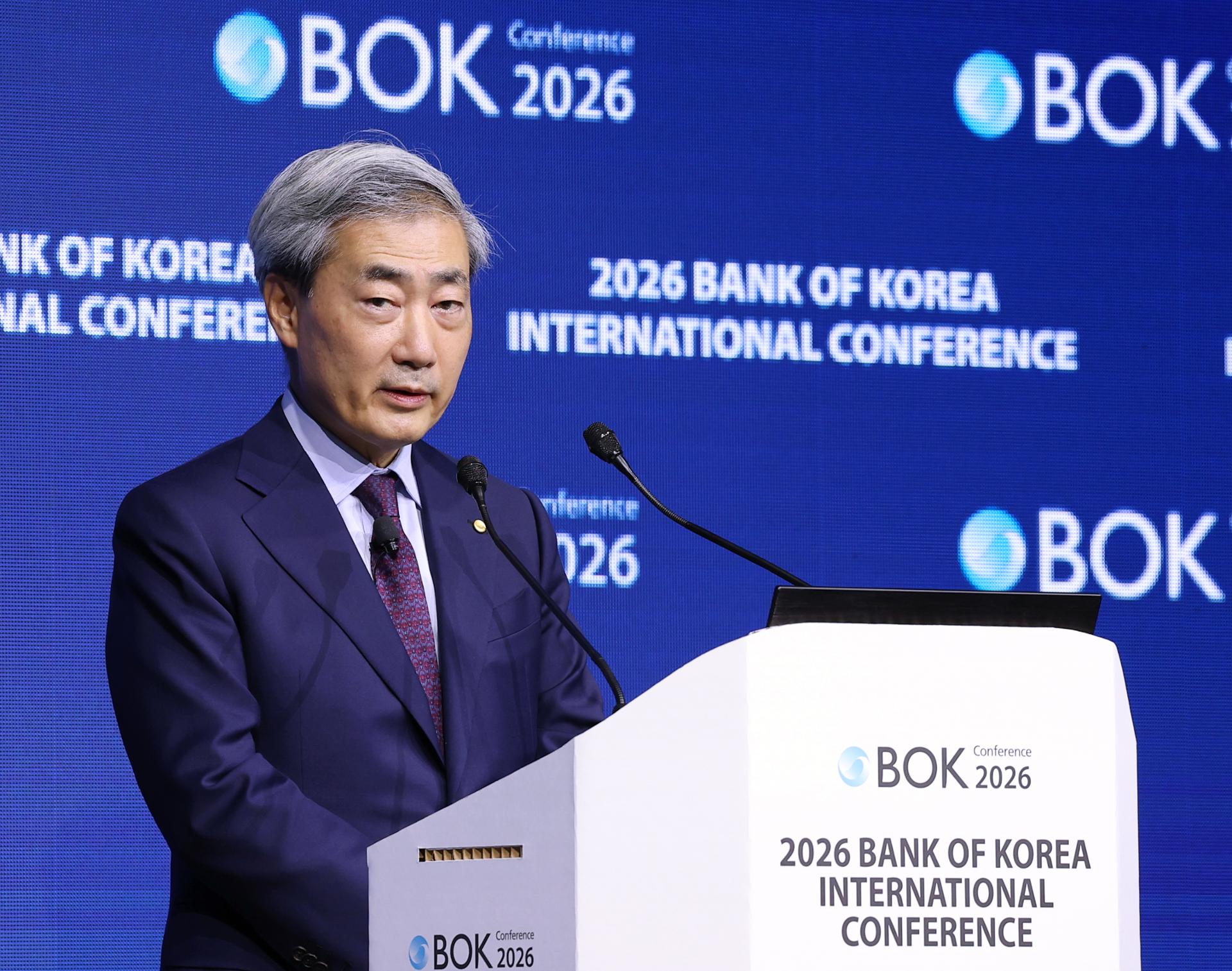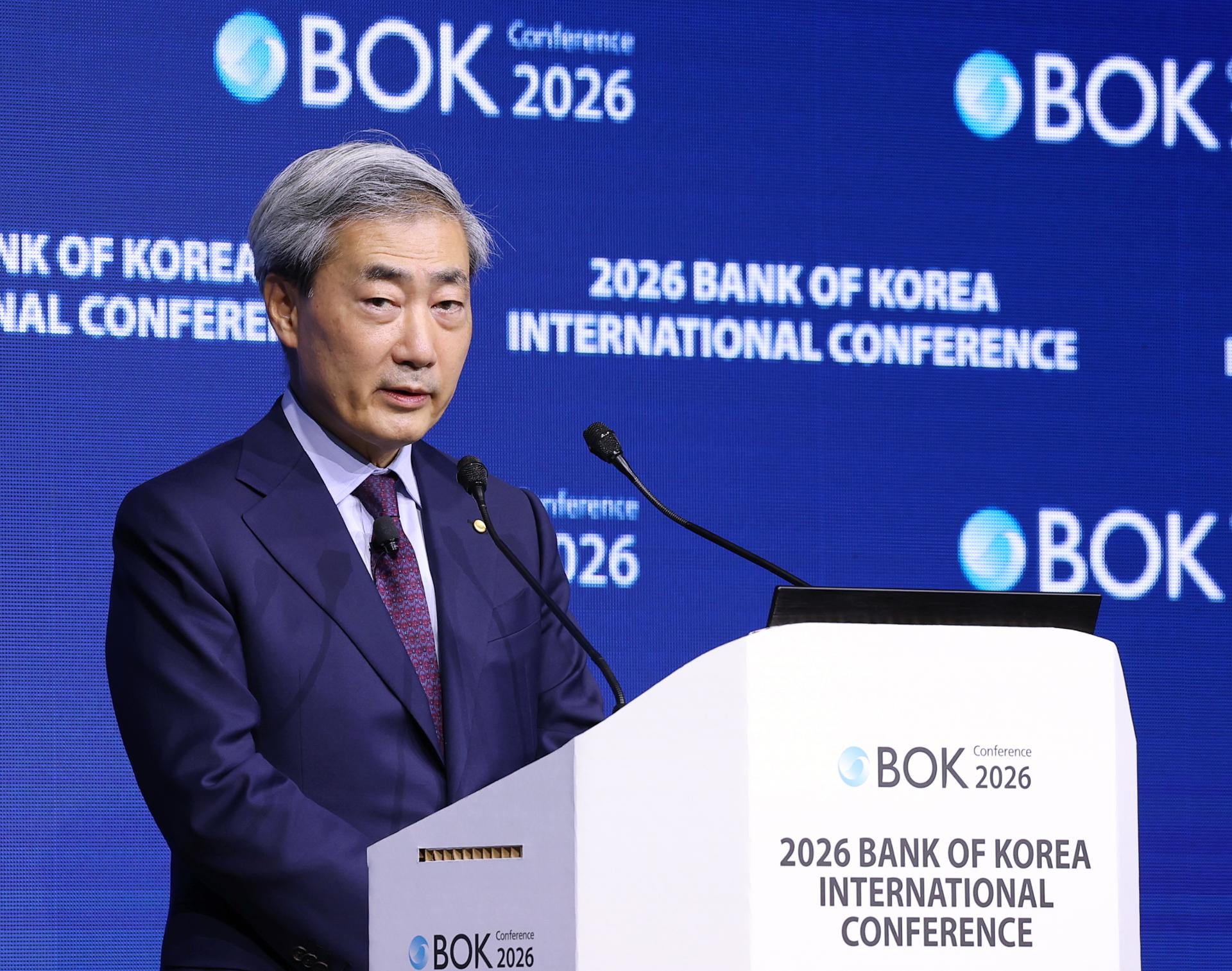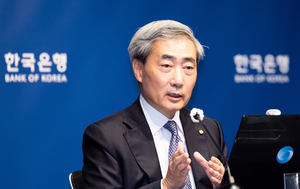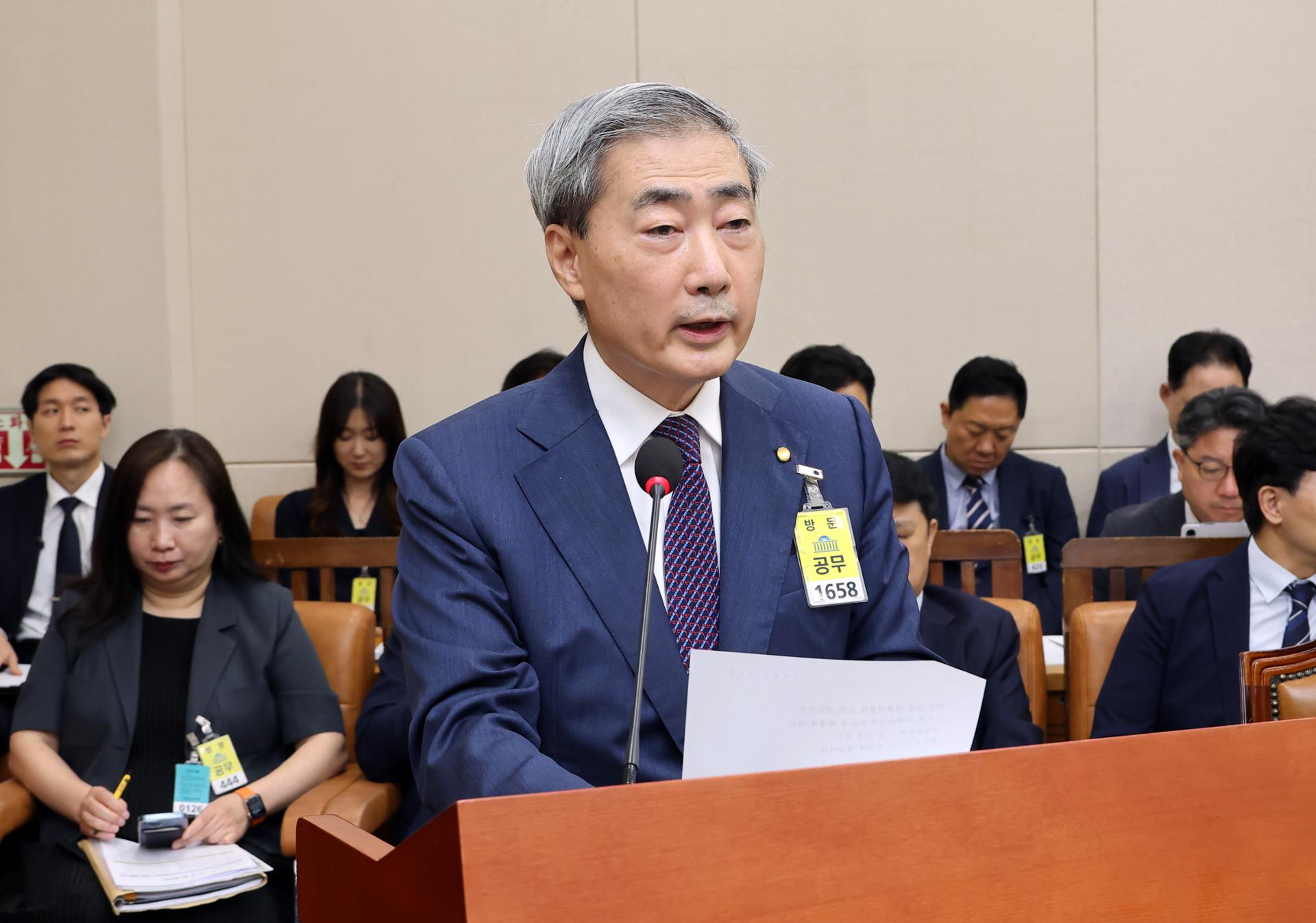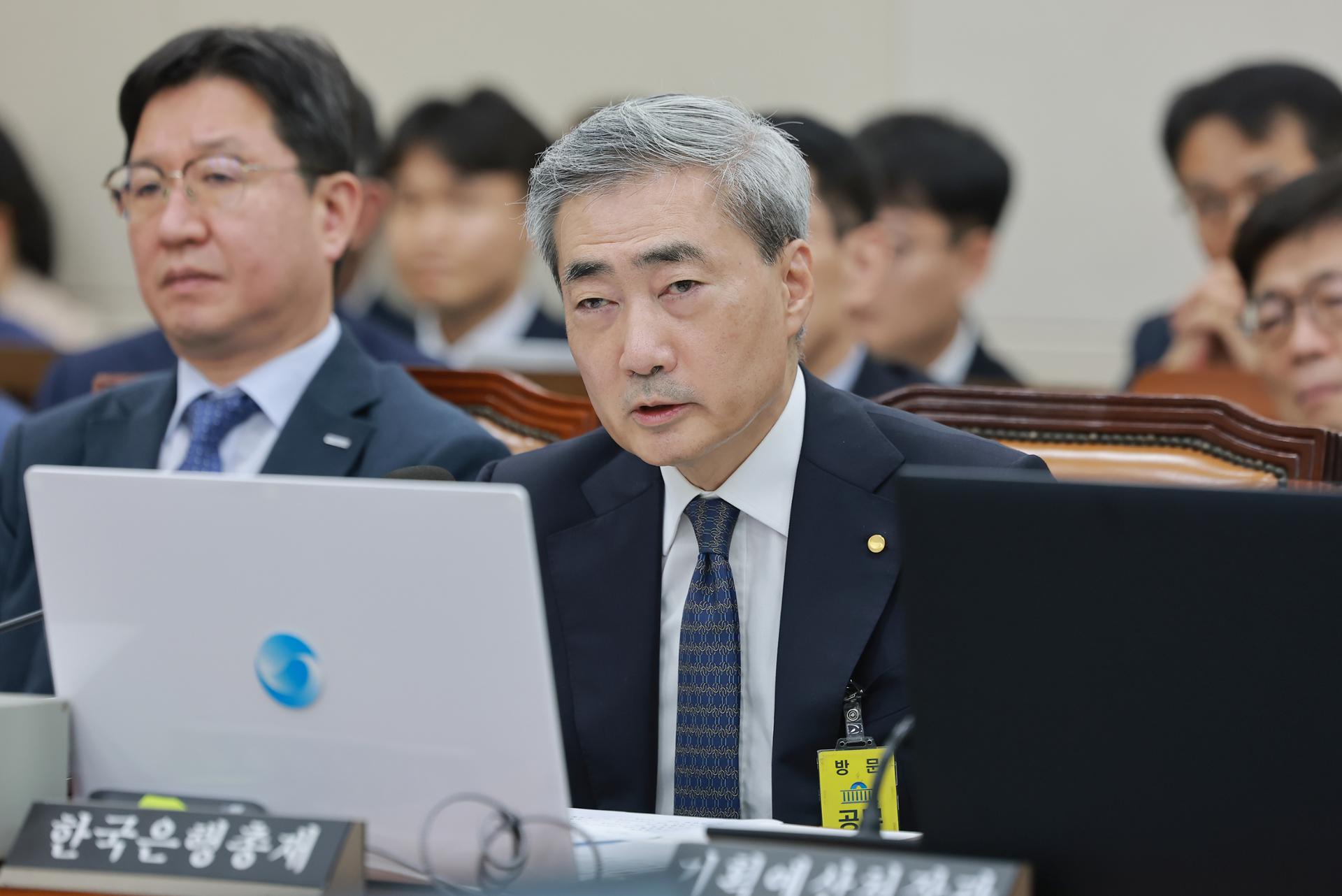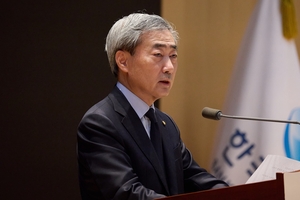
'Inflation likely to remain above target for considerable period,' Shin says in BOK anniversary speech Shin Hyun-song, governor of the Bank of Korea, delivers a speech at a ceremony marking the central bank’s 76th anniversary at its headquarters in Seoul on Friday. (BOK) Shin Hyun-song, governor of the Bank of Korea, reiterated the need to raise interest rates, citing persistent inflationary pressures from the Middle East war and rising housing prices.Speaking at a ceremony marking the BOK’s 76th anniversary in Seoul, Shin said growth, inflation and financial stability indicators all point to the need for further policy tightening.“Data received since the May monetary policy meeting have confirmed this assessment,” he said. “While monetary policy often involves trade-offs among policy objectives, such tensions are currently limited.”"Therefore, it is necessary to focus on price stability and raise interest rates without delay," he said.On inflation, Shin said prices of frequently purchased goods and services, which have a greater impact on households’ inflation expectations, are rising faster than headline consumer prices.He said inflation is likely to remain above the central bank’s inflation target for a considerable period, although government measures to stabilize prices may help ease upward pressure.“The burden of inflation tends to fall more heavily on low-income households, making preemptive efforts to stabilize prices all the more important,” Shin said.Acknowledging concerns that higher interest rates could increase debt-servicing costs for households and businesses, Shin said targeted support through fiscal policy would be a more effective way to address such difficulties.Shin also warned of overheating in the housing market.“In the Seoul metropolitan area, home prices, along with jeonse deposits and monthly rents, continue to climb sharply, while expectations for further gains have strengthened again,” he said.He called for continued efforts to reduce the concentration of people and resources in the capital region and encourage capital flows into more productive sectors.Shin also warned against excessive borrowing to invest in stocks, saying heavy leverage could amplify market volatility and result in significant losses when prices correct.On the foreign exchange market, Shin said the won is expected to stabilize gradually, as the country’s large current account surplus increases demand for the local currency through corporate tax payments and domestic investment.However, he warned that persistent volatility in the won-dollar exchange rate, driven by factors such as developments in the Middle East, could add to inflationary pressure by raising import prices.Shin said the central bank would work with relevant authorities to improve foreign investors’ access to the won market through measures including 24-hour trading and the development of an offshore won settlement system. The goal is to shift offshore nondeliverable forward trading demand into the domestic market, he added.On the economy, Shin said South Korea is expected to maintain solid growth as the semiconductor boom continues and domestic demand recovers, supported by rising incomes and stronger investment.He cautioned, however, that growth remains heavily dependent on the information technology sector and that disparities across industries persist.“We need to continue efforts to reduce disparities across regions, generations and income groups,” he said.Shin stressed the importance of expanding investment to enhance the country’s future growth potential, supported by stronger fiscal capacity and improved corporate finances.Quoting the saying “repair the roof while the sun is shining,” Shin said now is not the time for complacency, as the global economic environment is changing rapidly amid advances in artificial intelligence technologies.
BOK chief signals further rate hikes as inflation risks persist
Shin Hyun-song, governor of the Bank of Korea, reiterated the need to raise interest rates, citing persistent inflationary pressures from the Middle East war an
557 words~3 min read