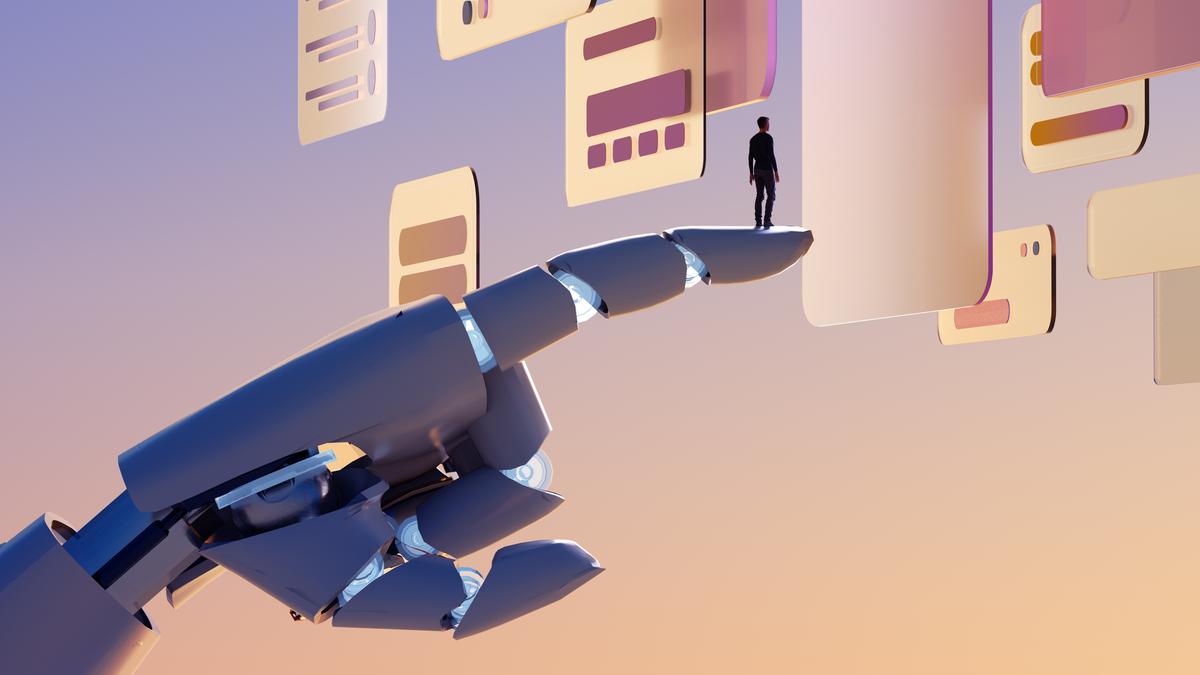
Is AI becoming a part of the cultural inheritance of young writers before they have developed a voice of their own? What happens when a generation’s first editor is a machine? In many cases, writers use AI not to cheat but to discover what “good writing” looks like. India has millions of English-language learners and there is an enormous demand for upward mobility through English. For many such students and young professionals, AI is becoming tutor, editor, writing coach and translator.But what does this mean for originality and creative risk-taking? Excessive dependence on AI could produce writing that is technically polished but lacking in distinctiveness. Emerging writers may bypass the difficult but essential process of developing their own voice, learning instead to imitate a large language model’s version of what good writing should sound like. We ask authors, publishers and artists to weigh in on the debate.Chiki Sarkar, Publisher, Juggernaut Books
“People come to Ruskin Bond because Ruskin Bond sounds like himself and not like anyone else, or they go to, say, the nutritionist Rujuta Diwekar’s voice because she absolutely and utterly sounds like herself, with her sarcasm and humour. In general, the writers that people read have their own way of expressing themselves. So if there is a professional writer, they are going to sooner or later have to develop their own style. If AI or Tolstoy or George Orwell or Khushwant Singh is their first teacher, what does it matter? AI is perfectly competent. To find your voice is to find your voice... I can’t imagine AI will generate a huge readership for you, unless there’s something else that attracts the reader”Aanchal Malhotra, writer and oral historian