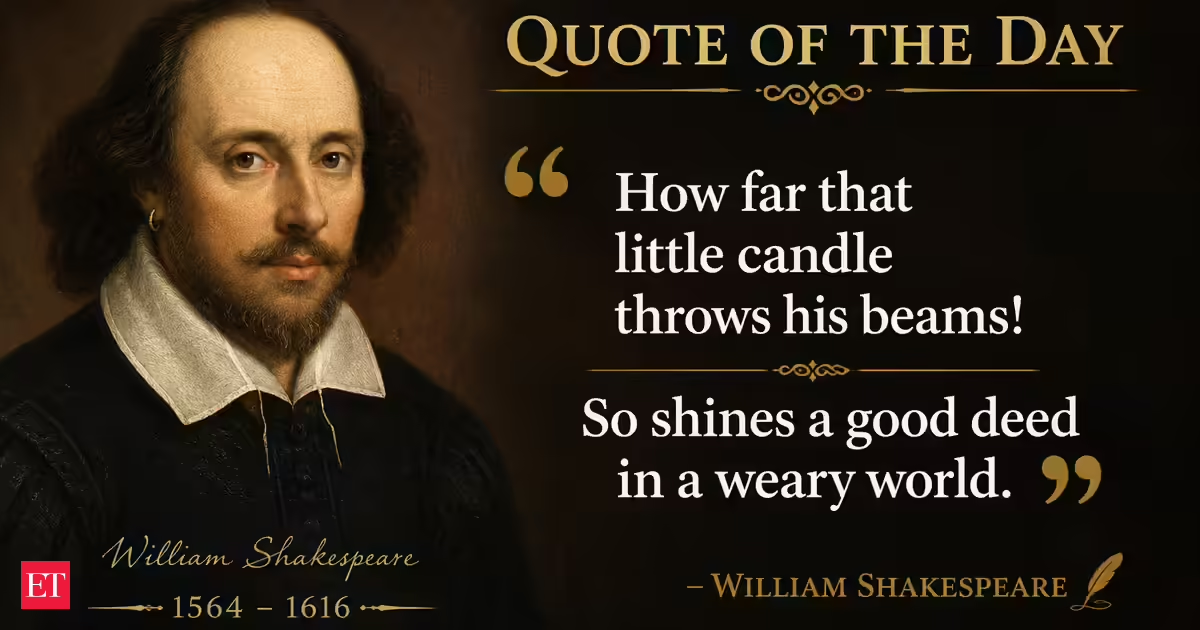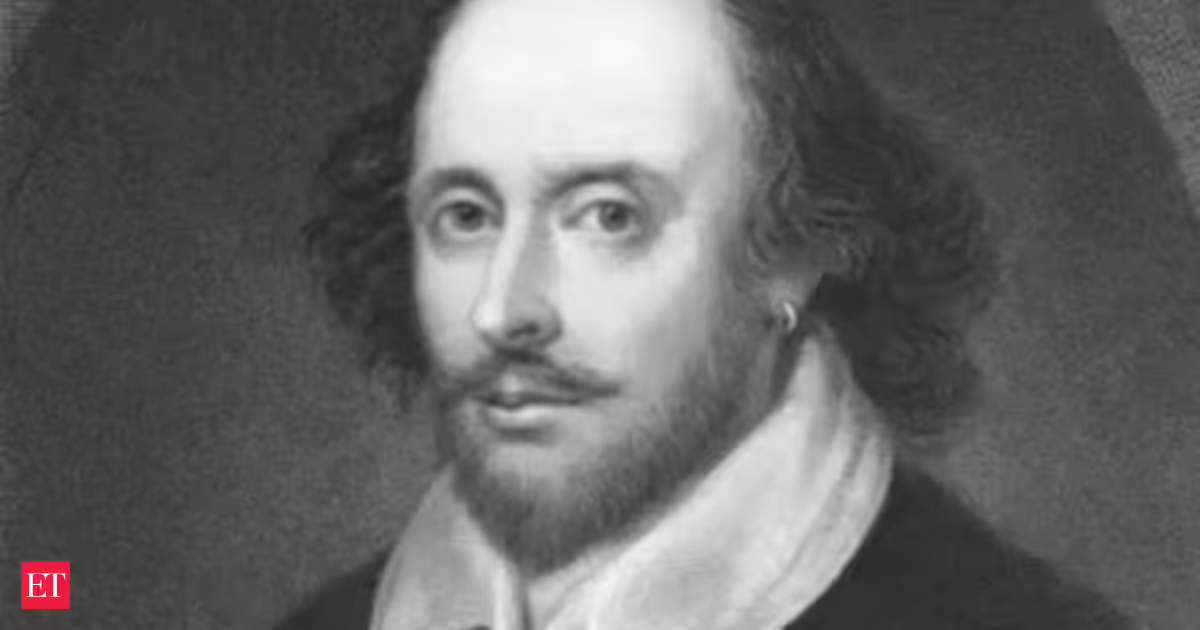
Quote of the Day by William Shakespeare: In a world where self-doubt often dominates decisions, Be not afraid of greatness reminds individuals that success is not a single path but a layered journey shaped by courage, opportunity, and inner belief. Shakespeare’s words—“Be not afraid of greatness. Some are born great, some achieve greatness, and others have greatness thrust upon them”—continue to echo across centuries because Be not afraid of greatness captures a universal truth about life’s unpredictability and human rise.Be not afraid of greatness speaks directly to students, professionals, entrepreneurs, and leaders who struggle with confidence while facing uncertainty. The phrase Be not afraid of greatness reflects a mindset shift from fear to acceptance of possibility. It suggests that greatness is not reserved for a chosen few but distributed across different life circumstances. Be not afraid of greatness also highlights that timing, environment, and action together shape destiny in ways often beyond control. Yet, Be not afraid of greatness insists that awareness and response define who ultimately succeeds.“Be not afraid of greatness. Some are born great, some achieve greatness, and others have greatness thrust upon them.” — William ShakespeareThis timeless idea speaks directly to people searching for success quotes, motivational quotes, and life inspiration. It explains that greatness is not fixed by birth alone. It grows through courage, action, and the ability to respond when life presents opportunity. In modern life, where competition is high and uncertainty is constant, this quote becomes a reminder that fear should never control decisions. True success begins when doubt ends and action starts, even in small steps.The deeper meaning of “Be not afraid of greatness” lies in its acceptance of different life paths. Some people inherit position, some achieve it through hard work, and some suddenly receive opportunity without warning. Yet, the quote teaches that greatness is defined by how one handles these situations. It connects strongly with leadership lessons, career growth, and success psychology.Meaning of the Quote of the Day: Be not afraid of greatness The meaning of “Be not afraid of greatness” is deeply rooted in the idea that success is not limited to birth, background, or privilege. It reflects a universal truth that greatness comes in different forms—some people are born into it, some build it slowly through hard work, and some encounter it suddenly through life-changing opportunities. Shakespeare uses this idea to show that human life is unpredictable, and true identity is shaped not by where we start, but by how we respond when opportunity appears. In modern terms, it connects strongly with success mindset, leadership growth, and personal development, reminding us that fear often blocks potential more than lack of ability.At a deeper level, the quote teaches acceptance of life’s uncertainty and responsibility. When greatness arrives—whether expected or unexpected—it demands courage, discipline, and awareness. It is not just about achieving status but about handling it wisely. This meaning is especially relevant today in a world driven by competition, career pressure, and constant comparison. Shakespeare’s message encourages people to move beyond hesitation and self-doubt, and instead trust action, timing, and effort. Ultimately, the quote reminds us that greatness is not rare—it is often already within reach, waiting for the courage to be embraced.William Shakespeare (1564–1616) was an English playwright, poet, and actor, widely regarded as one of the greatest writers in the English language and world literature. He was born in Stratford-upon-Avon, England, and became famous for his powerful plays, rich language, and deep understanding of human emotions like love, ambition, jealousy, and power.Shakespeare wrote around 39 plays, including well-known works such as Hamlet, Romeo and Juliet, Macbeth, and Othello. He also wrote 154 sonnets and several long narrative poems. His work is still performed and studied globally because it explores timeless human struggles and universal truths. Shakespeare’s influence on English vocabulary, storytelling, and drama is so strong that he is often called the “Bard of Avon.”William Shakespeare, one of the most influential writers in human history, crafted Be not afraid of greatness within his play Twelfth Night. His works consistently explored human emotion, ambition, identity, and fate. Be not afraid of greatness reflects Shakespeare’s deep observation that life is governed by both chance and choice.Shakespeare’s success came not from privilege but from creativity, persistence, and understanding human behavior. Be not afraid of greatness mirrors his own journey as a playwright who rose from modest beginnings to global recognition. His ability to portray kings, fools, lovers, and warriors with equal depth shows why Be not afraid of greatness remains relevant across cultures and centuries.In historical interpretation, Be not afraid of greatness also reflects the social structure of Shakespeare’s time, where birth often determined status. Yet, Be not afraid of greatness challenges that rigid system by suggesting that greatness can appear unexpectedly or be created through effort. This idea was revolutionary for its era and continues to influence modern thinking.Through centuries, Be not afraid of greatness has been quoted in leadership discussions, academic studies, and motivational teachings. Its endurance proves that Shakespeare did not merely write literature—he captured human truth in its purest form. Be not afraid of greatness continues to serve as a bridge between historical insight and modern aspiration.Other Famous Quotes by William Shakespeare “To be, or not to be: that is the question.” “All the world’s a stage, and all the men and women merely players.” “The course of true love never did run smooth.” “This above all: to thine own self be true.” “Some are born great, some achieve greatness, and some have greatness thrust upon them.” These famous William Shakespeare quotes reflect deep human truths about life, identity, love, and destiny. They continue to guide modern thinking on success, relationships, and self-awareness. Even today, Shakespeare’s words are widely searched in motivational quotes, leadership inspiration, and life wisdom topics because they connect timeless emotions with real human experiences.
Quote of the Day by William Shakespeare: “Be not afraid of greatness. Some are born great, some achieve greatness, and others have greatness thrust upon them.” what does true greatness really mean in today’s success-driven world of leadership and ambition?
Quote of the Day by William Shakespeare: William Shakespeare quotes remain among the most searched topics in “motivational quotes,” “life wisdom quotes,” and “success mindset inspiration” across Google Trends today. These timeless words reflect leadership thinking, human behavior, love, truth, and destiny in a simple yet powerful way.
971 words~4 min read