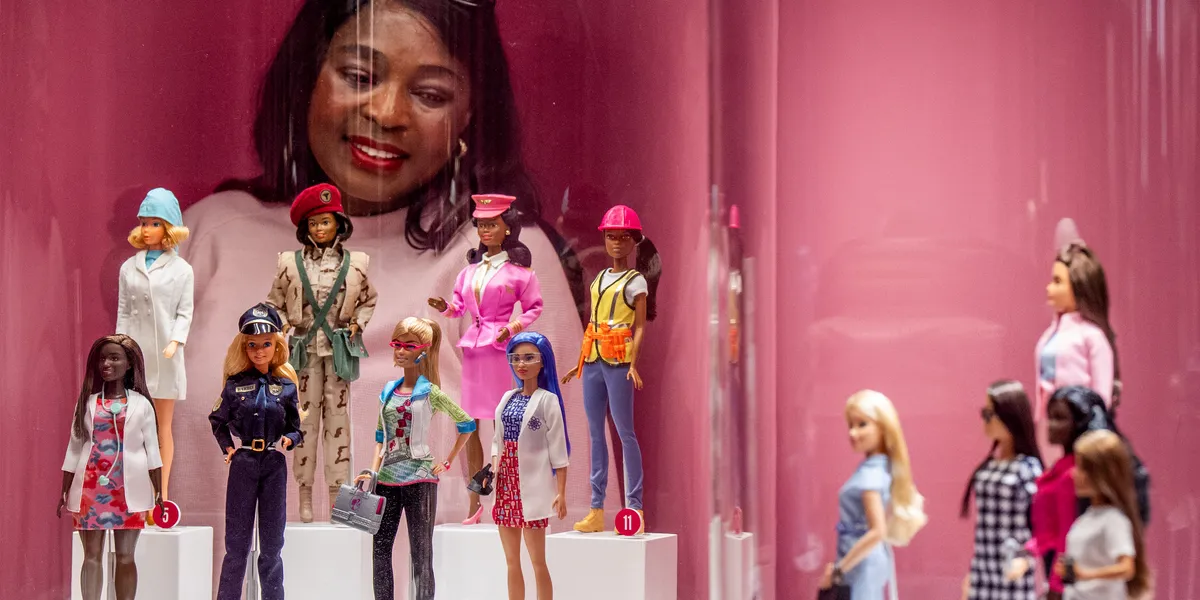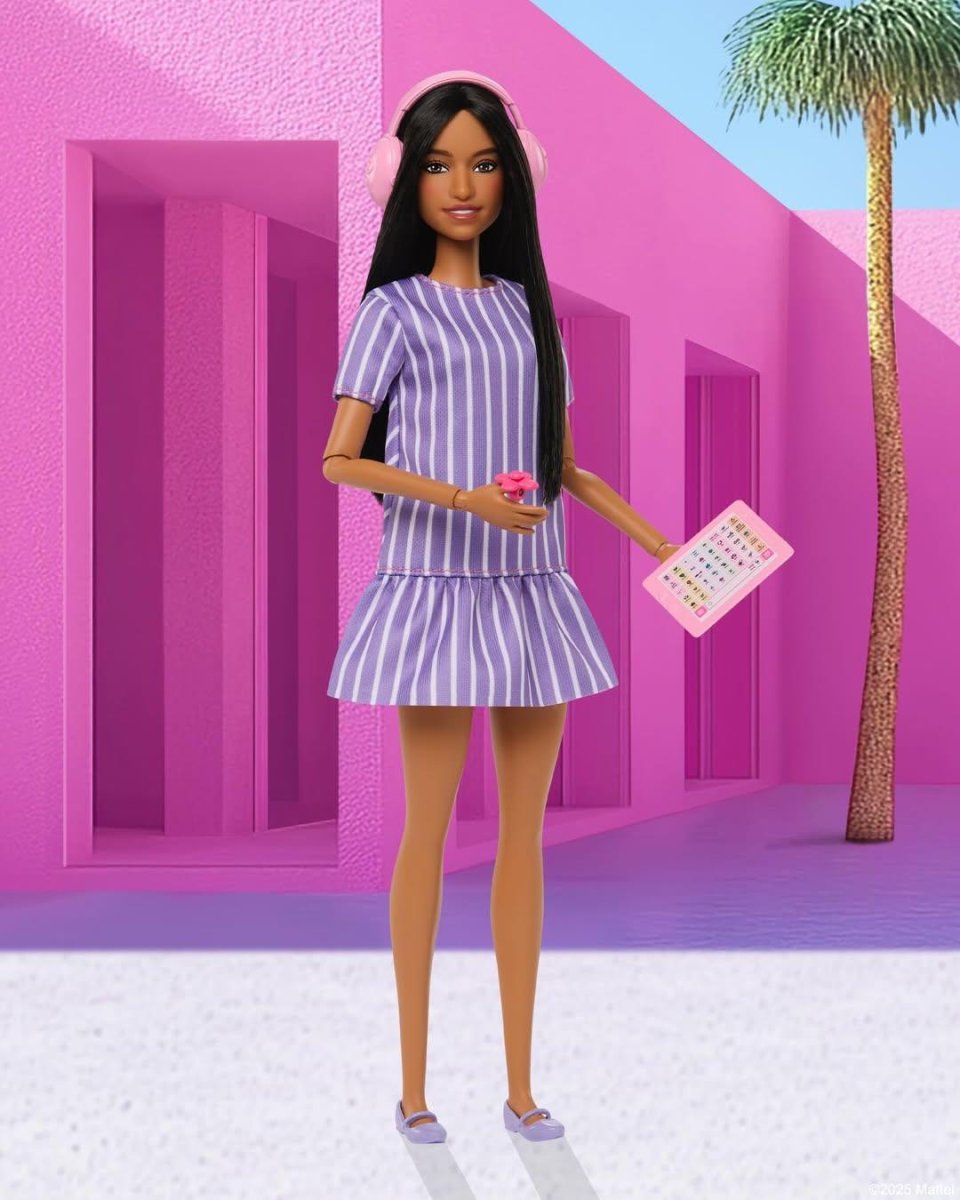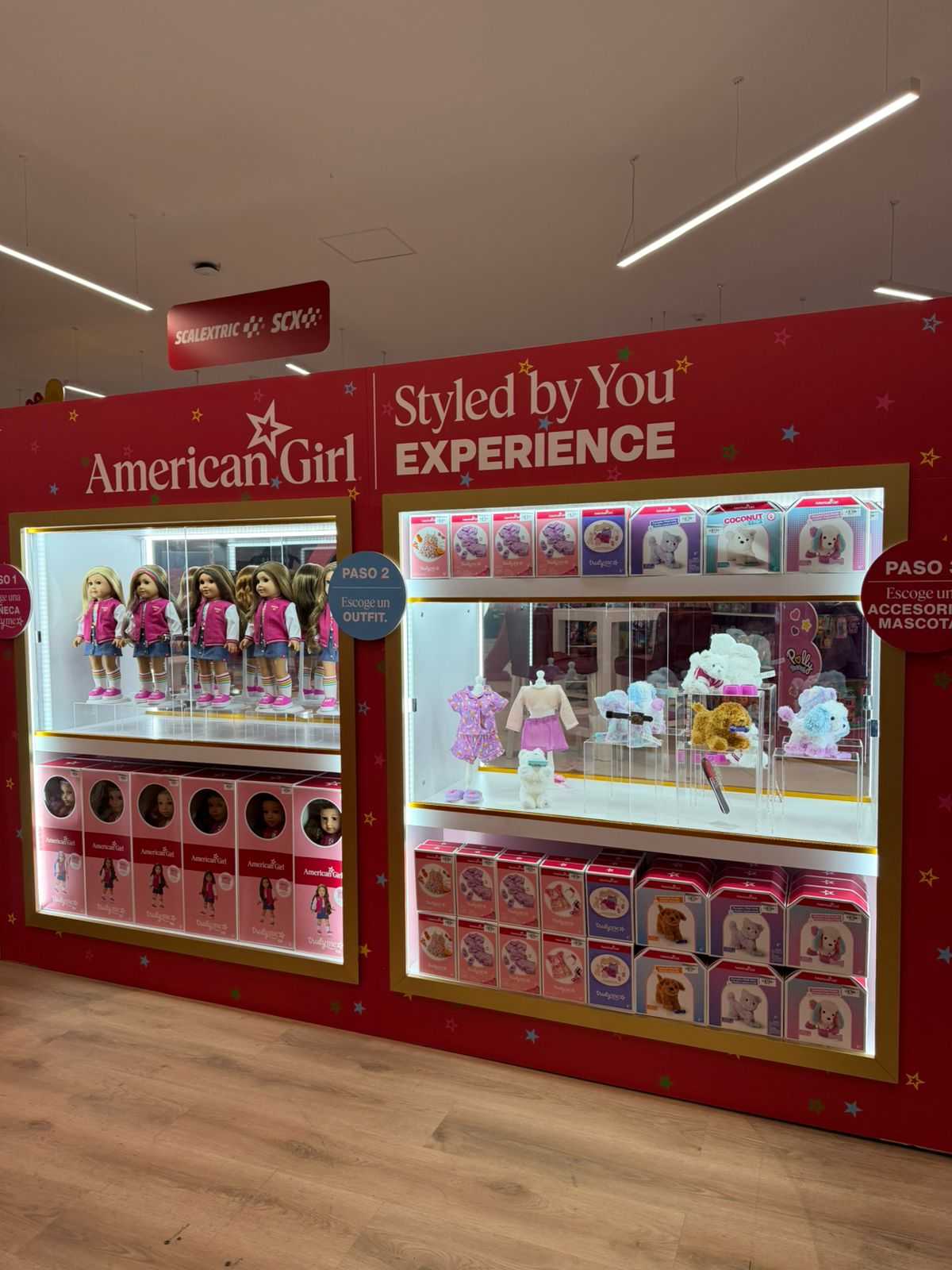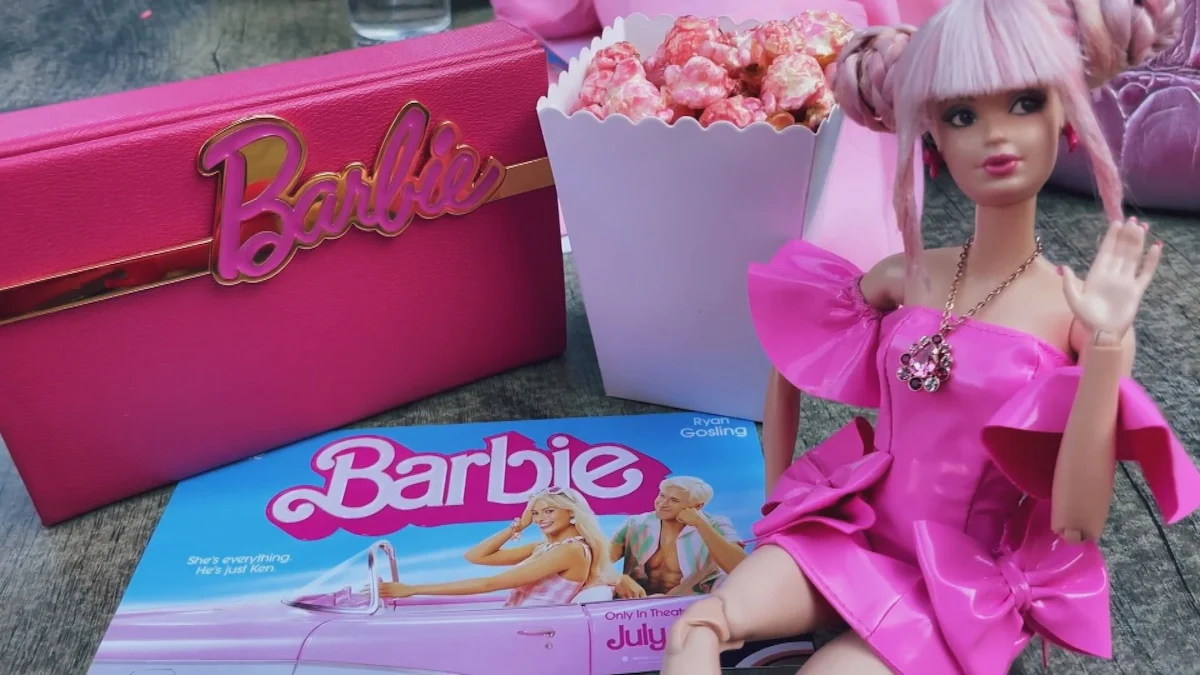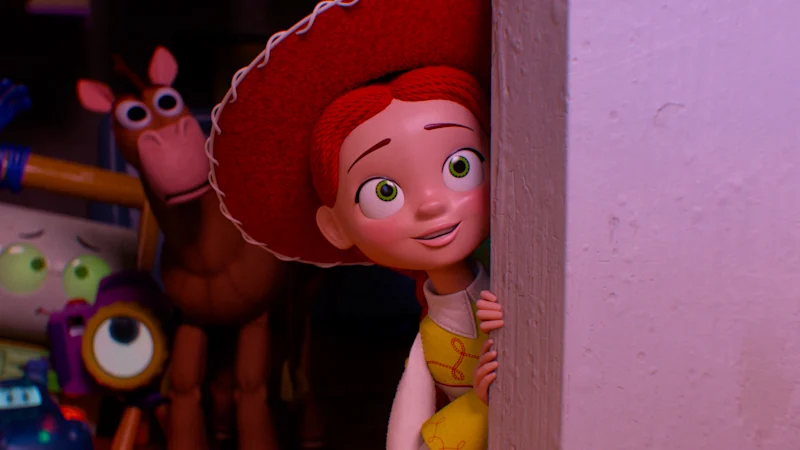
In a corridor deep in the cavernous headquarters of the American toy giant Mattel, a long timeline spans several sections of wall. On it, some seemingly unremarkable dates: 1947, when Mattel launched the plastic Uke-A-Doodle ukulele; or 1965, when the See-’n-Say came along, with its memorable: “The cow says … moo!”Elsewhere, the 1959 debut of Barbie, the world’s most famous fashion doll, and the 1961 debut of her dashing beau, Ken, are recorded. There was 1968, when Hot Wheels were launched in a race against Britain’s Matchbox cars. Or 1992, when Mattel acquired the card game UNO, created in 1971, and now one of the world’s most enduring family games.Perhaps the most interesting date is easily overlooked. In 1955, Mattel made what was then an extravagant marketing play, becoming a major sponsor of Walt Disney’s new television series, The Mickey Mouse Club. It was one of the first toy company TV show sponsorships, marking the beginning of a relationship that endures to this day. The newest fruit on that tree: Toy Story 5, which lands in cinemas this week.Walt Disney’s classic series The Mickey Mouse Club was a staple of the TV week for young viewers.What is telling about all of that, from the glamorous world of Barbie to the pantheon of beloved Toy Story toys Woody (Tom Hanks), Buzz Lightyear (Tim Allen), Forky (Tony Hale), Combat Carl (Ernie Hudson) and cowgirl rag doll Jessie (Joan Cusack), is that they, the countless toys which came between them, somehow tell the evolutionary journey of children who have grown up in the universe of American-designed toys.“When Ruth Handler came up with the idea for Barbie, she came up with it because she was observing her daughter cutting out [images] from a magazine and trying to have an interaction with that in a two-dimensional way,” says Nick Karamonos, Mattel’s senior vice-president of action figures and entertainment partnerships.“The need for kids to play, to use their imaginations, to have joy, to allow that to create social relationships with their friends and their peers, that is fundamental,” he says. “So what we do is to always try to provide the tools and the experiences for [that]. How we reach them, how they reach us, that certainly is changing. But the fundamental nature of toys and what they are meant to do and what they create for us as humans, has been universal and will continue to be universal. That’s the beauty of this business and that’s certainly the genius of Toy Story.”The world’s toy business is dominated by just four companies: The LEGO Group, headquartered in Billund, Denmark; the Tokyo-based Bandai Namco, whose brands include Gundam, Dragon Ball, Tamagotchi and video games; Hasbro, from Pawtucket, Rhode Island, which owns Nerf, Monopoly, Transformers, Magic: The Gathering and Dungeons and Dragons; and Mattel, headquartered in El Segundo, California, whose brands include Barbie, Hot Wheels, Fisher-Price, UNO and movie tie-ins, such as Toy Story.Buzz Lightyear and Woody return in Toy Story 5.PIXARBandai Namco’s revenue outstrips its competitors, but the brand profile of LEGO, Mattel and Hasbro arguably puts them in a stronger position, particularly in the US, Australia, Canada and Europe. What all four companies share is a complex, data-driven relationship with their consumers. But all four, in various ways, demonstrate quite instinctual approaches to the business. How the child consumer feels is almost as important – if not more so – than how they (or their parents) spend money.Mattel’s sprawling headquarters is a five-hectare campus comprising a main office tower, a design centre and a studio operations building. It is both the corporate headquarters, housing lawyers, accountants and executives, and the design hub, where product designers, sculptors and 3D modellers work on everything from packaging to poster design, and engineers work in large-scale 3D printing centres, creating prototype toys.The stars of Toy Story 5 plug into the time-honoured rules of child’s play.Disney/PixarIn that sense, it might be the real-world equivalent of Willy Wonka’s Chocolate Factory, though there is no chocolate river or waterfall. Getting inside, however, is something of a golden ticket. Like a visit to LEGO’s inner sanctum, there’s a lot you can’t see: the front end of research and development; the secret testing labs. But there’s a lot that is on display, much of it tied to upcoming, big-ticket movies.What is key, says one of Mattel’s leading design teams – product designer Baxter Crane and product design manager Kristen Sanzari – is that children should not be underestimated. “They find new ways to play with anything so you really have to challenge them in every way that you can,” Crane says. And making the best Toy Story toy, adds Sanzari, allows them to “play out those stories in the movie and have it be authentic, but also then create their own Toy Story and imaginative creative play on their own.”Moving around the inner sanctum of Mattel is a complicated journey that involves a lot of pre-created spaces to help you understand the multi-billion-dollar business of toy-making, but also a lot of closed doors and tight rules around photography. “It’s intimidating,” says Crane. “Because you don’t want to let anything leak out, because these movies are precious to you too.” And, adds Sanzari, many of the workspaces are intended to keep the details away from prying eyes. “We often have code names for everything in the beginning,” she says. Toy Story 5, for example, was initially referred to as Project Target.Toy design also operates on an extraordinarily long arc. With many TV and film tie-in projects, Mattel is looking at pre-production designs before projects are even underway. In some cases, it can be two or three years before a TV series or film is released.“And along the way, things are changing in the script,” Sanzari says. “We [get] movie moments in the beginning, and get the first rendition of the script so we’re making changes based on that, and then we get the next rendition of the script and certain characters might not even be in the script any more, moments that we really liked that we want to make a toy of might not exist any more. So we adjust or we add something.”It is also true, Crane and Sanzari say, that despite technological innovation, and the urge to integrate physical toys with tablet computers, phones and their apps, the best toys remain simply toys – with an “analog shelf life” – in the universe of a small child. “Because it’s tactile, so the toy itself is never going away,” says Crane. “Technology has been there from the beginning, from [the original] Toy Story, that was the whole deal, right? Buzz was an advanced toy that had a lot going on.”But toys don’t always need bells and whistles, adds Sanzari. “Kids will find the best part of a toy without the bells and whistles,” she says. “And without the batteries, they can still have a good time with it. For us, we’re trying to make toys that inspire a kid’s imagination. The best part is when you see a kid creating their own stories; that’s when they’re at their most creative.”The relationship between Mattel and Disney is complex and multilayered. It ranges from agreements that put characters such as Mickey Mouse, Minnie and Donald Duck into Mattel’s early childhood toy catalogue, as well as building mega-brands out of legacy universes, such as A.A. Milne’s Winnie the Pooh. It involves integrating new intellectual property (e.g. Cars) into established products (e.g. Hot Wheels). And, critically, it features a raft of top-shelf toy stars, from Halle Bailey’s The Little Mermaid and Rachel Zegler’s Snow White, to the Frozen princesses, and spinning them, and Disney’s other princesses, into the American Girl doll brand.Bullseye and Jessie in Toy Story 5.PIXARIt is, in some respects, a marriage of two corporate cultures, though they are obviously still very separate companies, with their own distinct brand identities. But they are also businesses where the artistic ghosts – that is, Ruth Handler and Walt Disney, who had distinct and shared visions for how children yearned to play – cast a long shadow over every aspect of the business, from visual design to research and development.Disney’s Tracy Thurman, vice-president of product design for physical toys acknowledges “both companies are very steeped in legacy with amazing inspirational leaders, [but] speaking mainly for Disney, what we know of Walt was that he was always looking ahead at what’s new and challenging. He wasn’t stuck in the past. He was very progressive. And that carries through our culture more than anything.”Which is to say, Disney’s creative leaders do not often pause to ponder whether Walt would have agreed with an idea, but “I think he would want us to continue to move things forward,” Thurman says. “The [distinct] cultures probably have helped strengthen the two companies. And we always try to stay true to the characters. In the world of toys, whether it be a plush or a little collectible, we always try to think about who that character is and what they embody and what we know of them, and then reflect that.”
From Barbie to Toy Story: Inside the dream factory where play comes to life
In a world of portable screens and apps, children still yearn to hold the real thing.
1,516 words~7 min read