Hyderabad: The Ministry of Commerce and Industry is taking measures to actively incentivise the Indian pharmaceutical sector so it can diversify and increase exports in the wake of the West Asia crisis and insulate the country’s medicine makers from US-dependent exports, a senior official of the ministry has said.
A 100 per cent import duty exemption on all petrochemical products, including solvents such as acetic acid and ammonia, trade facilitation, and protection of Indian manufacturing units from surging production costs are key measures taken by the commerce ministry and Pharmexcil, the Pharmaceutical Exports Promotion Council of India.The US accounts for a third of India’s pharma exports annually. In April 2026 alone, drug exports to the North American Free Trade Agreement (NAFTA) region comprising the United States, Canada, and Mexico dropped by 8 per cent in value terms compared to April 2025, data shared by Pharmexcil revealed. In April 2025, India exported medicines worth $11,466.25 million, compared to the April 2026 figures of $10,558 million.
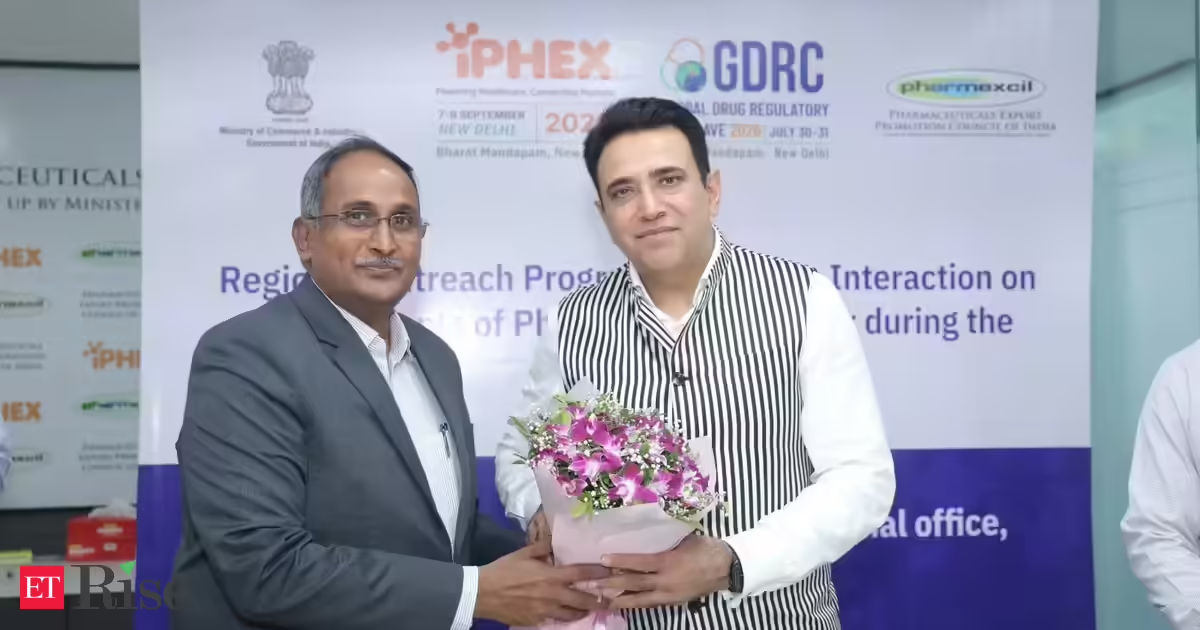
Deputy Director, Ministry of Trade and Commerce, Ravi Teja explained why exports to the US have declined. He said the US stockpiled medicine reserves before imposing punitive tariffs on India and other countries, adding that the West Asia war, the closure of the Hormuz Strait and critical maritime corridors, and a sharp rise in prices of petroleum-based derivatives and solvents caused a dip in exports.“We have identified the pharmaceutical industry as a critical sector to ensure import duty exemptions are accorded, and Liquified Petroleum Gas (LPG) supply is committed. In addition, our market access initiatives, production-linked incentives, and identification of newer markets to diversify our export base will help us mitigate any reduction in pharma exports,” Teja said at Pharmexcil in Hyderabad on Tuesday.To offset the tailwinds from the US market, India is capitalising on drug shortages reported by economies in Europe. Countries with sizeable populations, such as Germany, France, Spain, Italy, Belgium, and Finland, have all reported shortages of critical pharmaceutical ingredients and medicines. “The health minister from the Netherlands visited New Delhi, asking for a batch of medicines to be supplied while also seeking assistance from Indian pharma giants to help scale their pharmaceutical industry,” a senior member of Pharmexcil told ThePrint on the condition of anonymity.Despite the interim aberrations, data shared by commerce ministry officials shows that India’s pharmaceutical exports have grown from $14 billion in FY 2015 to $31 billion in FY 2026. These figures currently make India the third-largest producer of pharmaceuticals by volume, supplying around 20 per cent of global generic demand, and exporting to more than 200 countries. More than 60 per cent of India’s pharmaceutical exports go to stringently regulated markets.An uninterrupted supply of medicines through the Covid pandemic, a rise in the volume of vaccine exports thereafter, and aggressive targeting of new regions helped India’s exports increase exponentially, the officials told ThePrint.