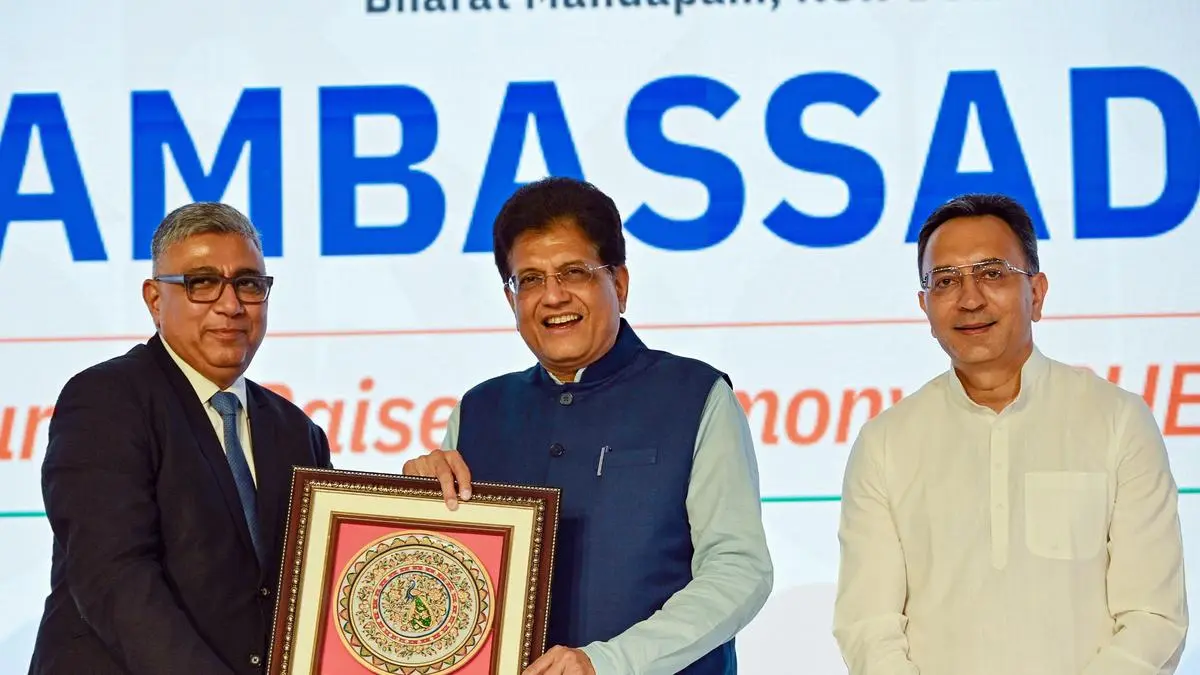
The Department of Commerce, Government of India, organised an outreach programme at the Regional Office of the Pharmaceuticals Export Promotion Council of India (Pharmexcil) in Mumbai to highlight the Department’s achievements, reforms and policy initiatives over the last 12 years.The programme was attended by representatives of industry associations, including the Indian Drug Manufacturers’ Association, Indian Pharmaceutical Alliance and International Pharmaceutical Excipients Council of India. Industry representatives from ACG, FDC Limited and other stakeholders also participated.Mohit Yadav, Joint Secretary, Department of Commerce, said in a statement, "India’s export trajectory, market diversification and deepening trade relations with key partner countries. The Government is working with industry to strengthen export capabilities, improve competitiveness and support India’s transition from volume-led exports to value-led exports."The Joint Secretary noted that, over the last 12 years, the Indian pharmaceutical sector has emerged as a strategic sector and a source of national pride. India is today widely recognised as the “Pharmacy of the World”, a reputation earned through scale, quality, affordability and dependable supply. The sector has grown from about $20 billion in 2014 to nearly $60 billion in 2026 and is expected to reach US$ 130 billion by 2030. India’s pharmaceutical exports have increased from $14 billion in FY 2015 to about $31 billion in FY 2026, registering a compound annual growth rate of 7.4 percent, with the ambition to reach US$ 50 billion by 2030.He underlined that affordability remains India’s defining strength. Indian generic medicines have enabled access to treatment for millions across the world. India is the third-largest producer of pharmaceuticals by volume, supplies around 20 percent of global generic medicines demand, and exports pharmaceutical products to more than 200 countries. More than 60 percent of India’s pharmaceutical exports go to stringently regulated markets.The Joint Secretary said the world today seeks quality, continuity and affordability in healthcare supply chains, and India offers all three. Quality is reflected in India’s strong regulatory footprint, including about 1,000 US FDA-registered sites, the highest number outside the United States. Continuity is reflected in India’s ability to deliver medicines during disruption, including during the pandemic and recent geopolitical challenges. Affordability is reflected in the global reach of Indian generics.He noted that Maharashtra occupies a special place in India’s pharmaceutical journey. Mumbai, Pune, Chhatrapati Sambhajinagar, Tarapur and nearby clusters have emerged as important centres of pharmaceutical manufacturing, research, exports and skilled talent. Maharashtra’s pharmaceutical industry employs more than 200,000 people, including pharmacists, scientists and skilled manufacturing workers, and remains a major contributor to India’s pharma production and exports.Industry representatives commended the efforts such as digital issuance of Registration-cum-Membership Certificates, digital Certificates of Origin, the Trade Connect ePlatform, the Trade Infrastructure for Export Scheme portal, the Export Promotion Mission, research and development-linked support measures, and initiatives to strengthen quality, compliance and market access.The Joint Secretary also highlighted Biopharma SHAKTI, formally Strategy for Healthcare Advancement through Knowledge, Technology and Innovation. The initiative has been proposed with an outlay of Rs10,000 crore over five years to position India as a global biopharmaceutical manufacturing hub. It seeks to build an ecosystem for domestic production of biologics and biosimilars, strengthen research and development, upgrade clinical trial infrastructure, promote collaboration between academia, research institutions and industry, and improve India’s competitiveness in the global biologics supply chain.The Joint Secretary stated that India’s trade agreements with key partners will open new opportunities for the pharmaceutical sector. Agreements and ongoing engagements with partners such as the United Arab Emirates, Australia, the United Kingdom, the European Union, EFTA, the Sultanate of Oman and New Zealand are expected to support market access, regulatory cooperation, investment partnerships and technology collaboration. The India-EFTA Trade and Economic Partnership Agreement, backed by a commitment of $100 billion in investment over 15 years, offers further possibilities in life sciences, research, manufacturing and advanced health technologies.
Govt outlines next phase of pharma growth
The government highlighted its achievements, reforms, and policy initiatives, aiming to boost exports from $31 billion to $50 billion by 2030. Focus remains on quality, affordability, and continuity in global healthcare supply chains.
628 words~3 min read