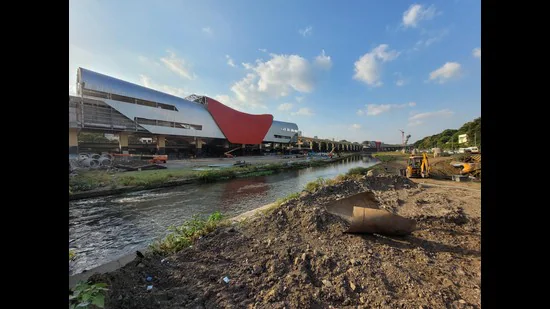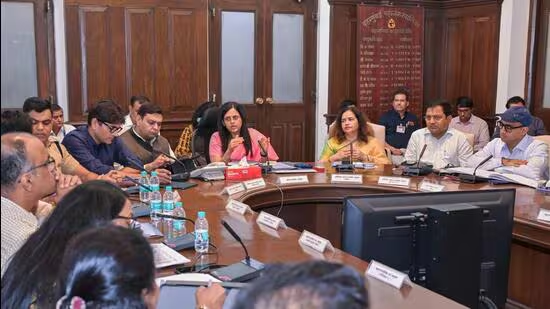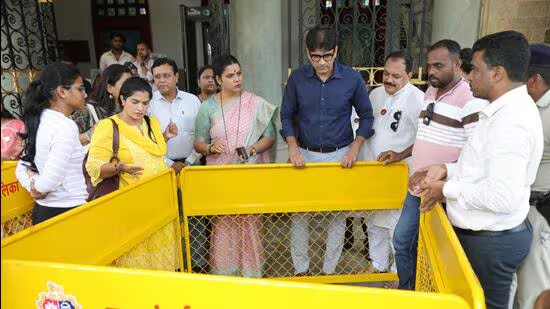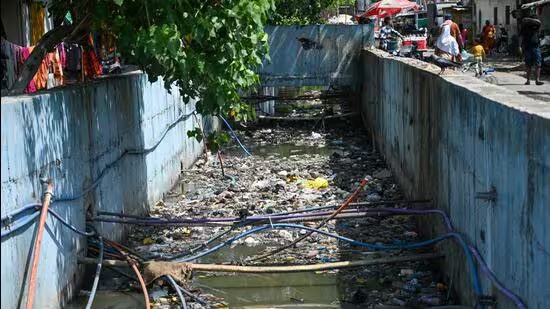
MUMBAI: In a first-of-its-kind operation during its annual pre-monsoon cleaning, the railway authorities pumped oxygen into a 250-metre-long Dadar-Dharavi (DD) nullah to enable conservancy workers to enter safely and clean the heavily silted stretch. The nullah is an important connect between the Mithi river and culverts along the rail tracks which carry rain water into the river.In a first, railways pump oxygen into nullah to clear lethal gases and aid manual cleaningThe culvert located beneath the Matunga railway workshop and passing through sections of both Western Railway (WR) and Central Railway (CR) has long been considered one of the most challenging drainage points in the city. During heavy spells of rains, the DD nullah routinely gets choked due to silt, debris and decomposed waste, and the water flowing through it often encounters hydraulic restrictions, resulting in a backflow and the accumulation of water on the railway tracks. Every year, this not only disrupts train operations but also delays the recession of flood waters.Since it is unlawful to send conservancy workers into nullahs and gutters where methane and other toxic gases have accumulated, railway engineers said that cleaning the nullah had remained difficult for years. “There were always safety concerns about the workers,” said a senior railway engineer. “So this year, we adopted a new approach by pumping oxygen into the nullah to neutralise the hazardous atmosphere before workers entered. It took us 12 to 15 days but we managed to clean it.”Explaining the modus operandi, the engineers said they used heavy-duty air blowers to pump oxygen into the covered portion of the nullah and drive out the methane. Following the oxygenation process, conservancy workers, with support from the BMC, undertook an extensive desilting and cleaning drive inside the nullah. “This method is helpful in locations which workers cannot access easily,” said a BMC engineer. “Wherever possible, we also open the top portions for faster dispersal of the gases.”The DD nullah operation involved the use of super-sucker machines to remove accumulated silt, debris and floating waste, which had significantly reduced the carrying capacity of the drainage channel. The entire stretch beneath the Matunga workshop and extending up to the Railway Protection Force barracks was cleaned, vegetation and floating material were cleared, and the original drainage profile was restored. The cleaning of the culvert has also significantly improved storm-water conveyance towards the Mithi river.Along with desilting, the railways have also undertaken track-raising works, expanded drainage infrastructure and installed monitoring systems in the area. “We have raised the height of the rail tracks by 5.5 to 6 inches between Matunga and Mahim for a stretch of 100 metres. This will also help in preventing water logging,” said another WR official.The Matunga-Dadar section has historically remained vulnerable to waterlogging during intense rainfall, particularly between kilometre markers 11/5 and 12/8 on the suburban corridor. This year, the measures taken are expected to reduce the risk of flooding in one of Mumbai’s most flood-prone railway sections and help ensure uninterrupted suburban train services during the monsoon.Shyam R Asolekar, former professor in IIT Bombay’s environmental science & engineering department, said the method adopted by the railways was a scientifically dependable one. “The presence of methane, carbon dioxide and other gases in closed nullahs and culverts is a common problem,” he said. “The standard practice is to evacuate the existing air space filled with these gases, and pump in fresh air or oxygen enriched enough for a human to enter safely. Our air has 21% oxygen, and even if that much is pumped in through blowers or enriched air with 40% or more oxygen is pushed in through compressed air cylinders, it’s a good move.”
In a first, railways pump oxygen into nullah to clear lethal gases and aid manual cleaning
Mumbai railways innovatively pumped oxygen into a nullah for safe cleaning, improving drainage and reducing flooding risk ahead of the monsoon. | Mumbai news
607 words~3 min read