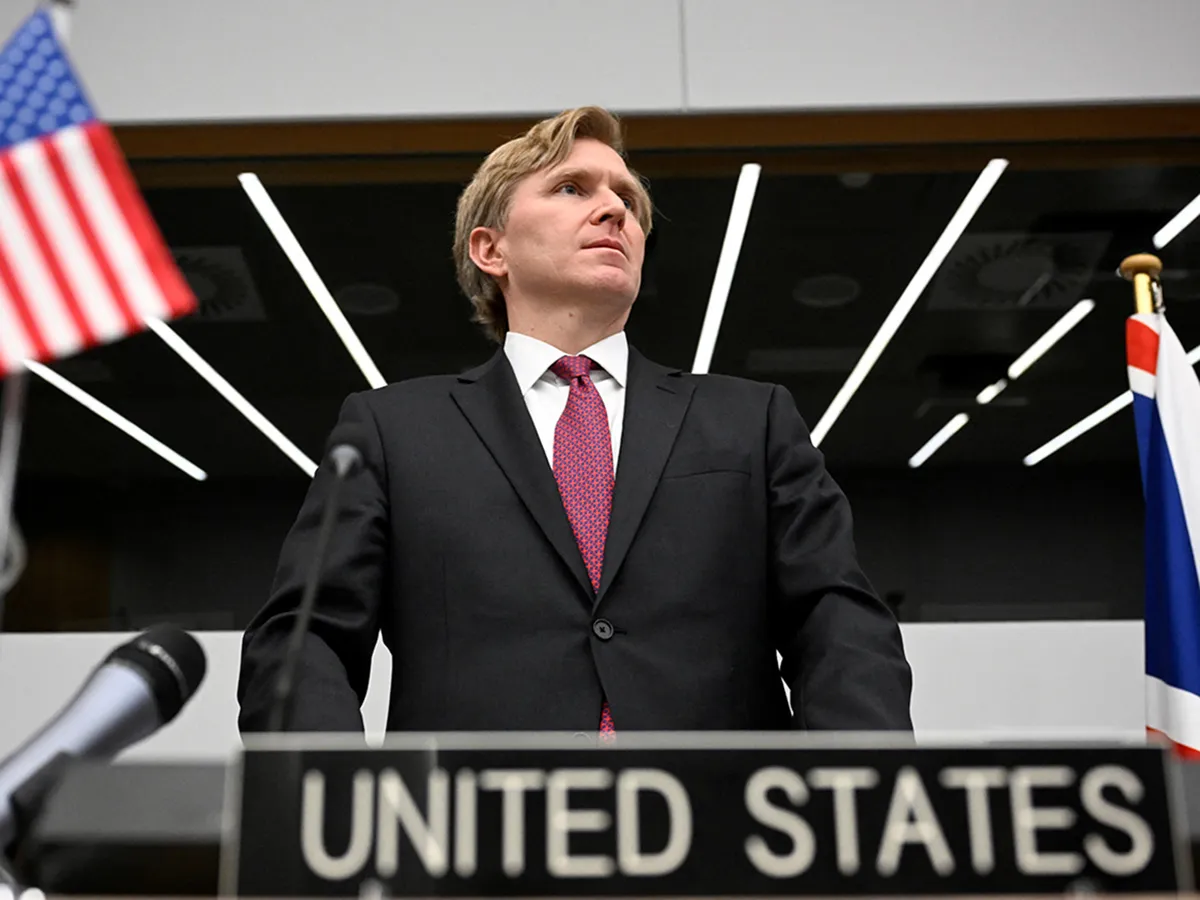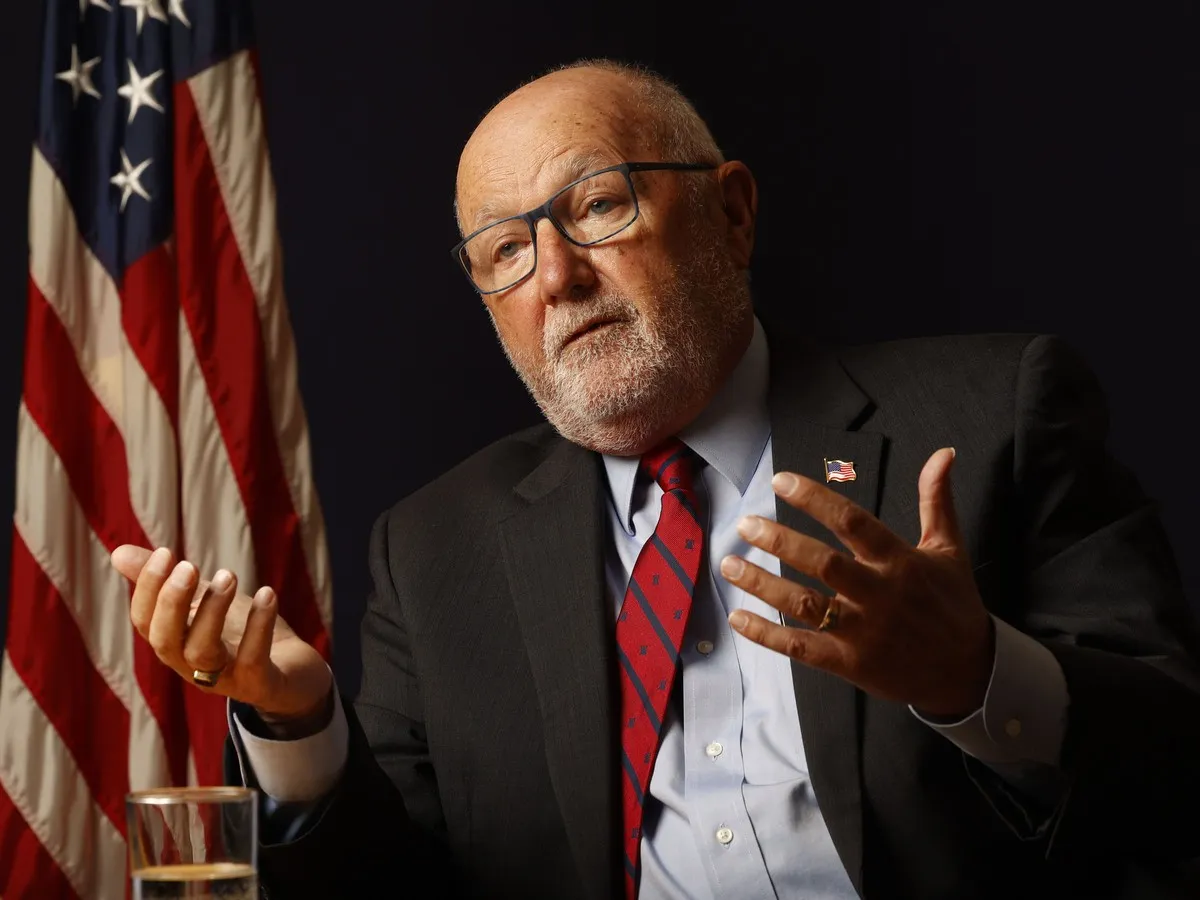
Skip to Content Subscribe Our Offers My Account Manage My Subscriptions FAQ Newsletters Canada Canadian True Crime Canadian Politics Health World Israel & Middle East Financial Post NP Comment Longreads Puzzmo Diversions Comics NP News Quiz New York Times Crossword Horoscopes Life Eating & Drinking Style Sponsored Play for Ontario Travel Travel Canada Travel USA Travel International Cruises Travel Essentials Culture Books Celebrity Movies Music Theatre Television Business Essentials Advice Lives Told Tails Told Shopping Buy Canadian Home Living Outdoor Living Kitchen & Dining Tech Style & Beauty Personal Care Entertainment & Hobbies Gift Guide Travel Guide Amazon Prime Day Deals Savings National Post Store More Sports Hockey Baseball Basketball Football Soccer Golf Tennis Driving Vehicle Research Reviews News Gear Guide Obituaries Place an Obituary Place an In Memoriam Classifieds Place an Ad Celebrations Working Business Ads Archives Healthing Epaper Manage Print Subscription Profile Settings My Subscriptions Saved Articles My Offers Newsletters Customer Service FAQ Newsletters Canada World Financial Post NP Comment Longreads Puzzmo Diversions Life Shopping Epaper Manage Print Subscription HomeNP CommentJohn Ivison: The U.S. ambassador blurts out Donald Trump’s bluffThe message from the U.S. ambassador in Ottawa seems to be that Canadians should ignore whatever comes out of the White House You can save this article by registering for free here. Or sign-in if you have an account.U.S. ambassador to Canada, Pete Hoekstra. Photo by Tony Caldwell /PostmediaPete Hoekstra is not quite in the super league of undiplomatic diplomats. Before he was British foreign minister, Boris Johnson once offended the entire nation of Papua New Guinea by linking it to cannibalism.Enjoy the latest local, national and international news.Exclusive articles by Conrad Black, Barbara Kay and others. Plus, special edition NP Platformed and First Reading newsletters and virtual events.Unlimited online access to National Post.National Post ePaper, an electronic replica of the print edition to view on any device, share and comment on.Daily puzzles including the New York Times Crossword.Support local journalism.Enjoy the latest local, national and international news.Exclusive articles by Conrad Black, Barbara Kay and others. Plus, special edition NP Platformed and First Reading newsletters and virtual events.Unlimited online access to National Post.National Post ePaper, an electronic replica of the print edition to view on any device, share and comment on.Daily puzzles including the New York Times Crossword.Support local journalism.Create an account or sign in to continue with your reading experience.Access articles from across Canada with one account.Share your thoughts and join the conversation in the comments.Enjoy additional articles per month.Get email updates from your favourite authors.Create an account or sign in to continue with your reading experience.Access articles from across Canada with one accountShare your thoughts and join the conversation in the commentsEnjoy additional articles per monthGet email updates from your favourite authorsSign In or Create an AccountorBut the current U.S. ambassador can claim the rare accomplishment of uniting Canadians coast to coast in their animosity toward him.At the Eurasia Group’s Canada-U.S. summit in Toronto on Thursday, he added to his bulging file of diplomatic faux pas when he told his audience that there’s a state in the U.S. (Kentucky) that produces “awesome” bourbon that has been pulled off the shelves in much of Canada.“If you need some, send me your order,” he said, providing his email address, “and I’ll see that you get some.”This newsletter from NP Comment tackles the topics you care about. (Subscriber-exclusive edition on Fridays)By signing up you consent to receive the above newsletter from Postmedia Network Inc.We encountered an issue signing you up. Please try againIt is a measure of how unsuited he is to his task that he expected to get a laugh. When he didn’t, he proceeded to insult his host nation.“I do know Canadians don’t have much of a sense of humour,” he said.Hoekstra’s saving grace may be that he is aware of his insensibility. He was later asked what he has learned as ambassador to Canada and said he is aware that “the message I’m trying to send is not necessarily the message you are receiving.”On occasions though, his unfiltered thinking can be valuable in trying to understand what the Americans really mean.In a press conference in the Oval Office on Wednesday, President Donald Trump said that the U.S. does not need anything that Canada or Mexico has to offer.It was quickly pointed out online that the U.S. receives about one-quarter of its net crude input from Canada, without which 11 refineries would be unable to operate. In addition, it gets 85 per cent of its potash, half its aluminum, and one-third of its uranium and softwood lumber.Hoekstra was asked about those comments and provided a useful interpretation of what the president really meant. He conceded that he’d just had breakfast with an executive from Nutrien, the Saskatoon-based fertilizer company, and “I guess we need potash.”But Trump is a “business guy,” the ambassador said.“When he talks about this — that we don’t need cars from Ontario, and Canadians say: ‘How can you say this?’ — it’s because we can get them from Japan or Mexico or South Korea. But, if Canada puts on its sales hat, they can make a compelling case that if America needs a single car coming in from somewhere else in the world, the best place to get that car from is Canada. It’s the same thing on oil.“Maybe you don’t like the way the president says it but take it on the tone of what he is saying, (which is): ‘We’re open to offers; make your case’.”The Mr. Bean of ambassadors may have blundered his way through a series of petty, sometimes malevolent, diplomatic incidents, but on Thursday, he was surprisingly cordial and upbeat about the prospects for Canada-U.S. relations.He said he views Canada as a partner with which the U.S. can expand a number of business sectors, including steel and aluminum, defence and “even autos.” This, despite Trump saying: “We don’t want cars from Canada.”“The opportunities are boundless if we can pull this off correctly,” Hoekstra said.The message from the U.S. ambassador seems to be that Canadians shouldn’t take at face value whatever comes out of the White House.Canada’s minister responsible for Canada-U.S. trade, Dominic LeBlanc, made a similar point at the same event. “Canadians should not be emotionally invested when American politicians speak to American voters,” he said.In his Wednesday press conference, Trump raised trade imbalances with Canada and Mexico. LeBlanc acknowledged the issue but pointed out that, if oil is removed from the equation, there is a trade surplus in the U.S.’s favour.The Iran war started by Trump pushed up Canada’s trade surplus to $9.48 billion in April, thanks to higher oil prices. It’s a phenomenon the president is familiar with, since he blamed the rise in U.S. inflation to 4.2 per cent in May solely on rising energy costs.Trump also floated the possibility that he may not renew the Canada-U.S.-Mexico trade deal, which has a July 1 deadline.LeBlanc said he is trying to “demystify” the July 1 date. “It is not a cliff everyone goes hurtling off. It’s a moment when the three countries could decide to extend the agreement by adding six more years,” he said.If by July 2 there is no deal, as is likely, CUSMA will enter a period of rolling annual reviews but will remain in place for another decade, unless one of the countries decides to exit it entirely. Crucially, Trump has not threatened to terminate the agreement.A more grounded view of CUSMA was offered by U.S. Trade Representative Jamieson Greer when he appeared at the Hudson Institute in April. He said there is a need to change aspects of the deal, including addressing the trade deficits, but he talked of a renewal “sooner, rather than later.”The U.S. wants access to Canada’s dairy markets but there is a sense that they might agree to the quota-allocation model, particularly for cheese, that has already been granted to the Europeans.There are concerns about the provincial liquor bans, but they would likely end if there was the prospect of a deal.The other U.S. complaint has been the perceived Canadian discriminatory practices on digital services. But the Carney government has already ceded ground, in advance of bilateral talks, rescinding the three per cent digital servicestax, and last week pausing the move by the Canadian Radio-television and Telecommunications Commission (CRTC) to triple to 15 per cent the contribution to Canadian content from major streaming services under the Online Streaming Act.The Liberal government has also indicated it will introduce new legislation to strengthen its forced labour standards, after a USTR Section 301 investigation criticized Canada’s enforcement and proposed a 10 per cent tariff on Canadian exports not covered by CUSMA.On autos, the U.S. bilateral negotiations with Mexico suggest the new expectation for North American vehicles is 50 per cent American content. Canadian industry suggests that this need not be a deal breaker, given the increase in the percentage of U.S. content in recent years.In short, the trade irritants raised by Greer seem to be capable of resolution.The Trump doctrine holds that permanent destabilization creates American advantage. The president wants to keep allies and adversaries alike off balance, hence the need to toss the occasional grenade from the Oval Office.However, thanks to Hoekstra, everyone now knows Trump is bluffing. His bluster has lost its leverage.National Post Get the latest from John Ivison straight to your inbox Join the Conversation This website uses cookies to personalize your content (including ads), and allows us to analyze our traffic. Read more about cookies here. By continuing to use our site, you agree to our Terms of Use and Privacy Policy.
John Ivison: The U.S. ambassador blurts out Donald Trump’s bluff
The message from the U.S. ambassador in Ottawa seems to be that Canadians should ignore whatever comes out of the White House.
TL;DRAI
Hoekstra rivela che Trump quando dice "non abbiamo bisogno del Canada" negozia: Canada fornisce 25% petrolio, 85% potash, 50% alluminio. Per manager tech segnala tattica di pressione su supply chain critiche, non isolamento; comporta rischio tariffario su import critici.
1,595 words~7 min read