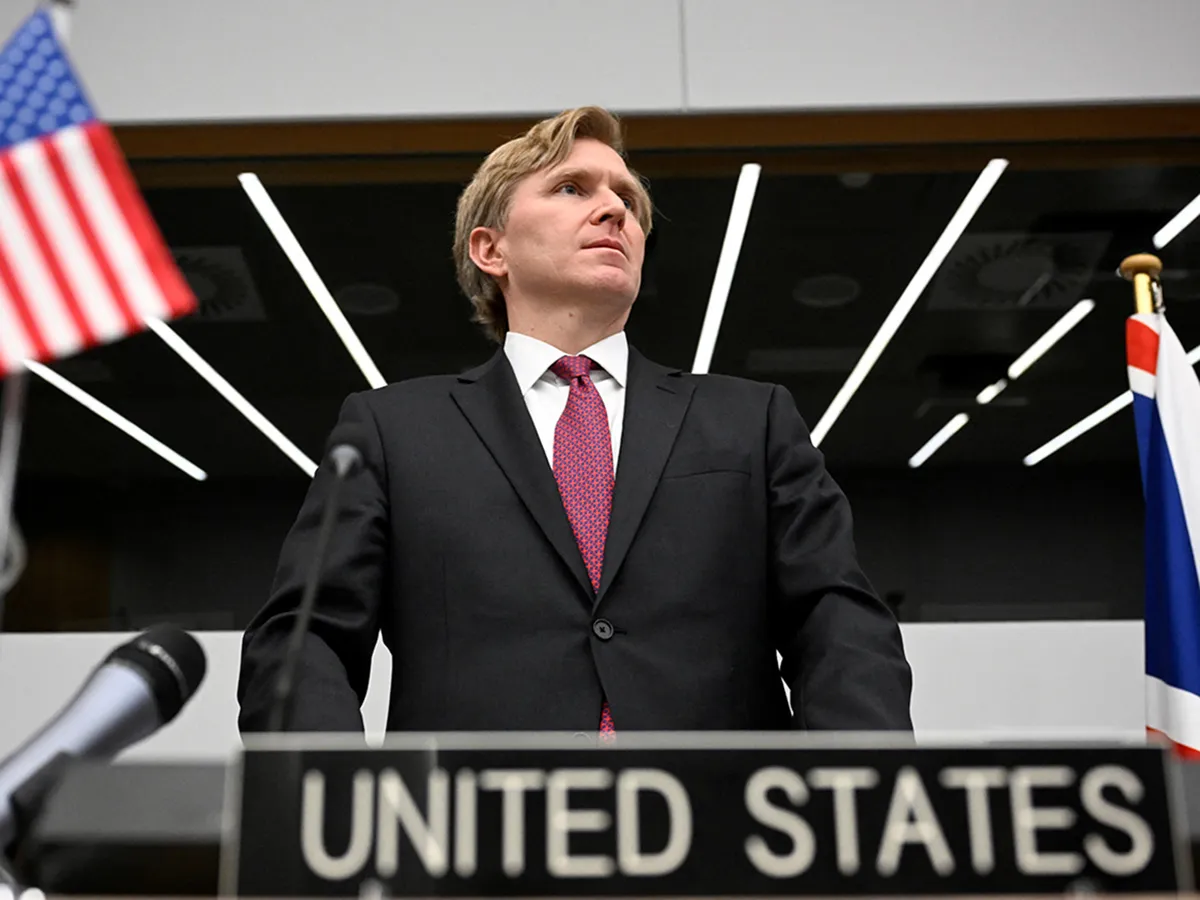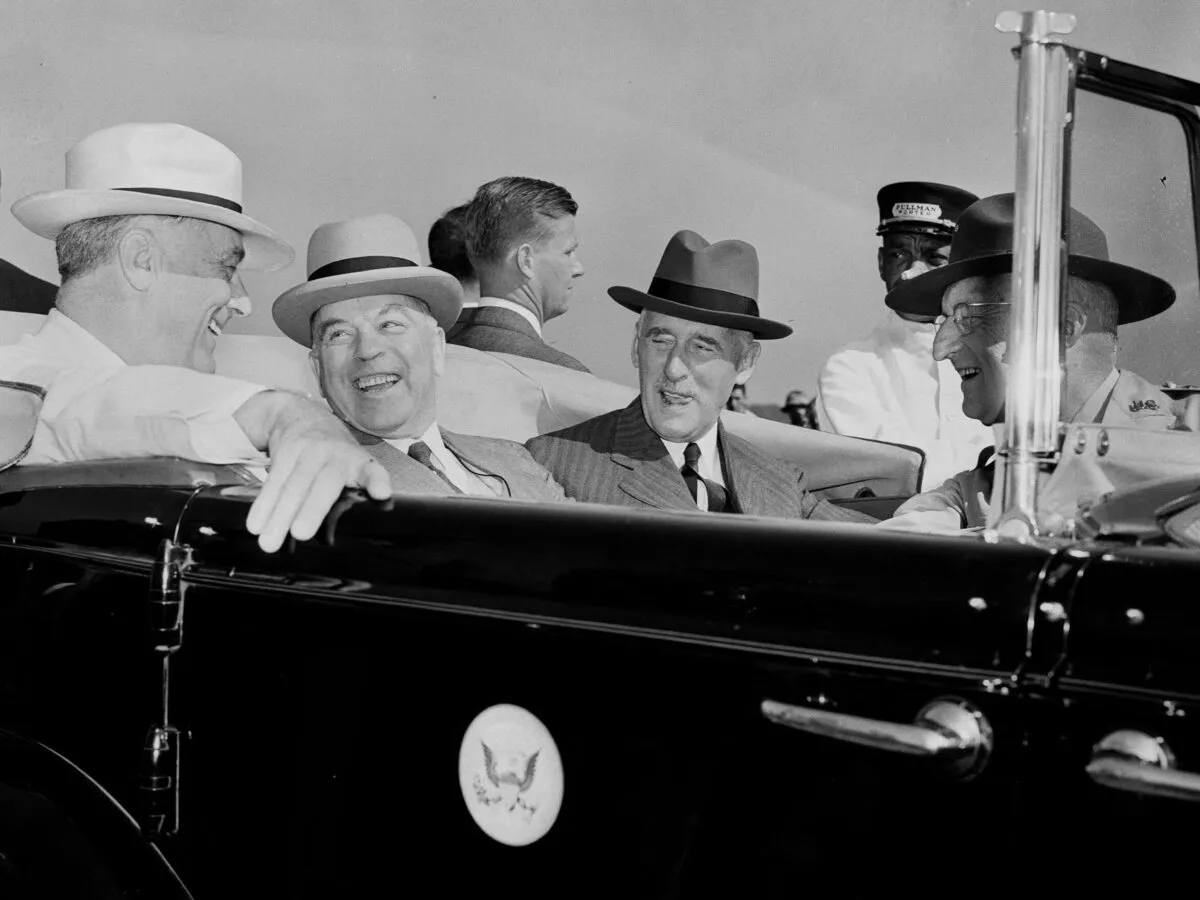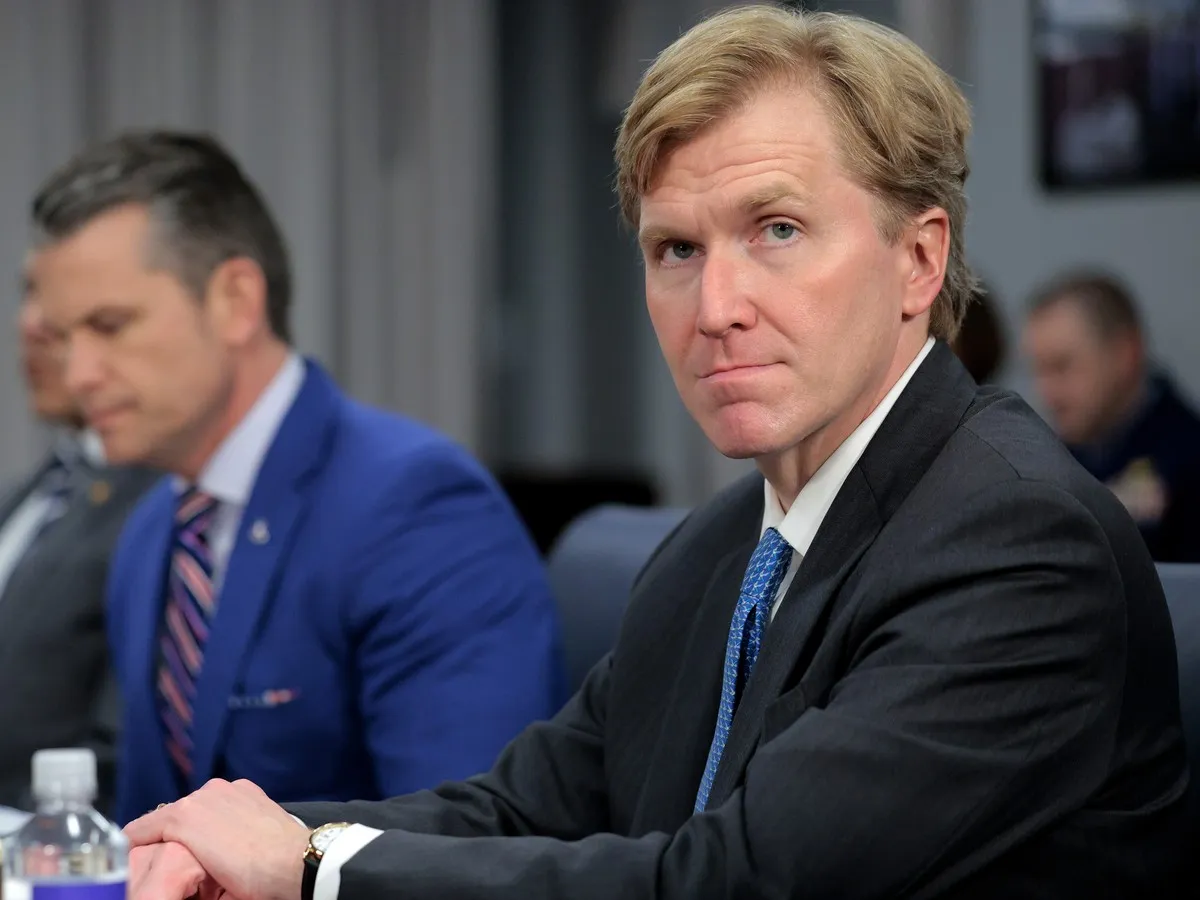
Skip to Content Subscribe Our Offers My Account Manage My Subscriptions FAQ Newsletters Canada Canadian True Crime Canadian Politics Health World Israel & Middle East Financial Post NP Comment Longreads Puzzmo Diversions Comics NP News Quiz New York Times Crossword Horoscopes Life Eating & Drinking Style Sponsored Play for Ontario Travel Travel Canada Travel USA Travel International Cruises Travel Essentials Culture Books Celebrity Movies Music Theatre Television Business Essentials Advice Lives Told Tails Told Shopping Buy Canadian Home Living Outdoor Living Tech Style & Beauty Kitchen & Dining Personal Care Entertainment & Hobbies Gift Guide Travel Guide Deals Savings National Post Store More Sports Hockey Baseball Basketball Football Soccer Golf Tennis Driving Vehicle Research Reviews News Gear Guide Obituaries Place an Obituary Place an In Memoriam Classifieds Place an Ad Celebrations Working Business Ads Archives Healthing Epaper Manage Print Subscription Profile Settings My Subscriptions Saved Articles My Offers Newsletters Customer Service FAQ Newsletters Canada World Financial Post NP Comment Longreads Puzzmo Diversions Life Shopping Epaper Manage Print Subscription HomeNP CommentJohn Ivison: 'Dangerous politics': Trump suspends joint defence board with Canada'This is politically motivated and fits perfectly into the ongoing tactics of the current administration to undermine Canada in as many ways as possible' You can save this article by registering for free here. Or sign-in if you have an account.U.S. Under Secretary of War for Policy Elbridge Colby (R) joins Secretary of War Pete Hegseth as they hosts South Korean Minister of National Defense Ahn Gyu-back for bilateral talks at the Pentagon on May 11, 2026 in Arlington, Virginia. Photo by Chip Somodevilla /Getty ImagesThe moment when Canada moved from Britain’s orbit into America’s can be dated precisely to Aug. 17, 1940.Enjoy the latest local, national and international news.Exclusive articles by Conrad Black, Barbara Kay and others. Plus, special edition NP Platformed and First Reading newsletters and virtual events.Unlimited online access to National Post.National Post ePaper, an electronic replica of the print edition to view on any device, share and comment on.Daily puzzles including the New York Times Crossword.Support local journalism.Enjoy the latest local, national and international news.Exclusive articles by Conrad Black, Barbara Kay and others. Plus, special edition NP Platformed and First Reading newsletters and virtual events.Unlimited online access to National Post.National Post ePaper, an electronic replica of the print edition to view on any device, share and comment on.Daily puzzles including the New York Times Crossword.Support local journalism.Create an account or sign in to continue with your reading experience.Access articles from across Canada with one account.Share your thoughts and join the conversation in the comments.Enjoy additional articles per month.Get email updates from your favourite authors.Create an account or sign in to continue with your reading experience.Access articles from across Canada with one accountShare your thoughts and join the conversation in the commentsEnjoy additional articles per monthGet email updates from your favourite authorsSign In or Create an AccountorThat was the day when Canadian prime minister William Mackenzie King and U.S. President Franklin Delano Roosevelt signed the Ogdensburg Agreement that defined the principle of the joint defence of North America.The agreement, drafted in pencil and without consultation with either cabinet, established the Permanent Joint Board of Defence that has been in place ever since.Or at least it was in place until Monday, when the U.S. Under-secretary of War, Elbridge Colby, announced the Trump administration has decided to “pause” its involvement and “reassess” its value because “Canada has failed to make credible progress on its defence commitments.”This newsletter from NP Comment tackles the topics you care about. (Subscriber-exclusive edition on Fridays)By signing up you consent to receive the above newsletter from Postmedia Network Inc.We encountered an issue signing you up. Please try againThe board was conceived by Mackenzie King and Roosevelt as a real joint defence commitment. The president said he thought 30,000 American troops could be moved to Nova Scotia within three hours of a German invasion, at a time when the Battle of Britain was being waged in the skies over southern England and the mother country’s independence was in peril.British Prime Minister Winston Churchill reacted with displeasure to the agreement, suggesting to King that Roosevelt was taking advantage of Britain’s distress to split the Commonwealth.But King thought it was a crucial step toward securing American help and winning the war.“Canada now had the security to risk more for Britain. The measure also drew the United States deeper into the war, while drawing Canada more into its orbit,” said historian Neville Thompson in his book, The Third Man.This is the body that the Trump administration is now trashing with such heedless disregard.Former Liberal MP John McKay was the Canadian chair of the board for seven years from 2016 (both sides put forward a civilian chair and an equal number of representatives).He said there were two aspects to the board’s annual or semi-annual discussions: firstly, did the two sides view the world the same way, and if they didn’t, what was to be done.“That was mostly congenial and there was not that much asked of us,” McKay said in an interview.Secondly, there was a “to-do” list of North American issues, centred around the North American Aerospace Defence Command (NORAD).“We were always doing a tap-dance around two per cent (NATO’s two per cent of GDP defence spending benchmark). But on a military-to-military basis, we still got a lot done. They realized they couldn’t defend the Arctic without involving Canada,” said McKay.He said he is surprised it took Trump so long to use the joint defence board as leverage. “The military rupture is just following the political rupture,” he said. “NORAD will be next on the chopping block. And there is no question that will undermine Canada’s security. It’s dangerous politics.”Vice-Admiral (ret’d) Mark Norman, a former Vice-Chief of the Defence Staff, said he is not surprised that “the low-hanging political fruit” of the joint defence board has proven vulnerable. “I’m still really nervous about NORAD,” he said.Norman said the board is extremely valuable and ensures that senior levels of government, as well as the military, engage with one another.But he said it is being viewed as an opportunity to bully Canada.“This is politically motivated and fits perfectly into the ongoing tactics of the current administration to undermine Canada in as many ways as possible,” he said.The timing is somewhat odd. In his social media post, Colby said the gaps between Canada’s rhetoric and reality can no longer be ignored, and he included a link to Prime Minister Mark Carney’s speech in Davos last January, when he proclaimed a policy of “strategic autonomy.”“Only by investing in our defence capability will Americans and Canadians be safe, secure and prosperous,” Colby said.The Under Secretary of War, who was a senior defence strategist in the first Trump administration, has been a vocal critic of former prime minister Justin Trudeau, who he said openly flouted NATO’s defence spending guidelines. He said Canada should be penalized for its failure to meet spending benchmarks.Yet, Canada has sharply increased defence spending plans under Carney, hitting two per cent of GDP this year and forecasting it will spend 3.5 per cent of economic output on “core” defence activities by 2035.The recent defence industrial strategy promised an additional $80 billion over five years, with annual expenditure forecast to rise to $132 billion in the next decade.It seems likely that the absolute level of spending is not the issue. Rather, this is about where it is spent.The defence strategy outlines plans for the Canadian Forces to purchase 70 per cent of its new equipment domestically, up from just 30 per cent now.It argues that Canada will not be “a hostage to the decisions of others when it comes to security” and pledges the government will be “resilient against any single point of failure.”That most undiplomatic of diplomats, the U.S. ambassador to Canada, Pete Hoekstra, has already warned of unspecified consequences for NORAD, if Ottawa does not buy 88 F-35A fighter jets, as the Trudeau government said it would in December 2022. (There is speculation in official Ottawa that the government may opt to split the fighter jet fleet, buying half by value from Sweden’s Saab).In this light, the “reassessment” of the joint defence board should probably be considered a warning shot across the bow.Such dissension among allies would come as a great shock to the authors of the Ogdensburg Agreement, Roosevelt and Mackenzie King.As the late historian Tim Cook made clear in his book, The Good Allies, Canada became a stalwart U.S. partner during the Second World War, securing the vulnerable frontiers of North America in order to allow resources to be sent overseas.Cook quoted a U.S. army planner who said the fundamental objective of American defence policy was to fashion an outer frontier that would avoid the need to fight war on American soil.“Roosevelt was mindful that it was in the interests of the United States to have a strong friend on the northern border.”Canada performed that role – and more. On the East Coast, the Canadian Navy and Air Force tackled the German U-boat threat. On the West Coast, Canada strengthened its coastline defences and accommodated the Americans in building the Alaska Highway.Canada was a good, and reliable, ally but that alliance has faded from memory in an increasingly unreliable Washington.National Post jivison@criffel.ca Twitter.com/IvisonJ Get the latest from John Ivison straight to your inbox Join the Conversation This website uses cookies to personalize your content (including ads), and allows us to analyze our traffic. Read more about cookies here. By continuing to use our site, you agree to our Terms of Use and Privacy Policy.
John Ivison: 'Dangerous politics': Trump suspends joint defence board with Canada
'This is politically motivated and fits perfectly into the ongoing tactics of the current administration to undermine Canada in as many ways as possible'
1,594 words~7 min read