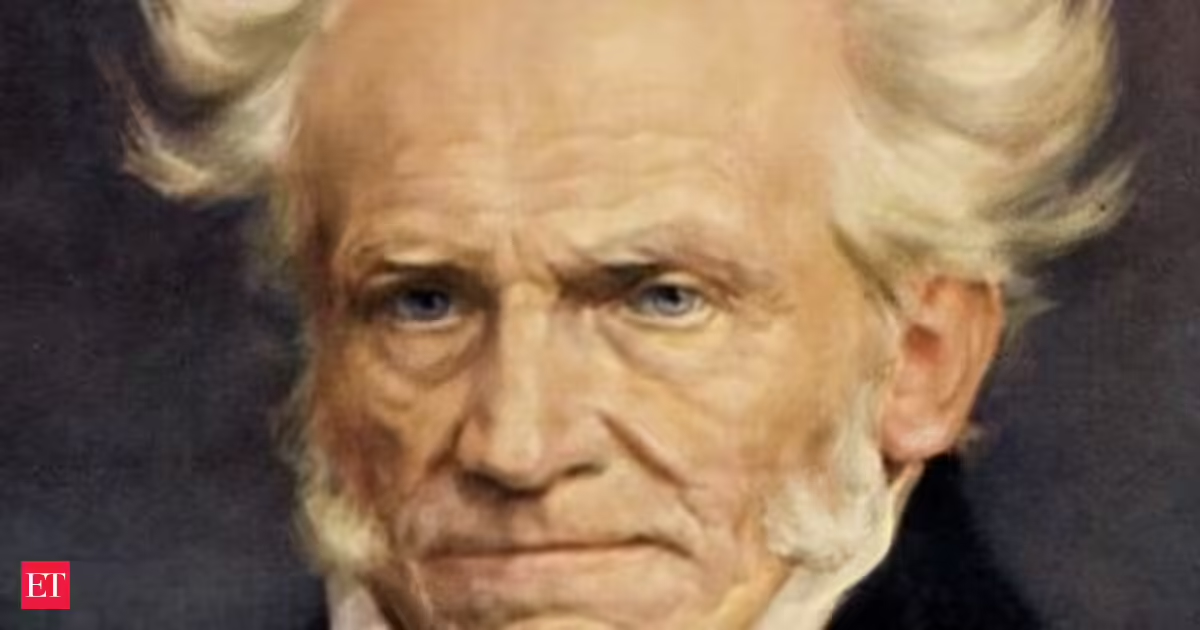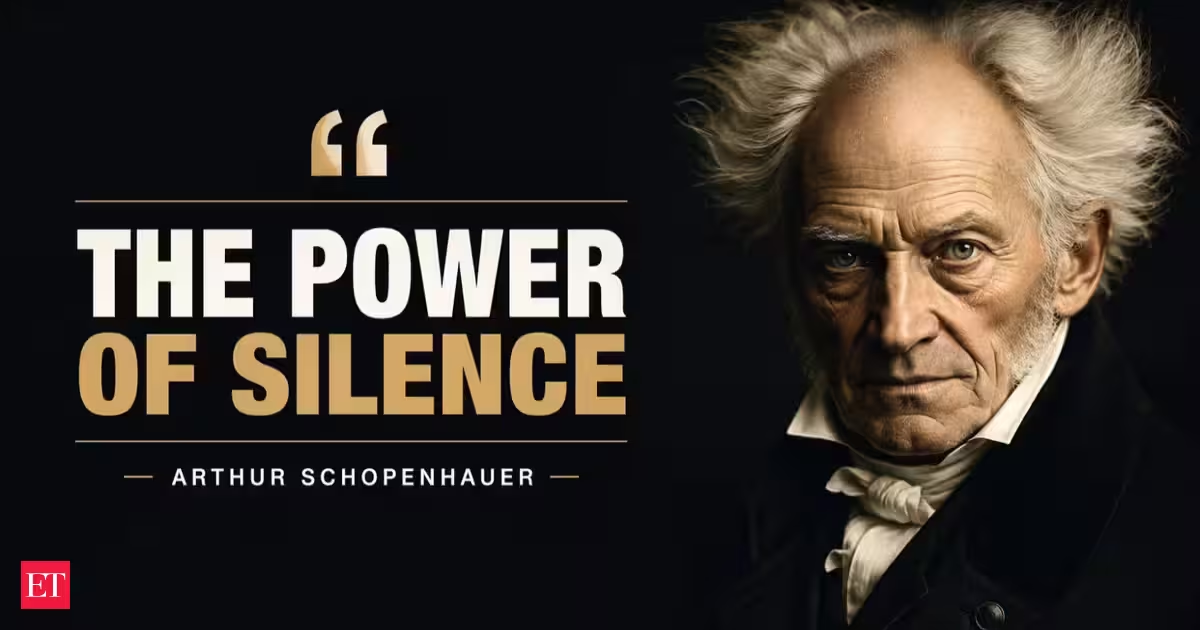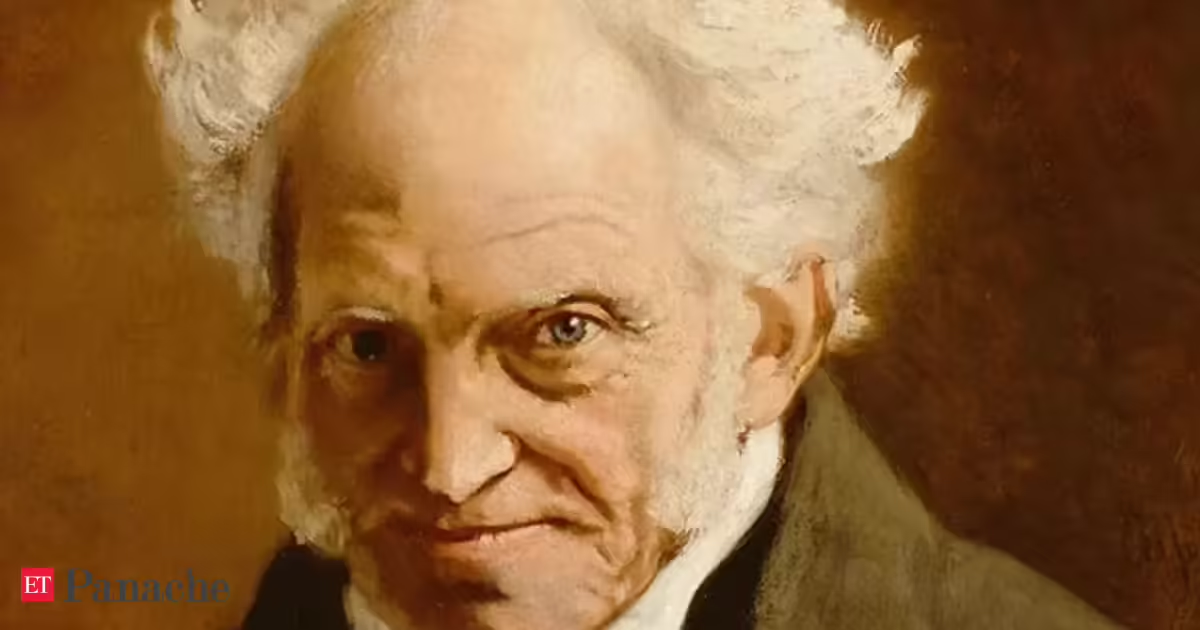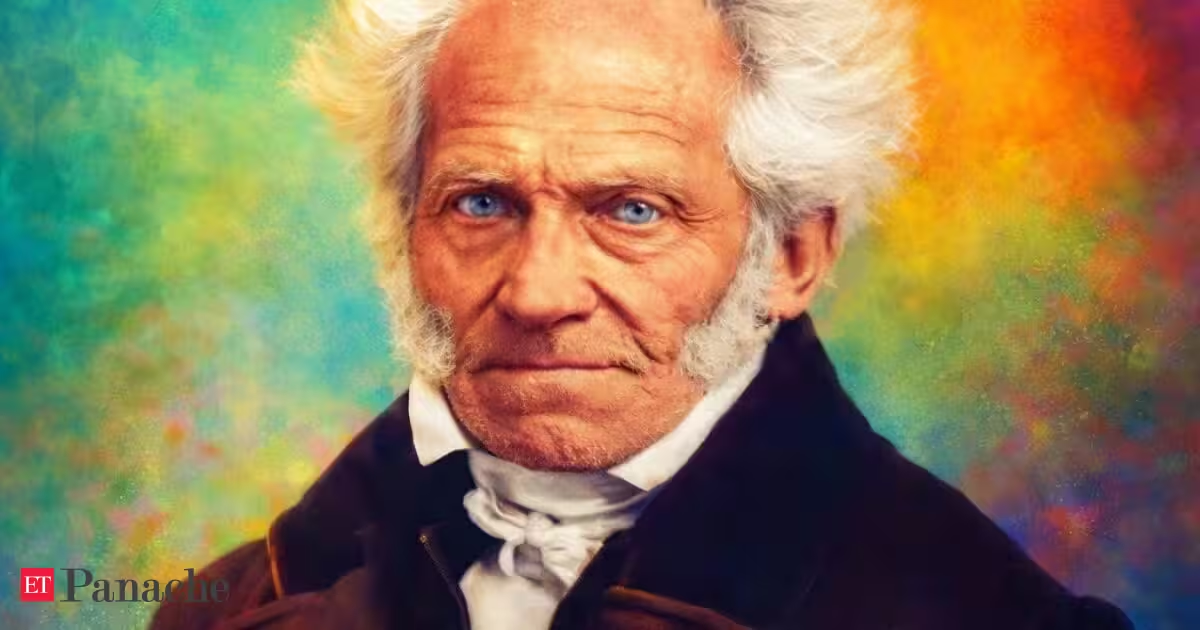
Quote of the day by Arthur Schopenhauer: 'A man's face as a rule says more, and more interesting things, than his mouth, for it is...' - inspiring life lessons on human expression, emotions and how to understand people beyond what they say by philosopher of pessimismSynopsisQuote of the day by Arthur Schopenhauer: He believed a person's face reveals more than their words. He argued expressions, not just speech, offer a deeper understanding of thoughts and aspirations. This insight highlights the profound significance of non-verbal communication in truly knowing someone, suggesting our inner world is often etched on our features.Global DeskQuote of the day by Arthur Schopenhauer: We often assume that what people say gives us the clearest understanding of who they are. But in reality, human communication is far more complex. Much of what we feel and think is expressed without words, through expressions, silence, and subtle facial changes. Today’s quote of the day from philosopher Arthur Schopenhauer highlights this idea, suggesting that the human face often communicates more than speech ever can.Quote of the Day Today: Arthur Schopenhauer on Human ExpressionArthur Schopenhauer said, “A man's face as a rule says more, and more interesting things, than his mouth, for it is a compendium of everything his mouth will ever say, in that it is the monogram of all this man's thoughts and aspirations,” as per BrainyQuote.The quote reflects his belief that the face is a deeper and more lasting record of a person’s inner life than spoken language.Schopenhauer is pointing out that while words can be carefully chosen, the face often reveals what lies beneath them. Emotions, intentions, and personality traits tend to surface naturally through expression.By describing the face as a “compendium” and a “monogram” of thoughts and aspirations, he suggests that everything a person thinks and feels eventually becomes visible over time.You Might Also Like:Quote of the Day June 12: Key Lessons From the Arthur Schopenhauer's MessageWords are only part of human communicationFacial expressions often reveal true emotionsPeople can be understood through careful observationInner thoughts naturally shape outward appearanceNon-verbal cues are as important as speechWho Was Arthur SchopenhauerArthur Schopenhauer (1788-1860) was a German philosopher known for his pessimistic view of life and his influential theory of the “will” as the driving force of human existence. Born in Danzig (now Gdańsk, Poland), he became one of the key critics of Hegelian idealism and influenced later existential philosophy and psychology, as per a Britannica report.Arthur Schopenhauer's Early Life and EducationBorn into a wealthy merchant family, Schopenhauer received a private education before studying medicine at the University of Göttingen. He later shifted to philosophy at the University of Berlin and earned his Ph.D. from the University of Jena in 1813, as per the Britannica report.Arthur Schopenhauer's Major PhilosophyIn The World as Will and Idea (1819), Schopenhauer argued that reality is shaped by human perception and driven by an endless, irrational “will.” He believed life is marked by suffering and struggle, and that relief comes through denying desire, practicing compassion, and engaging with art, especially music.You Might Also Like:Arthur Schopenhauer's Career and RecognitionHis early academic career failed to gain attention, especially compared to Hegel, leading him to leave university life and settle in Frankfurt. His later essays in Parerga and Paralipomena (1851) finally brought him recognition, as per the Britannica report.You Might Also Like:Read More News on(Catch all the US News, UK News, Canada News, International Breaking News Events, and Latest News Updates on The Economic Times.) Download The Economic Times News App to get Daily International News Updates....morelessExplore More Stories
Quote of the day by Arthur Schopenhauer: 'A man's face as a rule says more, and more interesting things, than his mouth, for it is...' - inspiring life lessons on human expression, emotions and how to understand people beyond what they say by philosopher of pessimism
Quote of the day by Arthur Schopenhauer: Explore the profound insights of philosopher Arthur Schopenhauer on the complexities of human communication, highlighting how facial expressions often reveal deeper emotions than spoken words. Discover life lessons on observation, emotions, and understanding others.
590 words~3 min read