By providing an email address. I agree to the Terms of Use and acknowledge that I have read the Privacy Policy.
The ties between sports and economic growth have never been stronger, with global sports events increasingly seen as drivers of tourism, infrastructure investment, job creation and long-term commercial activity.
In 2025, the global sports industry generated $2.3 trillion in revenues, roughly the size of the world’s 10th largest economy. Revenues are on track to hit $3.7 trillion by 2030, according to the World Economic Forum.
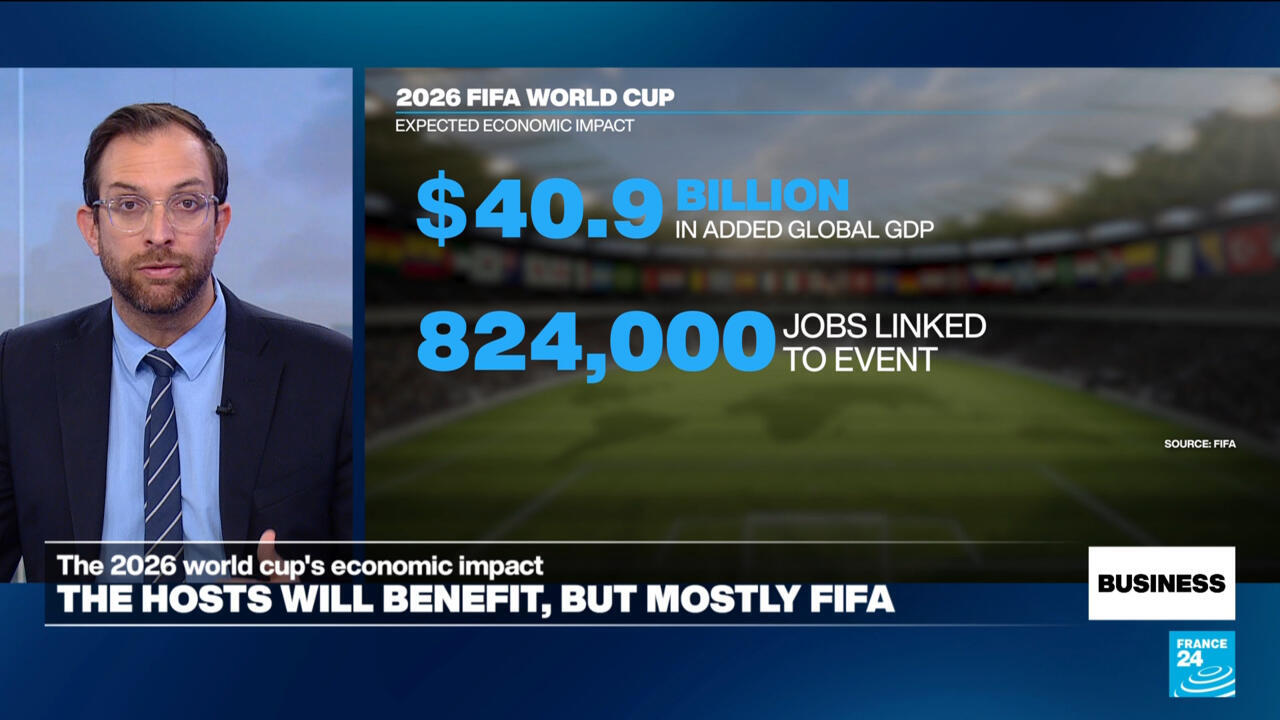
As the world’s most popular sport, football is a big growth driver. A study by sports body FIFA and the World Trade Organization estimates that the 2026 Football World Cup—set to kick off on June 11 across the host countries of the US, Canada and Mexico—could add as much as $41 billion to global gross domestic product and support more than 800,000 jobs. Some 185,000 of those jobs will be in the US, with sectors like airlines, beverages, sportswear, restaurants, broadcasting, social media and online betting among those best positioned for a windfall.
This year’s World Cup will be a landmark in many ways. It will be the largest sporting event ever staged, with 48 teams and 104 matches played across 16 host cities. It could engage more than 6 billion people, and the projected attendance of 6.5 million fans will be almost double the previous record.