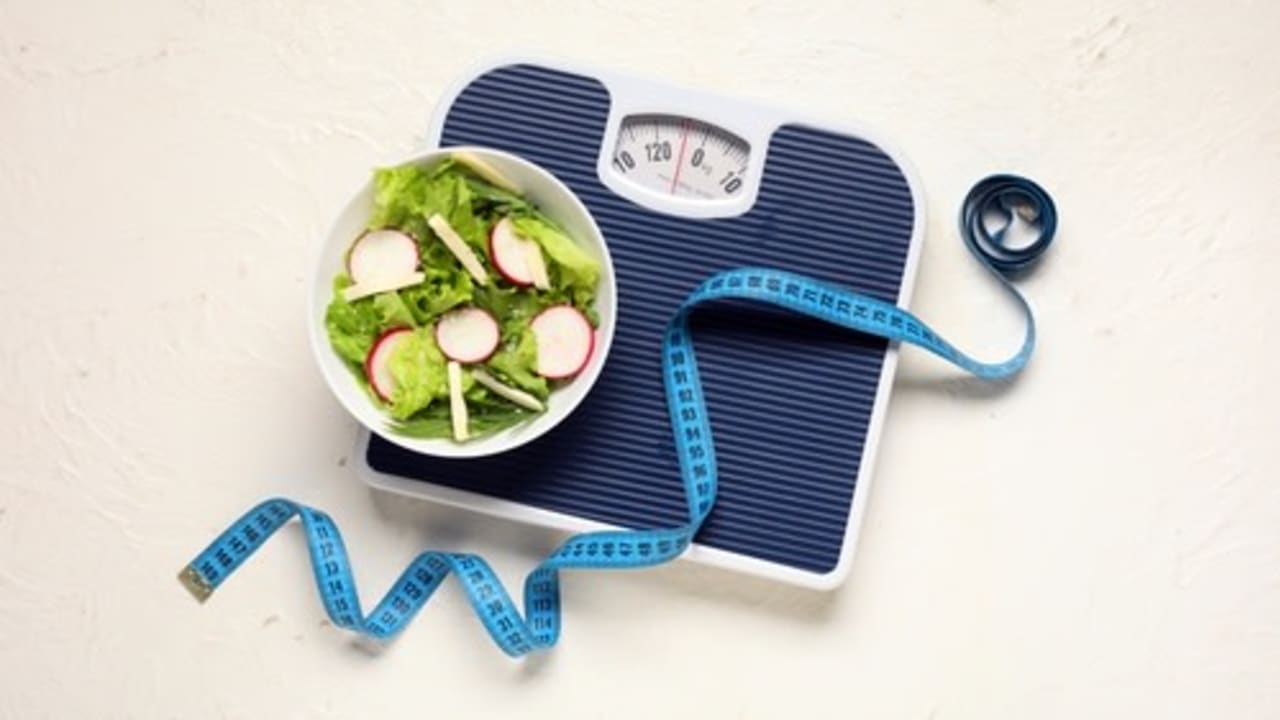
Jerusalem Post/Health & Wellness/NutritionAn in-depth look at the winning combination of food volume, proteins, and dietary fibers, as opposed to the psychological habits and the mental need for carbohydrates that we all know.Follow us on GoogleIllustration: Children eating(photo credit: freepik)ByDR. MAYA ROSMANJUNE 11, 2026 20:00One of the questions that returns again and again in weight loss processes is what really satiates us: Is it the carbohydrate, the protein, the vegetables, or perhaps the psychological feeling that "Without rice or bread it is not a meal"? A listener who is in a weight loss process, shared on air that she remains hungry after a lunch that contains protein and vegetables, and only a carbohydrate satiates her. This is a claim that I hear quite a bit, and it is definitely worth serious attention, because on the one hand carbohydrates can contribute to satiety, and on the other hand, they are not always the central factor. Sometimes what is missing is not necessarily rice or a potato, but volume, fibers, chewing, habits, and sometimes also an emotional feeling of a "Real meal."What makes us feel full? Satiety is not a simple feeling that is determined only by the amount of calories we ate. It is influenced by several mechanisms that operate together: The volume of food in the stomach, the duration of chewing, the amount of protein, the amount of fibers, the rate of stomach emptying, the blood sugar level, the secretion of satiety hormones from the intestines, and also what our brain is used to interpreting as a satisfying meal. That is, it is possible to eat something relatively small in calories but large in volume, high in fibers and requiring chewing, and feel very full. In contrast, it is possible to eat a high–calorie food, soft and sweet, that disappears within two minutes and feel that you want more.The role of the stomach: The stomach is a muscular and flexible organ. One of its important roles is to store the food, mix it with the gastric juices, break it down gradually and pass it onward to the small intestine. When the stomach fills up, the walls stretch, and special receptors pass a message to the brain: Food has entered, there is volume, it is possible to start lowering the feeling of hunger. Therefore, the volume of the meal is very significant. This is exactly the reason why a huge salad, cooked vegetables or a thick vegetable soup can influence satiety much more than it seems to us by the number of calories alone.Protein is considered one of the most satiating food components, among other things because it influences satiety hormones (credit: SHUTTERSTOCK)Why do vegetables in a large quantity satiate so much? When I speak about vegetables at lunch, I do not mean two slices of cucumber next to the chicken breast or three lettuce leaves for color on the plate. I mean a real quantity: An entire tray of vegetables in the oven: Carrots, pepper, eggplant, mushrooms, green beans, pumpkin, zucchini, cauliflower, broccoli, onion or any other combination, and in addition a large salad with lettuce, cucumbers, tomatoes, cabbage, sprouts or other fresh vegetables.Such a quantity of vegetables contributes a huge volume to the meal, a lot of water, dietary fibers, minerals, antioxidants and prolonged chewing. It fills the stomach without "Loading" calories, slows down the pace of eating, and causes the brain to receive enough time to absorb that we ate. There is an excellent combination here: On the one hand a lot of food on the plate, and on the other hand low caloric density. In simple words – you eat a lot, but not a lot of calories.Whoever eats a respectable portion of protein alongside a truly large quantity of vegetables, is not supposed to feel that they received a "Small meal." On the contrary. Such a meal can be so satiating, that sometimes it is difficult to move after it. If this does not happen, it is worth checking whether there really was a large quantity of vegetables there, or if it is a relatively small plate that was "Vegetables" only in name.The role of protein in the feeling of satiety: Protein also has a very important role in satiety. Protein is considered one of the most satiating food components, among other things because it influences satiety hormones, requires more energy for digestion, and contributes to maintaining muscle mass during weight loss. A protein portion can be fish, chicken, eggs, cheese, tofu, legumes or another combination that fits the personal menu.It is important to remember: Protein alone does not always create a feeling of "Fullness" in the stomach. If you eat for example a small piece of fish with a few vegetables, it is possible that the protein is high quality and sufficient from a nutritional standpoint, but the volume of the meal is still small. Therefore, the combination between protein and vegetables in a large quantity is so significant.What about the carbohydrate? Do three tablespoons of rice really make the difference? Here it is important to be precise. A carbohydrate can definitely be part of a healthy and balanced menu, and there is no reason to turn it into an enemy. Rice, potato, sweet potato, quinoa, bulgur or whole bread can be integrated into the menu, depending on the goal, the hunger, the physical activity and personal preferences.But when speaking about a very small quantity, for example three tablespoons of rice after cooking, one must ask: Is this really the quantity that causes significant satiety, or is it mainly a psychological feeling of "I had a carbohydrate in the meal"? Three tablespoons of cooked rice are a relatively small quantity. They can add flavor, texture, a feeling of balance on the plate, and perhaps also emotional satisfaction for whoever feels that a meal without a carbohydrate is incomplete. But in terms of volume, fibers and duration of chewing, their contribution to physiological satiety is usually much smaller than that of a large tray of vegetables and a huge salad. In other words, if a person feels that only three tablespoons of rice "Save" them from hunger, it is very possible that it is not just a physical need, but a habit, an expectation, or an emotional feeling that the brain associates with the end of the meal.Real hunger or habit? Many people grew up on a fixed structure of a meal: Protein, a carbohydrate side dish and a small vegetable on the side. For years the brain learned that a "Correct" meal includes rice, pasta, potato or bread. Therefore, when the plate looks different, even if it is large and nutritious, a feeling can appear that "Something is missing." This is not necessarily physiological hunger. Sometimes it is a hunger of habit, of the eye, of expectation. The body received volume, protein and fibers, but the brain searches for the familiar sign that says: Now this is a meal.The way to deal with this is not necessarily to fight the carbohydrates, but to understand what their real role is in that same meal. If a small quantity of carbohydrate helps to persist with the menu, calms the psychological need and prevents a feeling of deprivation, it can be integrated. But it is worth knowing that in the recommended quantity during a diet for weight loss – it is not always the one responsible for satiety. Sometimes it simply gives a feeling of closure.The bottom line: If a lunch of protein and vegetables does not satiate, before adding more and more carbohydrates it is worth checking first the quantity of vegetables and the volume of the meal. A small salad and a few vegetables on the side are not similar to an entire tray of vegetables and a large salad. When you truly eat a lot of vegetables alongside protein, the meal can be very satiating even without a significant carbohydrate. And if nevertheless three tablespoons of rice give a feeling of satisfaction and closure – they can of course be integrated, but it is worth understanding that they are not always the primary source of satiety. Sometimes the body is full, and only the brain is still searching for the old habit.For Dr. Maya Rosman's course: How to improve health and how to lose weight in a sane and logical way, click hereFor Dr. Maya Rosman's newsletter, articles in nutrition and health, advice and tips for improving health, and nice recipes, free of charge, click hereFollow us on Google
What really satiates us? | Dr. Maya Rosman | The Jerusalem Post
An in-depth look at the winning combination of food volume, proteins, and dietary fibers, as opposed to the psychological habits and the mental need for carbohydrates that we all know.
TL;DRAI
Questo articolo (nutrizione/diete da The Jerusalem Post) **non è rilevante per Warptech Tech News** — testata tech per manager IT e CTO italiani. Controlla se: - Hai incollato il corpo dell'articolo sbagliato - L'URL dovrebbe essere un pezzo tech (es. su AI in healthcare, food tech, ecc.) ma il contenuto estratto è generico Puoi riprovare con l'articolo corretto? Mi serve il titolo e il corpo di un pezzo rilevante per tech/AI/business/startup.
1,414 words~6 min read