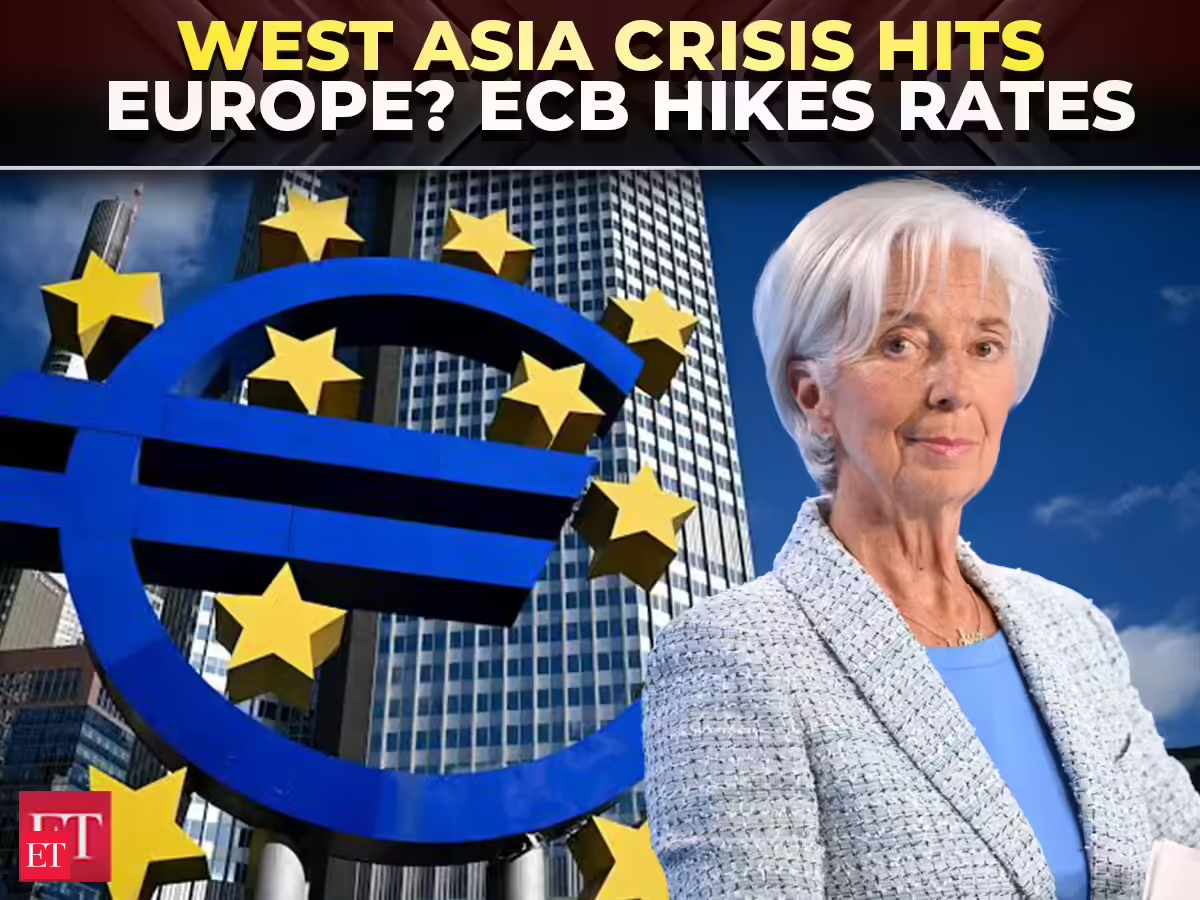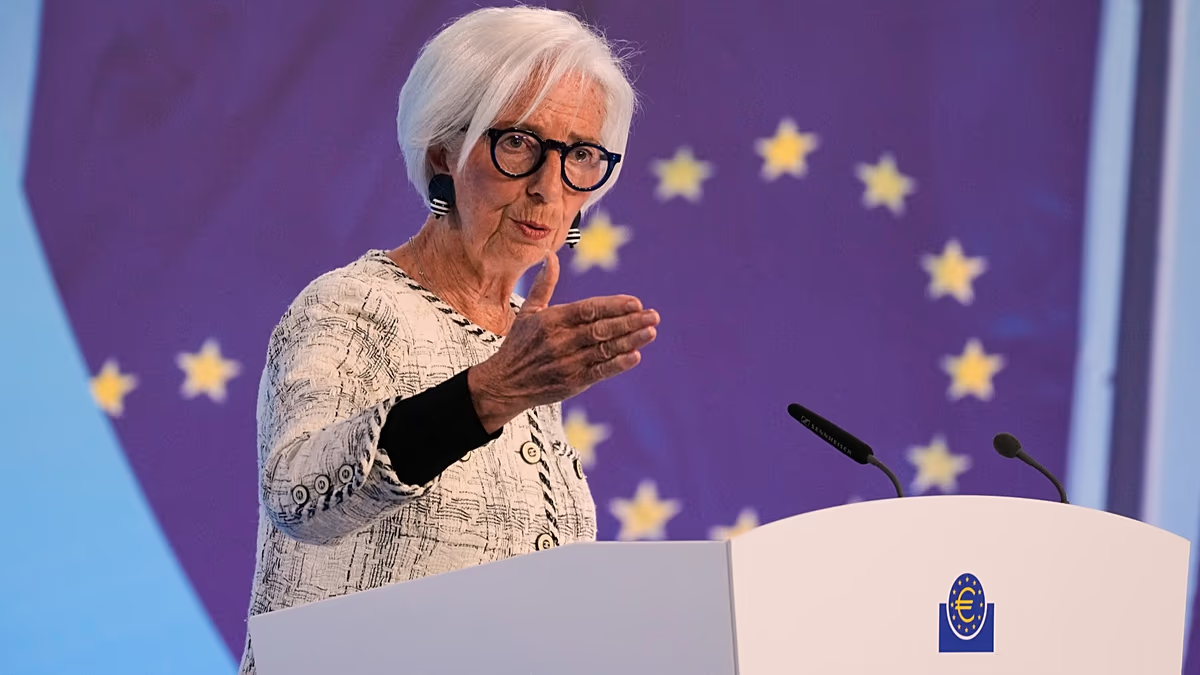
The European Central Bank became the first central bank to raise interest rates over inflation brought by the war with Iran.The bank announced on Thursday that it was raising three key ECB interest rates by 25 basis points to keep inflation under control at 2% in the medium term. The ECB was a natural first mover, as the closure of the Strait of Hormuz has had a much larger effect on Europe than the United States.“The war in the Middle East is generating inflation pressures, and the decision to raise rates is robust across a range of scenarios mapping out how the shock might evolve and affect the medium-term outlook for the euro area,” a press release from the bank said.
The release said that inflation is projected to average 3% in 2026, 2.3% in 2027, and 2% in 2028. The baseline for economic growth was likewise lowered, estimated now 0.8% in 2026, 1.2% in 2027, and 1.5% in 2028.
“The full implications of the war for medium-term inflation and growth will depend on the intensity and duration of the energy price shock, as well as the scale of its indirect and second-round effects,” the press release reads.
Though gas prices have risen significantly in the U.S., the country has been relatively insulated from the worst economic effects of the war with Iran, largely owing to its lucrative domestic energy market.