Serving tech enthusiasts for over 25 years.
TechSpot means tech analysis and advice you can trust.
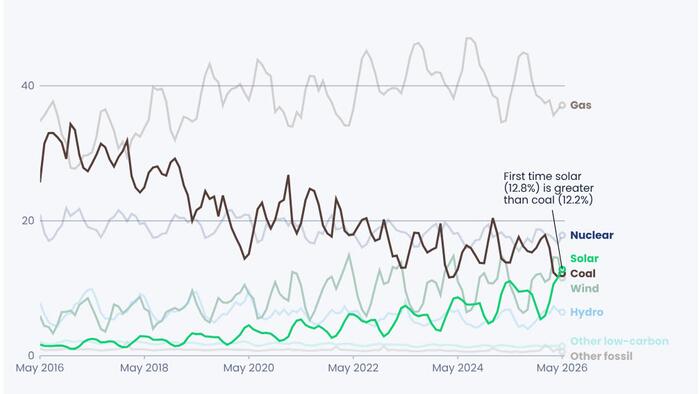
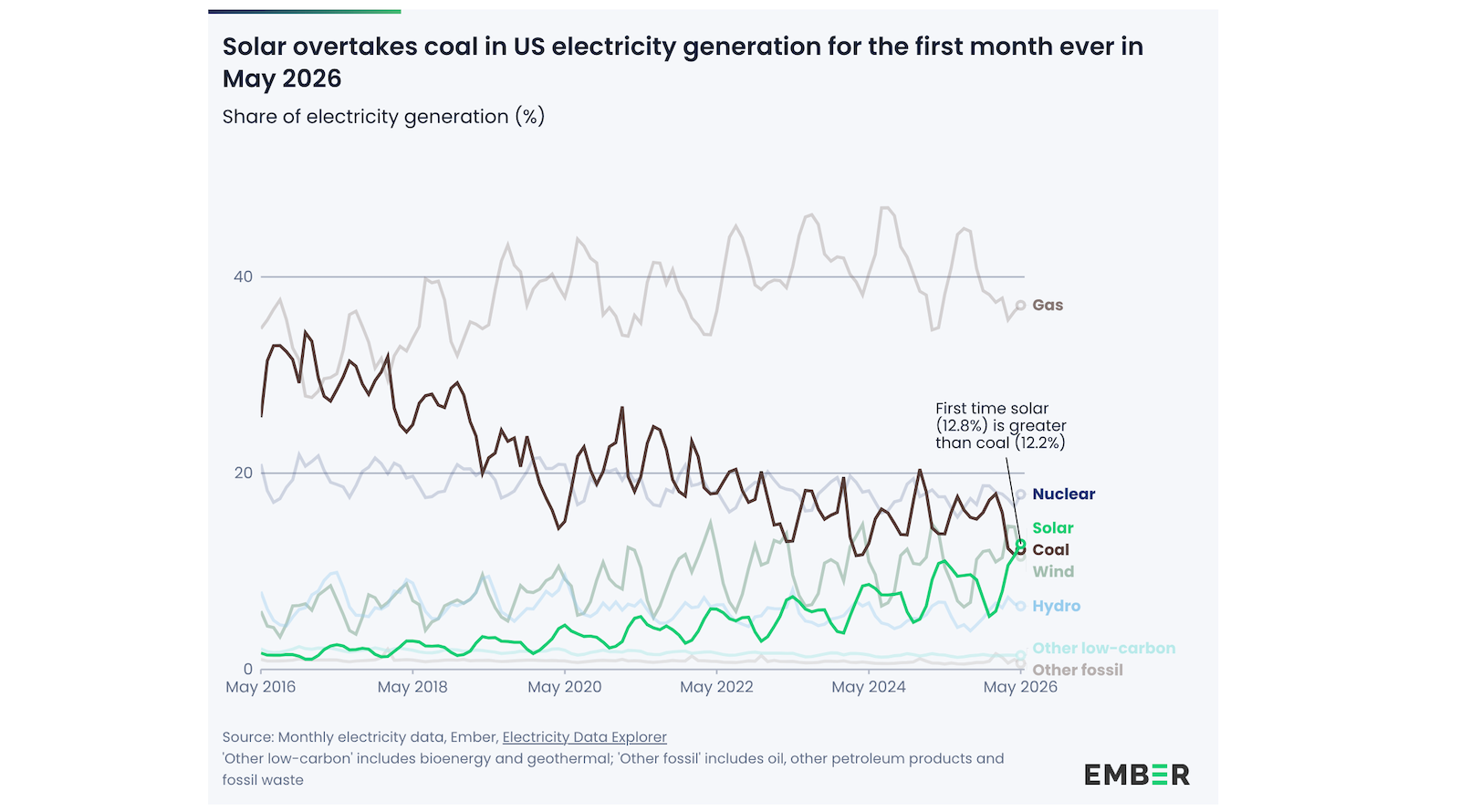
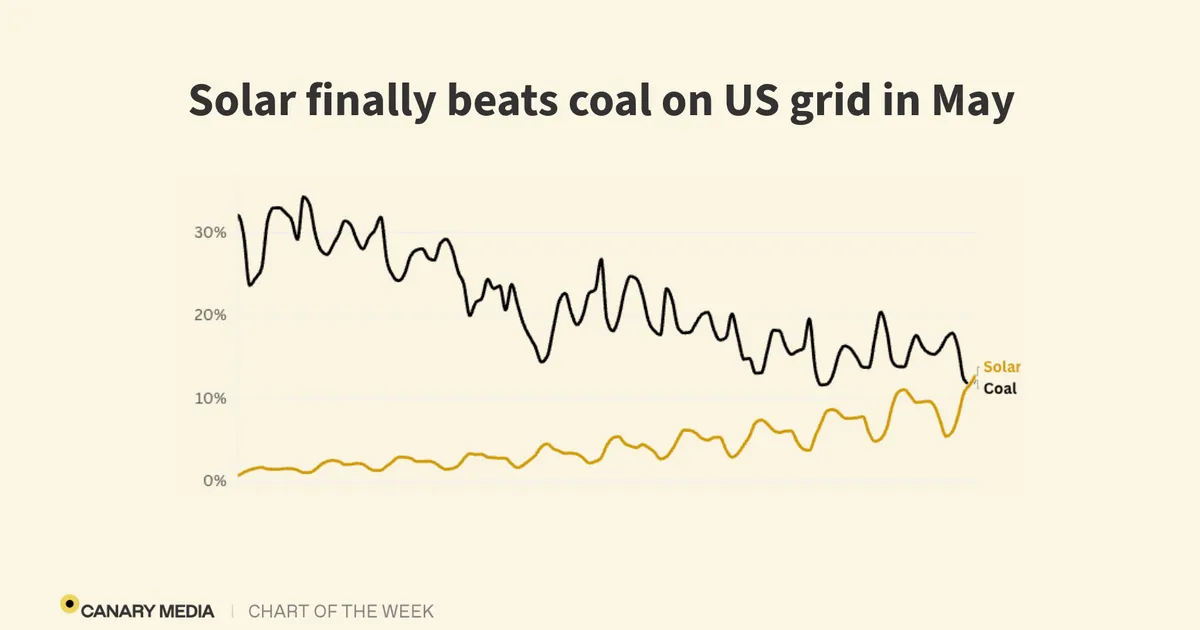
What just happened? Solar power crossed an important threshold in May, as a rapidly expanding fleet of photovoltaic projects supplied more US electricity than coal for the first time on record. New data from global energy think tank Ember shows that US solar generation climbed to 45.5 terawatt-hours in May 2026, the highest monthly total ever recorded and a 17% increase from May of last year. That output gave solar 12.8% of all US electricity for the month, just enough to edge ahead of coal at 12.2%. For a technology that only recently accounted for a small share of the mix, it has now become a central part of the system.
Five years make the shift look even sharper. In May 2021, coal supplied 19.7% of US electricity, while solar accounted for just 5.4%. Today, solar's share of the mix has risen to the point where coal is no longer ahead of it on the grid.
May also marked the first time solar ranked as the third-largest individual source of electricity in the country, behind only natural gas and nuclear. When grouped with other renewables, the category becomes the second-largest source overall. For utilities and grid planners, that is more than a change in rankings; it signals that solar must now be treated as a central part of the US power mix.