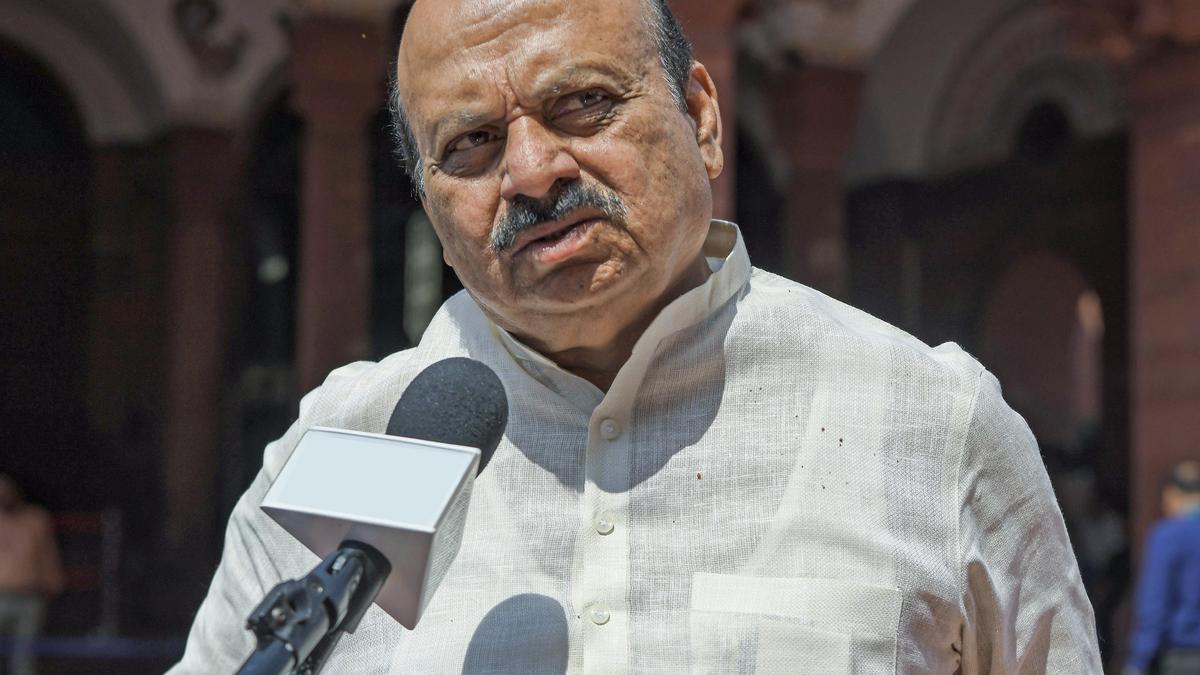
The National Company Law Tribunal (NCLT), Bengaluru Bench, has declared Naseer Ahmed, Member of the Karnataka Legislative Council from the Congress, as “bankrupt” under the Insolvency and Bankruptcy Code (IBC) for failing to repay ₹1,454 crore outstanding loan amount of his erstwhile company M/s Scotts Garments Limited, Bengaluru, now liquidated.The declaration of Mr. Naseer as a ‘bankrupt’ now leads to his disqualification from the post of MLC under both Section 140 of the IBC and Article 191(1)(c) of the Constitution of India, which disqualifies a MLA or MLC if he is an “undischarged insolvent”.Incidentally, Mr. Naseer was removed from the post of political secretary (to the then Chief Minister Siddaramaiah) amid allegations of anti-party activity during the Davangere South Assembly bypoll.Wife and son tooMeanwhile, the NCLT has also declared his wife, Nuzhat Aisha Naseer, and son Awaiz Ahmed as “bankrupt” as they were also personal guarantors for the loan as erstwhile directors of the company of which Mr. Naseer was the Managing Director before it was liquidated following a liquidation proceedings initiated in 2019.A Bengaluru Bench of the NCLT comprising comprising Sunil Kumar Aggarwal (Judicial Member) and Radhakrishna Sreepada (Technical Member) passed the order on June 8 on an application filed by State Bank of India, Canara Bank, and IDBI Bank under the IBC-2016.The NCLT has appointed Insolvency Professional, Ravindra Beleyur, as Bankruptcy Trustee (BT) under Section 125 of the IBC to take custody of all the assets/estates of Mr. Naseer, his wife and son for recovering the dues to the creditors.DisqualificationFrom the bankruptcy commencement date, Section 140 of the IBC states, the bankrupts, besides disqualification under existing laws, are disqualified from being appointed or acting as a public servant; being appointed or acting as a trustee or representative of any trust, estate or settlement, being elected to any public office, or be elected, sit, or vote as a local authority member.Bankruptcy declaration imposes restrictions on Mr. Naseer and others like preventing them from acting as any company director or participate in promotion, formation, or management. They cannot, without BT’s sanction, create charges or incur debt. They must inform partners, must disclose bankruptcy before specified transactions, cannot pursue legal action on debts without adjudicating authority’s approval, and cannot travel abroad without permission.Background of caseThe banks had extended various credit facilities to the company, for which Mr. Naseer, his wife and son, stood as personal guarantors. After the company’s loan account was classified as a Non-Performing Asset (NPA) in 2018, the creditors initiated recovery proceedings. The insolvency resolution process against the personal guarantor was originally admitted by the NCLT in June 2022.Though the NCLT had given adequate opportunities for Mr. Naseer and others to submit resolution/repayment plan, they failed to submit any plan following which the consortium of banks resolved to treat the absence of a repayment plan as a “deemed repayment plan” with ‘nil’ value and moved to seek bankruptcy.Meanwhile, the guarantors contested the bankruptcy proceedings before the NCLT, by arguing that there exist no privity of contract between them and the banks as they had not executed any deed of guarantee in favour of the banks. The trio had also contended that the guarantee deed was executed in favour of a security trustee, SBICAP Trustee Company, and not directly to the banks.However, NCLT rejected these contention by pointing out that the creditor-guarantor relationship between the bank and them was already established before it in 2022 itself and such a status had attained finality. The NCLT also clarified that pendency of recovery proceedings before the Debts Recovery Tribunal does not bar proceedings under the IBC, as remedies are independent and concurrent. Published - June 11, 2026 08:47 pm IST
Congress MLC Naseer Ahmed faces disqualification from being a legislator as NCLT declares him ‘bankrupt’
Congress MLC Naseer Ahmed faces disqualification after NCLT declares him bankrupt for failing to repay ₹1,454 crore loan.
609 words~3 min read