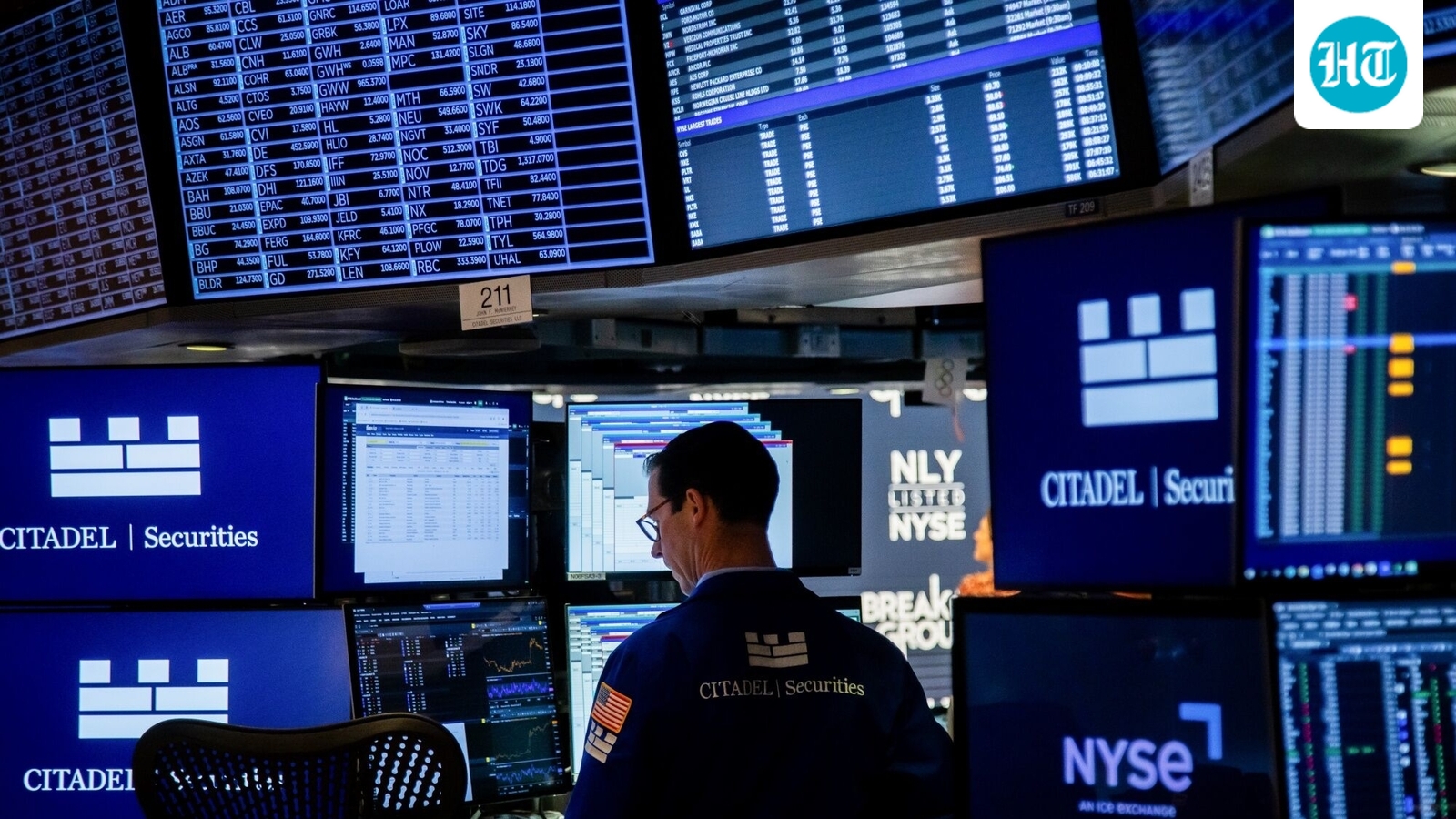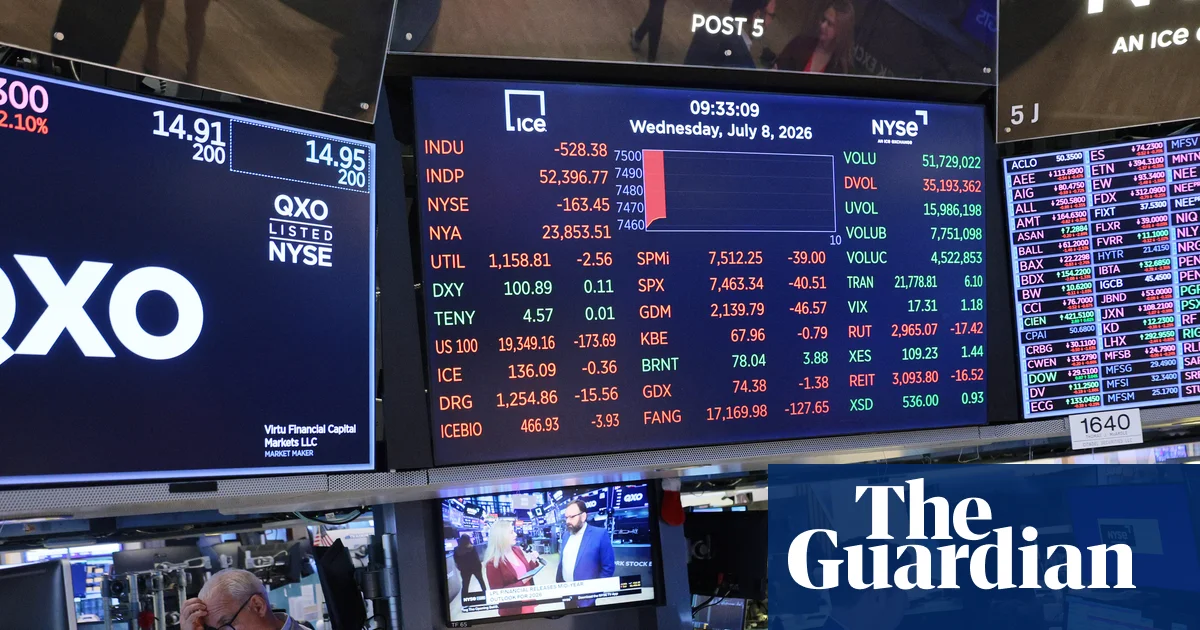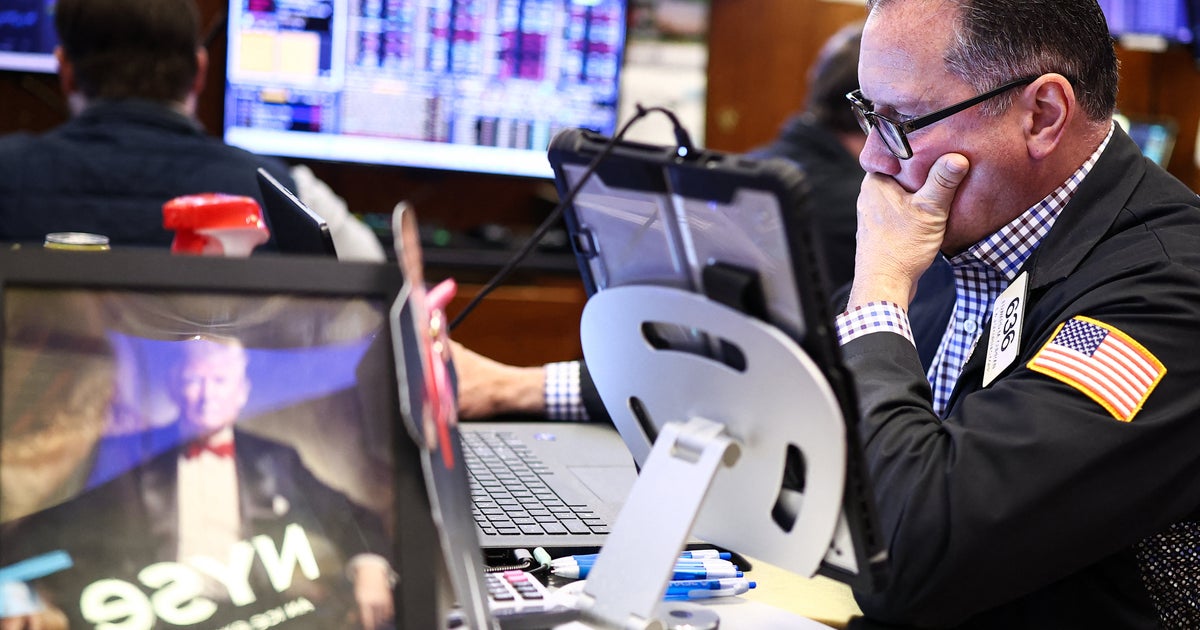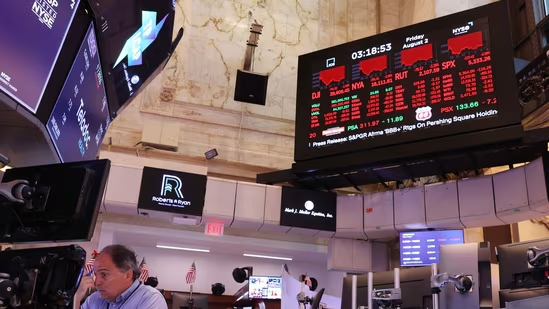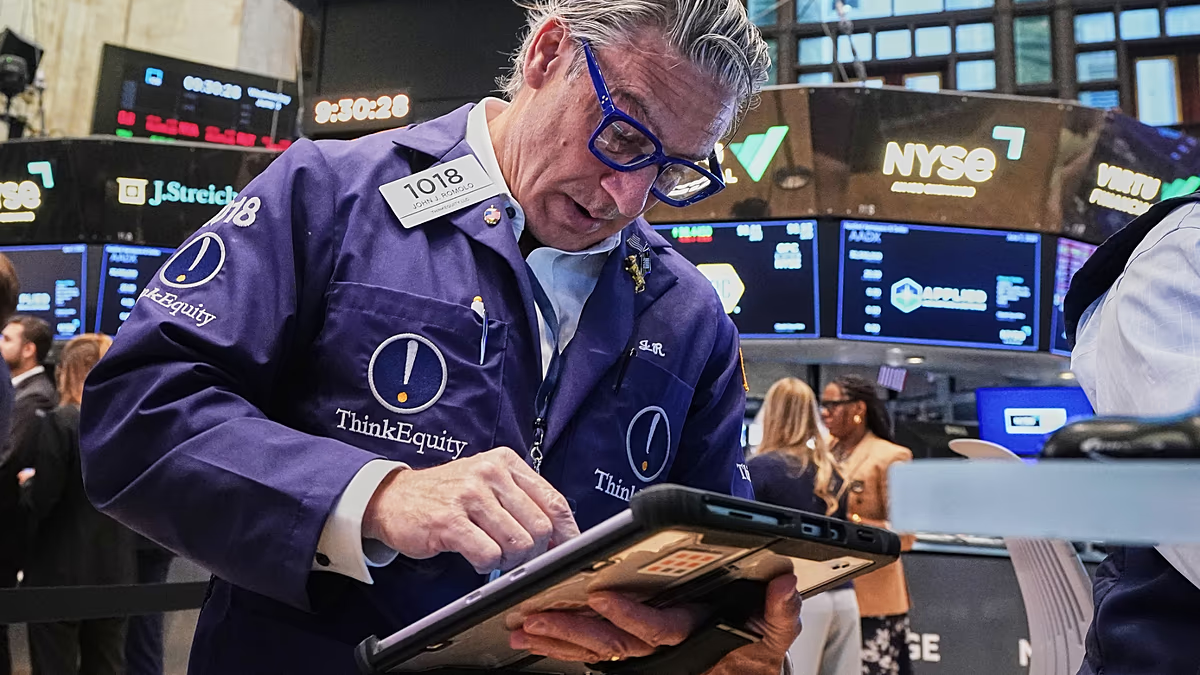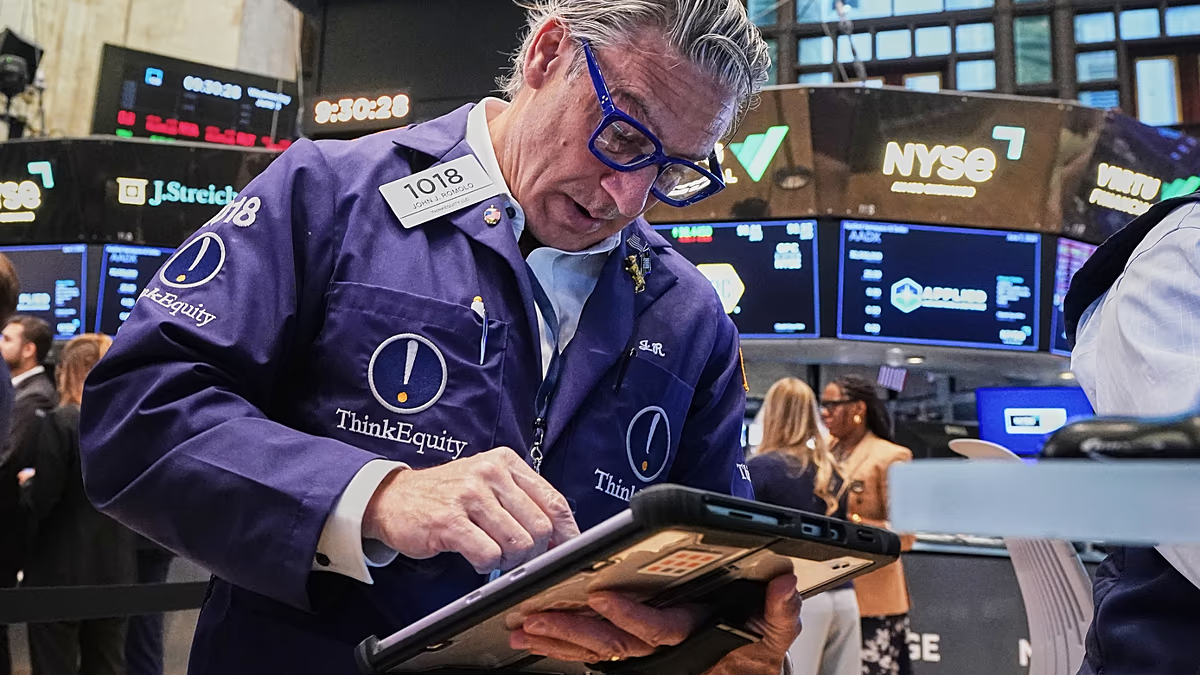
US Stock Market Crash: Wednesday was a session Wall Street would rather forget. The Dow Jones Industrial Average fell more than 950 points — closing below 50,000 — as a fresh wave of geopolitical fear swept through every corner of the market. The S&P 500 declined 1.6%, the Nasdaq dropped 2%, and the selling was broad: Industrials fell 3.4%, with Materials, Tech, and Consumer Discretionary each shedding more than 2%. One single earnings-season promise from a tech company triggered the sharpest individual stock collapse of the day, but the real driver was a war that is now reshaping the inflation math for every American.President Trump posted bluntly that Iran had "taken too long to negotiate a deal that would have been great for them, now they will have to pay the price!!!" — coming one day after the US launched what it called self-defense strikes following the downing of an Army Apache helicopter. The market's reaction was immediate and unambiguous: sell equities, buy oil, flee to safety. WTI Crude jumped past $90 a barrel. The US Dollar Index — a measure of the greenback's relative strength — ticked higher. Treasury yields on longer maturities fell modestly as bond investors priced in slower growth, not runaway spending.Dow Jones, S&P 500 and Nasdaq Crash as Trump’s Iran Threat Sparks Market Selloff, Oil Surge and Fresh Inflation FearsThe Dow Jones dropped 1.9%, while the S&P 500 declined 1.6%. The Nasdaq fell about 2%, with semiconductor and AI-related stocks suffering particularly heavy losses. The Philadelphia Semiconductor Index slid 3.6%, highlighting how quickly investors moved away from high-growth sectors. Technology shares were already showing signs of exhaustion after months of relentless gains. Nvidia fell 3.7%. Tesla lost 3.8%. Super Micro Computer plunged 28% after announcing plans to raise $7 billion through stock offerings, raising concerns about shareholder dilution despite strong AI demand. Investors also digested fresh inflation data. May Consumer Price Index inflation reached 4.2% year-over-year, the highest level in three years. Although the figure matched expectations, it reinforced concerns that rising energy prices could create a new inflation wave. When geopolitical tensions and inflation fears appear simultaneously, equity markets often struggle because investors worry that interest rates could stay higher for longer. That possibility weighed heavily on growth stocks and pushed major indexes sharply lower. How are oil prices, the U.S. dollar and Treasury yields signaling a risk-off market? One of the clearest signs of market stress appeared outside the stock market. WTI crude oil traded near $90 per barrel while Brent crude approached $87. Investors immediately priced in the possibility that tensions involving Iran could affect energy supplies moving through the Strait of Hormuz, one of the world's most important oil transit routes. At the same time, the U.S. Dollar Index moved higher as global investors sought safety in dollar-denominated assets. Historically, the dollar tends to strengthen during periods of geopolitical uncertainty because it remains the world's primary reserve currency. Treasury markets delivered another important message. The 10-year Treasury yield slipped toward 4.53%, while the 30-year yield fell toward 5.00%. Falling long-term yields often reflect growing demand for government bonds during periods of market anxiety. This combination of rising oil prices, a stronger dollar, and declining long-term Treasury yields represents a classic defensive market setup. Investors become less focused on growth opportunities and more concerned about preserving capital. The message from multiple asset classes was remarkably consistent: risk appetite was fading rapidly.What could happen next for the Dow Jones, S&P 500 and Nasdaq if the Iran crisis continues? The future direction of the Dow Jones, S&P 500 and Nasdaq may depend less on corporate earnings and more on developments in the Middle East. If oil prices remain elevated through the summer, inflation pressures could intensify further. Higher energy costs eventually affect transportation, manufacturing, logistics, and consumer spending. Economists are already warning that prolonged disruptions could complicate the Federal Reserve’s path toward lower interest rates. Investors are particularly sensitive because the recent stock market rally relied heavily on expectations that inflation would continue easing and monetary policy would gradually become more supportive. A sustained energy shock threatens both assumptions. Meanwhile, market volatility has increased significantly. Fear indicators have moved higher, and analysts note that many AI-related stocks had reached historically overbought levels before this correction began. Yet history also shows that markets often overreact to geopolitical headlines in the short term. Much will depend on whether tensions escalate further or stabilize in coming weeks. If the situation improves, investors could return to technology and growth sectors quickly. If conflict expands and oil continues climbing, the Dow Jones, S&P 500 and Nasdaq may face additional downside pressure.Supermicro collapses 28% — is the AI trade finally cooling?The sharpest single-stock story of the session was Super Micro Computer, which plunged 28% to lead all S&P 500 decliners. The server maker announced plans to raise $7 billion — $5 billion through stock offerings and $2 billion via an at-the-market program — to fund components for approximately $39 billion in AI orders it has recently secured. The stock market's verdict was swift: dilution risk outweighs the implied demand signal.The SMCI sell-off is part of a broader pattern. The Nasdaq has now pulled back meaningfully from its recent peaks. CNN's Fear & Greed Index is near "extreme fear" levels. The VIX — Wall Street's fear gauge — has climbed steadily this week. Roughly half a trillion dollars in market value was erased from tech and Magnificent Seven stocks on Tuesday alone, according to Fundstrat estimates. Tesla and Nvidia led Wednesday's Magnificent Seven losses at 3.8% and 3.7% respectively, while the PHLX Semiconductor Index fell 3.6%. Only Apple — which has been more insulated from the AI hardware buildout cycle — ended the session in positive territory.The AI trade is not dead. Demand for AI infrastructure — the data centers, chips, and servers that power large models — remains structurally enormous. Supermicro's $39 billion order backlog is evidence of that. But valuations had stretched well beyond historical norms, and with macro uncertainty returning, investors are recalibrating what they are willing to pay for growth that is now competing with 4.2% inflation and the possibility of higher rates for longer.SpaceX, Bitcoin, and a market still alive beneath the fearNot everything pointed down Wednesday. Cracker Barrel surged 23% after reporting a surprise profit and raising its full-year outlook — a reminder that domestic consumer spending, away from the AI and energy-complex storm, still has pockets of genuine strength. Oracle, which reports earnings after the bell, pulled back only 1% ahead of results that analysts expect to beat on the back of its cloud and AI partnerships.Bitcoin was trading near $61,900, down modestly, broadly tracking risk sentiment without the dramatic leverage moves that characterized earlier cycles. Gold futures, despite their traditional safe-haven role, fell 4% to $4,115 — an unusual move that some traders attributed to dollar-strength dynamics and forced selling from equity portfolios covering margin calls.Looming large over the next week is the SpaceX IPO, expected to hit markets on Friday under the ticker "SPCX." On prediction markets, bettors broadly expect shares to rise in their first session. The offering is expected to raise more money than any IPO in history and would immediately place a second Elon Musk-led company among the largest public US corporations. Market watchers have noted that retail investors appear to be repositioning ahead of the deal — which may itself be contributing to some of the tech-sector selling pressure this week.The 10-year Treasury yield settled near 4.53%, effectively unchanged from Tuesday's close. The bond market, at least, is not yet sounding an alarm louder than it already has. But with the Strait of Hormuz still disrupted, another CPI report due in five weeks, and a war whose political resolution remains entirely unclear, the calm in Treasuries may be the last quiet corner of a market that is growing increasingly difficult to read.
US markets plunge: Dow Jones, S&P 500 and Nasdaq crash as Trump’s Iran threat sparks a risk-off market selloff, pushing the U.S. dollar higher and oil prices sharply upward
Dow Jones, S&P 500 and Nasdaq crashed as Trumps Iran threat reignited fears of a wider Middle East conflict. Investors rushed into the U.S. dollar while WTI oil surged toward $90. Rising energy prices now threaten inflation, interest-rate expectations, and economic growth. The selloff reveals how quickly geopolitics can reshape Wall Street sentiment and global markets.
1,314 words~6 min read