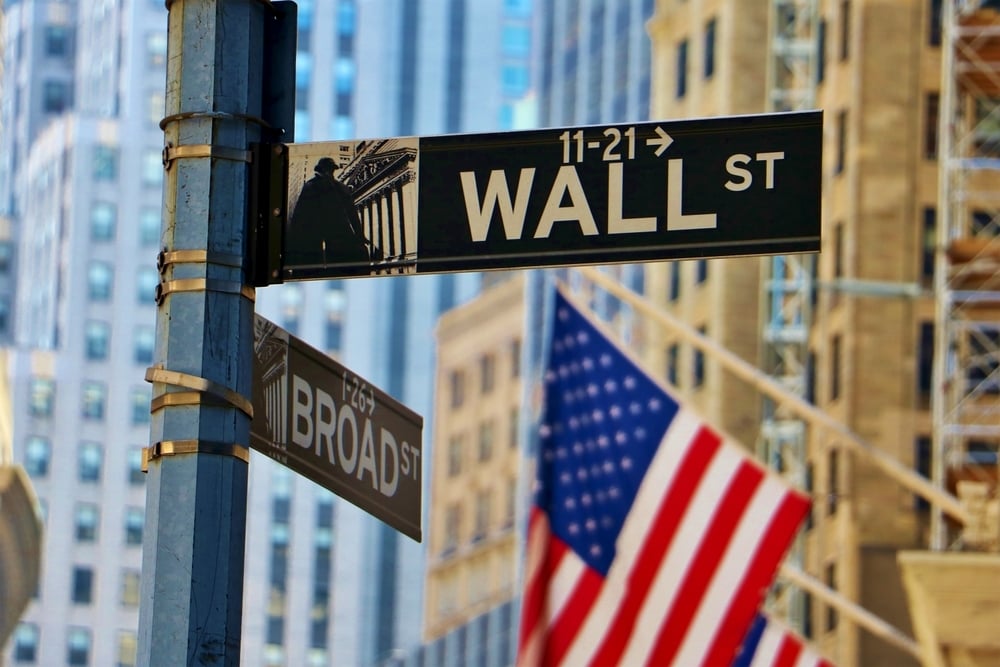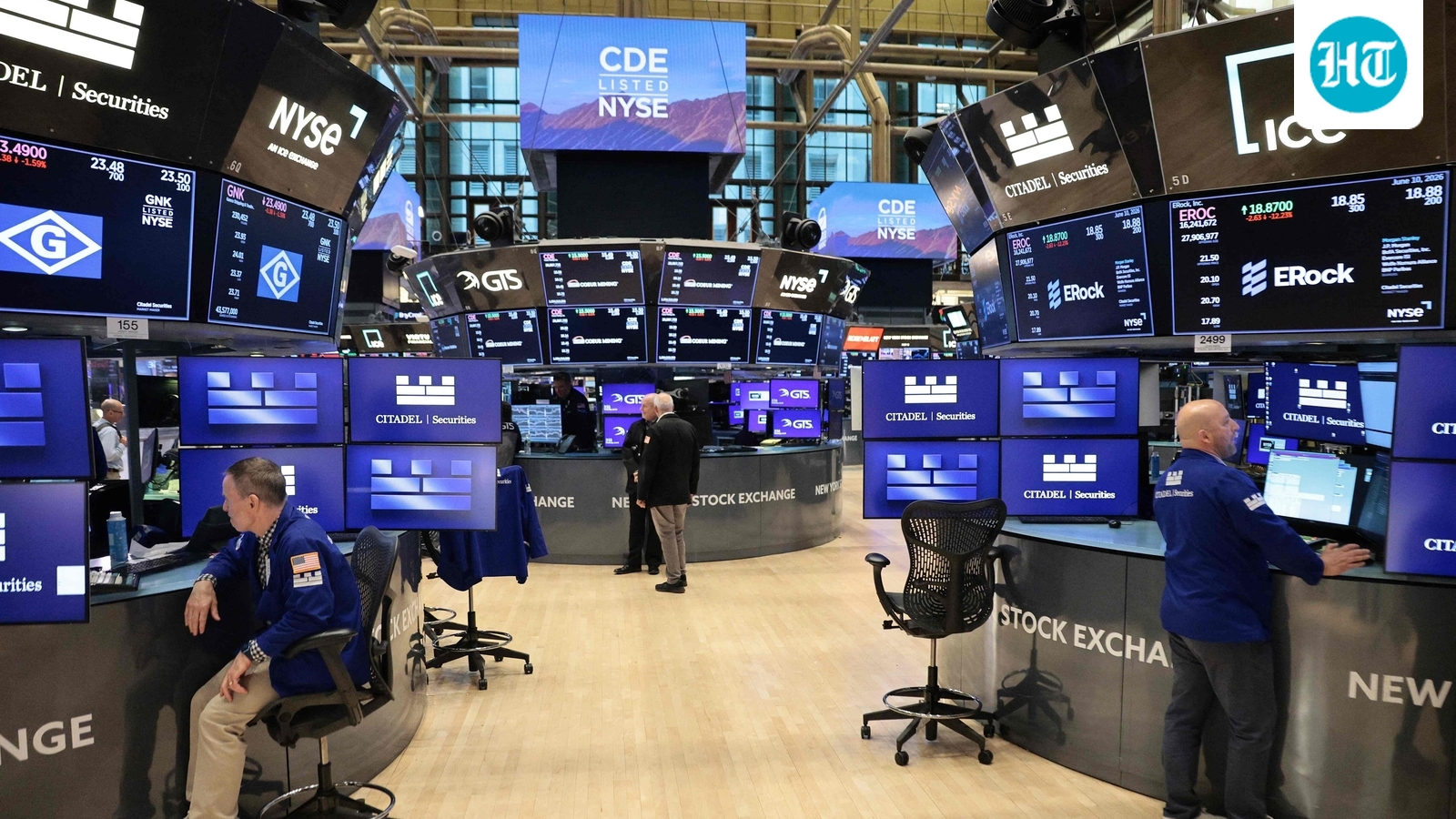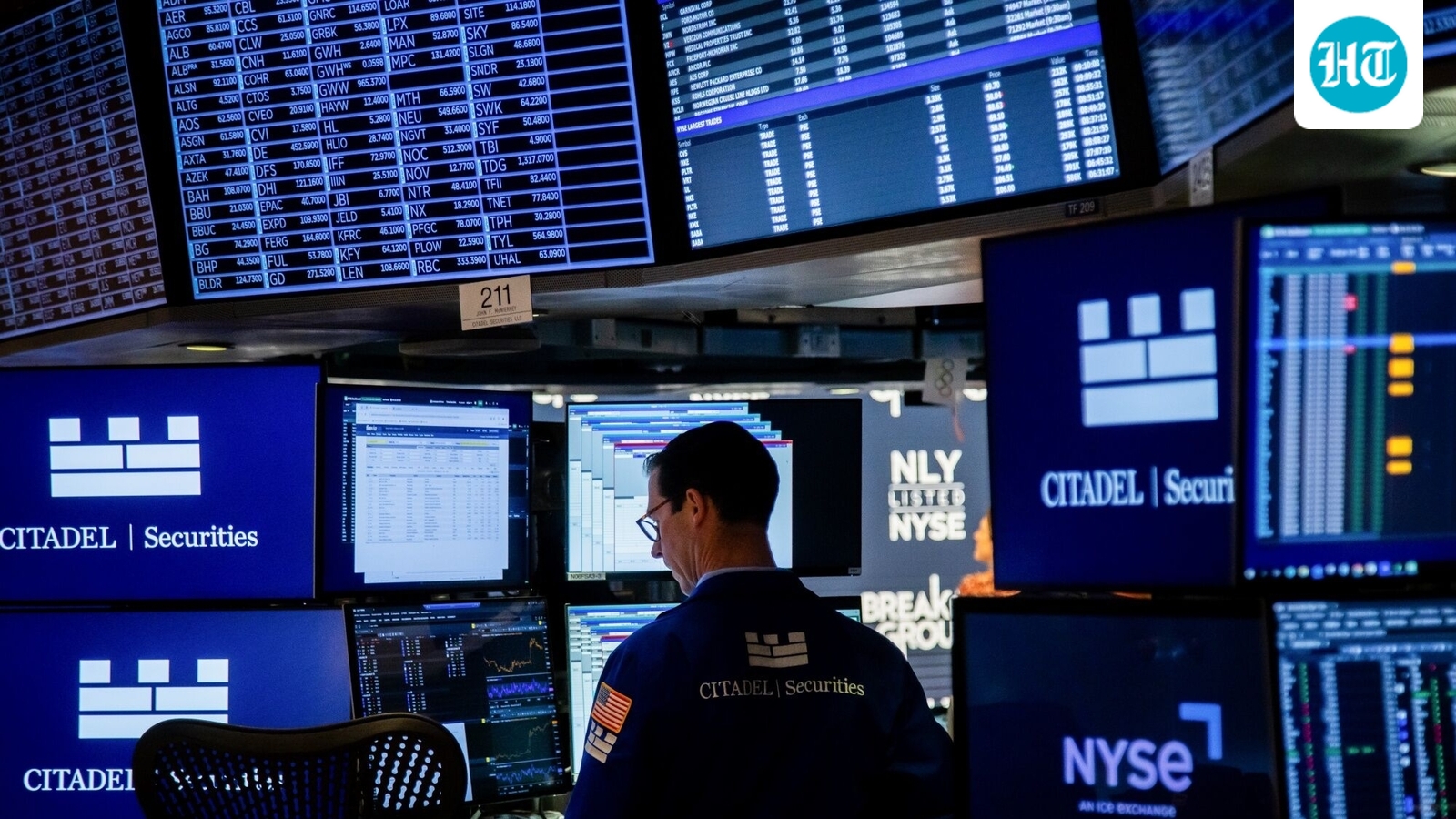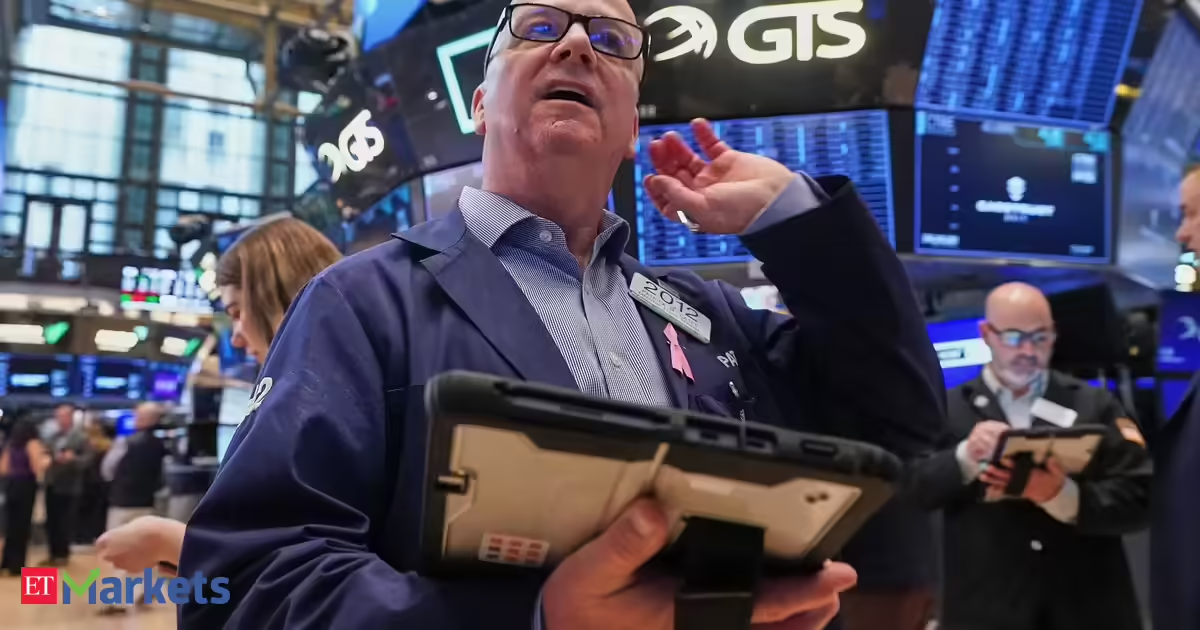
Why Is the US Stock Market Down Today? Dow Jones, S&P 500, and Nasdaq Fall as Iran War and Inflation Hit Hard: Wall Street woke up on edge Wednesday morning, and for good reason. The Dow Jones Industrial Average, S&P 500, and Nasdaq Composite all declined on June 10, 2026, as two forces collided at once — a surging inflation report and an escalating US-Iran military conflict that has rattled energy markets for weeks. The Dow Jones dropped over 450 points intraday, the S&P 500 shed roughly 40 points, and the Nasdaq slid close to 192 points. These are not panic numbers, but they reflect something deeper: a market that has been stretched thin for months, now facing the kind of compounding pressure that historically precedes bigger moves. Investors who have been holding through the noise are now asking a pointed question — is this a dip, or the beginning of a broader unraveling? Why is US stock market down today after the latest inflation report? The Bureau of Labor Statistics released its May Consumer Price Index report Wednesday morning, and the number was not comfortable. The CPI rose 4.2% year-over-year — the highest annual inflation reading since April 2023, and a meaningful jump from the 3.8% recorded in April. Core inflation, which strips out food and energy, came in at 2.9%, up from 2.8% the prior month. The headline figure matched economist forecasts, which is why markets did not crash on the news. But matching expectations and being good news are two very different things. The Federal Reserve has been trying to walk a narrow path — holding rates at a level that neither overheats the economy nor chokes growth. A 4.2% CPI reading makes that path narrower. Traders have already priced in a 25 basis point rate hike by December 2026, and Wednesday's data did little to change that calculus. What it did do is raise the temperature of uncertainty. Jeffrey Roach, Chief Economist at LPL Financial, noted Wednesday that the Iran crisis has begun to bleed into consumer prices across multiple categories beyond just fuel. If the Strait of Hormuz stays disrupted through the summer, the energy shock could ripple into broader pricing — which would likely force the Fed's hand sooner than markets are comfortable with. The 10-year Treasury yield, a key benchmark for mortgages and consumer lending, sat just below 4.53% following the release. It barely moved, which tells you that bond traders are not panicking yet. But the equity markets are a different beast — they hate ambiguity, and the inflation path right now is deeply ambiguous. How are Iran tensions and rising oil prices hurting the Dow Jones, S&P 500 and Nasdaq? The more emotionally charged driver of today's market selloff is the US military action against Iran. Overnight Tuesday, the US launched what the administration called "self-defense strikes" against Iranian targets, after Iran allegedly downed a US Army Apache helicopter. President Trump posted bluntly on social media that Iran had "taken too long to negotiate a deal" and would "have to pay the price." Oil markets responded immediately. West Texas Intermediate crude futures rose 2.2% to $90.15 per barrel, while Brent crude — the global benchmark — climbed 1.7% to $93 per barrel. These are not trivial moves. Oil at $90 is a fundamentally different economic environment than oil at the $63 per barrel it traded at before the conflict began escalating in late February. The war has effectively disrupted Middle Eastern oil supply, and every escalation raises the specter of a prolonged closure of the Strait of Hormuz, through which roughly 20% of the world's oil passes daily. At the pump, Americans are already feeling this. A gallon of regular gasoline averaged $4.15 on June 10, compared to $2.98 at the end of February — a 39% increase in just over three months. Walmart CEO John Furner spoke directly about the impact of fuel costs at the company's annual shareholder meeting in Bentonville this week, signaling that the consumer squeeze is real and already shaping retail behavior. When the CEO of America's largest retailer raises fuel prices as a concern in front of shareholders, the market listens. The sector rotation playing out in real time is telling. Oil and gas stocks, along with telecom and financials, were the only sectors trading in the green on Wednesday. Technology, industrials, and basic materials were all lower. Caterpillar led Dow losers with a 5% drop. Boeing fell 2.5%. Goldman Sachs shed 2%. These are not small moves in blue-chip names.Tech Stocks Remain Under Pressure — Nvidia, Amazon and technology stocks leading today's market decline The technology sector has been the engine of the US stock market rally for most of 2025 and early 2026. But the cracks started appearing in late May, and they have widened considerably. The Nasdaq Composite has dropped roughly 4.18% in a single session last Friday — its worst day since the tariff-driven volatility of April 2025. Wednesday's decline adds to a week of pressure. NVIDIA fell 1.74% Wednesday and traded around $204. Amazon dropped 1.63%. Tesla was among the weakest in the Magnificent Seven for the second day running. Super Micro Computer collapsed 15% in early trading after announcing plans to raise $7 billion to fund AI component purchases — the market read the capital raise as a sign of stretched resources, not confidence. The Roundhill Magnificent Seven ETF slipped again, reinforcing the trend. The deeper issue for tech is valuation. Analysts have been warning for weeks that the companies leading the AI trade had become expensive relative to realistic near-term earnings. When growth expectations plateau, expensive stocks fall harder. The PHLX Semiconductor Index dropped 1.28% Wednesday, continuing a slide that began with Broadcom's earnings disappointment the prior week. Adobe, meanwhile, is bracing for its own test. The Photoshop maker reports earnings Thursday after the bell, and options pricing implies a swing of up to 8.5% in either direction. Adobe shares are already down nearly a third for the year and more than 40% over the past twelve months, pressured by AI competition fears and the announcement that longtime CEO Shantanu Narayen will step down once a successor is found. Jefferies and Citi analysts both flagged investor focus on the leadership transition and full-year forecast risks ahead of the report. One bright spot in a difficult session: Oracle shares rose 1.5% ahead of its own earnings release scheduled for after Wednesday's close. Cracker Barrel soared 27% after posting a surprise profit — a reminder that consumer-facing businesses tied to value spending can outperform when wallets are tight.Healthcare Is the Quiet Winner — and It's Telling You Something About Market Psychology There is one sector that has been rising while everything else struggles, and it deserves attention. Healthcare was the best-performing S&P 500 sector over the past five trading sessions, gaining close to 6% while the broader index lost roughly 3%. On days when the S&P 500 drops 1% or more, healthcare has outperformed the index on 85% of those occasions, according to UBS analysts who published a note Tuesday. Major insurers drove the move. Humana shares gained 13% over the past week. UnitedHealth climbed roughly 10%. Medtronic rose 11%. Eli Lilly added 8%. These are companies tied to stable, non-discretionary demand — people do not stop needing healthcare when oil prices rise or geopolitical tensions flare. That is precisely the point. When investors rotate into healthcare at scale, it signals a shift in collective psychology. It means the smart money is hedging, repositioning into defensive plays that hold value when everything else is volatile. It does not mean a crash is coming. But it does mean that the conviction behind the 2026 rally — which was largely built on AI optimism and tech momentum — is being seriously questioned. The S&P 500 is still up roughly 8% for the year, and the healthcare sector is barely flat. That divergence will only matter if the rotation continues.
Why is US stock market down today? Dow Jones, S&P 500 and Nasdaq fall as inflation hits three-year high and Iran tensions shake Wall Street - Nvidia, Amazon and technology stocks leading today's decline
US stock market is under pressure again. Investors woke up to another sharp decline in the Dow Jones, S&P 500 and Nasdaq after fresh inflation data reminded Wall Street that the fight against rising prices is far from over. The Dow Jones Industrial Average dropped more than 450 points, falling below 50,450 during morning trading. The S&P 500 slipped over 40 points, while the Nasdaq lost nearly 200 points as technology stocks once again led declines. At the same time, the VIX volatility index jumped almost 7%, signaling growing fear among investors.
1,327 words~6 min read