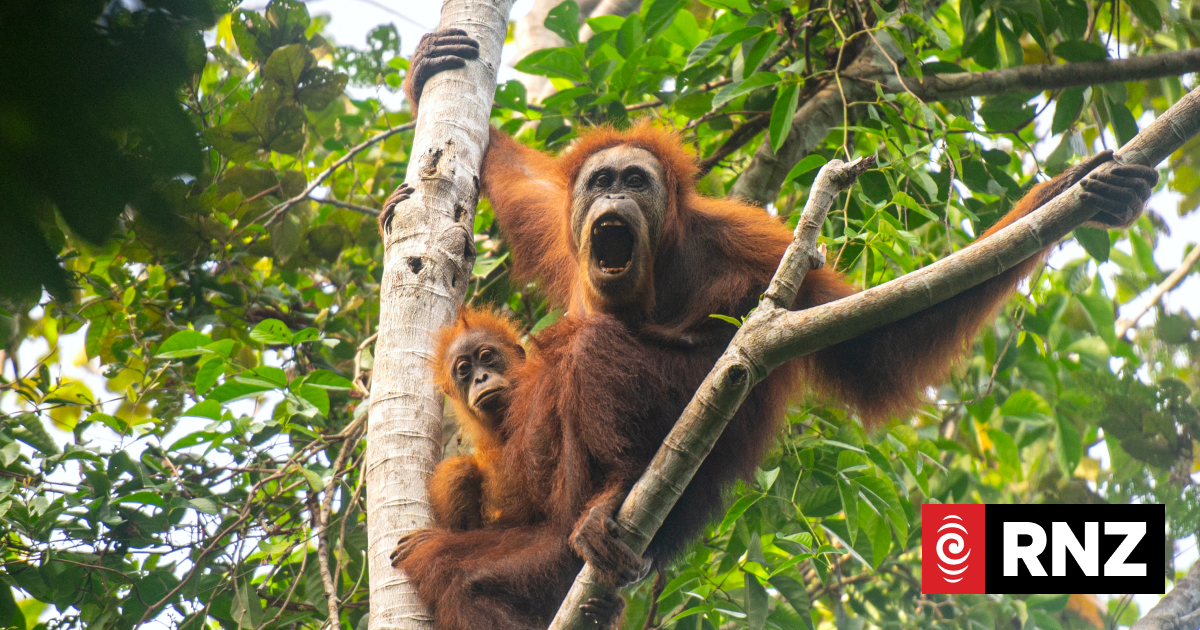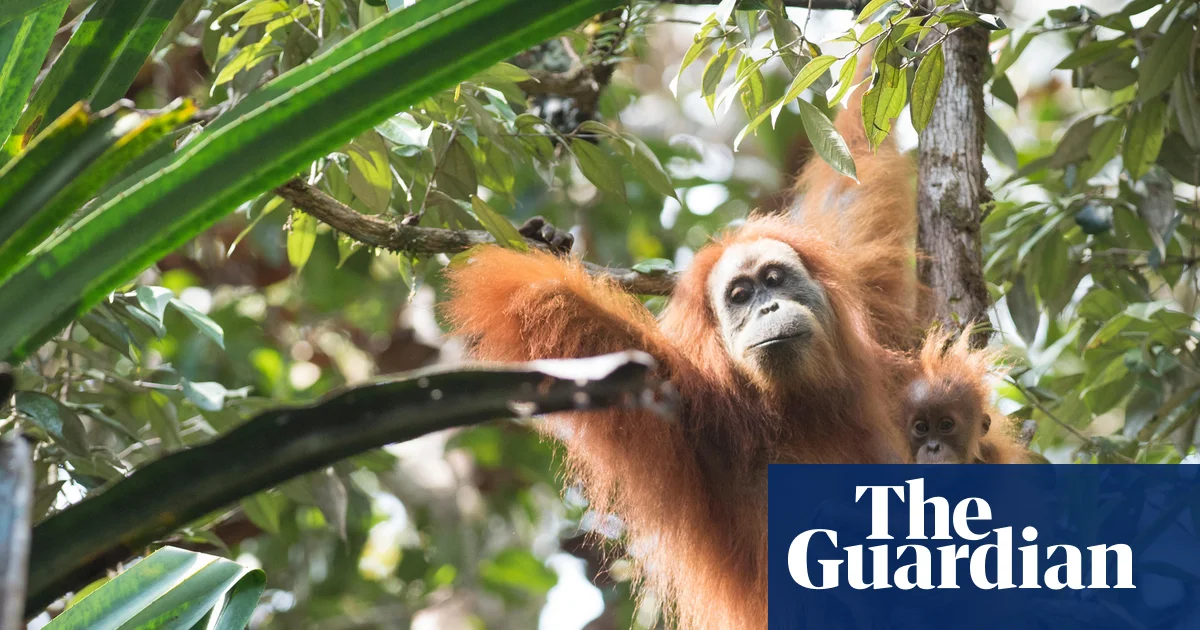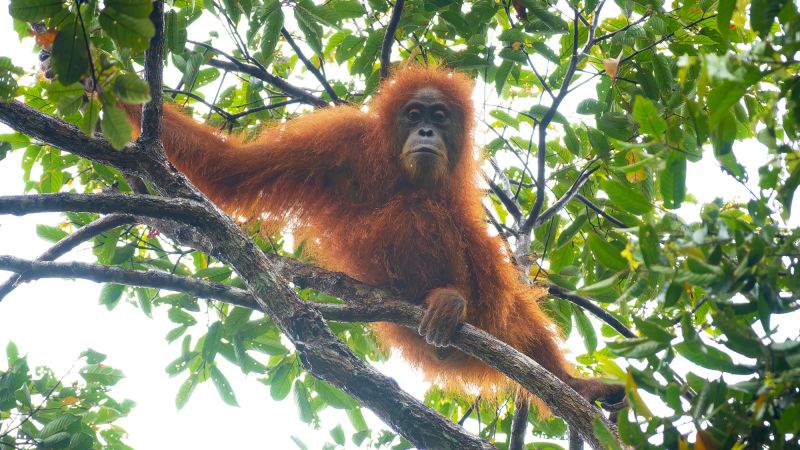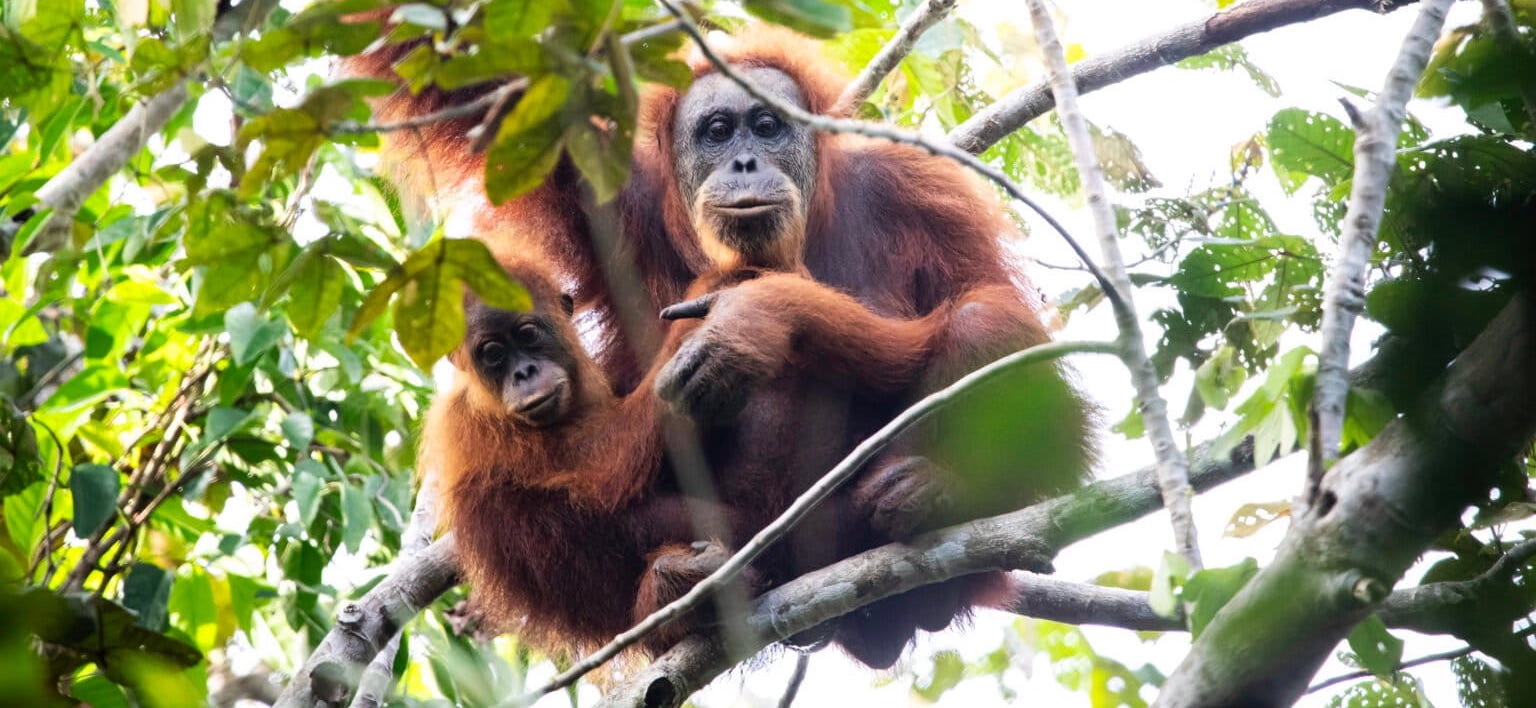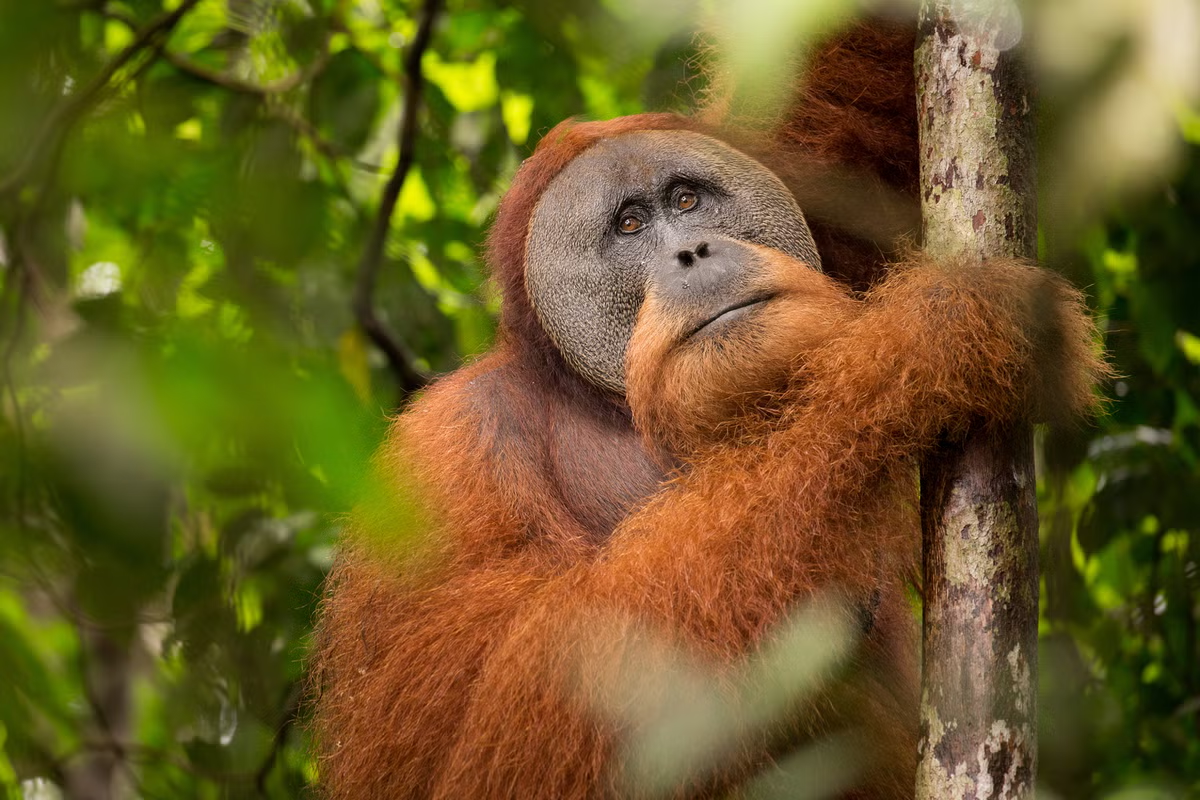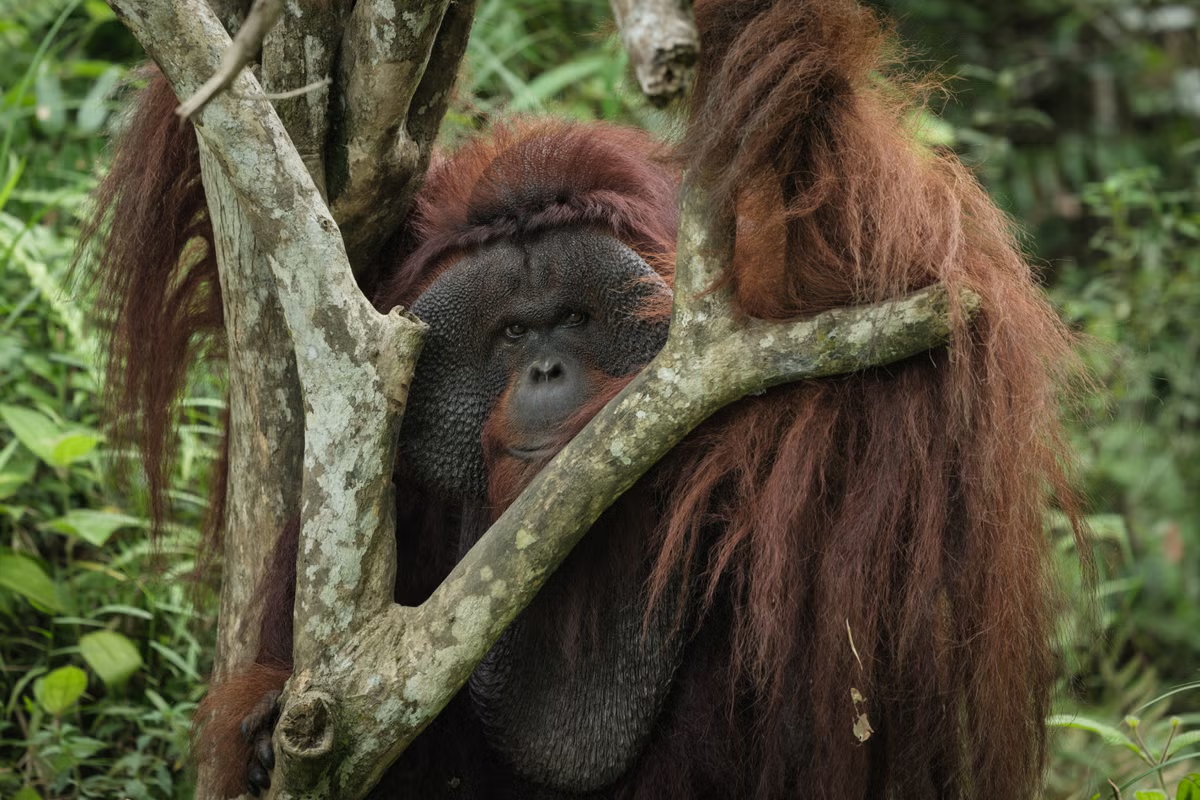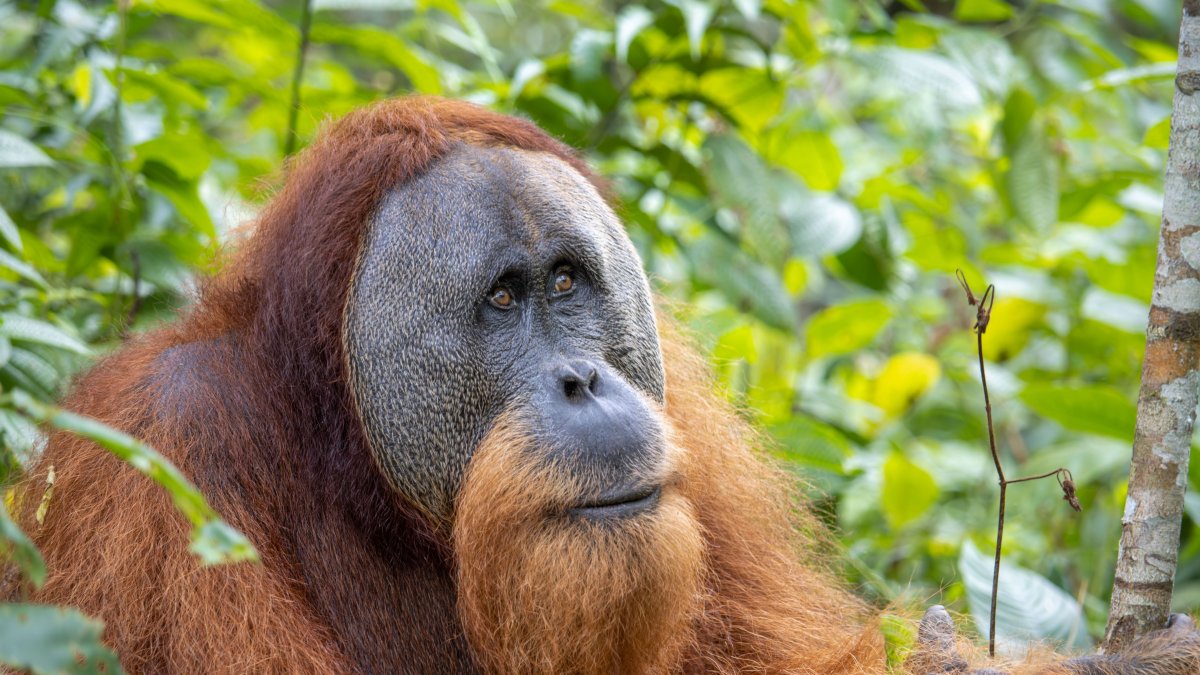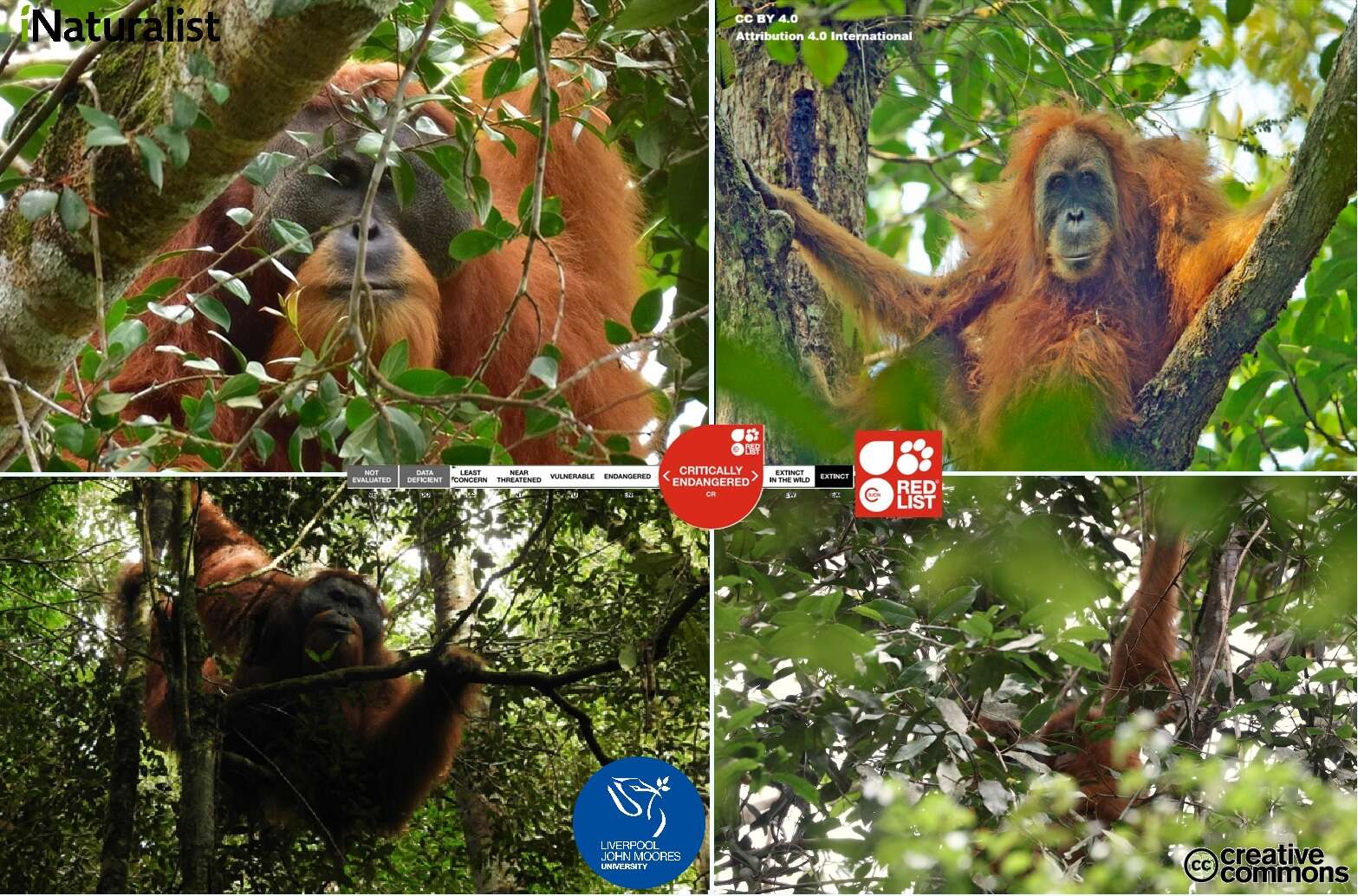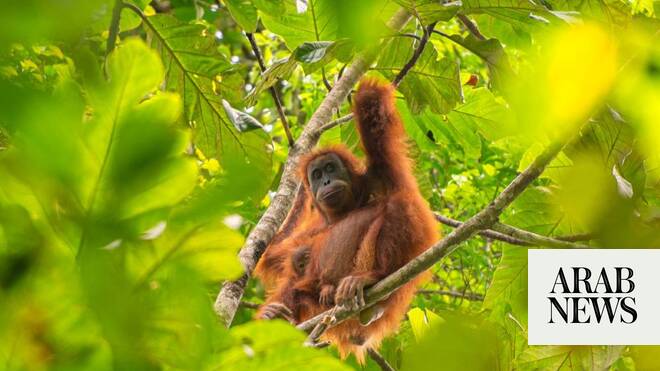
JAKARTA: Landslides driven by climate change in Sumatra, Indonesia last year alone wiped out 7 percent of the Tapanuli orangutan population, new research shows, as scientists warn of an increased risk of extinction for one of the world’s rarest great apes.
Cyclone Senyar ravaged northern Sumatra in November, causing catastrophic floods and landslides that killed more than 1,200 people and damaged more than 180,000 houses in three provinces, with environmental groups blaming the extent of the damage on rapid deforestation.
At least 58 Tapanuli orangutans, out of a total population of fewer than 800, were killed in the widespread landslides, according to findings published in the scientific journal Current Biology on Wednesday.
“Our findings provide quantitative evidence that extreme rainfall events can directly threaten great ape survival,” the study authors said.
“Given the species’ slow reproduction and sensitivity to additional mortality, this single event constitutes a severe demographic shock with long-term implications for its viability.”