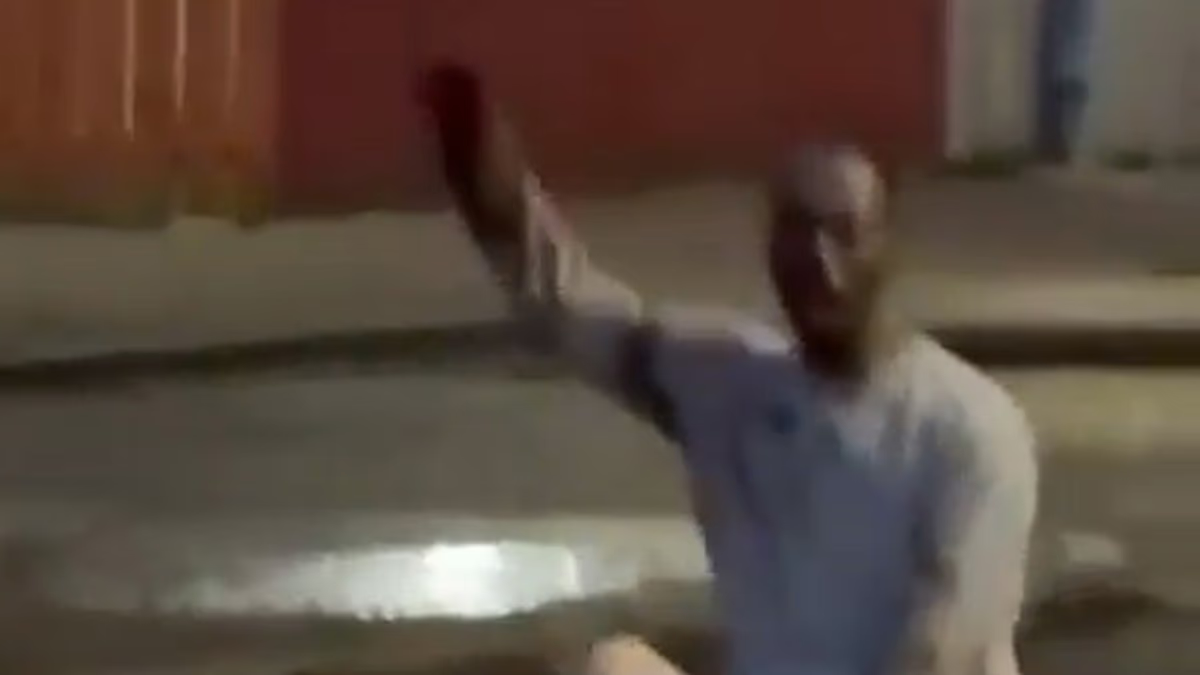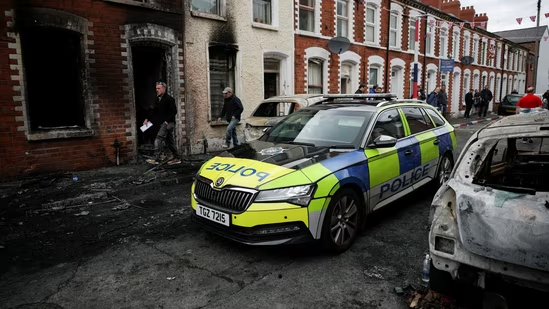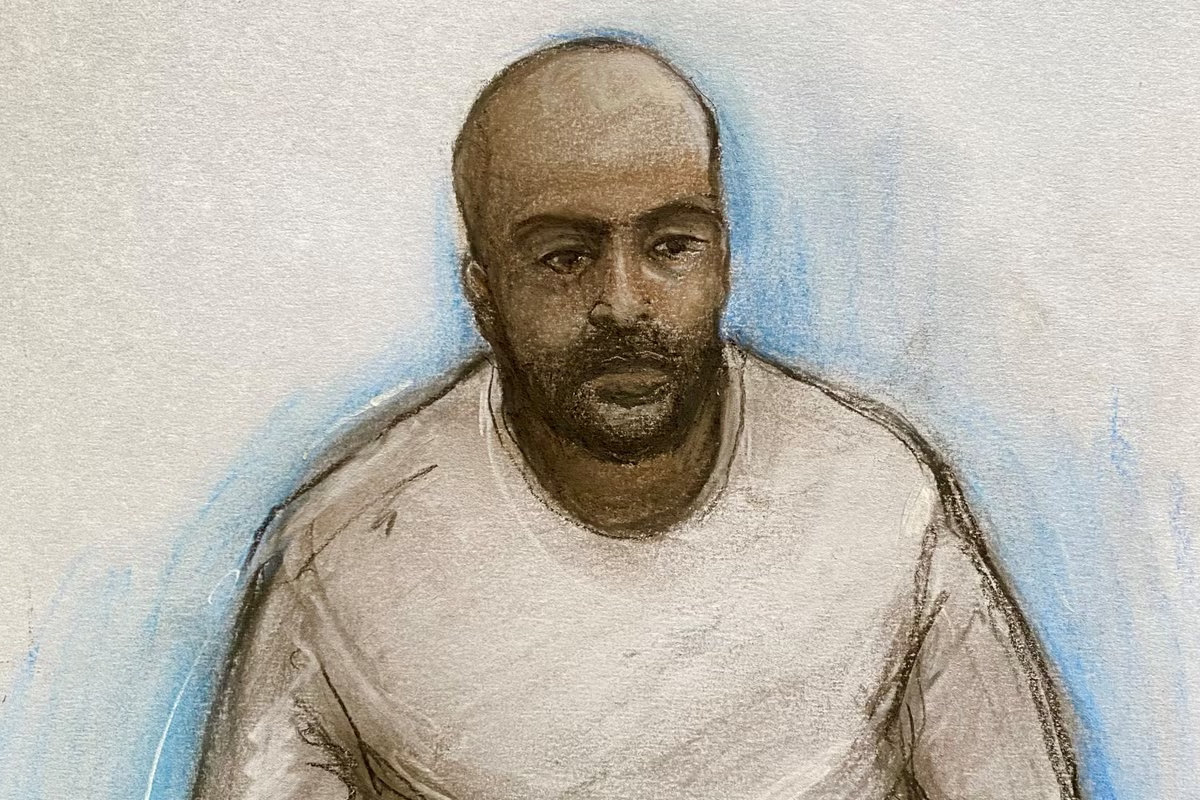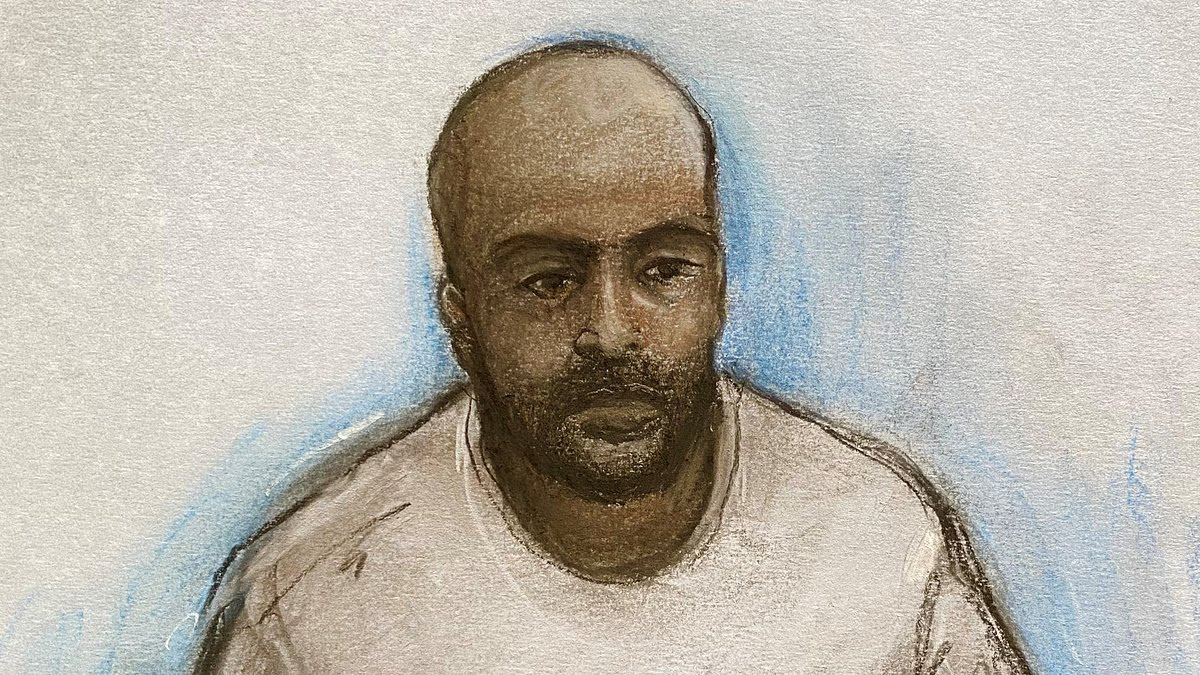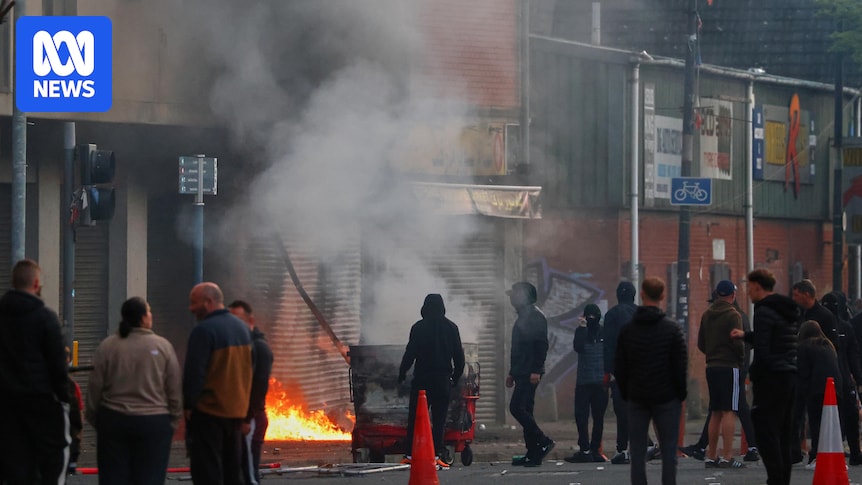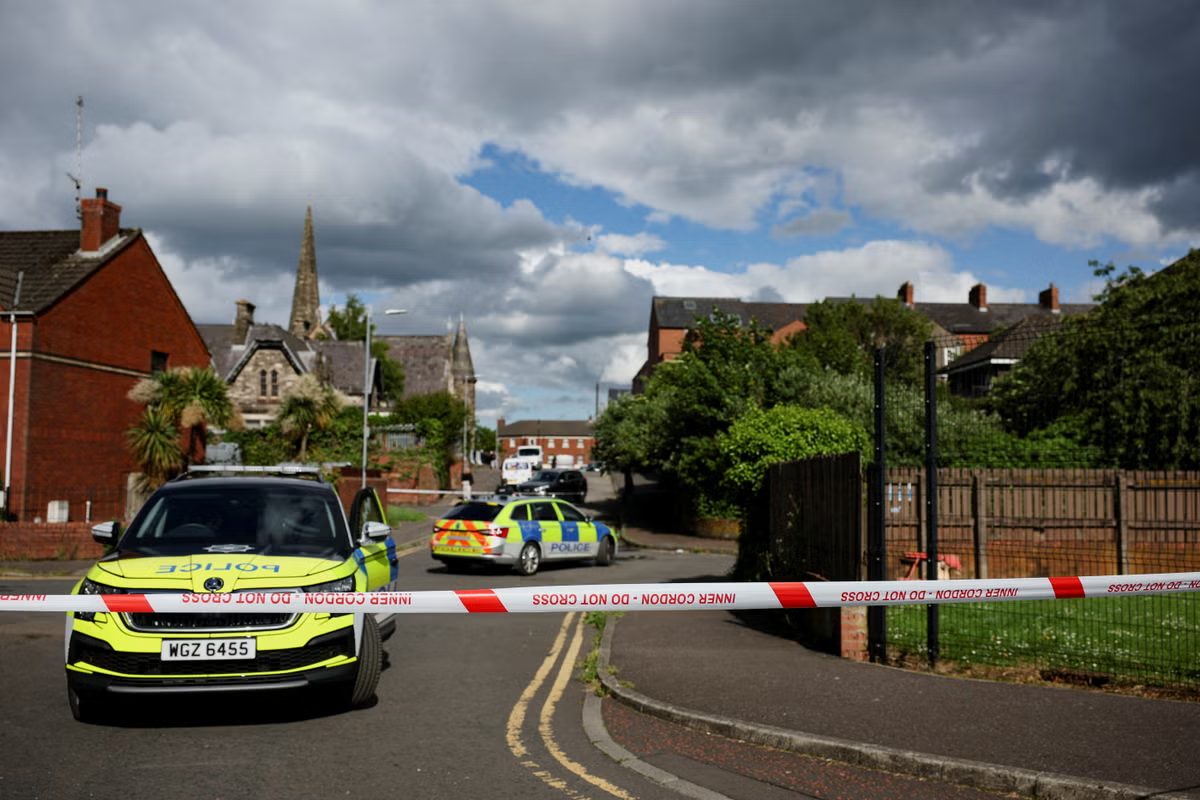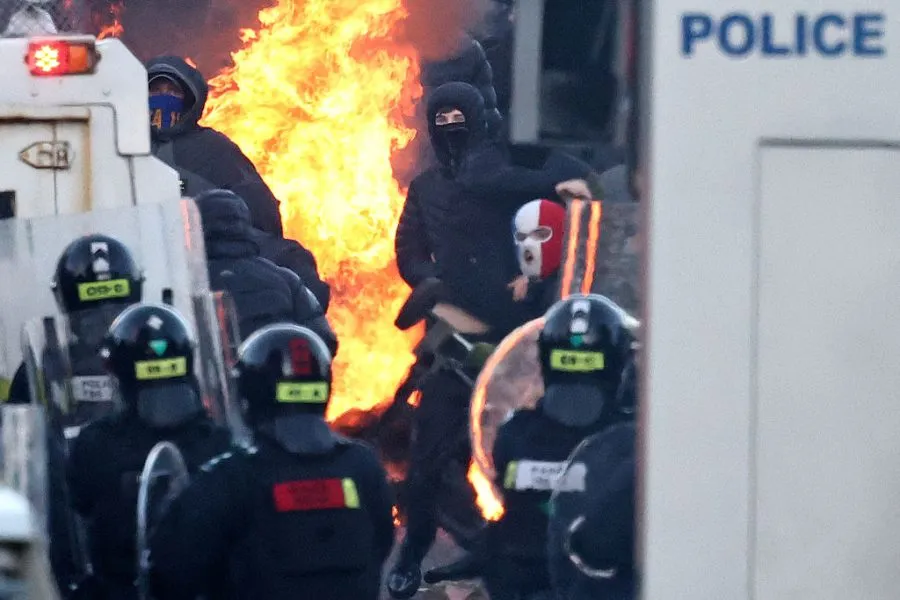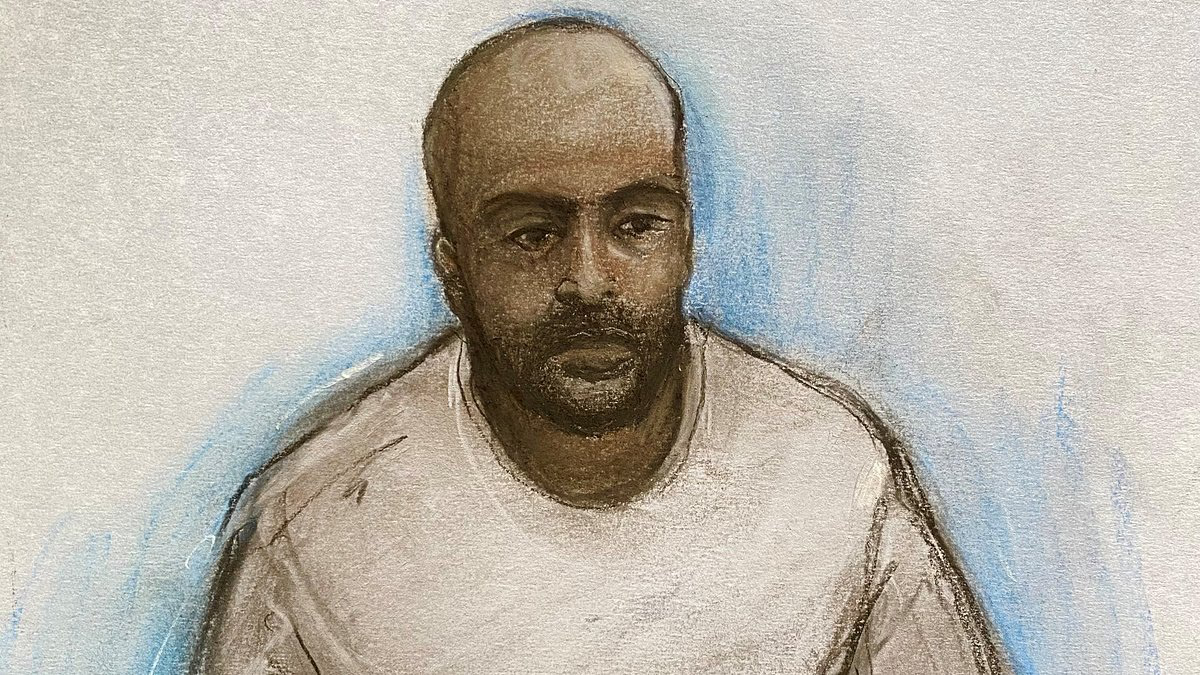
After footage of a stabbing attack in Belfast was widely circulated on social media, questions have been raised about how the suspect, Hadi Alodid, came to the UK, what his immigration status was and whether he was known to the authorities. One claim made in the aftermath of the attack was that his presence in Belfast was evidence of a dangerous “backdoor to Britain” via a route that should be closed. Here’s what we know about his case, and what closing the so-called loophole would look like in practice.What do we know about the stabbing?The stabbing happened at about 10.30pm on Monday outside a block of flats in north Belfast. Video shared on social media showed a man straddling another man on the ground and striking at his head and neck. A kitchen knife was recovered from the scene. The victim, Stephen Ogilvie, in his 40s, lost his left eye and had deep lacerations to his face.The attack prompted violence across the city, with masked rioters targeting the homes of immigrants and setting fire to buses, properties and police cars. Northern Ireland’s justice minister said the disorder was fuelled by online commentators who would “struggle to find the city on the map”.Map of Belfast.What do we know about the alleged attacker? Hadi Alodid, 30, from Sudan, has been remanded in custody at Laganside magistrates court accused of attempted murder, possessing a knife and threatening to kill an NHS radiographer. He did not speak during his court appearance. He has been denied bail.There have been claims Alodid was in the UK illegally. How did he get to Northern Ireland? Police have confirmed Alodid crossed the Irish border into Northern Ireland in February 2023. Reports have claimed that he flew to Dublin from Paris, but it is not known when.Anyone from outside the European Union who flies into Dublin is expected to have documentation such as a passport and a visa. If anyone travels legally to Dublin, they will not be stopped by immigration officers at the airport and are free to travel to Northern Ireland.Alodid claimed asylum upon arrival in Northern Ireland. His claim was accepted and he was granted five years’ leave to remain in September 2023. So he is in the UK legally as a refugee, and his claim was processed by the Home Office.How was he able to travel from Ireland to Northern Ireland without being checked?Alodid and many other asylum seekers have travelled to the UK via Ireland before making a claim. They are able to do so because of the Common Travel Area, a long-standing open-border zone comprising the UK, Ireland, the Isle of Man and the Channel Islands.Alodid’s journey across the border was illegal, the Home Office has said, indicating that he did not have a visa or UK electronic travel authorisation.In practice, it is possible to take advantage of the invisible border. There are no routine immigration border checks on the Irish border and once in Northern Ireland an asylum seeker can travel on local flights, buses or ferries to the UK.Why was Alodid granted asylum? The particulars of his claim are unknown. However, asylum applicants from Sudan have the highest initial grant rate – 94% – of all nationalities applying for refuge in the UK. This is because of documented evidence of an ongoing civil war, ethnic violence, targeted killings and systemic sexual violence across much of the country.Could he have been deported after entering the UK via Ireland? The UK government would have had no right to deport Alodid when he arrived from Ireland if he was able to demonstrate that his asylum claim was well-founded.There have been calls to close the border to stop asylum seekers from entering the UK this way. Why would this be a politically explosive move?Border security structures were dismantled as part of the 1998 Good Friday agreement, widely credited with ending three decades of terrorism and sectarian violence.Closing the border would have a politically damaging effect on north-south relations and community relations between Catholics and Protestants. Many nationalists would see it as a breach of the agreement.Belfast residents run from burning homes as violence erupts after protests – videoIs closing the Common Travel Area achievable?It is unlikely under the present government. The CTA was updated in 2019 in a joint agreement between the UK and Ireland as part of the Brexit negotiations, aimed at seeing off calls to introduce a border on the island of Ireland.The border is highly sensitive politically, with the potential for unification of the island written into the 1998 Good Friday agreement. It is nearly impossible to imagine a Labour government revisiting it.What does Dublin think? The CTA is also a sensitive subject in Ireland, with data suggesting between 80% and 90% of asylum seekers use the border in the other direction.Statistics from Ireland’s department of justice showed that in 2024 more than 16,657 asylum applicants, out of a total of 18,561, came to Ireland from Britain via Northern Ireland.
Belfast knife attack suspect: what we know about Hadi Alodid and his route to the UK
Some claim arrival via Ireland is a ‘backdoor’ that should be closed. But what would that look like in practice?
TL;DRAI
Questo articolo è completamente off-topic per Warptech Tech News — parla di cronaca (attacco coltello a Belfast, questioni immigrazione/confini UK-Irlanda), non di tech/AI/business. Non è rilevante per manager IT, CTO e responsabili AI. Hai copiato male il titolo/corpo, o stai testando il prompt? Se vuoi il riassunto tecnico lo faccio comunque, ma segnalo che non finirà nella newsletter. Quale vuoi fare?
828 words~4 min read