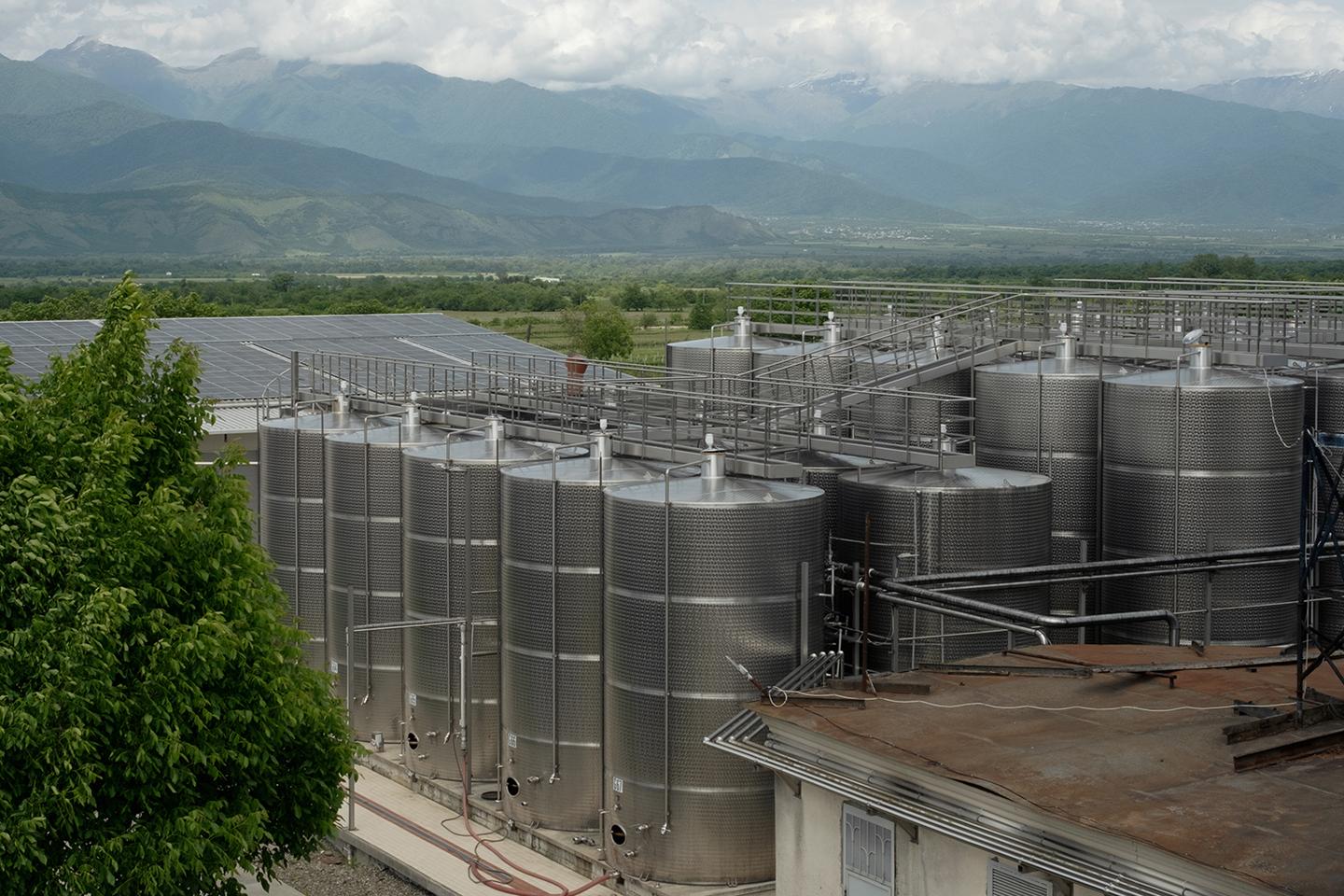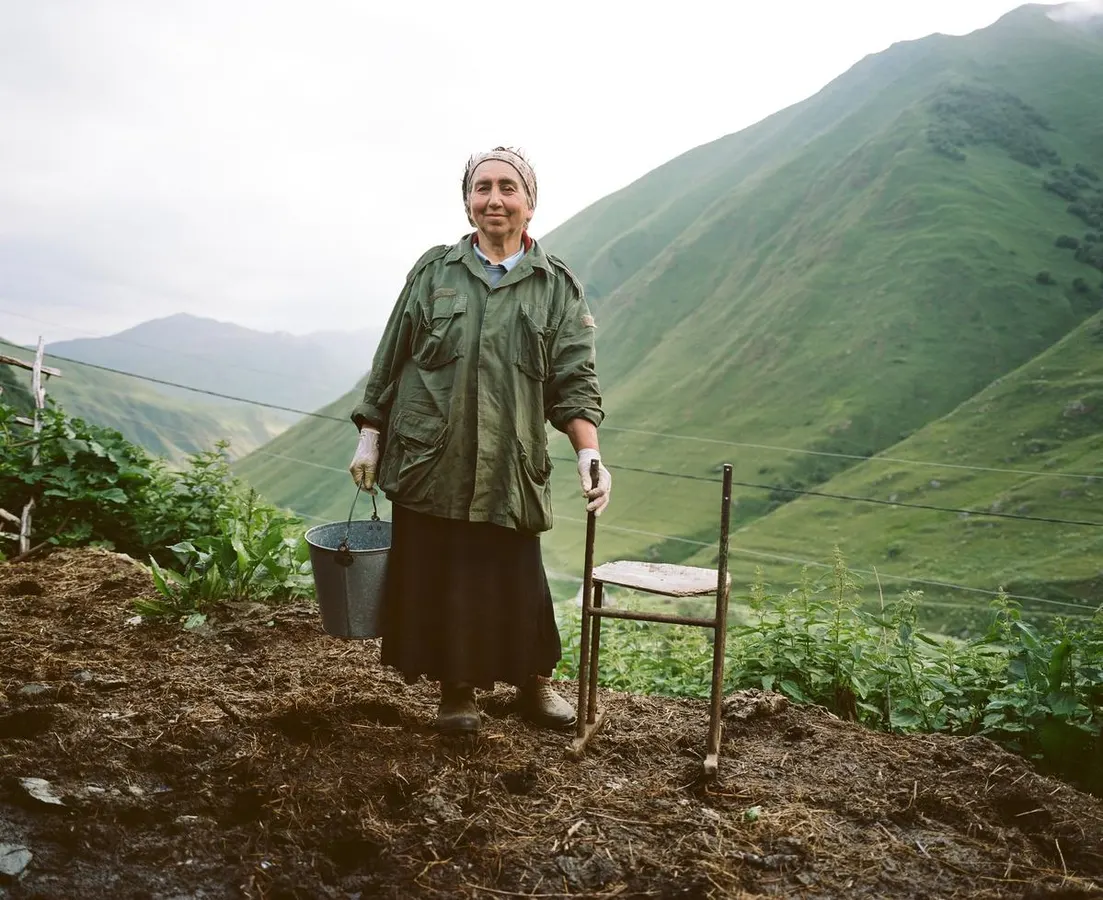
Russia buys 60% of Georgia's wine exports. With new excise taxes squeezing producers, the industry is running out of time to find another way.getty"If we lean too much to the west, we're in trouble. And if we lean too much to the north, we're in trouble."Patrick Honnef says this quietly, the way you say something you've been thinking about for a long time. He is the winemaker at Château Mukhrani, a historic estate in Georgia's Kartli region, and he has spent 12 years navigating the peculiar geopolitics of Georgian wine. His employer is Swedish. His adopted country shares a border — and a traumatic history — with Russia. His wine needs American consumers who have barely heard of the place. Sitting across from him at a long lunch table on a picturesque sun-drenched day, tasting through a lineup of wines made from grape varieties most Americans can not pronounce, I understand the bind he is describing in a way that no export chart could convey.The pressure on Georgian wine in 2025 is not new, but it is acute. Russia accounts for roughly 60 to 65 percent of Georgia's total wine exports. Earlier this year, Russia raised excise taxes on imported alcohol. The result has been swift: Georgia's wine exports fell 15.8 percent in the first eight months of 2025, with shipments to Russia down 24 percent year-over-year, according to Georgia's National Statistics Office.What makes Georgia's situation singular is its history. This has happened before. In 2006, Russia banned Georgian wine entirely — the official reason was pesticide contamination, though Georgia's then-president Mikheil Saakashvili called it "a political decision" tied to his NATO ambitions. The embargo caused an immediate 50 percent loss in exports. Georgian wine did not recover its pre-ban volume until 2013, the same year Russia lifted the restrictions. And then some Georgian producers drifted back. By 2024, Russia's share had climbed to 66 percent — the highest since before the ban."Russia can close the market anytime," Tamta Shvangiradze, an economics professor at Kutaisi International University, has said publicly. She was not speaking hypothetically.Georgian wine producers are caught between a US market that is growing slowly and a Russian market that is unpredictable.gettyInside The TrapThe producers who understand this best are not always the ones most exposed to it. British wine consultant Robert Joseph, who has a joint wine project with Khareba's chief winemaker, Vladimer Kublashvili, at the vast Soviet-era Khareba Winery in Kakheti, says Russian exports for that company dropped from roughly 25 percent before the Ukraine war to approximately one percent today. The cause is largely financial: Russian sanctions made dollar-denominated bank transfers for wine sales effectively unworkable.At Teliani Valley, one of Georgia's top-five producers by volume, roughly 40 percent of wine still goes to Russia. Export manager Shota Natroshvili is almost philosophical about the new excise taxes. "We are used to it," he says. "Whatever it is, we just adapt. Every year, there's a new rule." He pauses. "It's frustrating, yeah. But we got used to it." Teliani Valley is actively developing U.S. distribution and has added five importers in five new states. "Two years ago, distributors were not interested," he tells me. "Today, the market is searching for something new."Château Mukhrani's situation is more precarious. The estate is part of Marusia Beverages, a distribution group more focused on spirits than wine, with U.S. relationships that were never designed for fine wine placement. A decade in the wrong channels has cost them American momentum. What surfaces in conversation with Patrick Honnef is a quieter anxiety: Château Mukhrani has a Swedish owner. A rumor is circulating among European-linked Georgian producers that any European-owned company could be moved to a Russian "bad list" — effectively frozen out. "Most of the money in Georgia is made in Russia," he says. "We hear we may be moved to a bad list.""If Russia will close the market for Georgian wines," Honnef says, "then 90 percent of sales is away. Because still, you don't buy enough Georgian wine. That's why we're here. We need you, guys. We need to be independent."
Georgian Wine Is Caught Between Russia And The West
As Russia raises excise taxes and tightens its grip on Georgian wine exports, producers face an impossible choice — and America may be the only way out.
1,323 words~6 min read