Skip to content
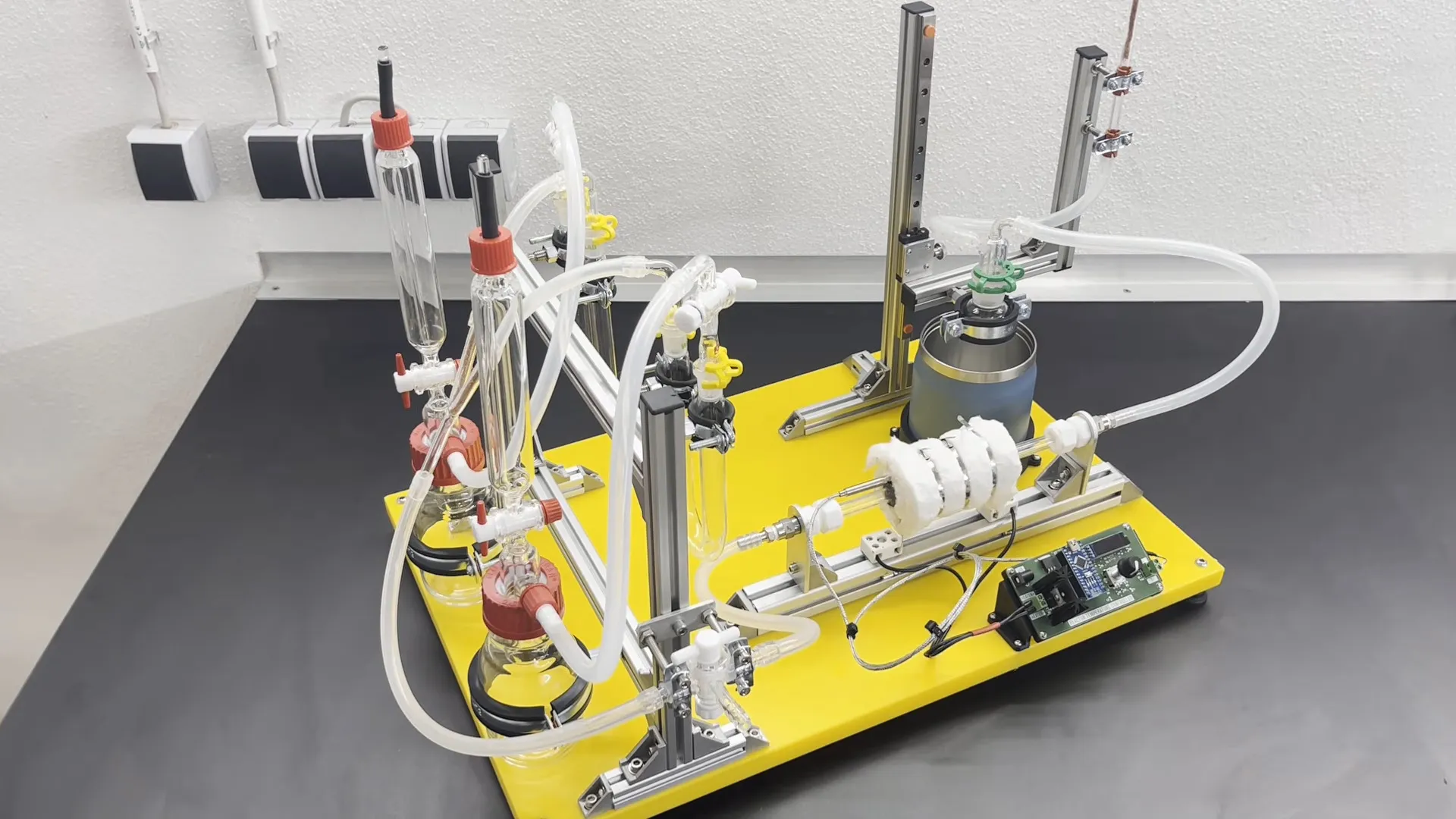
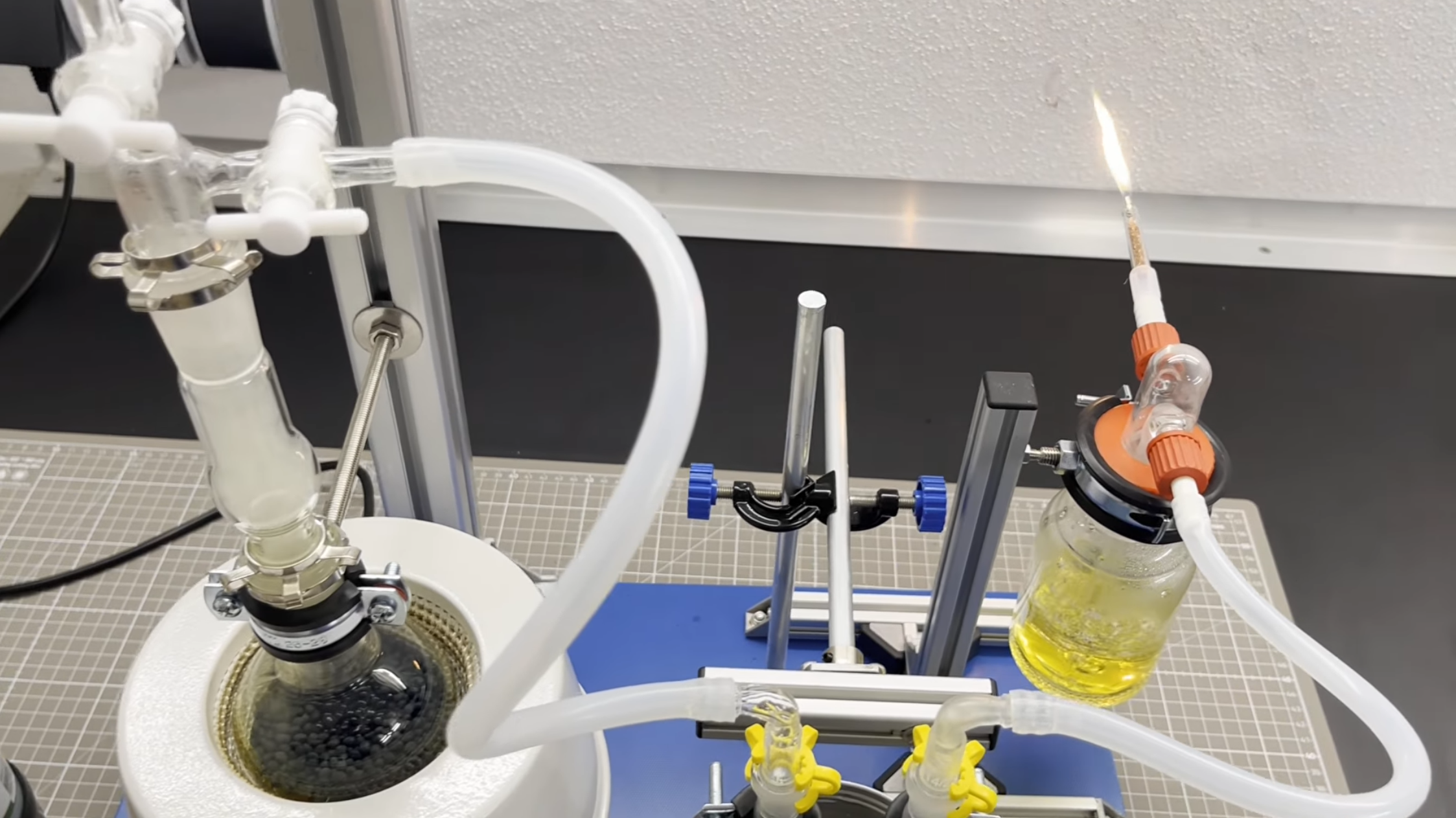
Although crude oil contains a vast diversity of hydrocarbons, a comparatively small number of these make up the bulk of demand for oil. Cracking solves this mismatch: most of the demand is for light, short-carbon-chain molecules, so a cracker breaks down long-chain hydrocarbons into lighter, more commercially-valuable chemicals. This is usually done in massive industrial plants, but as [Markus Bindhammer] showed, it’s possible even in a tabletop apparatus.
There are several methods of cracking, but [Markus] used catalytic fluid cracking: a feedstock high in alkanes (hydrocarbons containing fully saturated carbon-carbon bonds) is heated in the presence of a catalyst, whereupon its long alkane chains split to form alkenes (hydrocarbons with a carbon-carbon double bond) with the loss of a hydrogen molecule. In [Markus]’s setup, a heating mantle heated a boiling flask containing paraffin oil and an amorphous silica-alumina catalyst. Vapors from this flask passed through a condenser tube and a bottle of bromine water, then escaped through a flashback arrestor. Bromine reacts far more readily with alkenes than with alkanes, so the disappearance of its characteristic yellow color would visually indicate the production of alkenes.