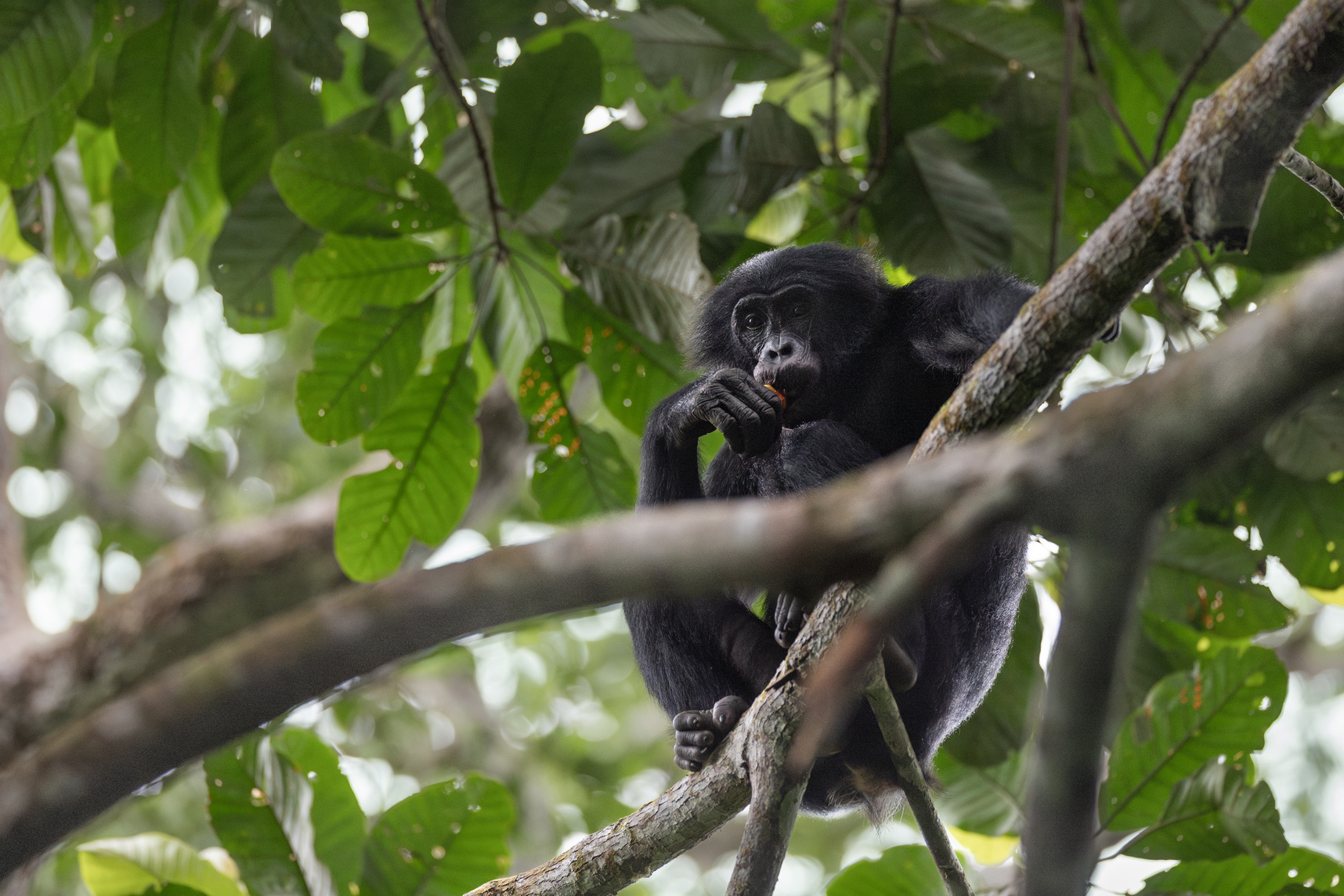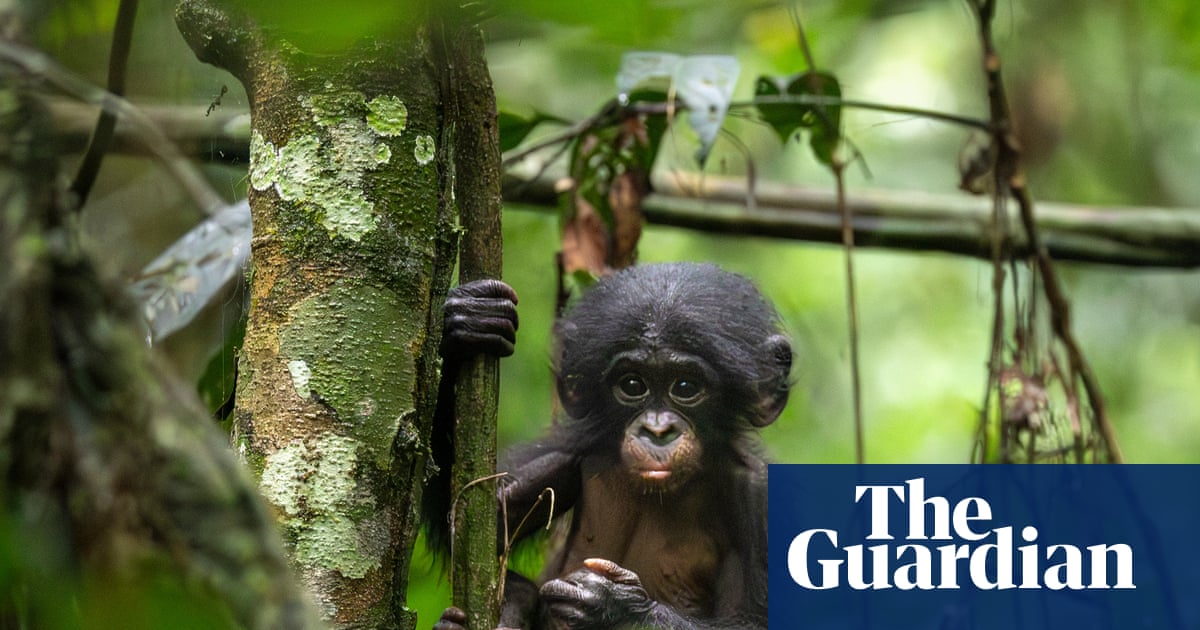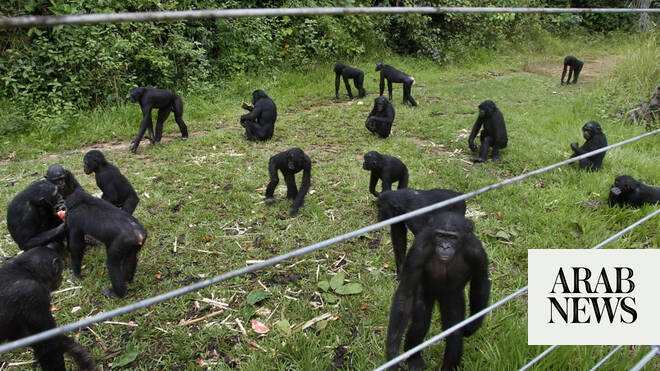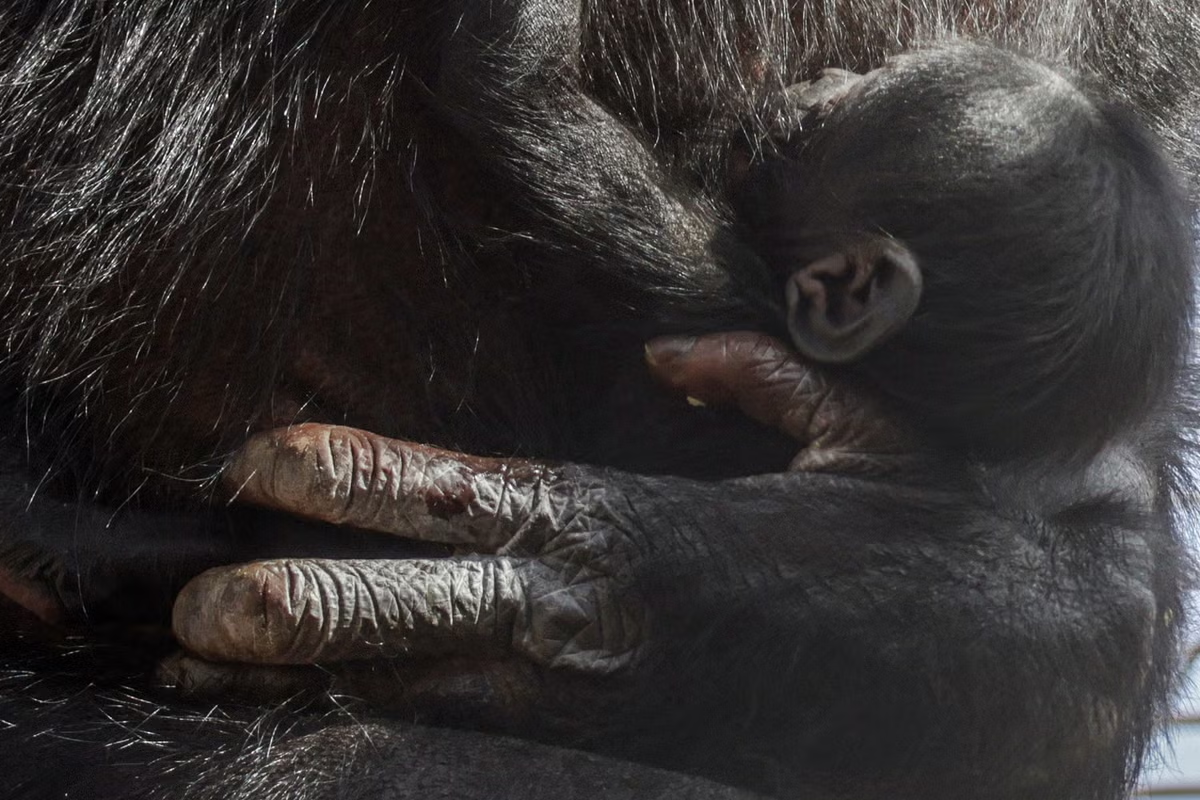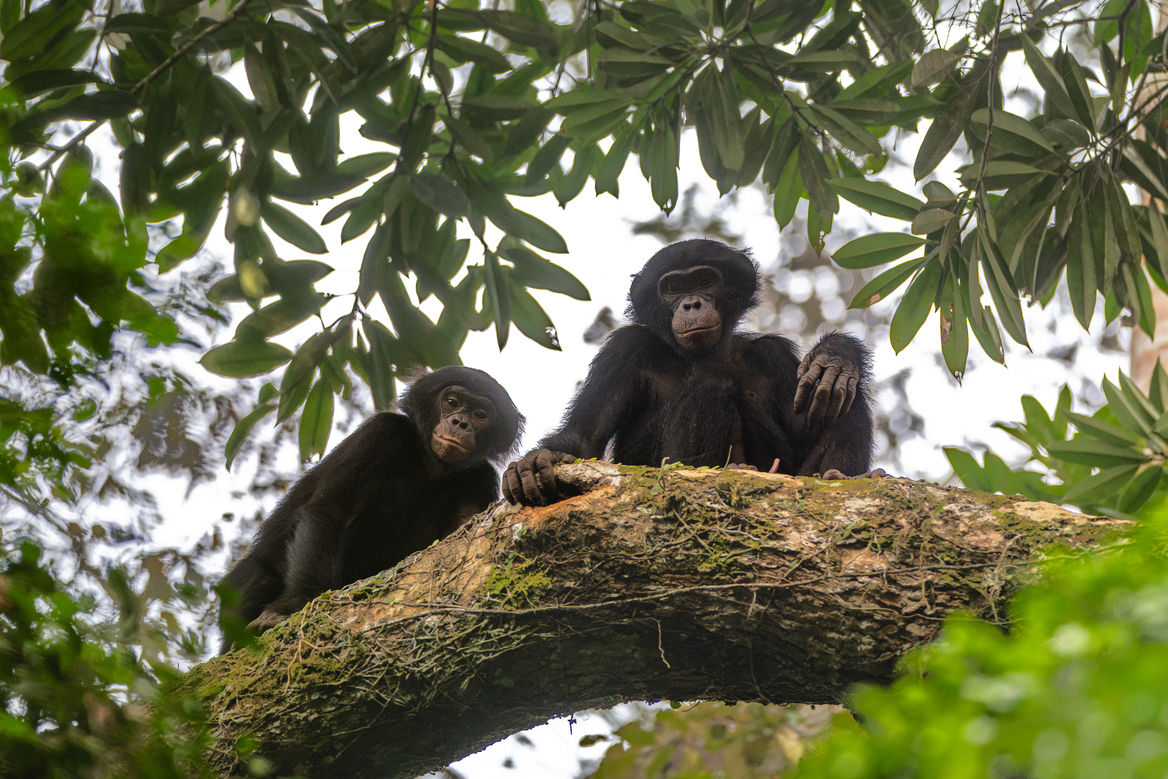
In the heart of Salonga National Park, one of Africa’s largest protected areas, researchers are trying to earn the trust of wild bonobos, one of the continent’s most endangered great apes.Conservationists say that habituation is a critical tool for protecting the species, allowing scientists to monitor their health, behavior and populations while strengthening long-term conservation efforts.As the Democratic Republic of Congo confronts a renewed Ebola outbreak in its eastern region, park officials acknowledge the ever-present risk of zoonotic disease transmission. However, when conducted under strict biosecurity protocols, bonobo habituation offers significant conservation, scientific and ecotourism benefits that outweigh the risks.
SALONGA NATIONAL PARK, Democratic Republic of Congo — Just before sunrise, while much of the rainforest remains cloaked in darkness, a team of researchers and trackers leaves the Inkomu research camp. Their destination is the previous night’s nesting site of a group of bonobos deep within the Salonga forest, located in the center of the DRC.
Their mission is to persuade the bonobos (Pan paniscus) to accept human presence as a natural part of their environment. By earning the animals’ trust, researchers hope to create opportunities to better understand their behavior, ecology and health. This painstaking process, bonobo habituation, involves spending time near the apes day after day until they gradually become accustomed to people.