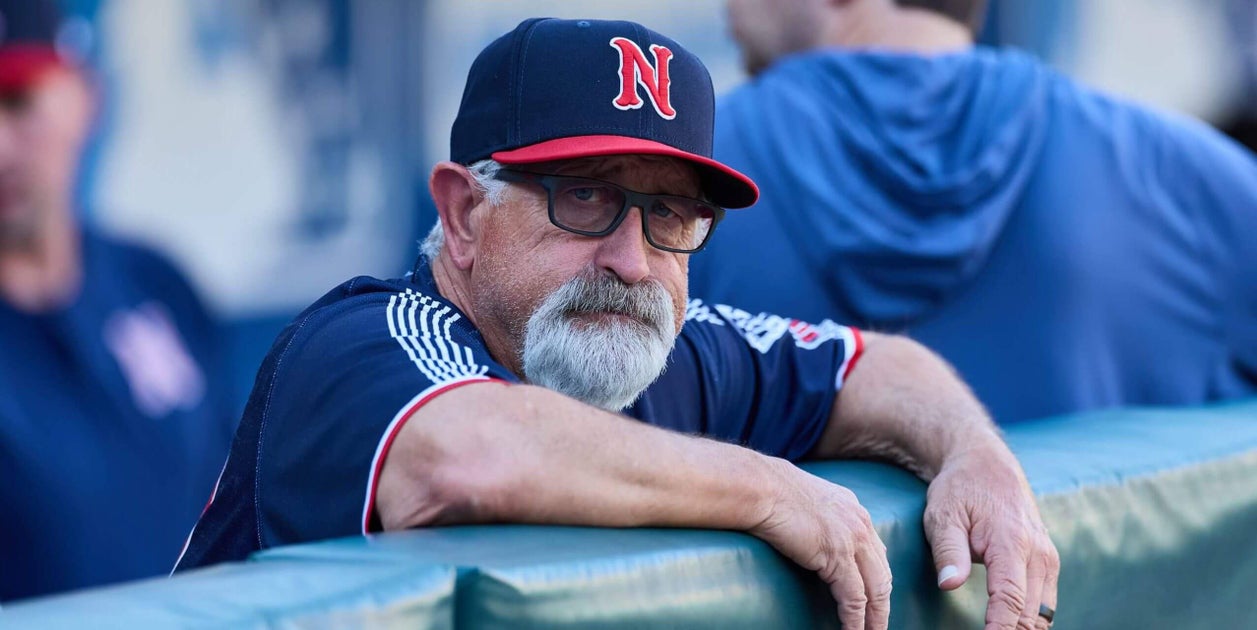
NASHVILLE, Tenn. — A red Corvette convertible. That is the big-league car. That is the dream.That is not what sits directly across from the clubhouse gates on Junior Gilliam Way here, at the home of the Nashville Sounds. It’s impressive, though, this silver Chevrolet Camaro SS, with the convertible top and the thick black racing stripes down the hood. It has given its owner 100,000 miles and looks like it would be fun to drive. It’s powered by a Corvette engine.This is what Rick Sweet takes to work. His spot is unmarked, but nobody else shows up for night games at 10:30 a.m. And it is work, managing a minor-league baseball team. It’s not the same as pipe fitting at underground construction sites, as he did in the winter as a minor-league catcher. But it’s long days and low pay and eight-hour bus rides with players who’d rather be somewhere else.“Triple-A manager is the hardest job in baseball,” said Terry Collins, who did it for nine years. “Because half your team isn’t happy.”Maybe more than half. If you’re on the way up, you’re desperate to finish the climb. If you’re on the way down, you ache because you know what you’re missing. Now try leading those players, decade after decade, while silently sharing their ambitions.That is Sweet, a 73-year-old former major-league catcher with two knee replacements, a bushy handlebar mustache and a knack for doing this job better than anyone ever has. He wears number 16 and gets a pan of freshly baked chocolate-chip cookies in his office after every home victory. Sweet 16, indeed.Considering his record, it’s a wonder his teeth are intact. Through Wednesday, Sweet has 2,478 career wins, 18 from moving into second place on the all-time minor-league list. He is 52 away from breaking the record held by Stan Wasiak, who managed from 1950 through 1986, mostly in Class A.“I like the fact that I’ve adjusted with the game — not to the game, with the game,” Sweet said last month over breakfast. “I can honestly say I’ve never lied, I’ve never deceived. I think my reputation with players is: ‘When Sweetie tells you something, that’s the way it is.’”Sweet has managed in the minors for 36 seasons in 13 states and one Canadian province. He has been a Mudcat and a Mission, a Toro and a Timber, a SeaWolf and a SkySock, a Bat and a Beaver. He has guided teams in Puerto Rico, Venezuela and the Dominican Republic, too, but record-keepers only count his wins for affiliates of MLB organizations.Eight have trusted Sweet with their futures — including, for the last 13 seasons, the Milwaukee Brewers, a low-budget marvel that depends on a rich talent pipeline. Sweet is a critical cog who keeps the spigot flowing.“He’s been so valuable to us in player development; he’s been indispensable there, honestly,” said Matt Arnold, the Brewers’ president of baseball operations. “There are certainly so many things in this game that we try to quantify, but Rick has all this wisdom that isn’t on a spreadsheet.”Sweet links the players to a part of baseball’s past they don’t often see anymore. The sport once teemed with managers and coaches seemingly born in double-knits, men who taught through lore and time-tested traditions. Now the instruction is more precise and individualized, often from younger people who love the sport, but don’t live it.Rare is the leader who has seen everything but stays current, open-minded and vital. The Nashville players recognize it when they see it.“Sweetie’s the GOAT, man,” said the Sounds’ Cooper Pratt, a 21-year-old shortstop. “He’s one of one. He knows.”Sweet did not imagine this kind of career. His goals were modest but specific: to be a high school counselor and coach baseball at Lower Columbia Community College in his hometown of Longview, Wash.After playing there for a year, Sweet took the first flight of his life, to Quantico, Va., for Platoon Leaders Class, an eight-week boot camp that trains students to become officers. Sweet’s father had served in World War II and it felt natural to him, the challenge of thinking only of survival: one foot in front of the other, over and over. It sharpened him mentally.If he hadn’t been so good at baseball when he got back, as a catcher for Gonzaga, Sweet would have stayed in the Marine Corps.“Absolutely, I loved it,” he said. “Discipline, structure. Being a catcher, I had that mentality.”The San Diego Padres drafted Sweet in 1975, and three years later he was playing in the first major-league game he ever saw, at San Francisco’s Candlestick Park. He grounded out to second base; Willie McCovey made the putout.Sweet wound up catching more games than anyone else on the 1978 Padres. The team’s slippery ace, Gaylord Perry — “Oh, he was a grizzly bear,” Sweet said — won the National League Cy Young Award. Sweet hit .221, gutting his way through a wrist injury, and the Padres had their first winning season ever.Then he blew it. Sent to the minors the next spring training, Sweet told off his manager, Roger Craig, who swore that Sweet would never play for him again — and kept his word. Sweet apologized, but it didn’t matter.“And what I learned is that any time a player says something to me in the heat of an altercation, I always give them a chance to come back and apologize — one time,” Sweet said. “You don’t get to do it more than once. But I’ve had a lot of players say something that they regretted, and I allowed it to pass, as long as it wasn’t too bad.”Sweet got his next chance in 1982, for three games with the New York Mets and then 181, across two seasons, with his hometown Seattle Mariners. Sweet was a year-round employee, reporting to the office all winter, working in ticket sales. When the Mariners cut him in spring training in 1984, he offered to stay on as a bullpen coach. He also took batting practice, just in case, but never returned to the roster.Sweet’s baseball cards from his playing career — such as this 1984 Donruss version — have become collectibles among his current and former players. (Photo from collection of Tyler Kepner / The Athletic)Still, Sweet thought he had it pretty good. His primary manager in Seattle, Rene Lachemann, was a model for the kind of leader he wanted to be. Decades before it became standard, Lachemann would give players the lineup the night before a game, so they could prepare accordingly.But mostly Lachemann just loved baseball in a way that captivated Sweet.“I played winter ball for him, too, in Puerto Rico, and every night we’d barbecue steaks and drink beer all night and sit around and bull— and talk baseball,” Sweet said. “And his players loved him.”Lachemann, himself a former catcher, said he tried to show players that he cared for them as people, too. In Sweet, he saw a hard-nosed, selfless student of the game whose pitchers trusted him. He was not especially talented – Sweet hit .234 with six career homers – but didn’t miss a thing.“He was always in the game,” said Lachemann, 81, now retired after nearly six decades in baseball. “He was dedicated to being a great teammate, the type of person who’s not in it for his own ego.”
The Sweet life: Inside a longtime minor-league manager’s record pursuit
Rick Sweet, who has managed in the minors for 36 seasons, is on the verge of 2,500 career wins in a sport where such longevity is now rare.
3,702 words~17 min read