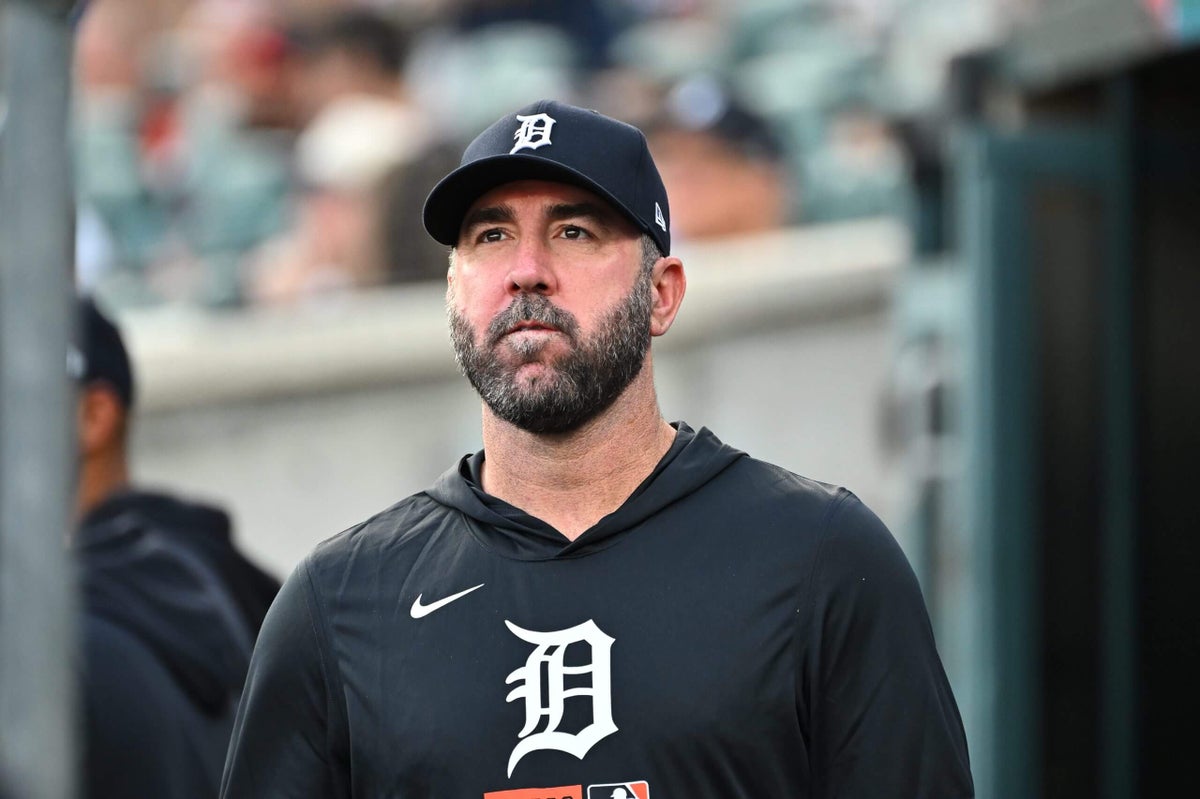
A few years ago, at a reception in the plaque gallery at the Hall of Fame, Mike Mussina contemplated whether any modern pitcher could reach 300 victories. Mussina had reached 270 wins — 90 percent of the way there — and decided he could live with that. He would not spend his 40s chasing ghosts.Justin Verlander relished the challenge. Through age 36, he had 225 wins, one more than Mussina at the same age. If Verlander wanted 300, Mussina said, he might have a chance. There was no time to waste. One injury, he warned, and that would be it.Verlander — the Detroit Tigers stalwart who announced on Wednesday that he would retire after this season — blew out his elbow in his first start after turning 37. He came back at 39 for a virtuoso performance with the Houston Astros: a third Cy Young Award, a second World Series title.Alas, 300 was indeed out of reach. From this point on, any pitcher’s pursuit would be pure fantasy. Verlander, 43, was the last hope.In the past five seasons, he’s gone from 18 wins to 13, five, four and zero. His total is 266, and even if he returns from his hip and hamstring injuries, he is unlikely to win many more.What Verlander's retirement announcement says about him as a playerCody StavenhagenWhen you pitch for a living, this is almost always how it ends.“It doesn’t make you have any less admiration for a guy like Justin,” said Jim Palmer, who finished his Hall of Fame career with the Baltimore Orioles by going 0-3 in 1984 at age 38.“I’m amazed he was even able to make the attempt to do it. What did they say in ‘Star Wars’? ‘Do or do not; there is no try.’ Well, if you don’t try, how are you ever gonna do it? It’s amazing that he was even able to be competitive at his age. Nobody else does that, unless you’re Nolan Ryan or maybe Jamie Moyer or Dennis Martínez.”Ryan — one of the foremost outliers of all-time — pitched three seasons after earning his 300th victory. Moyer and Martínez were late bloomers who never had a shot at 300.Verlander was that rare beast, driven to stave off the extinction of his species. He was an old-time ace and proud of it. He knew all the hazards.In 2014, when Verlander was 31, he returned too soon from core-muscle surgery. His mechanics were a mess. His fastball was a rumor. His shoulder ached. He feared the worst.“For the first time, I saw the end of the line,” Verlander said, years later, by his locker at the Tigers’ complex in Lakeland, Fla.“I want to play till I’m 40 or 45. I’ve always wanted to play till the wheels fall off. I kind of saw that then: ‘If this is the way it’s going to feel, I can’t pitch like this.’”He found his way back, of course. Verlander was probably the majors’ best pitcher in 2016. (His wife, Kate Upton, sure thought so.) He won his first championship in 2017, led the AL in strikeouts in 2018 and earned his second Cy Young in 2019, while firing his third no-hitter.In 2022 and 2023, after Tommy John surgery, Verlander dominated again, in the less-is-more spirit of the era. He had the majors’ best ERA in 2022 (a career-low 1.75) while working only 175 innings. It paid off with a two-year, $86.66 million contract from the New York Mets, who sent him back to Houston the next summer.“He certainly kind of figured out how to thrive in two different versions of MLB,” the New York Yankees’ Gerrit Cole, a former Houston teammate, told The Athletic’s Chris Kirschner on Wednesday. “He was right in the thick of the old-school realm and then into the new-school realm. We share a lot of thoughts in that regard. I didn’t spend as much time in that previous era as he did, but I spent enough time to know what it takes to kind of reinvent and adapt.”Cole noted, correctly, that Verlander is the last pitcher to work 250 innings in a season, during his 2011 MVP campaign. That was part of a decade-long stretch (the 2010s) in which Verlander led the majors in innings, averaging 214 per season.Today’s iron man, Logan Webb of the San Francisco Giants, led the majors last season with 207. Webb played with Verlander last year and spoke this spring about his endangered mentality.“I used to hang out with him, and Justin, when he’s in the seventh, he always wants to go back out for the eighth, even if he’s at 110 pitches,” Webb said. “Nowadays, there’s a lot of emphasis on stuff. Maybe your 13th guy, your middle-relief guy, is throwing 100. You want to get that guy in the game. I think, in general, pitchers have gotten so much better.”In the 1970s, Palmer said, he understood that his job was to make about 40 starts and work about 300 innings. The Orioles’ manager, Earl Weaver, would tell starters not to look for help from the bullpen. There’s nobody better out there than you, he would say.“And now, they think there are — and in most cases, they’re right,” Palmer said. “It’s hard to pitch late in a ballgame because of the analytics right now. It doesn’t help your bullpen in late September and October when you’ve overused them, but at the end of the day, they look at the card, and that third time through the order, unless you’re exceptional, the numbers go up dramatically.“So we’ll bring a guy in for the bullpen, and now the game is in the bullpen’s hands. We used to get to pitch the seventh and eighth and ninth, and yeah, you might lose a few more games, but you’d also win some more, too.”Palmer had 268 career victories in 558 games, two more wins and two more games than Verlander. They were different pitchers (Verlander had 1,300 more strikeouts), but Palmer, a longtime Orioles broadcaster, appreciated Verlander’s style.“He had impeccable mechanics, threw the ball downhill as well as anybody, big, tall guy, great leverage, great extension, perfect wind-up, repeatable wind-up,” Palmer said. “And he was a warrior.”Verlander was born in 1983, when creatures like Palmer still roamed the majors. It’s not that today’s pitchers are worse. It’s that more of them are good, and that kind of inventory holds back the industry from allowing truly great ones to flourish.No active pitcher under 35 years old has even 115 career victories. The Philadelphia Phillies’ Aaron Nola has the most, with 112 wins at age 33. Verlander, at the same age, had 173.Randy Johnson was the last pitcher to win 300, getting there in 2009 and finishing with 303 victories. Verlander won’t reach that peak, but will anyone who follows come as close to him as he is to Johnson? It’s hard to imagine.In the end, Verlander never needed to keep pushing for 300 to rank among the legends.“Come on,” Palmer said. “He already is.”
As Justin Verlander gives up chase, the 300 win club seems closed forever
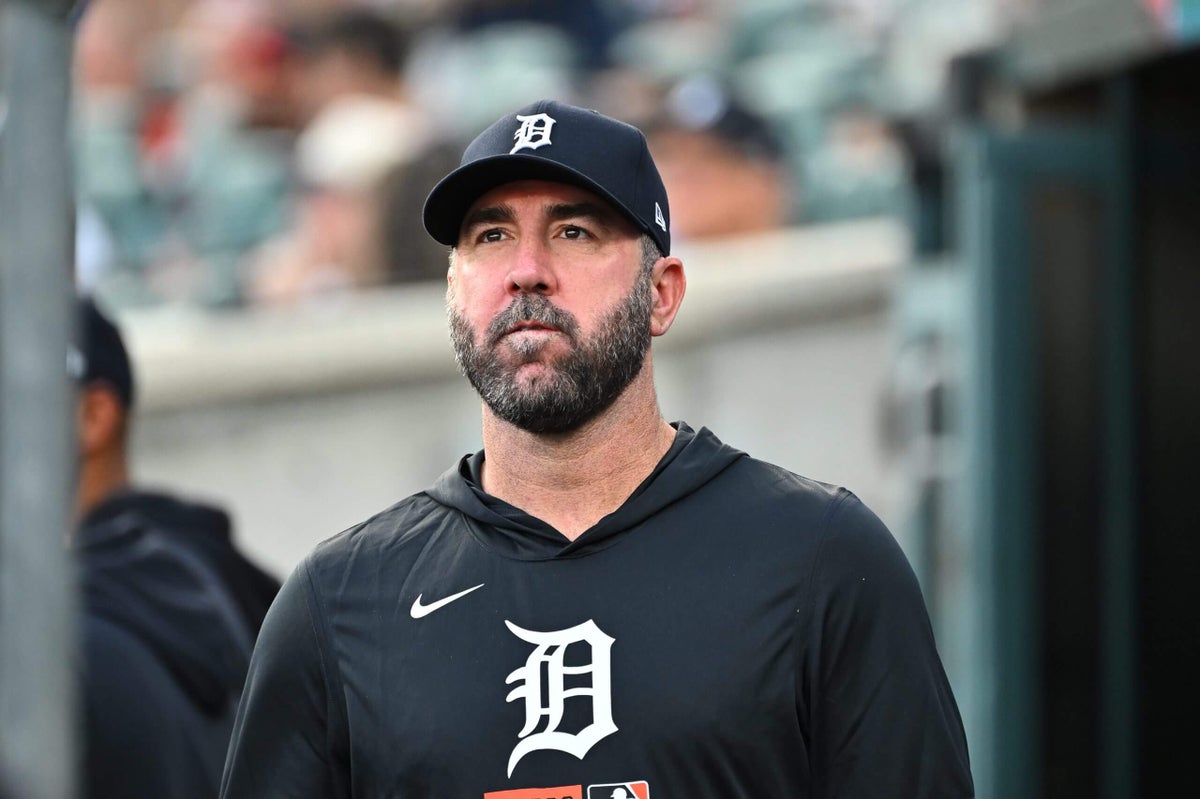
Verlander, 43, has 266 career wins to his name. No active pitcher under 35 years old has even 115.
1,170 words~5 min read