Food Security: NADF Flags-off Farm Input Programme in North Central
James Emejo in Abuja
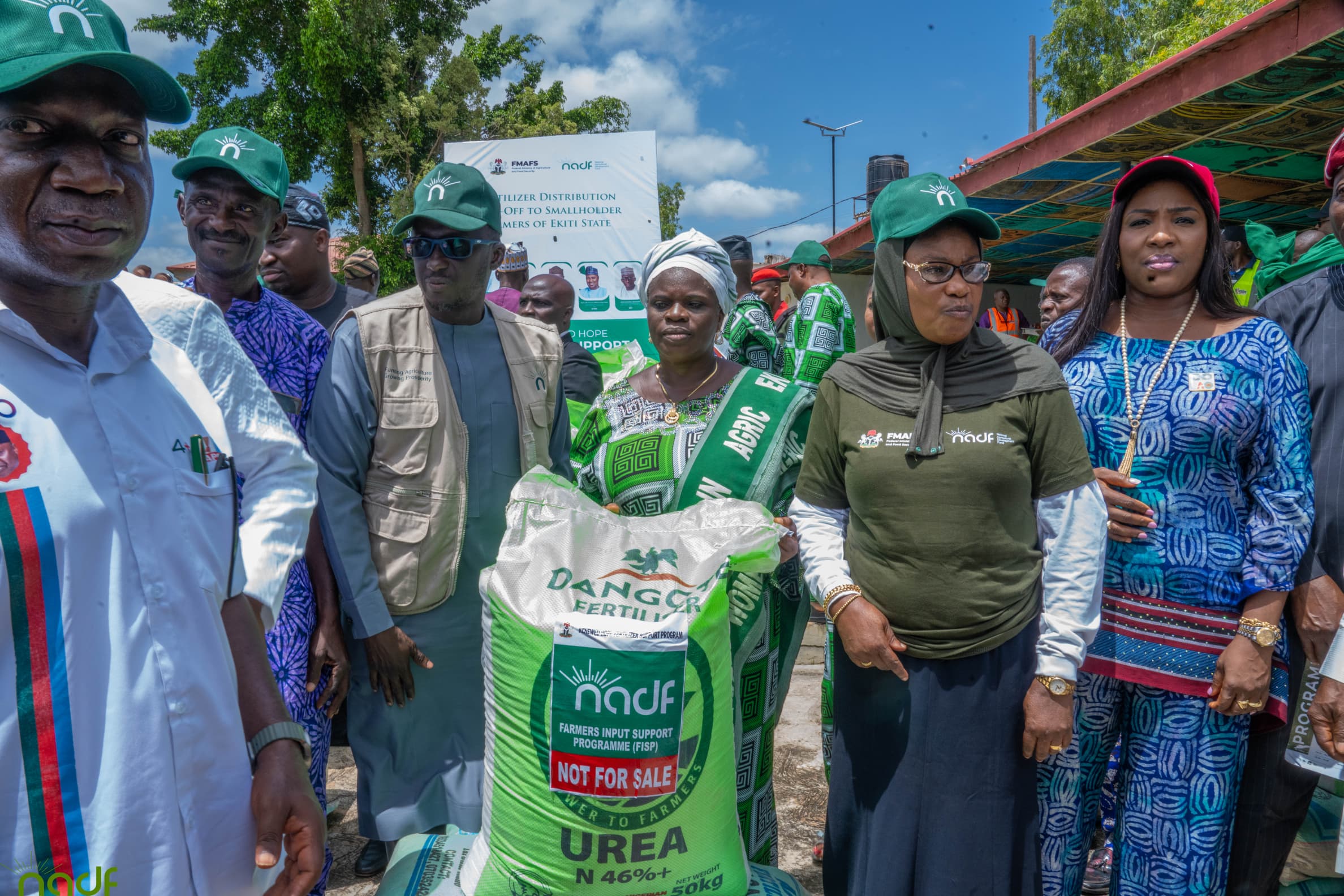
The National Agricultural Development Fund (NADF) Wednesday officially flagged off its Farm Input Support Programme (FISP) for the North Central geo-political zone in Minna, Niger State.The programme will deliver 80,640 bags of subsidised NPK fertiliser to 20,160 smallholder farmers across Niger, Benue, Nasarawa, and Kwara States, with a strong focus on priority food crops aimed at boosting yields, reducing production costs, and strengthening national food supply.Speaking at the flag-off ceremony, the Executive Secretary/CEO of NADF, Mohammed Abu Ibrahim, described the initiative as a strategic intervention designed to address one of the most persistent challenges facing Nigerian farmers—access to affordable and quality inputs.He said the programme aligned directly with President Bola Tinubu’s broader agricultural transformation agenda, which seeks to reposition farming as a key driver of economic growth, job creation, and national development.According to him, the intervention is not a blanket distribution exercise but a carefully structured support system targeted at genuine farmers engaged in priority crops essential to food security.He said, “FISP is not fertiliser distribution for the sake of distribution. It is targeted support designed to get fertiliser to the right farmers, for the right crops, at the right time. Our focus is on increasing productivity, improving farm output and supporting a more stable food market.’Ibrahim explained that NADF identified priority crops for each participating state based on comparative advantage and production capacity.In Niger State, beneficiaries will focus on rice, maize, and yam production, while farmers in Benue State will receive support for rice, yam, and soybean cultivation. Similar crop-specific frameworks will guide implementation across Nasarawa and Kwara States.He added that all fertilisers under the scheme are locally produced, fully traceable, and clearly marked “NOT FOR SALE” to prevent diversion. Each bag, he said, has been mapped to verified beneficiaries through a rigorous validation process involving stakeholders and farmer associations.The NADF chief further disclosed that the programme includes a strong monitoring and evaluation framework to track outcomes, including productivity levels, yield improvements, and broader impact on beneficiaries.“The real success of this programme will not be measured by today’s ceremony but by what happens on the farms in the coming months. We are committed to tracking results and using evidence to strengthen future interventions,” he stated.He urged farmers to apply the inputs responsibly and strictly for their intended agricultural use, noting that beneficiaries remain central partners in achieving national food security goals.In Niger, Governor Mohammed Umaru Bago commended the federal government for what he described as a practical demonstration of commitment to agricultural transformation under the Renewed Hope Agenda.He noted that empowering smallholder farmers with critical inputs remains one of the most effective pathways to increasing food production, improving rural livelihoods, and strengthening agricultural value chains.The governor also praised NADF’s leadership for its continued support to the agricultural sector through targeted and impact-driven programmes that directly benefit rural communities.According to him, such interventions are essential to stimulating economic activity at the grassroots and accelerating Nigeria’s drive toward food sufficiency.Also speaking, the Minister of State for Agriculture and Food Security, Senator Aliyu Sabi Abdullahi, said the programme reflects the Federal Government’s sustained commitment to addressing food insecurity through increased support to farmers.He noted that the timing of the intervention is strategic, coinciding with the onset of the rainy season when demand for fertiliser is at its peak.He further explained that the NADF, operating under the Federal Ministry of Agriculture and Food Security, was established to implement targeted interventions that directly enhance agricultural productivity.Kyari, attended the ceremony along with lawmakers, traditional rulers, farmer associations, and development partners.The flag-off of FISP in the North Central zone represents another milestone in Nigeria’s broader agricultural reform agenda aimed at increasing domestic food production, strengthening value chains, improving affordability, and advancing food sovereignty.With the coordinated support of federal and state actors, the initiative is expected to deepen productivity gains and contribute significantly to Nigeria’s long-term food security and economic resilience agenda under Tinubu’s leadership.