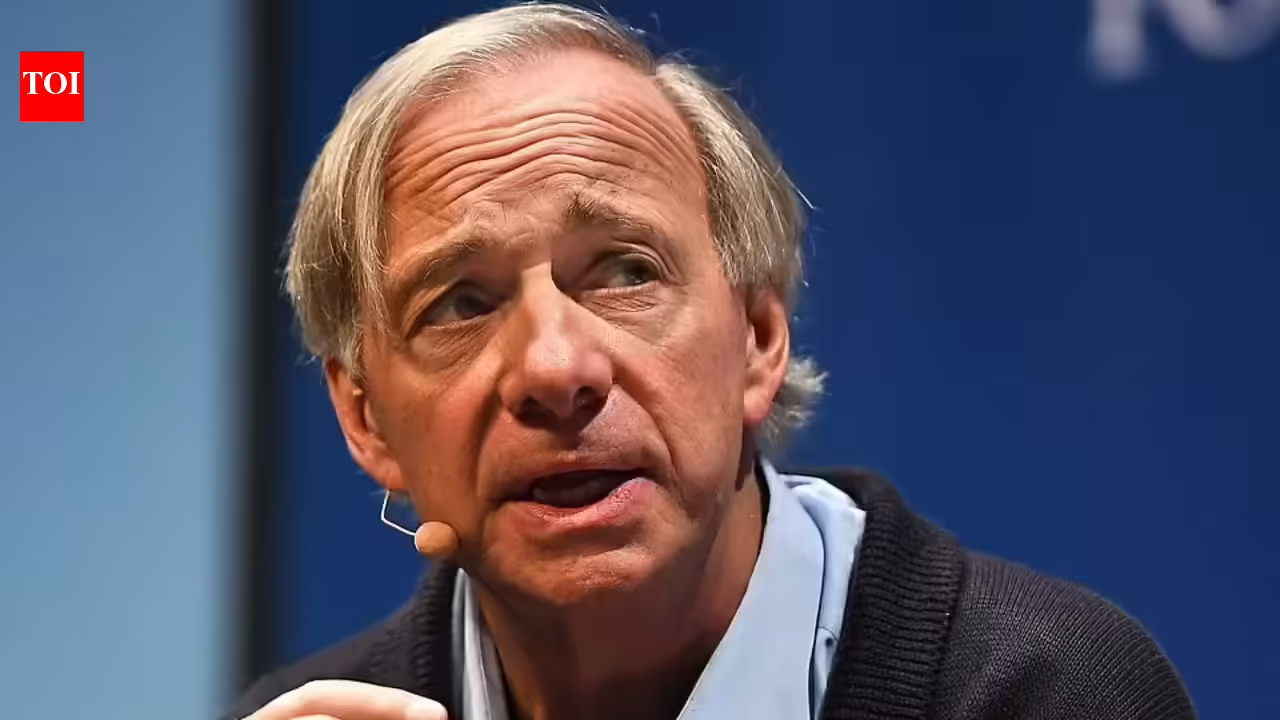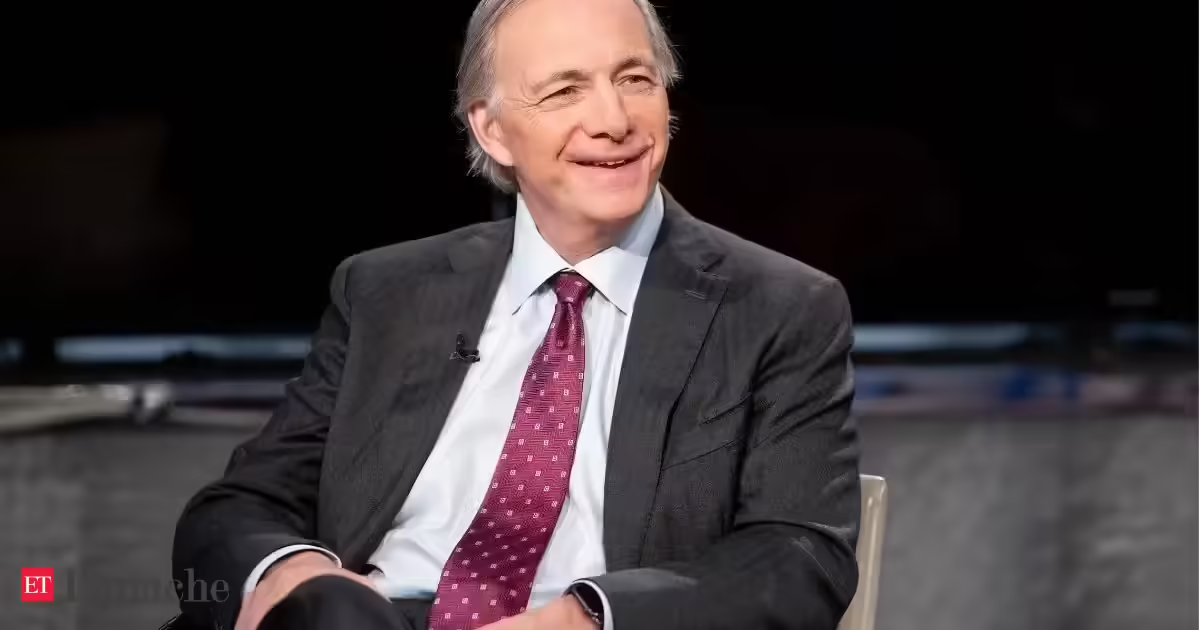
Markets move in cycles, but life does too. Success is rarely a straight line, and setbacks are often an unavoidable part of any long journey. These are words of legendary investor Rakesh Jhunjhunwala. For investors, entrepreneurs, and professionals alike, the ability to endure difficult phases in life and stock markets without losing conviction often determines long-term success, the ace investor always believed in. Speaking during the aftermath of the 2019 NBFC liquidity crisis to CNBC TV18, Jhunjhunwala offered a perspective that remains relevant even today. The crisis, triggered by the collapse of infrastructure financing giant IL&FS, created widespread concerns across India's financial sector. Liquidity dried up, market sentiment weakened, and investors worried about the broader impact on economic growth.Meaning of Rakesh Jhunjhunwala's quoteWhile acknowledging the challenges facing the economy at the time, Jhunjhunwala still maintained a longer-term view. He believed that slowdowns were temporary and that markets, like economies, eventually recover. The real challenge, according to him, was not determining whether a rebound would occur but understanding when it would happen. Such periods test an investor's patience and conviction more than their ability to predict short-term market movements. “The economy is going to rebound for sure, the indices are going to rebound but the question is when,” Jhunjhunwala noted.Rakesh Jhunjhunwala acknowledged that he too is a human and don't like to see market drawdowns but "we have to accept reality as it is rather than what we would like it to be. So it is okay, it’s part of life. Life is not linear; there are good times, there are bad times. So they do come and they will go."Traits of a good investor in Rakesh Jhunjhunwala's wordsSpeaking to another TV channel, Jhunjhunwala said that successful investing was never merely about intelligence or finding the next winning stock. He often stressed that wisdom mattered far more than raw intellect. Markets are inherently tied to the future, and the future is uncertain by nature. Investors must constantly make decisions without having complete information, which requires judgment, adaptability, and emotional balance.He also believed that many investors struggle because they become emotionally attached to their views. Instead of accepting changing realities, they convince themselves that the market is wrong and they are right. This refusal to acknowledge mistakes can be costly. In contrast, successful investors remain curious, open-minded, and willing to learn from new information.Another lesson he frequently emphasized was the importance of passion. Markets reward those who genuinely enjoy studying businesses, understanding financial statements, and observing economic trends. Curiosity, discipline, and an awareness of risk are essential because investing is never easy. Making money is challenging, but preserving and compounding wealth over decades is even harder.Jhunjhunwala also highlighted the role of human psychology in investing. Technologies evolve, industries change, and new tools emerge, but human emotions such as fear, greed, optimism, and panic continue to influence markets just as they always have. Understanding these forces is often as important as understanding balance sheets.Rakesh Jhunjhunwala - from middle class background to once of India's most successful investorsOften called India's Warren Buffett, Jhunjhunwala built one of the country's most remarkable investing careers. The son of an income tax officer, he entered the stock market in 1985 with a modest capital of around Rs 5,000. Over the decades, he transformed that small beginning into a multibillion-dollar fortune.
Rakesh Jhunjhunwala's timeless lesson on handling life's and market's ups and downs: 'Life is not linear. We have to accept reality as it is rather than...'
Legendary investor Rakesh Jhunjhunwala in quote of the day emphasized that life and markets move in cycles, with setbacks being an unavoidable part of long-term success. He believed that while economic slowdowns are temporary, the true challenge lies in conviction over prediction.
552 words~3 min read