Lee Seung-ku
Covering Korean lawand education
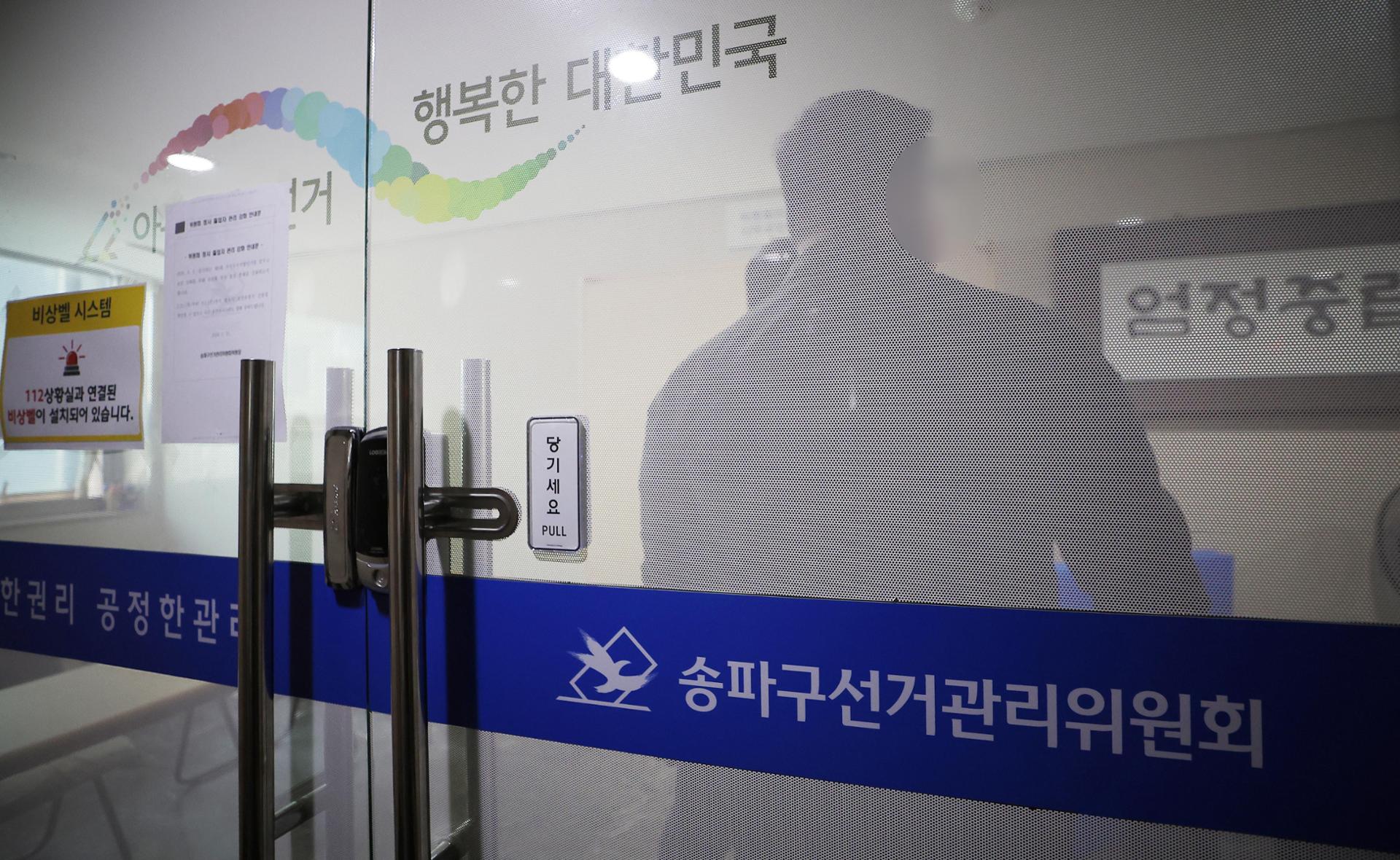
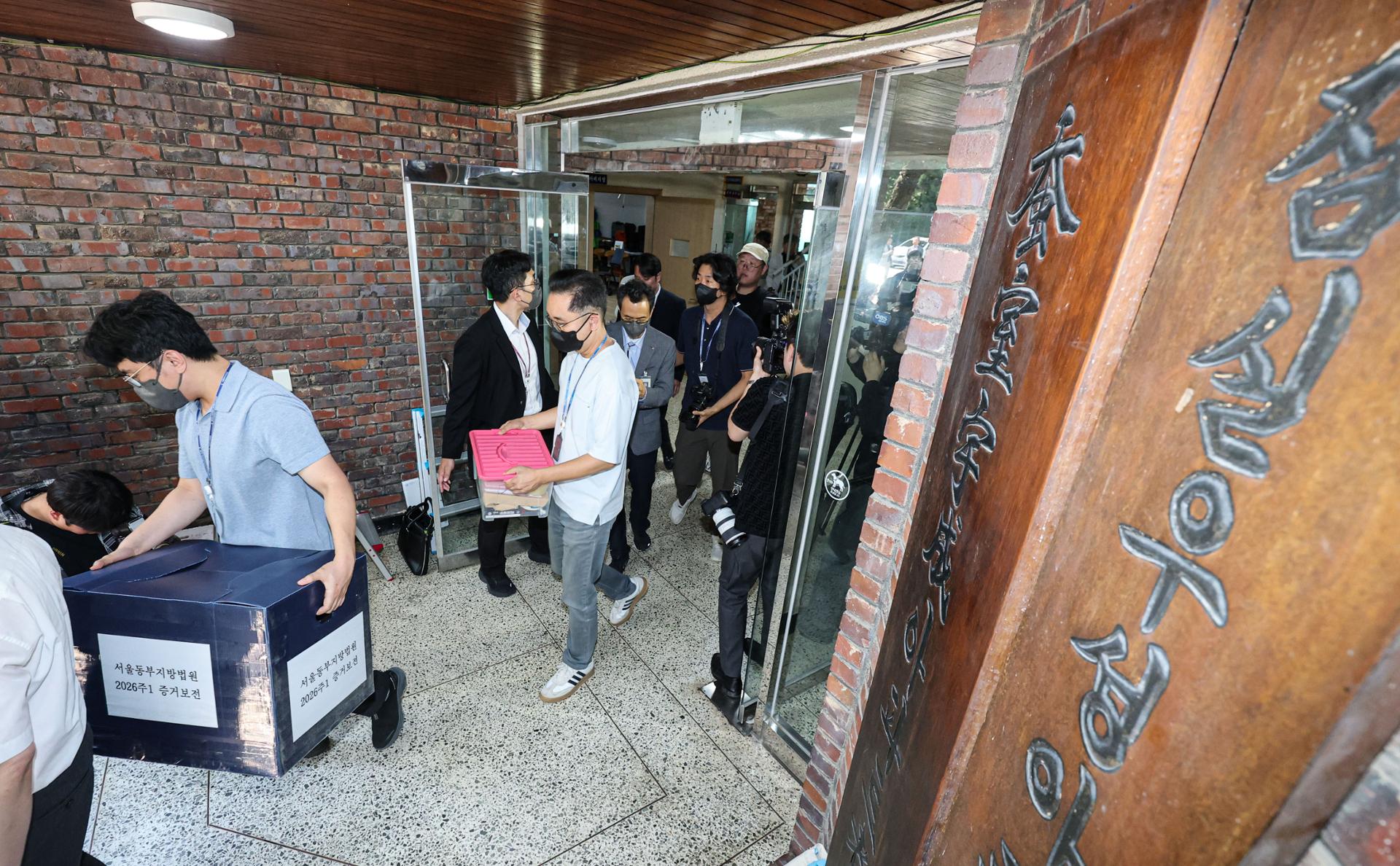
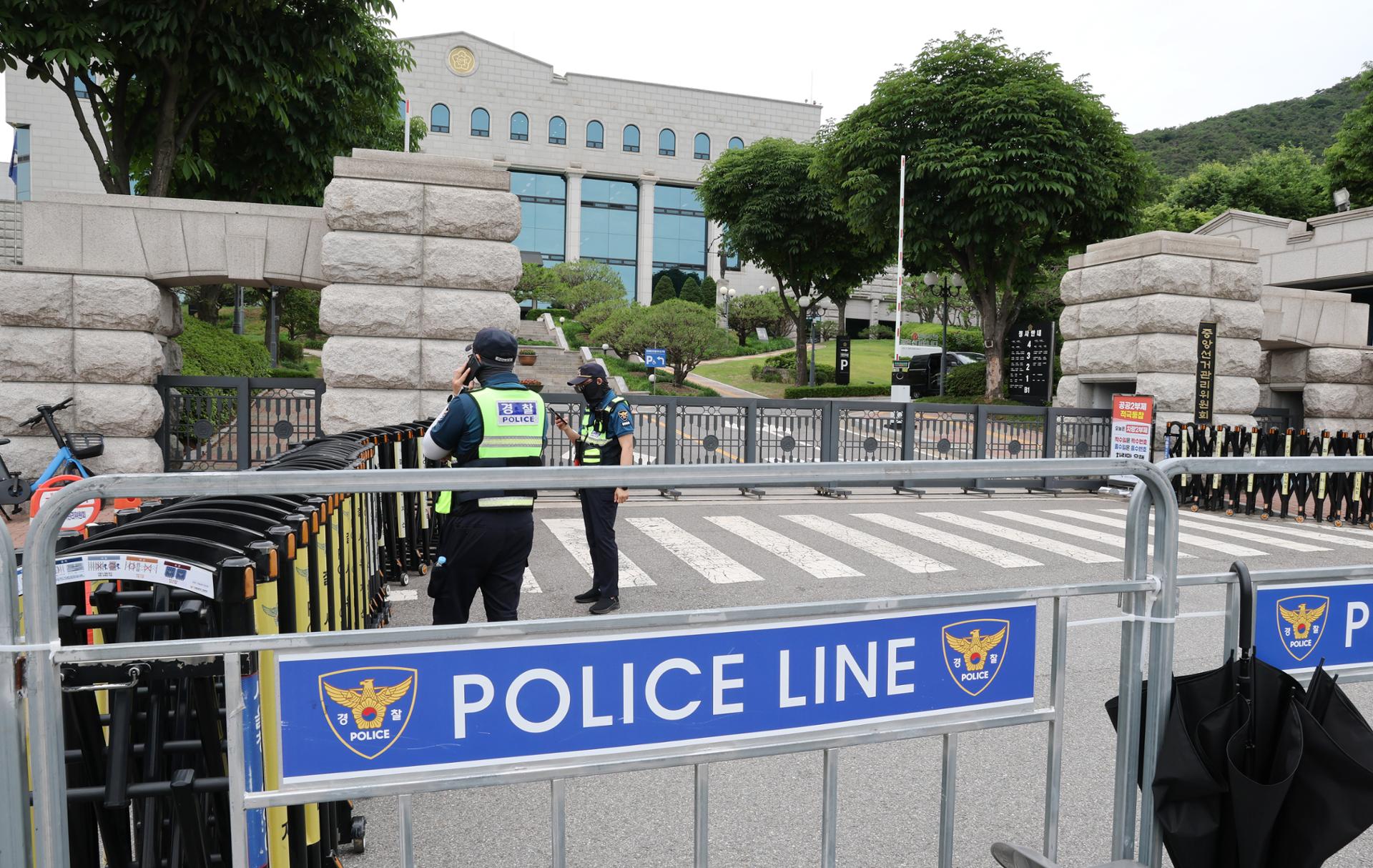
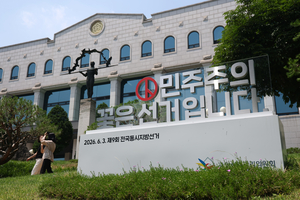
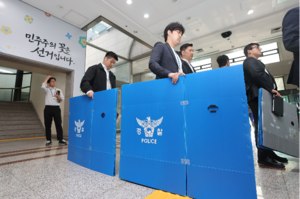
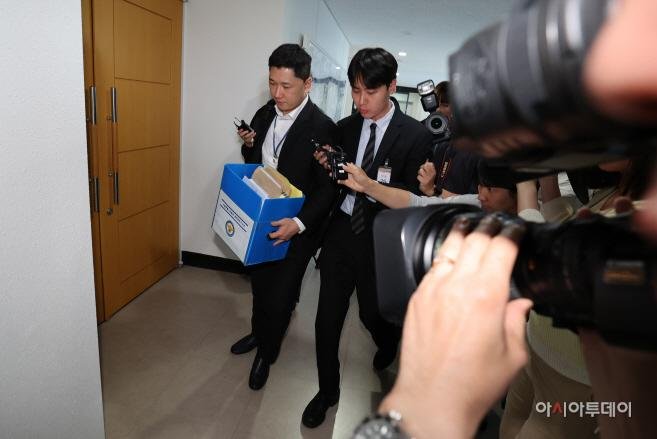
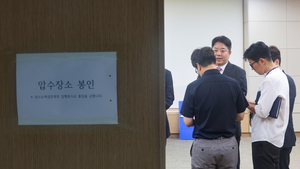
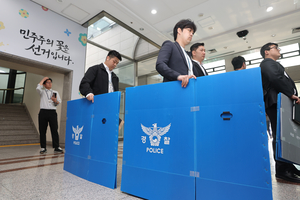
Missing evidence, tally errors, questions over printing deepen scrutiny of National Election Commission Police officials enter the National Election Commission headquarters in Gwacheon, Gyeonggi Province, on June 11 to conduct a search and seizure operation related to the ballot paper shortages during the June 3 local elections. (Yonhap) Police raided the National Election Commission's headquarters and local offices Thursday as a ballot shortage scandal expanded to allegations of missing evidence, vote-counting errors and the commission's failure to follow operational standards.The Seoul Metropolitan Police Agency said it mobilized about 100 personnel and launched search-and-seizure operations at 9 a.m. at the NEC headquarters in Gwacheon, Gyeonggi Province, and seven other locations, including local election offices overseeing areas where ballot shortages occurred.Police said the raids were aimed at determining the cause of the ballot shortage and the circumstances surrounding the NEC’s alleged poor management and response.The controversy erupted during South Korea's June 3 local elections: 91 polling stations across the country ran short of ballot papers, leaving some voters unable to cast their ballots before the official 6 p.m. closing time.The NEC extended voting hours at affected polling stations, but the incident sparked backlash over the commission’s management, preparation and crisis response.The police investigation comes as scrutiny of the NEC has expanded beyond the ballot shortage itself, with additional allegations of election mismanagement emerging in the days since.The allegations include the disposal of a ballot storage box sought as evidence and a data entry error that left more than 1,100 votes unreflected in official tallies.Discarded ballot box Judge Kim Ji-yeon (second from right) and Reform Party Supreme Council member Kim Jeong-cheol (third from right) enter a polling station in Songpa-gu, Seoul on Wednesday to inspect evidence, just moments before they discover that a ballot storage box has gone missing. (Yonhap) A storage box at the center of the ballot shortage controversy in Songpa-gu, Seoul, was found missing Wednesday, a day after the Seoul Eastern District Court ordered its preservation as evidence.The box’s absence was discovered when court officials visited the polling station to inspect the evidence. The Songpa-gu Election Commission, which had been expected to have the box, said it did not know where it was.“The election commission said they did not know where the evidence was,” said Reform Party Supreme Council member Kim Jeong-cheol, who attended Wednesday’s inspection as the applicant for evidence preservation.However, the Seoul Metropolitan Election Commission issued a statement at around 8 p.m. Wednesday saying the ballot storage box had already been discarded.“The ballot storage box has already been discarded,” the commission said. “As an election-related item for which there is no legal obligation of preservation, it was disposed of in accordance with regular procedures.”In a phone interview with Korean-language daily JoongAng Ilbo, a commission official said the box had been discarded before the court ordered its preservation.The box is considered key evidence in allegations that the election commission prepared fewer ballots than required. Under NEC internal guidelines, each voting station must print ballots equivalent to at least 50 percent of registered voters.A label on the box lists 1,900 ballots, amounting to 49.3 percent of the constituency’s registered voters.Data entry errorThe NEC also came under fire after local broadcaster KBS reported Wednesday that vote-counting results for the North Jeolla Province education superintendent election had been incorrectly entered into the commission’s computer system.According to the report, officials at the Wansan-gu Election Commission in Jeonju mistakenly entered the vote-counting results from the third polling station in Hwasan 1-dong as results from the first polling station in the same neighborhood.The commission belatedly discovered the error on June 4, as vote counting was being finalized. But by then, the computer system had been locked after the completion of counting, making it impossible to correct the entry, according to the commission.As a result, votes cast by 1,104 voters at the first polling station were omitted, while the results from the third polling station were reflected twice.The commission did not notify the candidates of the vote-counting error.The NEC said the error did not affect the outcome of the election.Questions grow over ballot preparation standards A police official carries out evidence from the National Election Commission headquarters in Gwacheon, Gyeonggi Province during its raid on Thursday. (Yonhap) The controversy has also intensified after SBS reported Wednesday that most of the additional ballots supplied to polling stations on Election Day did not have printed serial numbers.According to the SBS report, a total of 24,577 additional ballots were supplied to 140 polling stations across the country on June 3. Of them, 17,247 ballots, or 70.2 percent, were unnumbered, based on the broadcaster’s analysis of NEC data.Unnumbered ballots refer to spare ballots without printed serial numbers. Election officials at polling stations reportedly had to write serial numbers manually, a process that may have further delayed the distribution of additional ballots.Questions have also emerged over how the NEC lowered its minimum ballot preparation standard from 60 percent of registered voters to 50 percent in December 2025, ahead of the June 3 elections.According to reports by local daily Chosun Ilbo, the decision to lower the standard was made by the commission’s secretary general and the head of its election policy bureau without a formal internal review process.But NEC data showed that some polling stations prepared printed ballots equivalent to less than half of registered voters.According to the data, 1,371 out of 14,288 polling stations nationwide, or 9.6 percent, had printed ballots equivalent to less than 50 percent of registered voters. At 26 of these stations, voting had been suspended due to ballot shortages.At the third polling station in Garak 2-dong, Songpa-gu, Seoul — where a ballot shortage was first reported to the NEC — only 2,000 ballots were printed for 4,178 registered voters, or 47.8 percent.