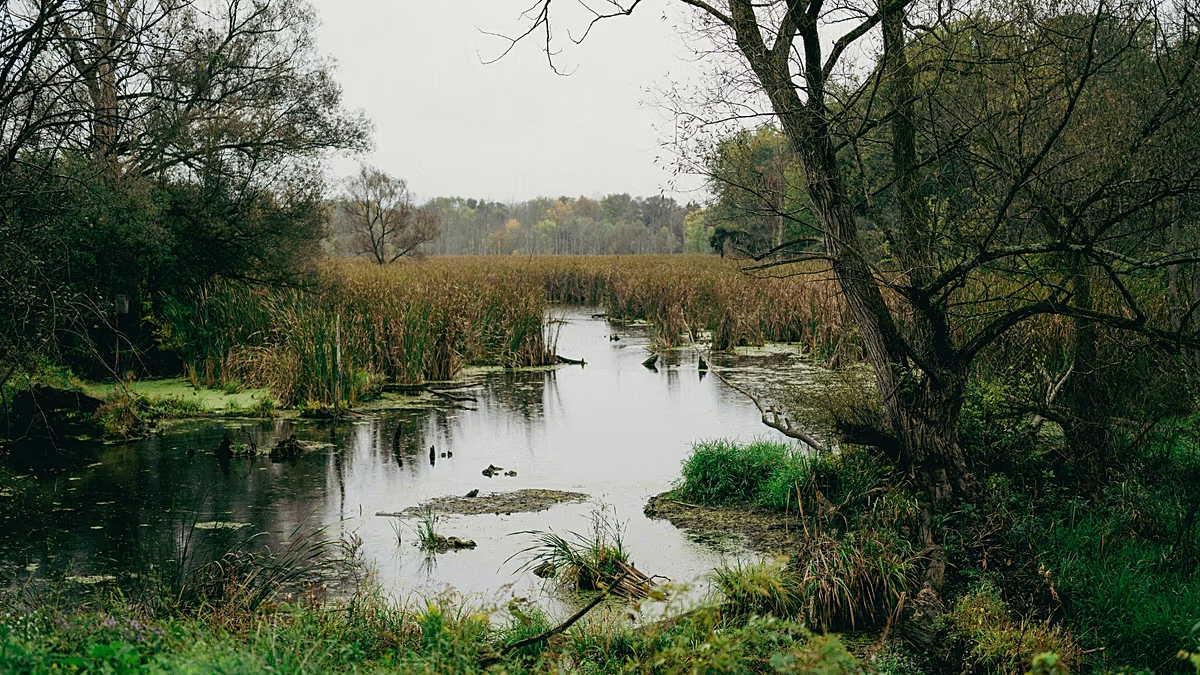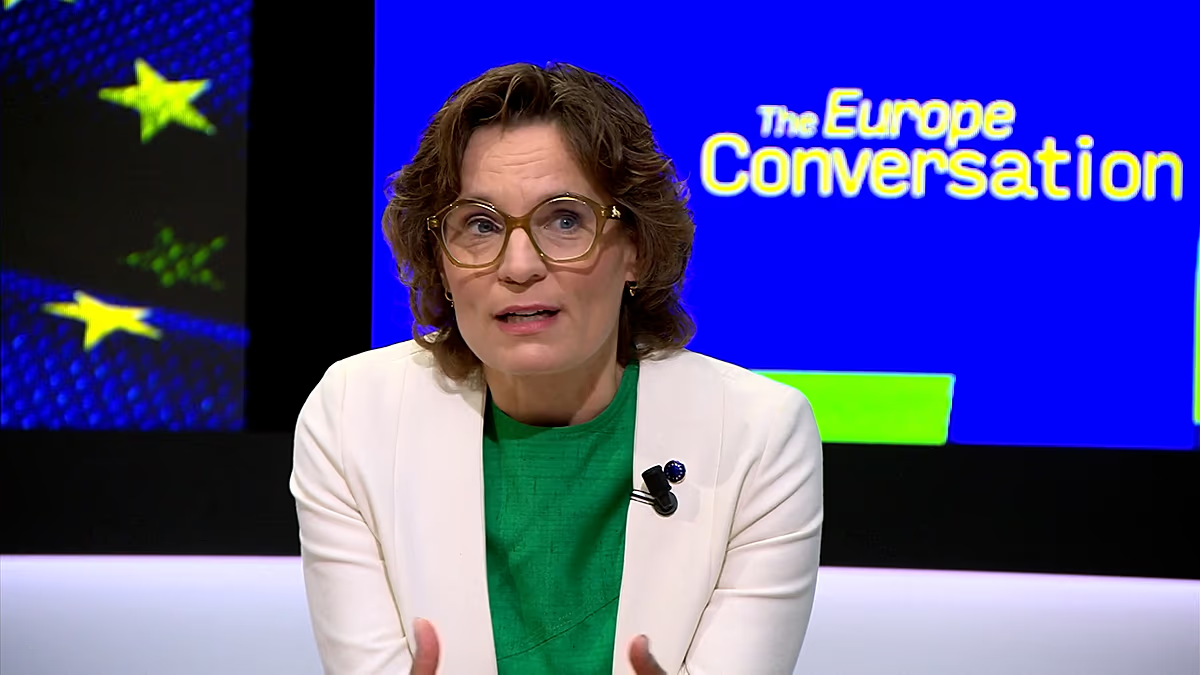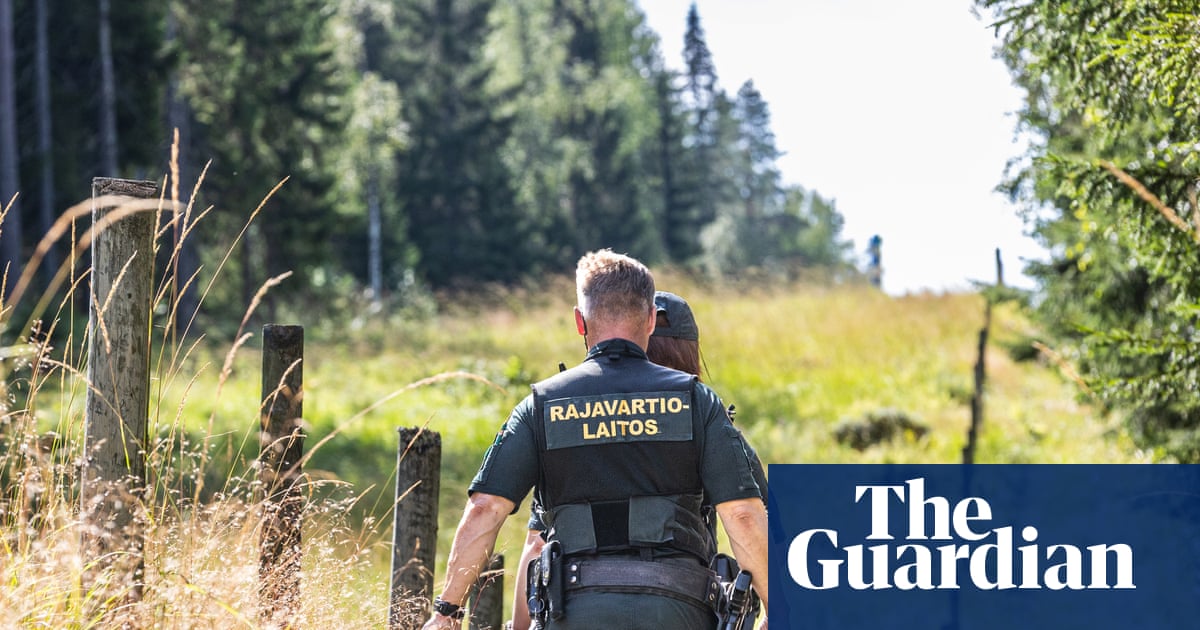
Europe’s eastern borders bear the signs of many years of human interference. Wetlands are drained for access, peatlands are stripped for fuel and forests are cleared for farmland. It’s a familiar pattern and one that Ireland has followed in full.But whereas Ireland has a natural barrier against unwanted incursion – namely 7,500km of coastline – countries such as Poland, Latvia, Lithuania, Estonia and Finland have Russia next door.So while nature restoration is needed and pleaded for the sake of biodiversity, carbon capture, natural flood relief and many other compelling reasons, it could be military rationale that wins the argument.Sodden marshes and spongy peatlands are not the kind of terrain any military commander wants to send tanks and heavy military equipment across. You can lay mines, install barbed wire and develop superior air power but if you want to bog down your enemy, wetlands are your ally.Elina Bardram highlights the nature restoration projects under way or in planning along the borders of Europe’s fringe countries to explain how a new way of thinking about climate and biodiversity may be the best route to action on both fronts.“It’s a natural defence and less expensive [than the alternative],” says the director of climate resilience at the European Commission’s climate action department, DG Clima.“This is the utility-based mentality that we really need to be pursuing.” It’s the kind of thinking, she says, that gets those who are reluctant to implement climate action on board with measures they would previously sideline.“The unveiling of our vulnerability to external shocks resulting from fossil fuel dependency has certainly accelerated the action and investment in this area,” she says.[ Environmentalists’ plea to keep bleach off the beach when cleaning slippery stepsOpens in new window ]She’s referring to the fuel supply and cost crises that followed the invasion of Ukraine and more recently the closure of the Strait of Hormuz.These events have even seen diehard fossil fuel advocates pushing the need to ramp up renewable energy.“Even some of those EU leaders from the right side of the spectrum who have found it more difficult to embrace the climate agenda are now really embracing the decarbonisation agenda for the purposes of strategic autonomy and energy independence,” Bardram says.“Is that bad? No, I think we serve the same purpose. And fossil fuel independence has always been part of the climate narrative.“Maybe in the past we‘ve been seen to be pursing this for the ‘do-good’ agenda, for green purposes only.“That doesn’t resonate with everyone. It has to be utility-based if we want to reach out to the broadest range of constituents.”[ Recent record temperatures ‘rose 10 times faster than expected in stable climate’Opens in new window ]Bardram was speaking in Dublin recently before her address to the Environmental Protection Agency’s annual climate conference.The conference coincided with the agency’s release of Ireland’s latest greenhouse gas projections.They show that the country will achieve, at best and with a large increase in effort, a 25 per cent cut in emissions by 2030 – half the 51 per cent reduction committed to under law.Bardram was diplomatic in her assessment, praising the Government’s climate plans.“It is really about the implementation [of the plans],” she says of the challenge facing Ireland.“There are some structural challenges that go deep such as the big share of agricultural emissions, such as reliance on private transportation.”Ireland’s hard-to-decarbonise agricultural sector makes up 36 per cent of national emissions – several times the EU average – and we have a reliance on the private car for transport that is far out of line with the rest of Europe.So what does the commission think of Ireland’s record of meeting the challenges? “The commission is always ready to discuss with the member states about how we can make it more feasible to stay within targets,” Bardram says.So that’s it? No dressing down from Brussels? “We encourage further efforts.”Ireland’s efforts will be under particular scrutiny from July when the country takes over the six-month term as president of the European Union.There are several key climate-related items that the Irish Government will need to drive forward among a heavy agenda of negotiations and initiatives on all aspects of EU co-operation.First up are amendments to the Emissions Trading System (ETS), the arrangement under which large carbon-emitting industries use EU carbon credits to offset emissions above their allowed threshold.On July 15th talks will begin on the commission’s latest proposed amendments to the ETS.The proposals are technical, complex and not universally welcomed but it will be Ireland’s job to ensure agreement in principle if not in every detail. “Landing the ETS proposal will be super important,” Bardram says. “And I think it’s completely achievable to agree a general approach during the Irish presidency.”Talks on the Multiannual Financial Framework (MFF), the EU’s long-term spending plan, will take place throughout the presidency and will have a knock-on effect for climate-related projects. “We really can’t afford to delay the MFF or get stuck in internal bickering,” Bardram says.Other big items on the list include talks on the next “effort-sharing” arrangement that will underpin the EU’s target of cutting greenhouse gas emissions by 90 per cent by 2040.How the cuts are shared between EU member states will make for tricky talks that are unlikely to conclude before December but Bardram says: “Securing a good initial conversation at ministerial level will be important.”“Finally, and very importantly, we have the resilience framework – how we deal with climate extremes in the future,” she says.As director for climate resilience, Bardram is acutely aware that Europe is warming faster than any other region in the world.Heatwaves on the Continent are happening earlier, becoming more intense and lasting longer; wildfires destroyed a record amount of land last year and intense rainfall and deadly floods are becoming more frequent.A climate resilience and risk management framework is being drawn up and Ireland will need to keep the momentum going on it.Bardram says the challenge was attitudinal as well as practical – moving from retrospective policymaking to anticipatory policymaking that safeguards the EU’s people and prosperity despite “the inevitable impacts of climate change”.“All the legislative measures have been focused on mitigation [cutting greenhouse gas emissions].“It’s high time that focus shifts because, despite the very important continued mitigation efforts, we have to also be totally honest about the fact the EU only accounts for 6 per cent of [global] emissions and there is such inertia in the system that even if all of the globe stopped emitting today we would still be seeing increasing temperatures.“Scientists are converging now on the view that the 1.5 degree [target limit for temperature rise] will be surpassed and it’s completely possible that we will be heading for 3 degrees by the end of the century.“That’s a drastically different operating environment and we can’t as a society afford to pay for the damages. We need to anticipate and avoid the damages.”Those damages include not only the terrible human cost from lives lost and homes destroyed but also massive disruption to harvests, businesses, trade, essential services and economies.“Only 25 per cent of the assets exposed to climate extremes is insured so 75 per cent of the damages that occur will have to be covered by the State.“Governments are insurers of last resort but that’s not sustainable.”Bardram says “building resilience by design” must be the approach from now on.“There are so many solutions – the ability to innovate with nature-based solutions, different types of architectural solutions, precision farming, irrigation methods.“We must do things differently as administrators, as private people, as businesses, as investors.”That all sounds costly but Bardram has the economic rationale to back it up.Not only is upfront investment less expensive than post-disaster recovery but the resilience solutions and technologies market is estimated to be worth €4 trillion.So it would be a win-win for climate, business, nature and people?“It’s about co-benefits,” says Bardram, returning to the theme of restored wetlands being good for nature and defence.“We need to do more thinking like that. In today’s political reality we can insist on absolute greenest motives and be very rigid and we’ll know that we will be morally right but we will risk, and most likely become, operationally irrelevant.”
Green motives are great, but climate agenda must also appeal to broader constituency
‘Utility-based mentality’ can get previously reluctant industries on board, says Elina Bardram
1,356 words~6 min read