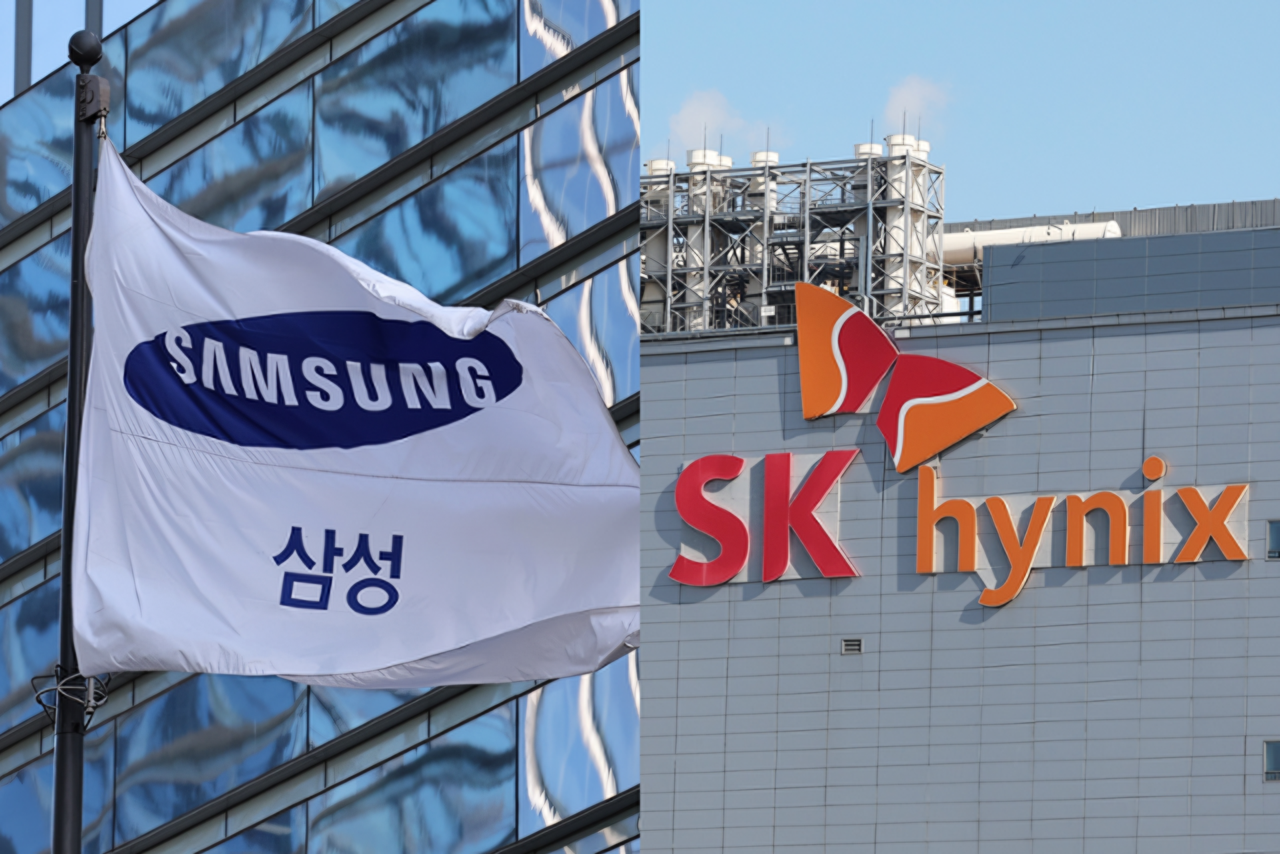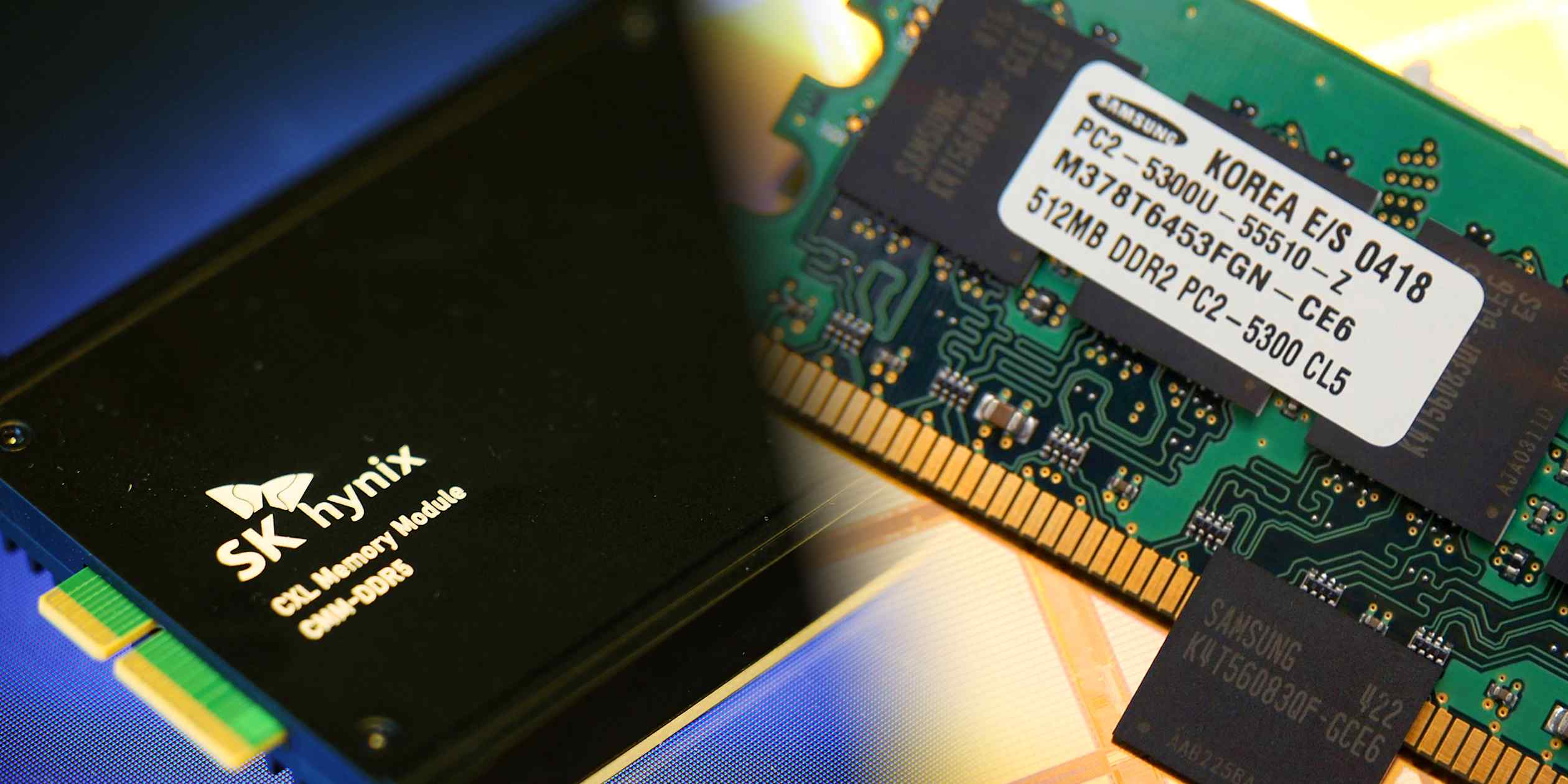
Government push for regional growth fuels speculation over chip giants' investments in Honam Samsung Electronics logo (left) and SK hynix logo (Yonhap) Samsung Electronics and SK hynix are being floated as possible investors in new semiconductor facilities in Korea's southwest, fueling hopes that the Honam region could host its first major chip production base, even as both companies say no such plans have been decided.The speculation has gathered momentum among local officials and political figures as the Lee Jae Myung administration presses major conglomerates to expand investment beyond the Seoul metropolitan area and use large-scale projects to support balanced regional growth.According to political and government sources, Samsung has been mentioned as a potential investor in a chip packaging facility in Gwangju, while SK hynix is also being discussed as a possible candidate for back-end semiconductor operations in the region. Packaging, a post-fabrication process that assembles and protects chips for use in electronic devices, has gained strategic importance as demand rises for high-bandwidth memory and other advanced chips used in artificial intelligence systems.The two chipmakers, both already tied to major semiconductor cluster projects in Yongin, Gyeonggi Province, have distanced themselves from the speculation, saying they have "no knowledge" of such discussions and that "nothing has been decided on regional investment.SK Group Chairman Chey Tae-won acknowledged the need to secure additional production sites as demand continues to grow, but said the group's semiconductor arm would review all options, including overseas sites, based on infrastructure, customer needs and market conditions.“For now, the most important thing is to build Yongin properly,” Chey told reporters on the sidelines of a forum in Japan on Wednesday. “But demand is growing so rapidly that our plans have clearly moved faster. We also need to find the next location after Yongin.”He said any new chip plant would require a full set of infrastructure, including power, water, land and workers.“If those conditions are in place, we are willing to build a fab,” Chey said.Asked about investment plans after the completion of the four planned fabs at the Yongin cluster, Chey said the company would have to prepare early for its next site.“Once the four fabs are completed, we will have to go somewhere else, won’t we?” he said. “We cannot avoid it. That is why we need to prepare in advance. That is our task.”Chey did not rule out overseas investment, saying SK could be forced to build outside Korea if domestic conditions are not sufficient.“All stakeholders have to be satisfied,” Chey said. “If customers or other countries believe they have contributed a lot to our profits, they may also make demands. How we respond to those demands is also part of our capability.”Samsung currently operates its semiconductor packaging lines mainly in Onyang and Cheonan, both in South Chungcheong Province. If an investment in Gwangju materializes, it would mark the company’s first additional domestic back-end production base since the Onyang campus was established in 1991.SK hynix has also begun building its P&T7 advanced packaging plant in Cheongju, North Chungcheong Province, with an investment of about 19 trillion won.Still, expectations are rising in Gwangju and South Jeolla Province. President Lee said at a press conference marking his first year in office on Monday that the government would soon unveil large-scale investment projects aimed at reshaping Korea’s growth strategy."When I talk to companies about corporate or industrial policy, I ask them to 'please invest in the regions if possible. We will support you.' I also apply a bit of pressure, within the bounds of not abusing authority," Lee said during the press conference.On the same day, Min Hyung-bae, mayor-elect of the planned Gwangju-South Jeolla integrated special city, suggested that semiconductor-related investment could be headed to the region.Questions remain over whether chip plants in the region could generate the same clustering benefits as Korea’s existing semiconductor hubs.The chip industry relies heavily on dense ecosystems of suppliers, equipment makers, materials providers and skilled workers, as hundreds of manufacturing steps are linked in sequence and depend on one another. Physical proximity is therefore a major source of competitiveness.The two chipmakers are reportedly coordinating with the government over whether to disclose regional investment plans at a presidential roundtable scheduled for later in June.
Samsung, SK hynix chip investment hopes build in Korea's southwest
Samsung Electronics and SK hynix are being floated as possible investors in new semiconductor facilities in Korea's southwest, fueling hopes that the Honam regi
699 words~3 min read