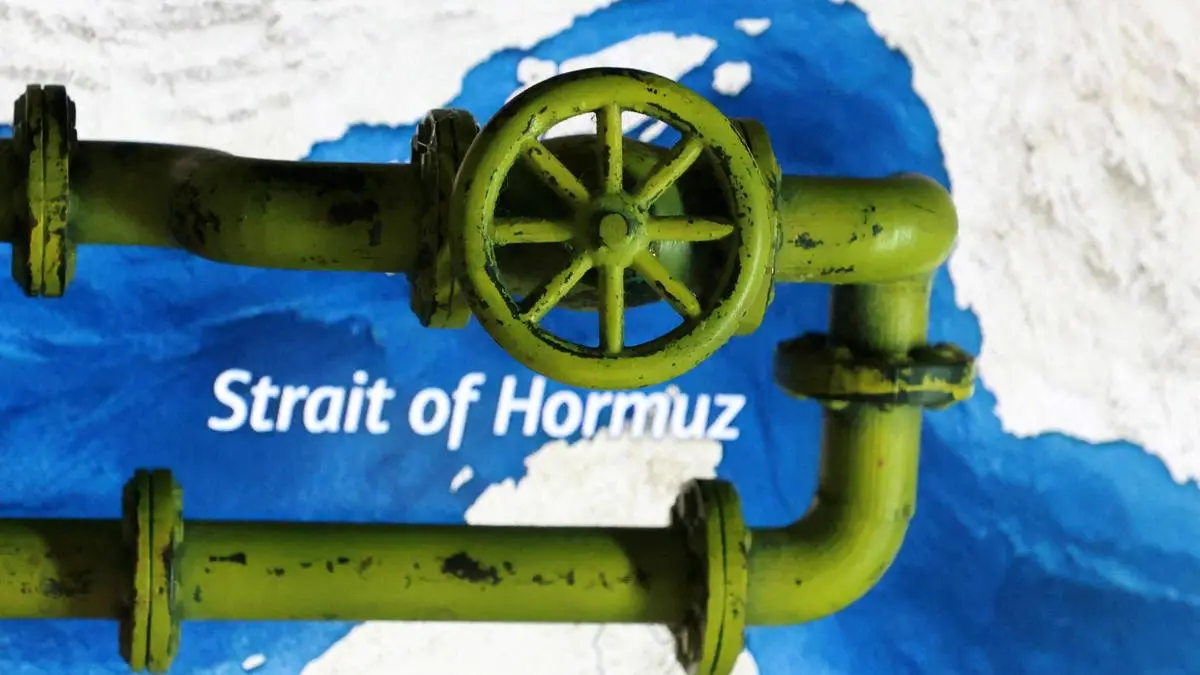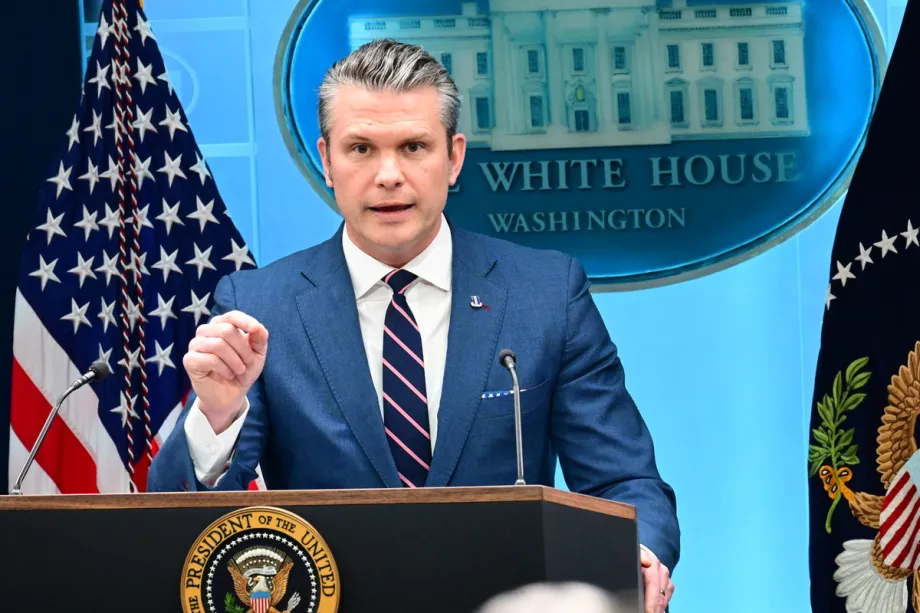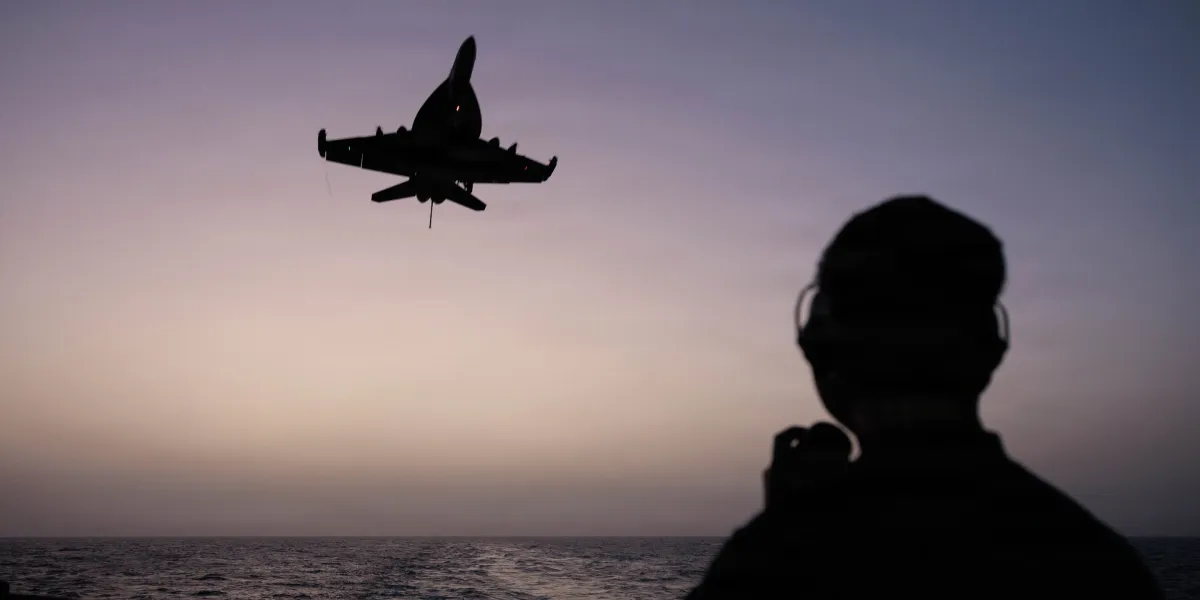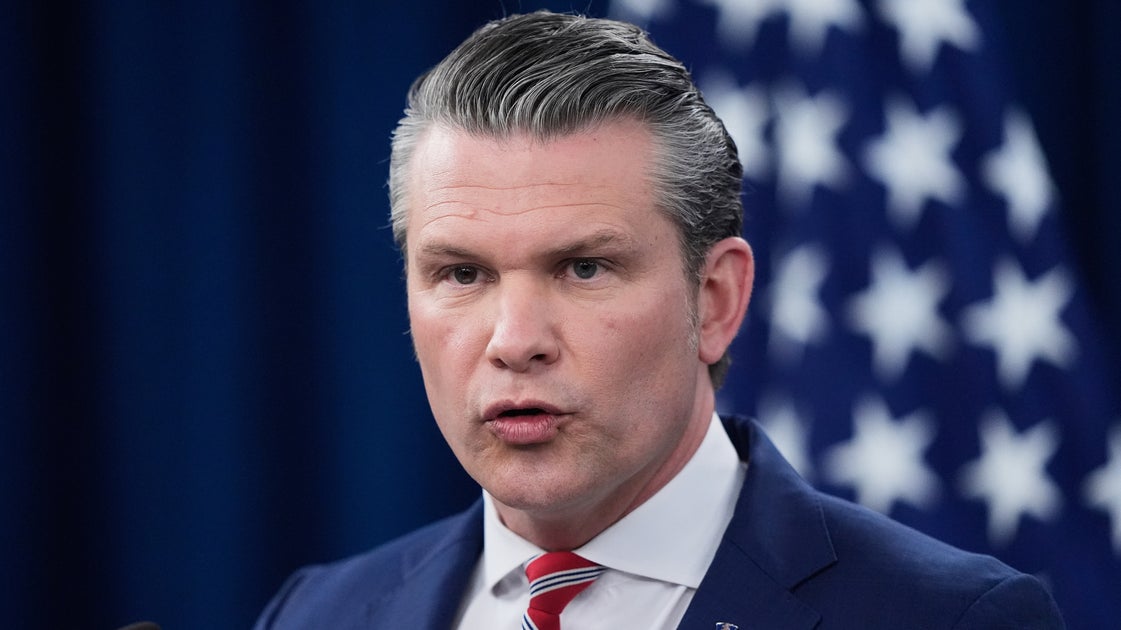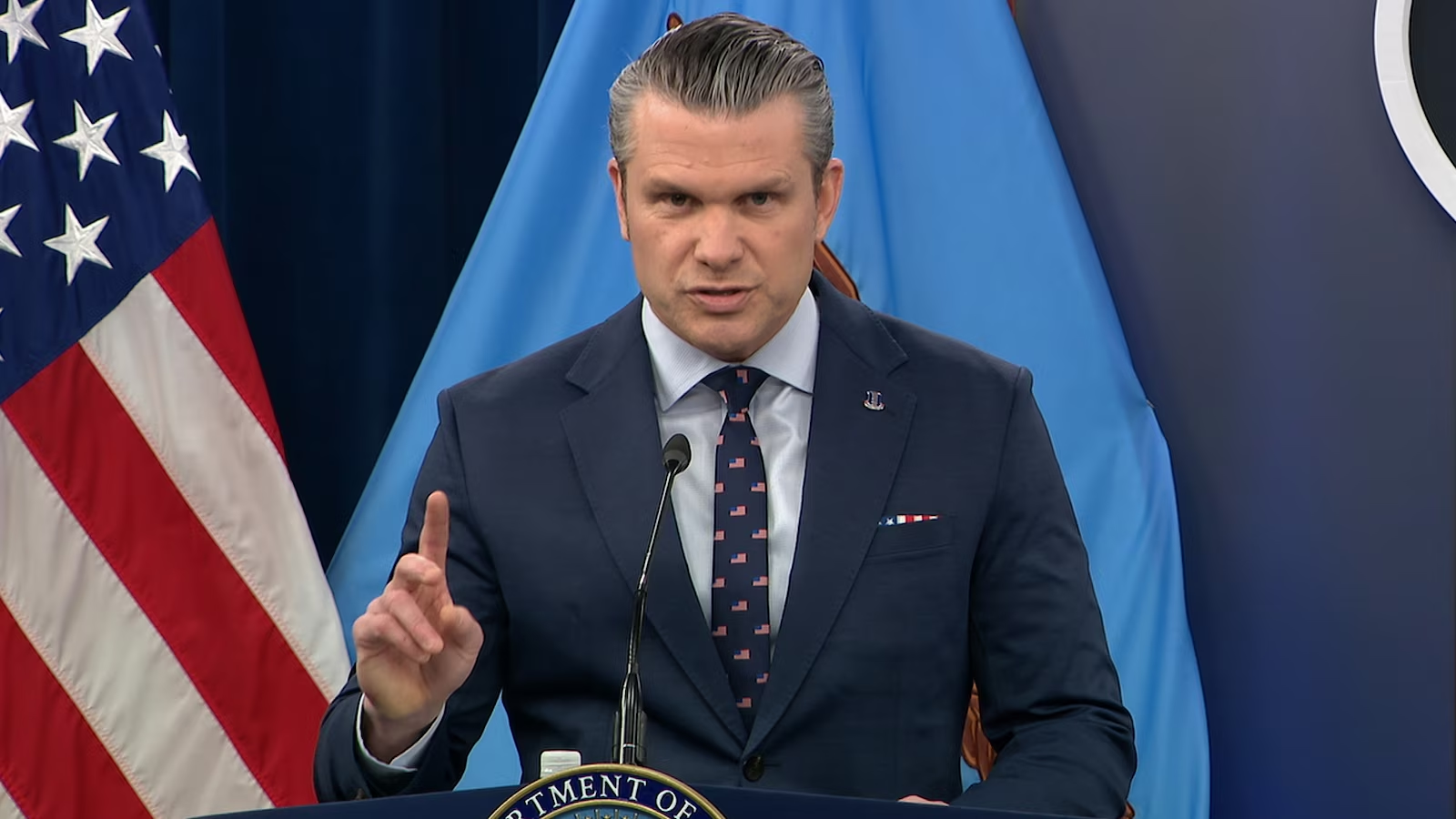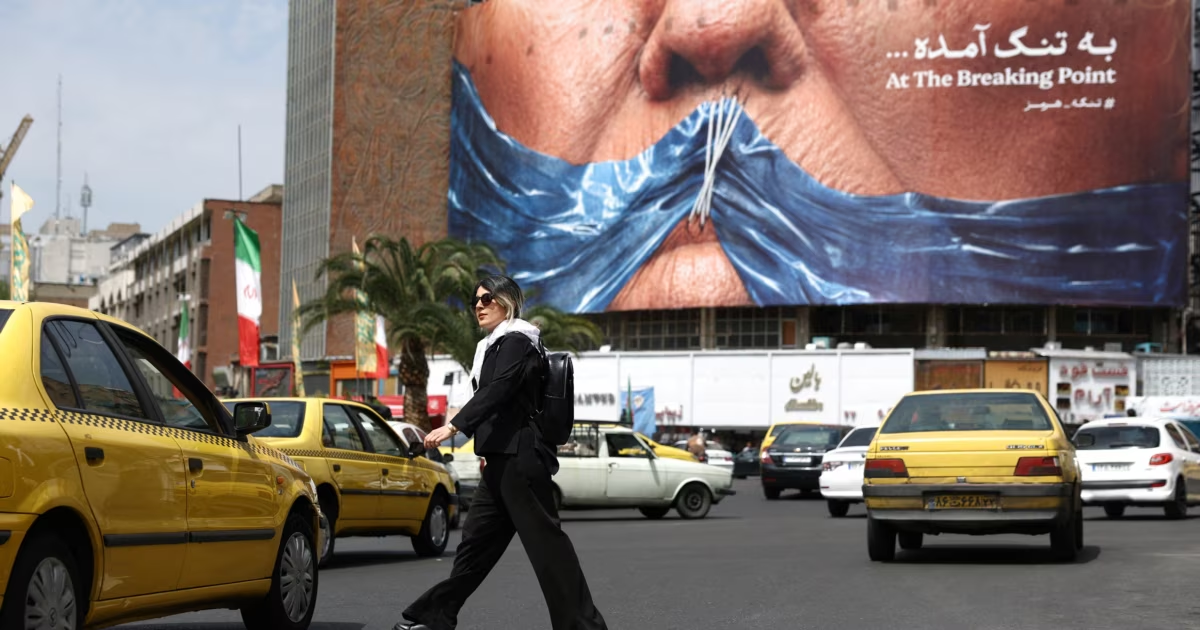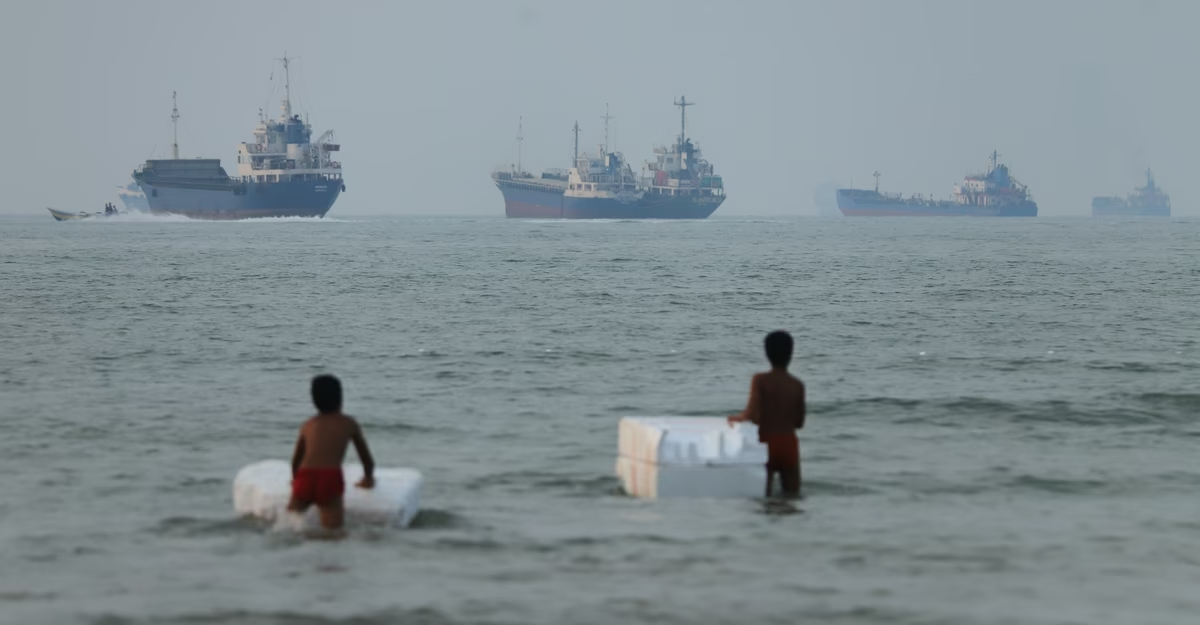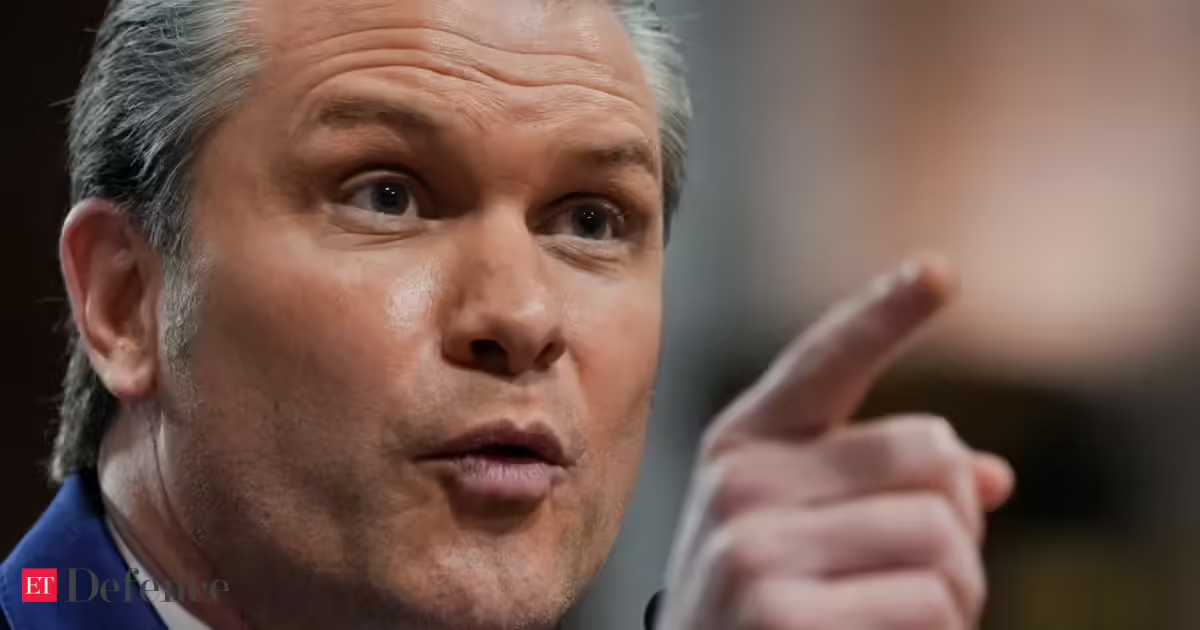
US Defense Secretary Pete Hegseth has sharpened Washington’s messaging on the escalating confrontation with Iran, asserting that the United States effectively “controls” the Strait of Hormuz through sustained maritime operations and a tightening blockade strategy that he says has kept global shipping moving despite Iranian resistance.Speaking outside US Central Command headquarters in Tampa, Florida, Pete Hegseth said American forces were not just reacting to threats in the region but actively shaping conditions in one of the world’s most strategically sensitive waterways.Also Read: Kuwait temporarily closes airspace after Iranian attacks, flights divertedMid rising tensions with Iran, Hegseth said the US presence has ensured uninterrupted commercial flow through the Strait even as Tehran seeks to disrupt it.“… the U.S. Central Command has known that Project Freedom, the idea of running ships through the Strait of Hormuz, has never stopped. It just went underground... we've been protecting commercial shipping going through the Strait of Hormuz, as the president announced, to the tune of over 100 million barrels that have moved through and more. in the middle of the night, protected by the United States in a way that Iran can't stop. They can't see it, and they can't stop it...”He added that US operations had effectively neutralised Iranian attempts to restrict maritime movement, pointing to what he described as a growing tally of intercepted or blocked vessels.“If our blockade is ironclad, which it is. We just disabled another tanker attempting to leave just yesterday. Our blockade has stopped almost 140 ships attempting to navigate in or out of Iranian ports. If our blockade is ironclad, which it is, and we're able to move commercial shipping in and out of the Strait of Hormuz, who controls the Strait of Hormuz? President Trump said it, and he's right. The United States of America controls the Strait of Hormuz. We're able to move oil in and out and other things with partners and have done so now for weeks and weeks in ways the Iranians don't want to acknowledge. That's a powerful reality on the ground...”Also Read: West Asia War: US to bomb 'key facilities' in Iran, says Pete HegsethThe remarks come as Washington continues military operations in and around Iranian-linked assets, with US officials describing a broader effort to secure maritime routes and deter attacks on commercial shipping.Hegseth also addressed reports involving a US Apache helicopter operating in a contested environment, saying the crew remained safe and had performed effectively under pressure.“The Apache pilots are in good shape. What they did bringing that thing down was incredible. It was just class A work by the great Americans who are incredibly skilled. People don't realise this is a contested environment. As we've noted, we're running ships through. Iran doesn't really know how to see them or how to sense them. And so they're doing well, good spirits, and we're grateful for everything they've done to protect the shipping and our interests in the process,” he said.The comments were made alongside a broader escalation in rhetoric and military activity between Washington and Tehran, with US officials confirming repeated strikes on Iranian targets in recent days.Hegseth reiterated that US forces were acting under presidential direction and would continue operations aimed at degrading Iranian capabilities.“We will hit them hard on our terms on the targets that improve the environment for us to operate in and undermine the capabilities that Iran wants to have,” he said.He linked the military posture directly to statements from Donald Trump, who has repeatedly warned of further escalation if diplomatic progress stalls.“As President Trump said, they've been tap, tap, tapping,” Hegseth said, referring to Iran.“You can see when someone's trying to tap, tap, tap on a deal, instead they're going to have tap, tap, tap bombs dropping on key facilities in Iran from the United States of America.”He accused Iran of stalling negotiations and added: “If we need to negotiate with bombs, we'll negotiate with bombs, and we're very good at it.”The escalation comes against a backdrop of direct military confrontation, with Iran launching retaliatory strikes on US-linked installations in Bahrain and Kuwait, and declaring heightened restrictions around the Strait of Hormuz.Iranian forces claimed responsibility for attacks on multiple regional bases, including facilities they said hosted US personnel. State media reported drone strikes targeting radar and communications systems linked to US naval assets in the Gulf.Iran also announced measures it said restricted maritime movement through the Strait, warning commercial vessels against attempting passage. US Central Command rejected the claim, saying shipping continued normally and no blockade existed.Iran’s Revolutionary Guard warned of further retaliation, saying it would expand targets if US strikes continued, while accusing Washington of manufacturing escalation narratives.On the US side, military officials said strikes had been carried out using Marine Corps, Air Force and Navy assets, targeting what they described as Iranian infrastructure linked to threats against regional shipping and US forces.Iran, meanwhile, said the strikes had caused damage to civilian infrastructure, including water reservoirs and telecommunications systems, and released images of destroyed facilities in southern regions.Diplomatic uncertainty has also grown alongside the military exchanges. US officials have suggested that Iranian leaders attempted backchannel contact to halt the bombing campaign, a claim Tehran has strongly denied.The situation has spilled into broader regional disruption, with Gulf states briefly closing airspace and activating air defence systems after missile and drone interceptions were reported. Kuwait confirmed temporary airspace closure and said its systems had intercepted incoming threats, while urging reliance on official information.As competing claims continue to emerge from both sides, the central point of contention now extends beyond battlefield strikes to control of maritime routes, with Washington asserting operational dominance over the Strait of Hormuz and Tehran disputing both the legality and reality of that control.
Hegseth says the US controls the Strait of Hormuz, while also warning of bomb strikes on Iran’s 'key facilities'
America is taking a firm stand in the Strait of Hormuz, demonstrating significant influence over this crucial maritime corridor. While Iranian resistance persists, commercial shipping flows uninterrupted, showcasing the effectiveness of US military operations that have successfully countered Iranian attempts to disrupt trade.
951 words~4 min read