Read The Diplomat, Know The Asia-Pacific
Canberra likely hopes that its relationship with Berlin will come to hold a similar importance as those with Washington, London, and Tokyo.
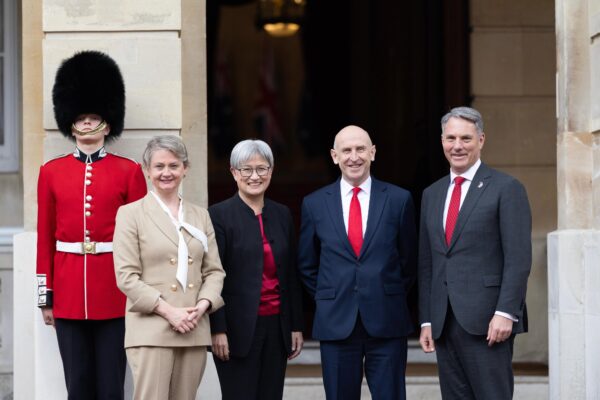
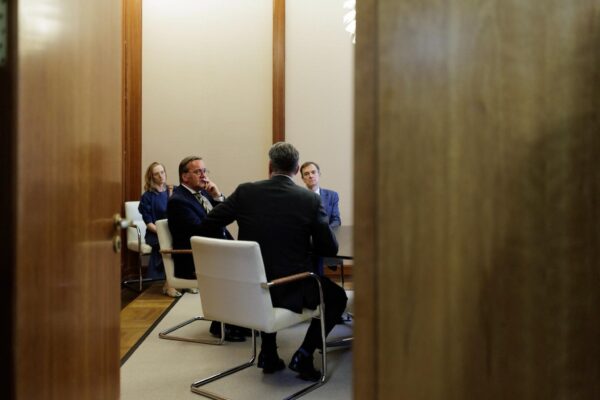
From left: Australian Defense Minister Richard Marles takes part in a meeting with Foreign Minister Penny Wong and their German counterparts, Foreign Minister Johann Wadephul and German Defense Minister Boris Pistorius, in Berlin, Germany, Jun. 8, 2026.
This week, Australia’s foreign and defense ministers met with their German counterparts in Berlin for the 3rd iteration of the Australia-Germany Security Policy Consultations, and the first since 2021. This is a format that Canberra usually reserves for its core partners – the United States, United Kingdom, and Japan – indicating that Australia is trying to build a more substantive security relationship with Germany. The consultations follow the visit by Germany’s Defense Minister Boris Pistorius to Australia in March.
Germany’s strategic situation has changed materially since it released its 2020 Indo-Pacific Guidelines. The erosion of American security guarantees in Europe has created greater pressure for more self-reliance and the need for broader partnerships. With its economic interests, this means that the Indo-Pacific is more firmly embedded in Berlin’s thinking. Maritime trade routes, fuel and critical minerals supply chains, and stable global rules are all essential for Germany’s industrial economy.