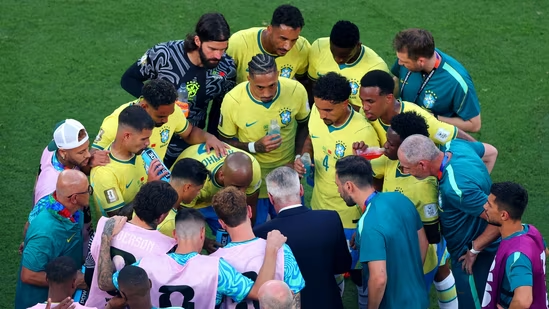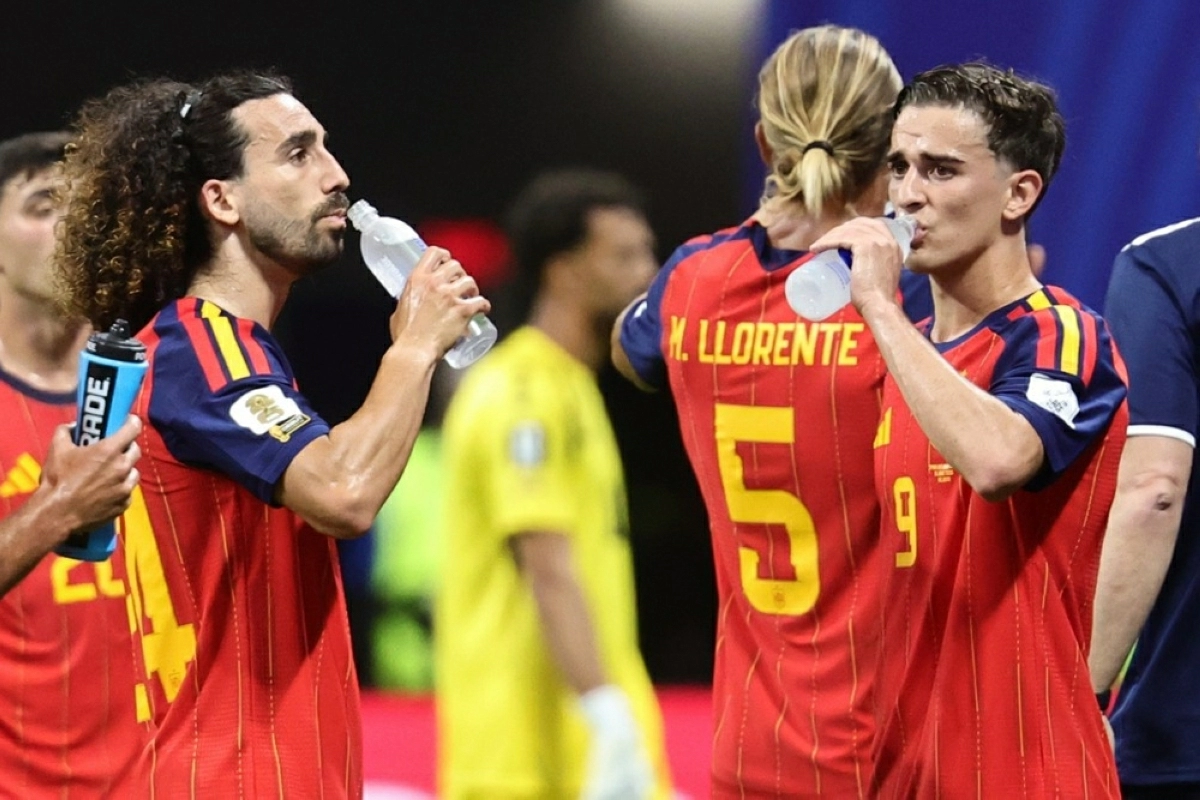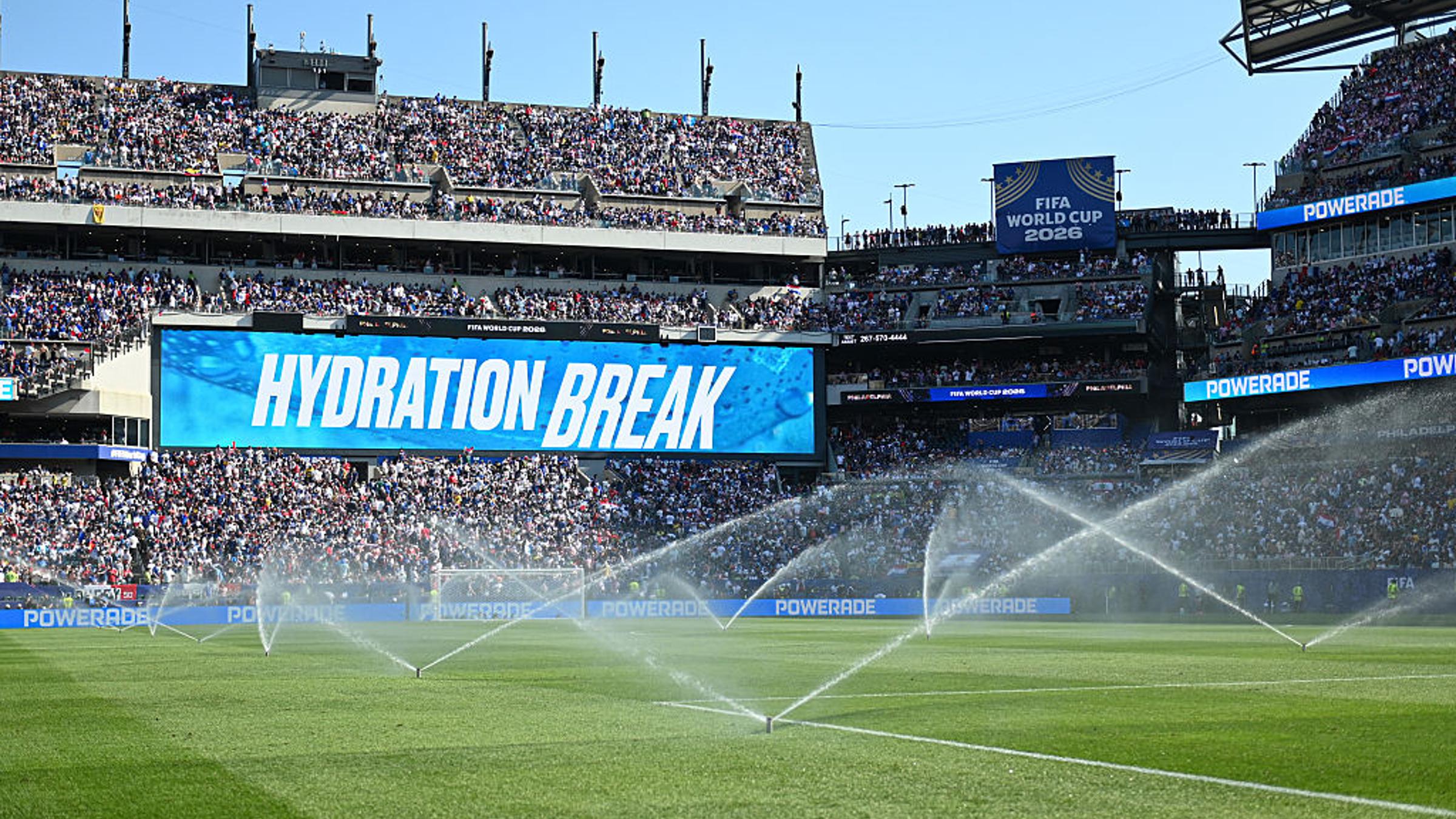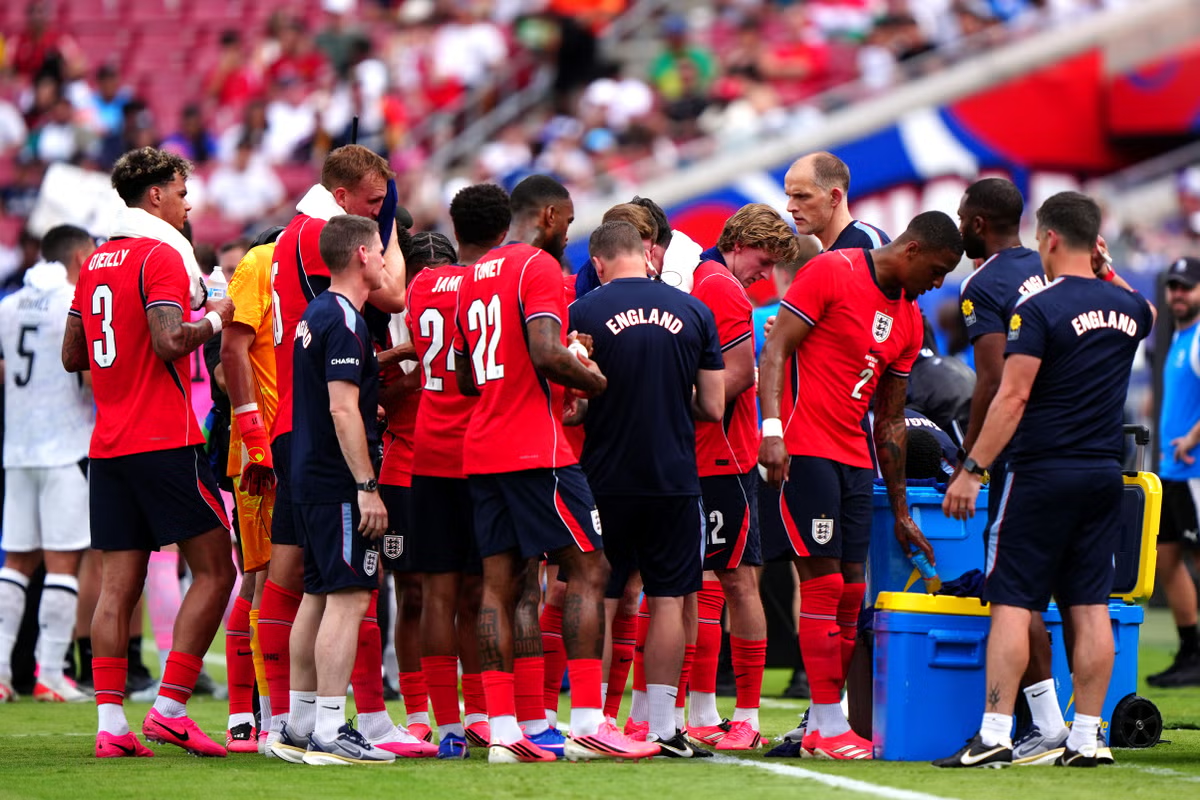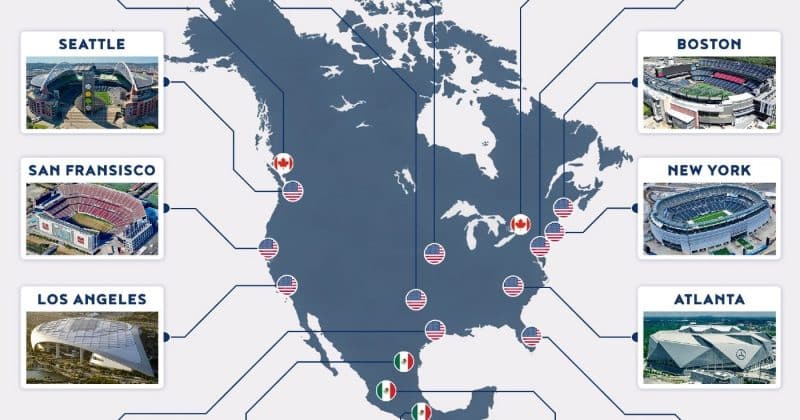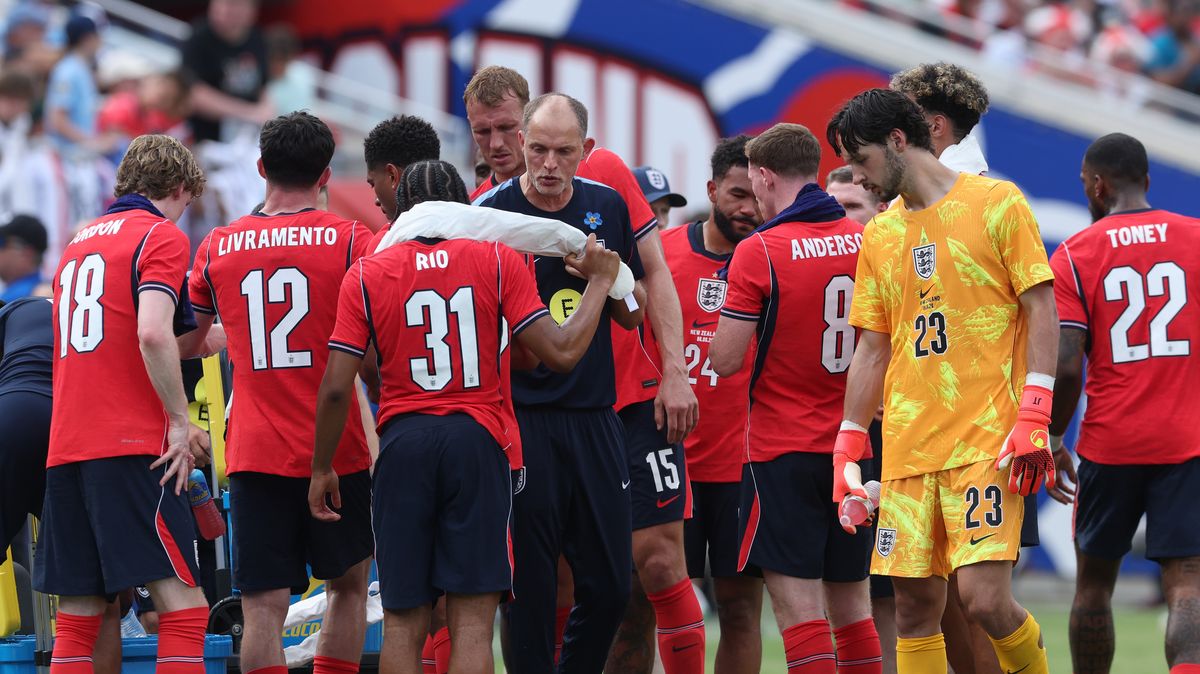
FIFA's mandatory hydration breaks at the 2026 World Cup offer a powerful lesson beyond the world of sport. The new rule is a blueprint for how companies can move recovery from optional perk to operational advantage.Getty ImagesDuring the 2026 men’s World Cup, FIFA, soccer’s global governing body, will introduce a simple yet consequential change for players.Every match, in every stadium, will pause twice - midway through each half - for a mandatory three-minute hydration break, regardless of weather or temperature.FIFA isn’t doing this arbitrarily. Heat has become an increasingly serious performance risk.Researchers from Queen’s University Belfast found nearly all World Cup host locations could reach dangerous heat conditions. Moreover, at the 2025 Club World Cup, Chelsea midfielder Enzo Fernández said he felt severely dizzy during extreme heat, while his teammates described conditions intense enough to noticeably slow the game.At first glance, FIFA’s new rule may appear as basic player safety. But there’s a deeper lesson here for organizations focused on high performance. Historically in professional soccer, a player who signals exhaustion alone risks appearing weaker, less committed or less reliable. FIFA's universal hydration break removes that social cost entirely by creating a collective break, ensuring no individual player has to call attention to their own fatigue. Beyond the world of sport, organizations have a similar opportunity. Many already offer meaningful benefits, from generous PTO policies to mental health resources. Yet employees often hesitate, sensing hidden costs or subtle pressures against using these resources fully. Pew Research found nearly half of American workers don’t take all their available paid time off, many fearing they’ll fall behind or add pressure to their teammates. FIFA’s approach highlights a critical insight for corporate culture: when wellbeing is intentionally embedded into the operating rhythm, it stops being seen as downtime or a personal indulgence. Instead, it becomes a deliberate advantage that drives higher performance and wins for the organization. MORE FOR YOUWhy Benefits Don’t Become Behavior FIFA’s rule changes the game rather than the player. No athlete needs to question whether they can do something as fundamental as hydrate. Recovery is officially part of the game. However, many workplace wellbeing strategies depend heavily on employees finding, understanding and having the internal motivation to use available resources. Workers might have access to generous PTO, wellness apps or Employee Assistance Programs (EAPs), but when juggling back-to-back meetings, busy seasons or fear of being replaced by ChatGPT, even the well-intended benefits can remain untouched. Research from Oxford’s Wellbeing Research Centre underscores the point: individual-level interventions rarely drive meaningful improvements in workplace wellbeing, while the findings point organizations toward changes in how work itself is designed.In my experience as a workplace wellbeing expert across fast-paced industries from law to finance to tech, two challenges consistently stand out:Benefit Integration Into Workplace Realities HR leaders work hard to design and communicate benefits, and line managers work just as hard to manage workloads. Yet the decision around how to manage wellbeing during the day lands on the stakeholder with the least power to influence conditions: the employee.Workers know they’re measured on productivity, presence and performance. Against that backdrop, taking time from immediate tasks to use benefits can feel risky. The wellness stipend for executive coaching goes unused because it takes time to book amid urgent deadlines. The EAP remains untouched because pausing mid-day for therapy feels misaligned with a day defined by deliverables. Deloitte research quantifies the concern: 68% of workers said they didn't fully use available wellbeing resources because accessing them felt too time-consuming, confusing or cumbersome. When benefits aren't visibly embedded into workplace norms, organizations risk low utilization and, over time, higher employee burnout.Leaders Set the Norm, Not the PolicyWhen it comes to embedding wellbeing into organizational culture, actions speak louder than words. If senior leaders consistently skip lunch, answer emails on vacation or never take PTO at all, employees find it harder to act differently, regardless of what formal guidelines permit.This dynamic recently played out publicly in soccer. During a U.S. men’s friendly against Senegal, coach Mauricio Pochettino used a hydration break to gather players around a laptop for tactical instructions. It was the workplace equivalent of scheduling a coffee break and turning it into a budget meeting instead. More importantly, the moment illustrated how easily leadership actions shape perceptions about how breaks are actually used. Research confirms a similar gap in workplaces: 73% of managers say they should model healthy behaviors, yet only 35% of employees have a clear picture of how well their manager takes care of their own wellbeing. Employees don’t follow stated policies; they follow what leaders visibly do.Three Ways Organizations Can Build Wellbeing Into High PerformanceFIFA’s mandatory hydration rule points to a broader leadership lesson: when pressure becomes predictable, wellbeing and recovery should become predictable too. Here are three practical leadership plays for building wellbeing into high performance culture. 1) Put Recovery on the Calendar, Not Just the HandbookBorrow FIFA’s playbook and set clear, organization-wide pauses after predictably busy seasons or at natural low points in the year.Consider: Instituting 2-3 company-wide no-meeting days at the end of summer and/or the final week of December. Announce the dates during annual planning and block them at the organizational level rather than asking individuals to opt in.Takeaway: A synchronized pause turns recovery from an individual negotiation into an operating rhythm. When organizations protect these windows in advance and senior leaders visibly respect them, employees get usable space for focus, movement, appointments, life admin or simply rest, without having to request it, justify it or wonder whether stepping away will be held against them.2) Create Communication Norms to Signal Expectations Soccer never leaves urgency to interpretation. A whistle, a flag or a card tells every player on the field exactly when to stop, what demands attention and when to continue. At work, however, a Slack ping, a late-night email or a subject line with “quick question” can make every routine request feel time-sensitive. That ambiguity adds pressure. When every message feels like it could require immediate action, employees have a harder time focusing, stepping away or trusting that a break is actually a break.Organizations can reduce that pressure by creating shared communication norms that make three things clear: what needs action, by when and what can wait.Consider: Setting a communication framework. Any request that requires time, input or a decision should make the expected action, timing and response clear. That can apply across meetings, project tools, email, Slack and follow-ups, with cues such as “decision needed by Thursday,” “review when you’re back,” “FYI only,” “no action needed” or “for discussion in Monday’s meeting.”This may seem incredibly simple, but in a fast-paced work environment, clarity becomes a form of support. Employees are often moving across different threads, meetings, priorities and time zones. Clear expectations give people a faster way to understand what deserves attention now and what can wait.Takeaway: Communication norms support wellbeing by reducing the mental load of constant interpretation. When employees know the expected action and timing, they can prioritize more effectively, stay focused and spend more of their energy on productive work instead of decoding whether every message requires an immediate response.3) Make Wellbeing a Team SportElite teams build shared wellbeing rituals, whether through training, pregame routines or cooldowns away from competition. Why? Because connection is a performance asset. Teams that trust each other navigate challenges more effectively and perform better.Senior leaders can follow that lead by enabling teams to build those rituals into their normal workflow. Offsites can spark initial connections, but cohesion comes from smaller, repeatable moments. Consider: Giving teams a modest quarterly budget specifically for experiences that strengthen social wellbeing, such as a fitness class, team lunch or volunteering day.Managers can also reinforce these rituals by creating light-touch opportunities for employees to share their own practices, how they’re leveraging stipends (if available) or benefits they’re using, whether through informal Slack channels or short spotlights in team meetings.Takeaway: These actions are low-cost, practical ways to increase visibility and embed wellbeing into everyday team culture. When wellbeing becomes something teams can see and share, it becomes easier to use consistently.From the World Cup Pitch to Performance Culture The FIFA World Cup will crown a champion in July, but the tournament has already offered a win for workplace wellbeing. Facing relentless conditions, FIFA didn’t ask elite athletes to manage pressure individually; it redesigned the game itself to make high performance possible.Organizations navigating their own challenging landscape have the same opportunity: to move beyond expanding benefits and build a culture that helps employees use the support they’ve already been given.FIFA wrote player wellbeing into the rules of the game. The most competitive organizations will write wellbeing into the rules of work.
The FIFA World Cup Built Recovery Into The Rules—How Your Company Can Too
The 2026 FIFA World Cup’s mandatory hydration breaks offer organizations a lesson in building recovery into work to support high performance and workplace wellbeing.
1,444 words~7 min read