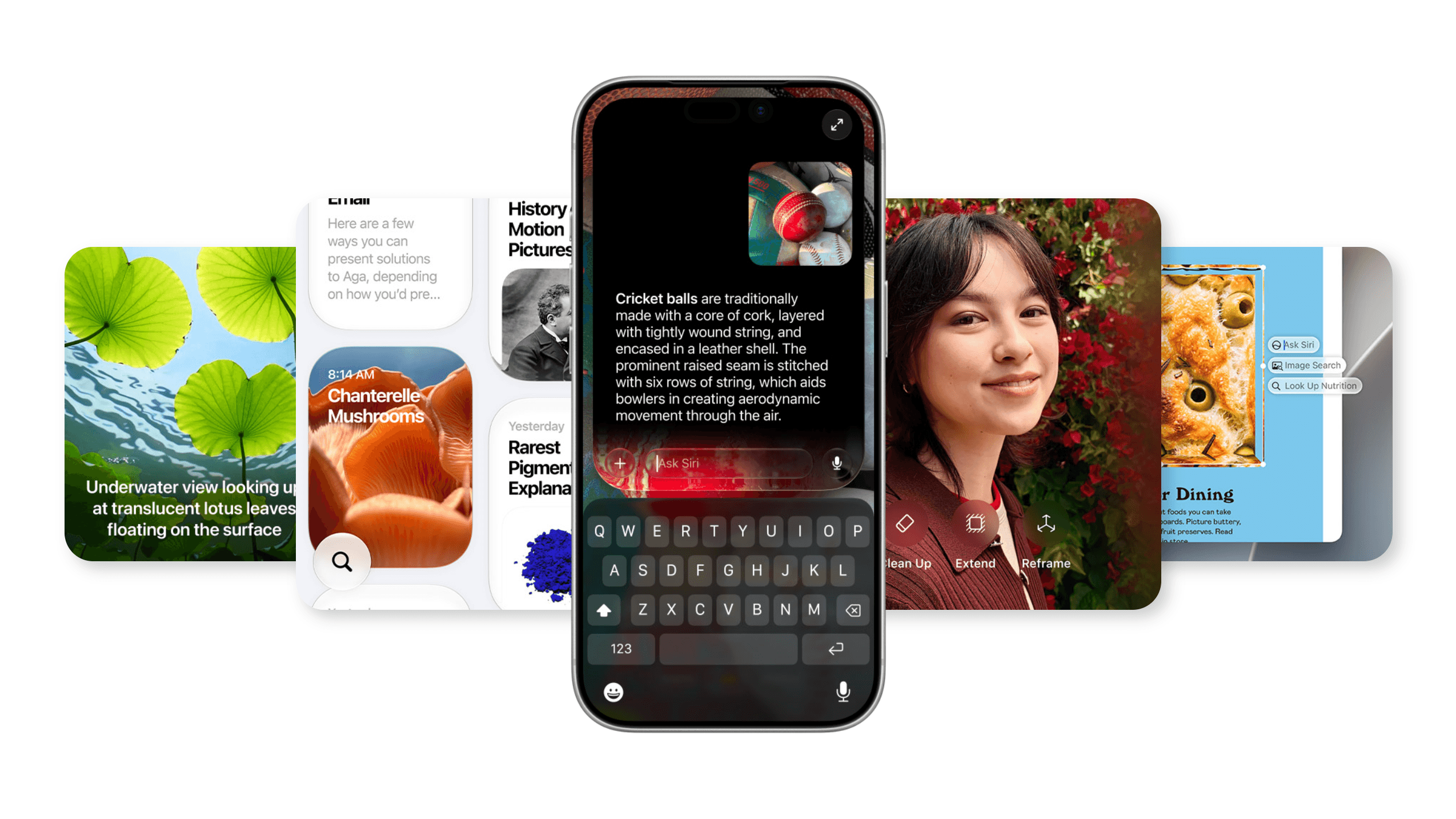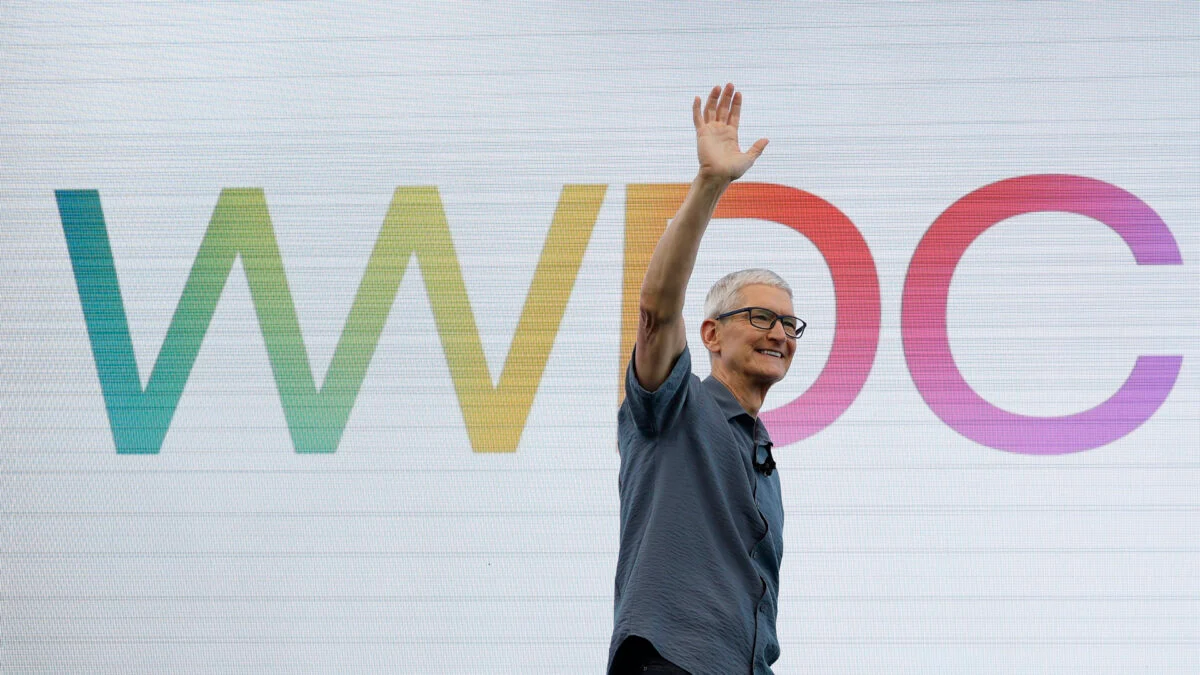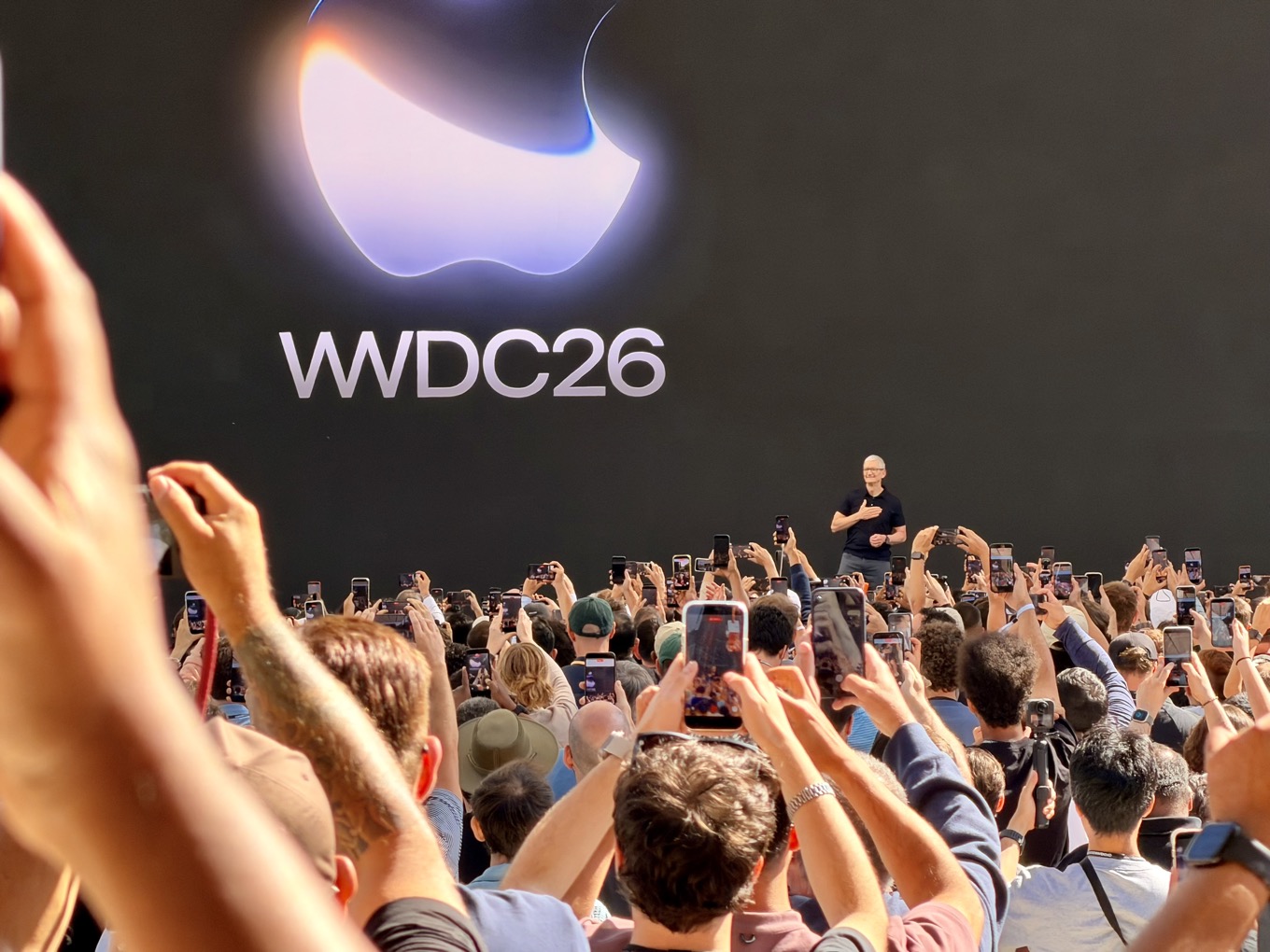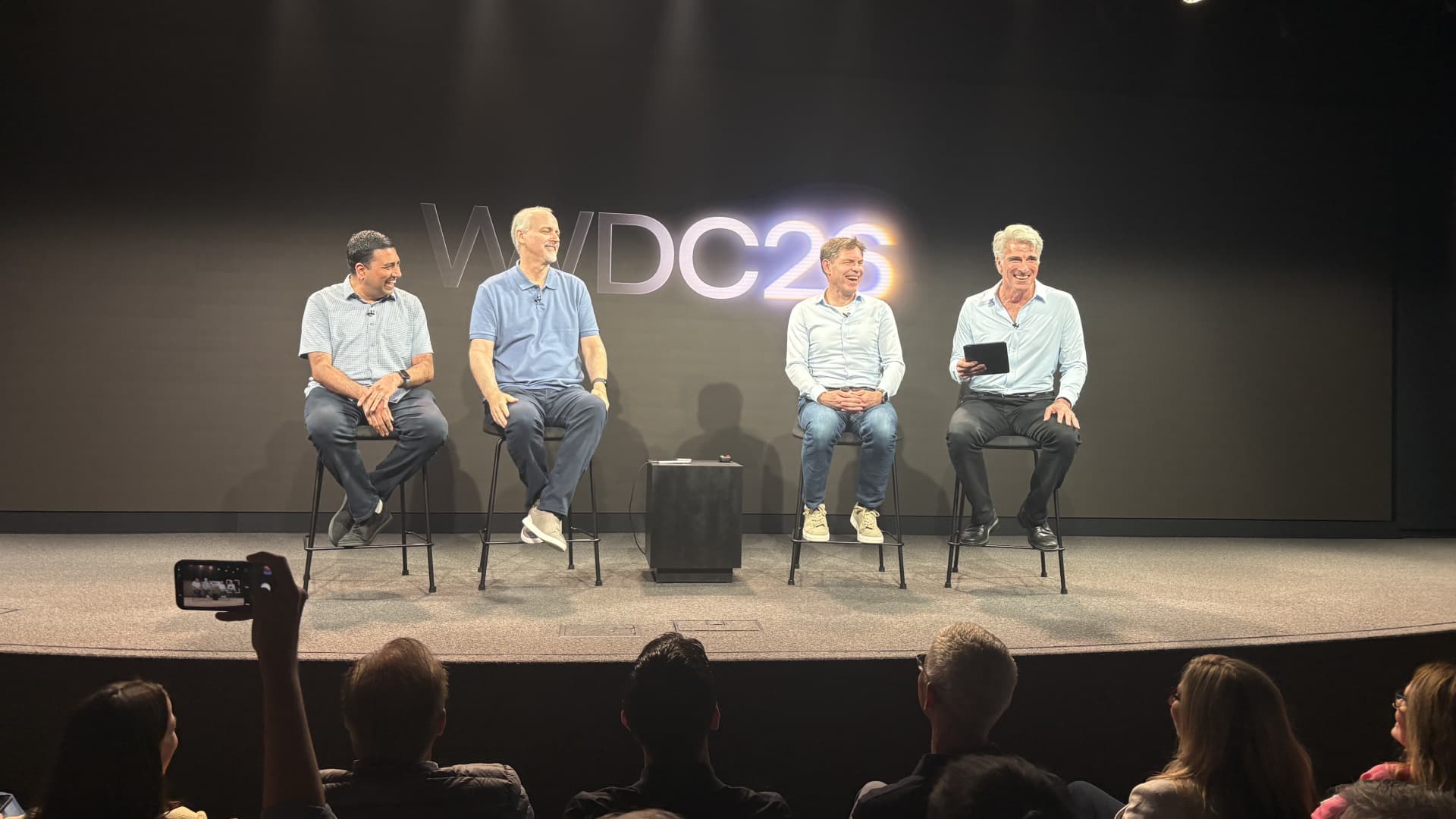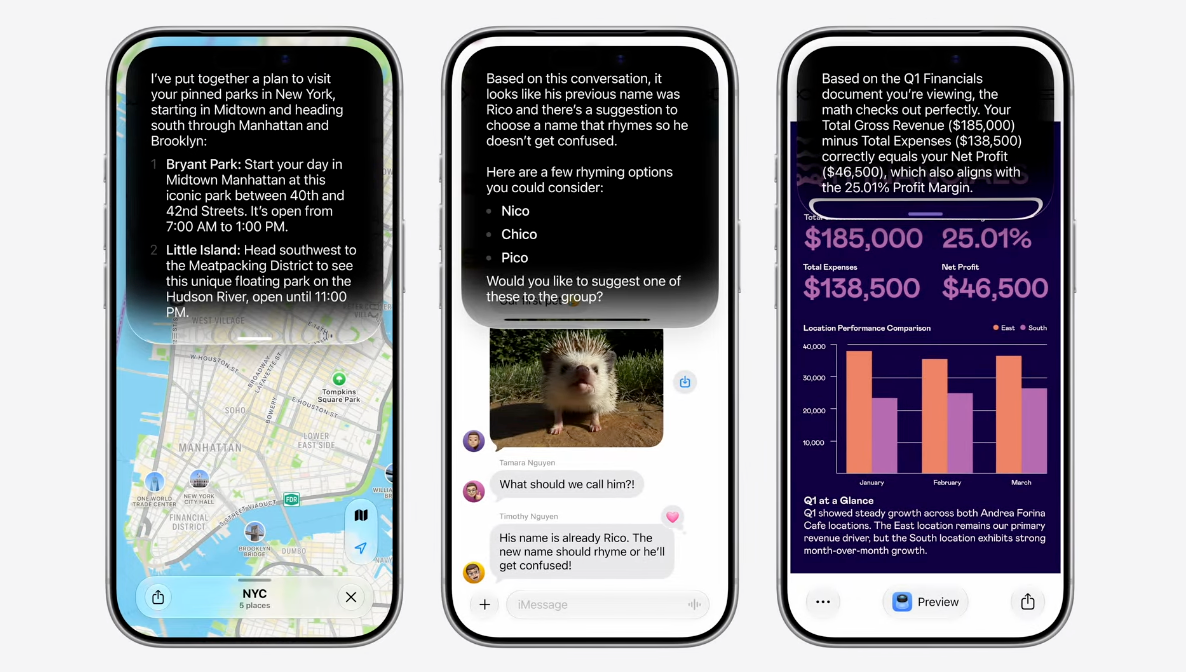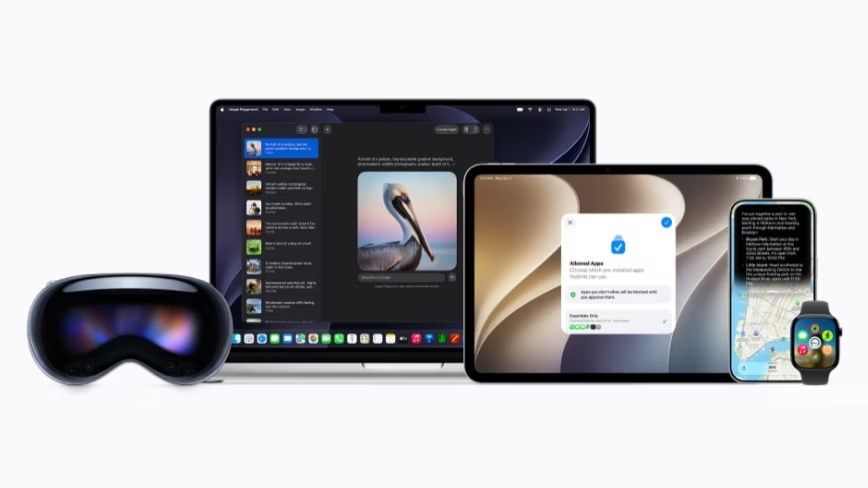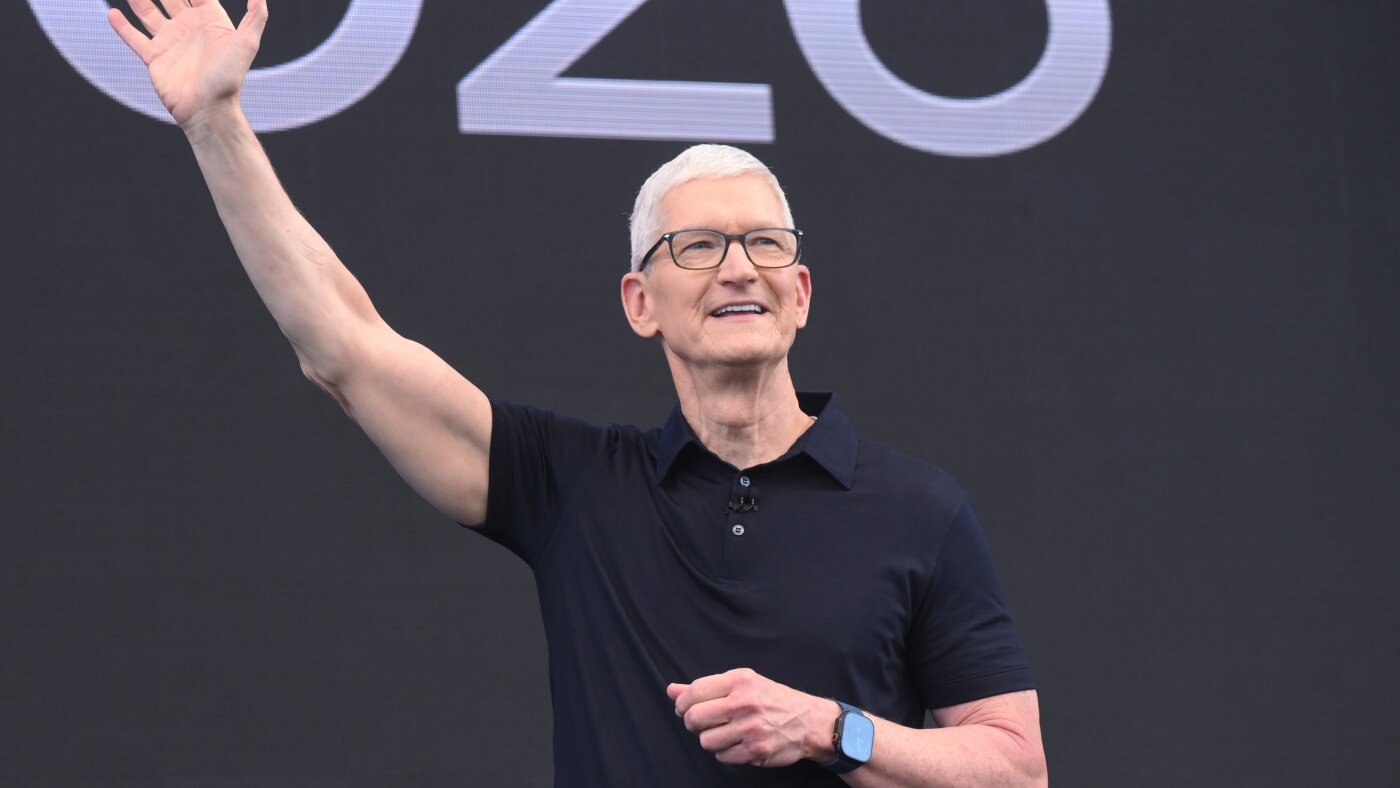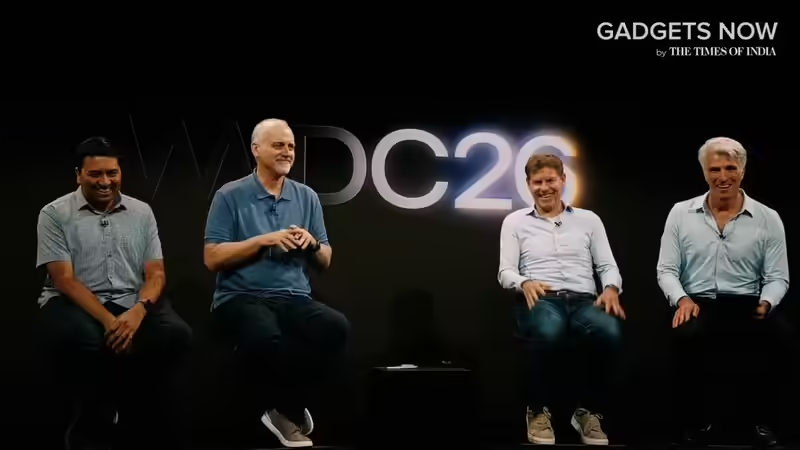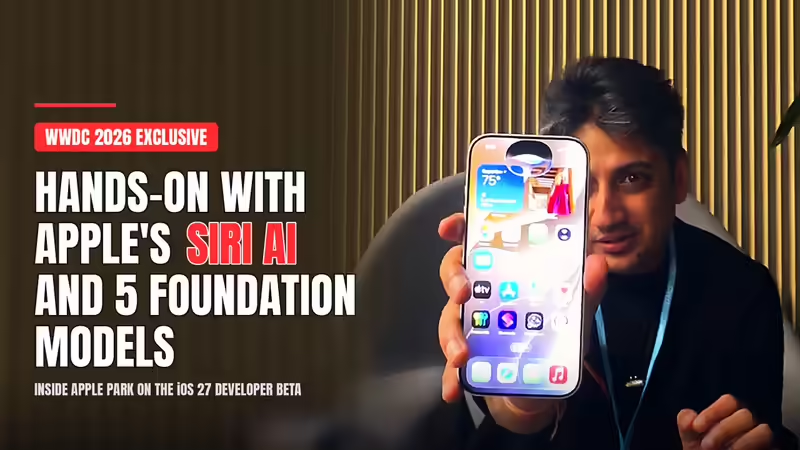
Eight football matches, one block of text formatted by what appeared to be a drunk man falling down a staircase, a single trackpad shortcut — and a fully populated calendar, in under three seconds. For two years, Apple has been promising an intelligent Siri the way my neighbour promises to return my hedge trimmer: warmly, often, and with absolutely no follow-through whatsoever, a phrase I am legally permitted to use because the lawyers made Apple pay for it, and we shall get to that. Then, in the hours after the WWDC 2026 keynote, I got an exclusive hands-on with Siri AI inside Apple Park — on an iPhone 17, a MacBook Air M5 and an iPad Pro M5, all running the iOS 27, iPadOS 27 and macOS 27 developer betas released that morning — and I am here to report something that surprised me more than it will surprise you. It works. It is fast. It is gorgeous. After two years of vapourware, Apple has shipped the most coherent piece of AI design I have used all year, and the truly demented part of the story sits underneath it: a family of five new Apple Foundation Models, the biggest of which lives on NVIDIA chips inside Google's data centres, in a cryptographic vault Apple has invited the world's burglars to inspect.Key TakeawaysSiri AI, unveiled at WWDC 2026, is a full rebuild of Apple's assistant powered by Apple Intelligence — on-screen awareness, personal context across apps, cited web answers, a dedicated app — available today only as an iOS 27 developer beta behind a waitlist, ahead of a public beta in July and an English-first consumer beta later this year.Apple introduced five new Apple Foundation Models (AFM 3), built in collaboration with Google: two on-device (3-billion and 20-billion parameters) and three on Private Cloud Compute, including AFM 3 Cloud Pro running on NVIDIA GPUs inside Google Cloud — a first for Apple.The marquee features — expressive voices and the big dictation upgrade — demand 12GB of RAM, so among current iPhones only the iPhone Air (Rs 1,19,900), iPhone 17 Pro and 17 Pro Max qualify. The base iPhone 17 misses out.In my exclusive hands-on, Siri AI parsed an unformatted eight-match football schedule into Calendar in under three seconds on a MacBook Air M5, and the reworked Image Playground rebuilt my real selfie with Tim Cook into new photorealistic scenes with element-by-element editing — using photos from your library only, with screenshots refused.Server-side Apple Intelligence features carry daily usage limits, raised with an iCloud+ plan (from Rs 75 a month in India); Siri AI skips the EU on iPhone and iPad at launch, and China entirely, while India sits in the first wave.What Is Siri AI Actually Like to Use? Start with the thing every other chatbot gets wrong. ChatGPT and Gemini are destinations — apps you trudge to, hauling your context behind you like a man dragging a suitcase with one wheel through Terminal 3. Siri AI lives where your data already is. I asked it about a plan a friend had texted, and rather than performing the traditional AI party trick — a cold web search followed by a confident essay about the wrong thing — it parsed local data and surfaced the actual Messages thread with that actual contact, on screen, in context. The app-hopping that defines AI in 2026 simply evaporates. And it is beautifully designed, which I can say because I have used every major chatbot interface on Earth and most of them look like a tax portal built by a teenager.One ice-cold shower before the praise compounds: everything here describes developer beta software, on Apple's own hardware, inside Apple's own spaceship, demoed by people whose job depends on it going well. Betas flatter. A public beta lands in July, and millions of less forgiving thumbs arrive in the autumn.The Scheffler Test: Cited Answers From Apple's Own Index The web answers come with receipts, which for a chatbot is roughly as common as honesty in a property listing. In one demo, Siri AI chewed through a dense, multi-column spreadsheet of PGA Tour statistics — a layout only an accountant could love, and even then only at gunpoint — filtered Scottie Scheffler's numbers, and rendered the lot as an interactive data card inside the workspace. At the base of the card sits a Sources button. Tap it and a tray slides out listing the cited URLs. An AI that shows its homework: I checked my media badge to confirm I was still at a technology demonstration and had wandered into a press conference for miracles by mistake. The detail most of this week's coverage missed is where those answers come from — Apple's own world-knowledge graph, an index it has spent years building with its Applebot crawler. Apple is answering the open web with its own library card. Google Search sits this one out, which becomes properly funny in a few paragraphs, so hold that thought.A sidebar of Yosemite camping logistics sat alongside the golf card, and rapid scrolling between data-heavy cards and notes ran lag-free, with the bored ease of silicon that has horsepower to spare.Where the Orchestration Sings, and Where It Falls Over On the MacBook Air M5, Siri AI turns into a DJ working stems live across apps — a list buried in Messages becomes detailed action items, the action items become a neatly drafted email, the email goes out, every transition beat-matched while my hands hovered uselessly over the decks like a best man at someone else's wedding. The football demo was the headline drop. A desktop screen showed a summer league schedule as text formatted with genuine malice — dates here, venues there, opponents scattered like crisps after a party. One keyboard shortcut later, Siri AI had read the chaos, identified all eight fixtures with their differing times and grounds, and offered a single prompt. One click. Entire schedule in Calendar. Under three seconds, on the machine itself. I have owned kettles that take longer to acknowledge me.And then the set trainwrecked, at exactly one transition. Visual Intelligence lifted dates from a PDF into Calendar like a trained butler. I then asked for the same content to flow into a word processor, and the system regarded me with the blank patience of a labrador that has been asked to file my taxes. Calendar: yes. Word processor: beyond the orchestration layer's reach. The pipes run to some apps and stop dead short of others, and in a developer beta that is forgivable; by September it is the difference between a magic trick and an instrument. My opinion, and I am right about this: Apple should treat that gap as a fire.Siri AI also has the conversational sparkle of a Swiss border guard, and I think that is magnificent. It trails Gemini and ChatGPT for charm because Apple performed the personality-ectomy on purpose — the company wants you holding a tool, and it engineered the warmth out so you keep treating it as one instead of falling in love with it. Given that half the industry is currently building chatbots designed to text you goodnight, Apple shipping an assistant that answers the question, cites its sources and shuts up is the most quietly radical decision of the year.How Good Are the New Apple Intelligence Tools? Better than they have any right to be, given the form book. Clean Up, the object-removal tool that launched competent and then aged like milk against Google and Samsung, has improved past parity — in the trickier scenes I watched, it was ahead of both, a sentence I typed twice to be sure my fingers were sober. Simple edits run on-device; the complicated reconstructions route up to the cloud side of the new model family. Reframe generates fresh detail by taking its cues from what the image already holds, and the spatial extension tool re-composes a shot as if you had repositioned the camera at the moment of capture — which is the sort of thing that would have got you burned as a witch in 1693 and now ships free with a software update.Image Playground, meanwhile, has gone from a toy that produced waxy cartoon people to something bordering on sorcery, and I tested it with the most precious photographic asset I acquired all week: a selfie with Jensen Huang which I managed after the technical deep dive on Apple's foundational models and its collaboration with Google. The reworked Playground, running on the new cloud-side image model, took that photo and rebuilt the scene with full photographic realism —Huang and I baking a cake, since you ask — and then let me direct the result like a fussy art director. Change the cake. Change the topping on the cake. Swap what each of us is wearing. Stretch the aspect ratio for a wider crop. Every edit landed on the element I named and left the rest of the image untouched, which is the exact spot where ChatGPT's image generator and Google's Nano Banana 2 keep falling over — ask those two for a new topping and they repaint the entire kitchen, gift somebody an extra finger and move the window while they're at it. Apple's version works like a surgeon; the rivals work like a man redecorating with a pressure washer.There is one charmingly Apple condition, and it is the cleverest sentence in this article that I had zero hand in writing: the source photograph must live in your photo library, and screenshots get bounced at the door like teenagers with laminated fake IDs. You can fabricate the cake, the topping and the entire wardrobe, but you must have earned the original photograph — which means the only people on Earth who can put Jensen Huang in their kitchen are people who have stood next to Jensen in real life. Right-click-save merchants, screenshot goblins and the internet's vast deepfake cottage industry are all turned away at reception. As guardrails go, it is beautifully passive-aggressive: Apple has made fraud require effort again. The photographic realism of real, named, recognisable humans still gave me a small chill I shall save for another column — but as a creative instrument, this is the most precise consumer image editor I have used, and the gap to the competition on element-level control is wide enough to park the keynote stage in.The rebuilt Shortcuts app is the sleeper hit: natural language has turned a power-user hobby into a quasi-agentic playground where you describe a workflow and the system simply builds it. Safari does the same trick, assembling custom extensions from a plain-English description. And dictation has taken a leap that changes daily habits — punctuation, casing, intent — keeping up with me, an Indian who speaks English at the velocity of a Gatling gun, and landing level with the best Google has shipped. Whatever Mountain View answers with this autumn, the bar just moved.That dictation point matters, because the model behind it carves Apple's own product line in half, and the carving is where my mood darkens. Machinery first.What Are Apple's 5 New Foundation Models? AFM 3 is a family of five foundation models — two on your device, three in the cloud — that Apple's machine-learning team described as "custom-built in collaboration with Google", and the line-up runs like a carmaker's engine range. AFM 3 Core, a 3-billion-parameter unit, hauls the everyday load on Apple silicon. Above it sits AFM 3 Core Advanced, a 20-billion-parameter multimodal monster that powers the expressive voices and that dictation leap — and how it fits inside a phone is the cleverest engineering story of the week. The full model lounges in flash storage rather than hogging RAM. For each prompt it selects a small squad of specialist "experts", pulls them into active memory, and bolts them onto a core of always-on shared weights — a sparsely activated design built on a technique Apple's researchers named Instruction-Following Pruning. Only 1 to 4 billion parameters fire per request. It is variable displacement for a language model: a V12 that runs as a thrifty four-cylinder on the school run and opens every valve when you floor it.Three more models live on Private Cloud Compute. AFM 3 Cloud is the server workhorse. A dedicated image model carries Image Playground, Genmoji and the heavy photo edits — including my cake-based collaboration with Mr Cook. And at the summit sits AFM 3 Cloud Pro — agentic tool use, complex reasoning, the genuinely hard problems — running on NVIDIA GPUs inside Google Cloud, the first time Apple's Private Cloud Compute has ever reached hardware in somebody else's building. Four of five models run on Apple silicon. The single exception is what makes this year's architecture new, and slightly mad.A Customer Engine, McLaren Style Here is the part that should embarrass Apple and somehow comes out looking shrewd. Apple — a company with more cash than Belgium — looked at its in-house engine programme, watched it catch fire for two consecutive summers, and did what every sensible Formula 1 team does in that situation: went next door and bought someone else's. McLaren took the 2024 constructors' championship on power units purchased from Mercedes; the chassis, the aero programme and the pit wall stayed Woking's own. Apple has signed the identical deal with Google. The training muscle behind Gemini supplies the power unit, Google's TPU accelerators ran the training laps, Google Cloud hosts the top model, and a reported $1 billion a year — north of Rs 8,000 crore, per Bloomberg's reporting — changes hands so that Apple can borrow its fiercest rival's lawnmower. The chassis stays Cupertino's: the on-device models, the orchestration, the knowledge graph, Private Cloud Compute and every signing key in the building. Ming-Chi Kuo set the stakes the day before the keynote, writing that the test is whether Apple, "using the same Gemini", can deliver better AI experiences than Google itself. Having driven the thing, my answer: integration is the race Apple has picked, and it is the only race its car is built for — and on Monday's evidence, it is leading it.Apple's own scorecards point up everywhere, with the caveat that the maker graded its own homework, hired the graders and catered the lunch. In-house evaluators preferred AFM 3 Core over last year's on-device model 45.6 per cent to 23.3 per cent on general text; the cloud workhorse won its matchup 64.7 to 8.7, which in football terms is a relegation. AFM 3 Cloud Pro sits a further step up — roughly 10 per cent better on text, about 14 per cent on image understanding and maths. The new voices scored about 4.15 on a 5-point scale against 3.87 for the outgoing text-to-speech, and Apple notes a 0.1 move on that scale is the kind customers notice. Independent benchmarks remain weeks away. Treat all of it as a direction of travel rather than a lap time.Is Your Data Safe on Google's Servers? Apple's answer: the vault travels with its own locks, and your iPhone checks the locksmith's signature before a single byte leaves the building. Strip the white paper away and the design is gloriously odd. Apple has built a sealed bank vault and dropped it inside a building it rents from Google, on machinery supplied by NVIDIA and Intel. The landlord owns the walls. The vault, its locks and the guest list stay Apple's. NVIDIA brings the raw compute plus confidential computing that seals a running job inside the GPU; Intel's TDX locks down a slice of memory so the host machine's own operators stay shut out; Google's Titan chip is the root of trust, proving a server is the genuine Apple-approved article before any work begins. Three vendors, three layers, one keyring — Apple's. The company's security engineers put it in writing: devices "will only trust PCC software that is cryptographically approved by Apple".The five Private Cloud Compute rules from 2024 travel with the vault, and they read like a prenup. Stateless computation — the server holds your data only long enough to answer, then wipes it. Enforceable guarantees — the promises live in hardware, beyond the reach of a policy PDF. Privileged runtime access stays locked out, for Apple staff and Google staff alike. Non-targetability — aiming an attack at one specific person's request stays out of reach by design. Verifiable transparency — the binaries ship publicly, and researchers get live access to PCC nodes through Apple's security bounty programme. For the rented premises, Apple added a tamper-evident, append-only ledger of every Google Cloud machine in the fleet, so a swapped server shows up like a forged signature, plus dual-vendor hardware roots for anything that could leak. Fuller detail is promised at the Confidential Computing Summit this month and in an updated PCC Security Guide later this year. Until then, part of this rests on a promise of openness Apple has yet to redeem in full — and a privacy claim you can audit is worth ten you take on faith.Who Actually Gets Siri AI, and When? Today: a rounding error of humanity, and even they had to queue. The backstory remains a disgrace, and Apple has the legal bill to prove it — the personalised Siri promised at WWDC 2024 was delayed indefinitely by March 2025, and in May this year Apple agreed a $250 million settlement (over Rs 2,000 crore) with iPhone buyers who argued the company advertised AI it failed to ship. The final approval hearing falls on 17 June, nine days after this keynote, which means Siri AI arrived in court-mandated nick of time. Even now, access comes rationed. Day-one developers on iOS 27 found a waitlist inside Settings rather than an assistant. A waitlist. For software. I have queued for Springsteen tickets, for tatkal bookings and once, regrettably, for a nightclub in Berlin — but queueing to talk to a phone is a new frontier in anticipation. A public beta lands in July, the consumer release arrives as an English-first beta later this year, and yes, the beta badge is back — Siri wore one from 2011 to 2013, and like a band reunion tour, the badge has returned with the original line-up's sense of timing. Server-powered features, image generation included, carry daily usage limits, and an iCloud+ subscription raises them — which means Apple Intelligence has quietly become a tiered service while everyone at Apple Park sprints away from the word subscription. The EU misses Siri AI on iPhone and iPad at launch entirely; Craig Federighi said it on the record: "We're deeply disappointed that our EU users won't have Siri AI on iPhone or iPad when we share our new software releases later this year," pointing at the Digital Markets Act, while European iPhone owners watch from behind the regulatory velvet rope. China waits too.The sharpest rationing, and the bit that genuinely boils my blood, is silicon. AFM 3 Core Advanced — the model behind the voices and the dictation leap I just spent a paragraph praising — demands 12GB of unified memory. Among current iPhones that means the iPhone Air, the 17 Pro and the 17 Pro Max. The base iPhone 17, a Rs 82,900 telephone that started shipping nine months ago, has 8GB and therefore misses the marquee experience. Apple has built a phone too poor for its own software, priced it like a foreign holiday, and raised the memory bar for the first time since Apple Intelligence debuted — and the forums are full of people who bought "Built for Apple Intelligence" iPhone 16s in 2024 discovering what that slogan was worth. Apple sells the feature. The RAM decides who receives it.What Does Siri AI Mean for India? India sits in the first wave, and for once that sentence carries zero asterisks about timing. Apple names India directly in its supported English locales, Hindi appears on the supported-languages list, and India stands outside both the EU and China carve-outs — global rollout timeline, full stop, while Brussels argues with Cupertino through lawyers. The familiar tax applies to the hardware: the cheapest ticket to the full AFM 3 Core Advanced experience is the iPhone Air at Rs 1,19,900, and below that line Indian buyers get the capable-but-leaner Siri AI on the 3-billion-parameter model. The quieter angle is the toll booth — Apple Intelligence rides the OS free of charge, so for anyone inside the device gate, the cheapest AI upgrade in the country is the iCloud+ plan that lifts those daily limits, from Rs 75 a month. Seventy-five rupees. Less than my espresso, and on Monday's evidence, considerably more intelligent. Somewhere in Cupertino, a services-revenue analyst just ordered champagne.A Vault in a Rented BuildingI walked out of Apple Park holding two thoughts, and the keynote only makes sense with both in hand. First: Siri AI — even as a beta, even in a demo run by minders — finally behaves like the assistant Apple has been describing since 2024: fast, context-soaked, gorgeous, and honest about its sources, which puts it ahead of several journalists I know. Second: Apple has conceded the engine war, paid its bitterest rival a billion dollars a year for the power unit, and bet everything on winning the integration war from inside a vault it built in Google's basement — then handed the world's security researchers the blueprints and dared them to crack it. Tim Cook closed his final WWDC keynote in tears, and he had earned them. John Ternus inherits the company on 1 September, weeks before iOS 27 carries this architecture to a billion devices. The summer of betas, the bounty hunters crawling through those published binaries, and ten million Indian iPhones asking Siri AI their first question will deliver the verdict the keynote merely promised. My early one, from inside the room: the hedge trimmer finally came back, sharpened — and somewhere on my iPhone, Tim Cook is icing a cake.Frequently Asked QuestionsIs Siri AI just Google Gemini with an Apple badge? The truer description is that Apple built its own models using Google's technology. The AFM 3 family was custom-built in collaboration with Google and trained on Google's TPU infrastructure, then tuned by Apple for Apple silicon and NVIDIA GPUs. Siri AI runs on those Apple Foundation Models, with the orchestration, personal-context layer, web index and privacy architecture all Apple's own.Is Siri AI available now? It exists today only as a developer beta inside iOS 27, iPadOS 27, macOS 27 and visionOS 27, gated behind a waitlist in Settings. A public beta arrives in July 2026, and the consumer version ships as an English-first beta later this year alongside the autumn OS releases.Which iPhones get the full Siri AI experience? The complete experience — expressive voices and the upgraded dictation powered by the 20-billion-parameter AFM 3 Core Advanced — needs 12GB of RAM, which means the iPhone Air, iPhone 17 Pro and iPhone 17 Pro Max among current models. Every Apple Intelligence-capable device, from the iPhone 15 Pro onward, gets Siri AI built on the smaller 3-billion-parameter on-device model.Does my data go to Google when Siri AI uses the cloud? Hard requests route to Apple's Private Cloud Compute, which now includes NVIDIA GPUs inside Google Cloud, where Apple's five rules apply: data is wiped after the answer returns, Apple and Google operators stay locked out of running jobs, and devices trust only software Apple has cryptographically signed. Apple publishes the binaries and gives researchers live access so the claims can be independently checked.Can Image Playground edit real photos of people now? Yes — the reworked Image Playground, powered by the new cloud-side image model in the AFM 3 family, can rebuild a real photograph into a new photorealistic scenario and then edit individual elements, from an object in the scene to clothing to the aspect ratio, while leaving everything else intact. The source image must live in your photo library — screenshots are refused — and image generation runs server-side with daily usage limits, which an iCloud+ plan raises.Will Siri AI work in India, and what does it cost? India sits in the first wave — Apple lists Indian English among supported locales and Hindi among supported languages, and India falls outside the EU and China restrictions. Siri AI itself is free with the OS update; some server-side features carry daily limits, which an iCloud+ plan (from Rs 75 a month) raises.end of article
WWDC 2026 Exclusive: Hands-On With Apple's Siri AI and 5 Foundation Models
Inside Apple Park on developer beta software, the rebuilt assistant finally works — and the five-model machinery underneath, stretching from iPhone flash storage to NVIDIA GPUs inside Google's data centres, is the bigger, stranger, funnier story.
4,063 words~18 min read