Imagine this: You’ve just deployed a state-of-the-art autonomous AI agent. It uses advanced reasoning loops, accesses a vector database for long-term memory, and dynamically optimizes its own prompts to deliver incredibly accurate results. For the first few hours, it’s a triumph.
Then, you check your API dashboard.
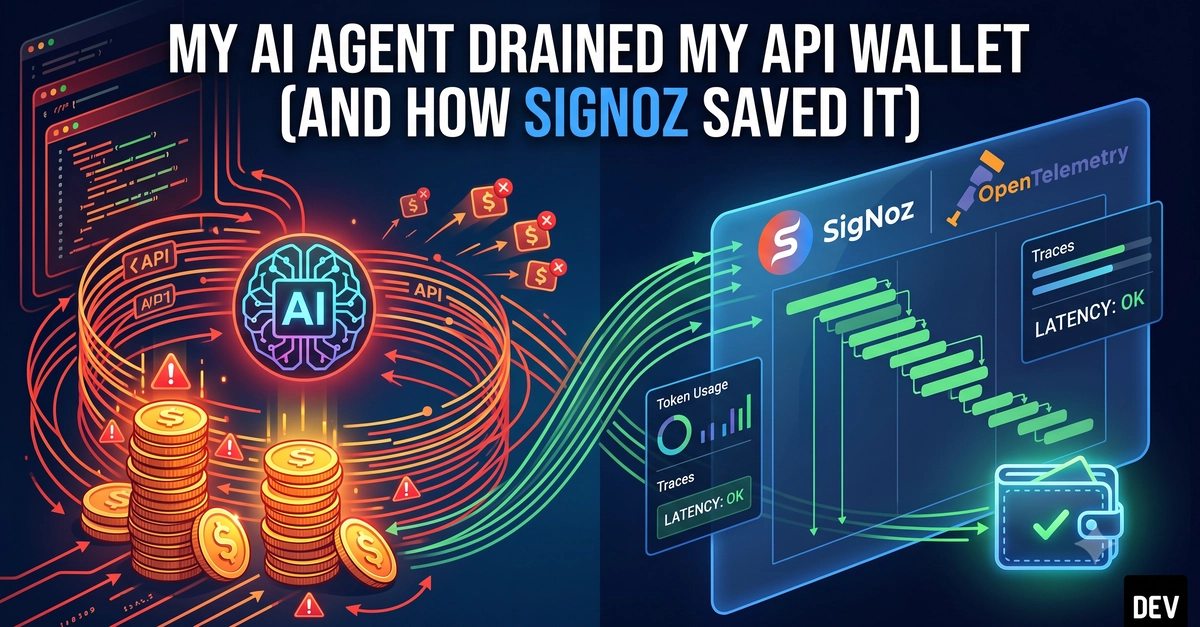
In less than half a day, your agent has managed to burn through hundreds of dollars. It got caught in an infinite loop of self-reflection, repeatedly sending massive context windows to an expensive frontier model. Even worse, several users are complaining that the agent’s response times have ballooned to over thirty seconds, but you have no idea which step in the agent's chain of thought is causing the bottleneck.
This is the reality of operating AI agents in production without a dedicated observability and telemetry layer.
When we transition from simple, single-turn LLM queries to complex, self-improving agentic workflows, traditional application performance monitoring (APM) tools fall short. We don't just need to know if a server is up; we need to know how many tokens were consumed, the exact cost of each step, whether prompt caching was utilized effectively, and how latency behaves across streaming and asynchronous calls.