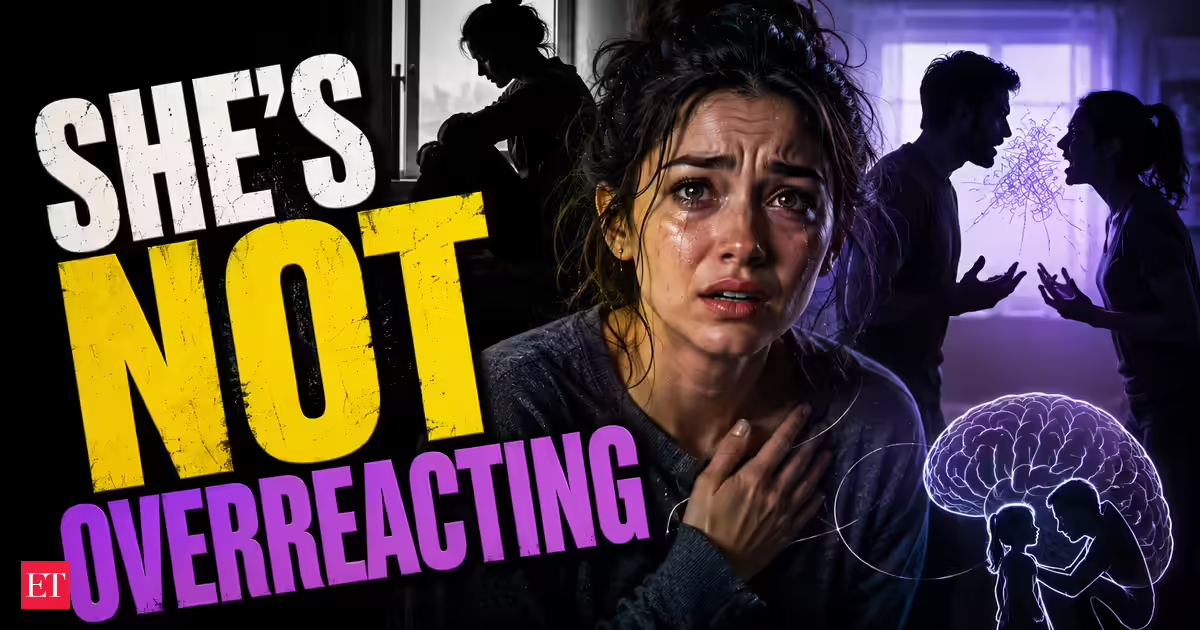
Few things are more misunderstood in relationships than emotional arguments. When disagreements happen, some women find themselves crying unexpectedly, repeating their points, or explaining the same issue over and over again. To an outside observer, it may seem dramatic, irrational, or unnecessary. Psychology suggests something very different.According to the theories of John Bowlby, the British psychologist who developed Attachment Theory, these reactions maybe connected to emotional security rather than weakness. In many cases, tears and overexplaining are not attempts to manipulate a conversation. They are attempts to preserve connection, gain understanding, and reduce emotional distress.The key insights from Bowlby's work is simple: when people fear disconnection, they often communicate more intensely, not less. Psychology of John Bowlby: Why arguments can trigger attachment fearsAttachment Theory suggests that early relationships teach people how safe and secure they feel with others. These experiences create attachment styles that influence how individuals respond during conflict as adults.Imagine a fictional example. Emily tells her partner that she feels ignored when he spends entire evenings on his phone. Instead of discussing the issue, he becomes defensive and dismisses her concerns. As the conversation continues, Emily begins crying.You Might Also Like:According to attachment theory, her tears may not be about the phone at all. They may stem from a deeper fear that her feelings are not being heard or that the relationship is becoming emotionally distant.Psychologists often note that conflict can activate attachment systems, making emotional reactions stronger than the actual disagreement itself.Why some people overexplain during conflictAnother explanation comes from what psychologists call anxious attachment. Individuals with anxious attachment often place high value on emotional connection and reassurance. When they sense misunderstanding, they may feel compelled to explain themselves repeatedly.Consider a fictional woman named Sarah. During an argument, her partner misunderstands a comment she made. Rather than moving on, Sarah spends the next twenty minutes clarifying exactly what she meant.You Might Also Like: Psychology says some women crying and overexplaining themselves during arguments may not be normal: John Bowlby explains reason behind hidden tearsFrom the outside, this may look excessive. However, psychologists suggest she may be trying to restore emotional clarity and prevent rejection. The behavior is often driven by a desire to be accurately understood rather than a desire to "win" the argument.Why tears appear even when someone is not sadMany people assume crying is always a sign of sadness. Psychology tells a more complex story. Research on emotional regulation shows that tears can emerge during frustration, stress, overwhelm, anger, embarrassment, or emotional overload.Imagine a fictional scenario where Maya calmly discusses a problem with her partner. As the disagreement continues, she suddenly begins crying despite not feeling particularly sad. What happened? Psychologists explain that strong emotions can overwhelm the brain's ability to regulate stress. Tears often become a physiological response to emotional intensity. In other words, crying during an argument does not necessarily mean someone is losing control. It may simply mean their emotional system is overloaded.You Might Also Like:The need to feel understoodOne of the strongest themes in Bowlby's work is the human need for emotional connection. Modern psychologists often refer to this as validation. Validation means feeling heard, acknowledged, and understood.Imagine a fictional woman named Rachel explaining why she felt hurt after her partner forgot an important anniversary. Instead of acknowledging her feelings, he repeatedly tells her she is overreacting.Rachel responds by explaining her perspective again and again. Psychologists suggest this pattern occurs because people naturally seek validation. When they do not receive it, they often intensify their communication efforts. The goal is not necessarily agreement. The goal is understanding.Psychology of John Bowlby: Why this behavior is not always healthyWhile crying and overexplaining are normal human responses, psychologists caution that they can become unhealthy when they replace direct communication.If a person constantly feels unheard, dismissed, or emotionally unsafe, they may become trapped in a cycle of explaining more and feeling understood less. Healthy relationships create space for both partners to express emotions without fear of judgment.Research on relationship satisfaction consistently finds that empathy, active listening, and emotional validation improve communication more effectively than criticism or defensiveness. The healthiest goal is not to avoid emotions during conflict. It is to communicate emotions clearly while maintaining mutual respect.John Bowlby's Attachment Theory insights suggests that crying and overexplaining during arguments are often connected to deeper emotional needs for security, understanding, and connection.For some women, these reactions occur when they fear being misunderstood, dismissed, or emotionally disconnected from someone important to them.Rather than viewing tears or lengthy explanations as signs of weakness, psychology encourages looking at the emotional needs underneath them. Sometimes what appears to be an argument about a small issue is actually a request for reassurance, validation, and emotional safety.FAQsWhy do some women cry during arguments?Psychologists suggest tears can result from emotional overload, frustration, stress, attachment fears, or feeling misunderstood rather than simply sadness.What causes overexplaining in relationships?Overexplaining is often linked to anxious attachment, fear of misunderstanding, or a strong desire to feel heard and validated.
Psychology says some women crying and overexplaining themselves during arguments may not be normal: John Bowlby explains reason behind hidden tears
Although crying and overexplaining are natural emotional responses, psychologists note that they can become counterproductive when they replace clear, direct communication. When someone repeatedly feels ignored, invalidated or emotionally unsafe, they may find themselves caught in a frustrating cycle.
830 words~4 min read