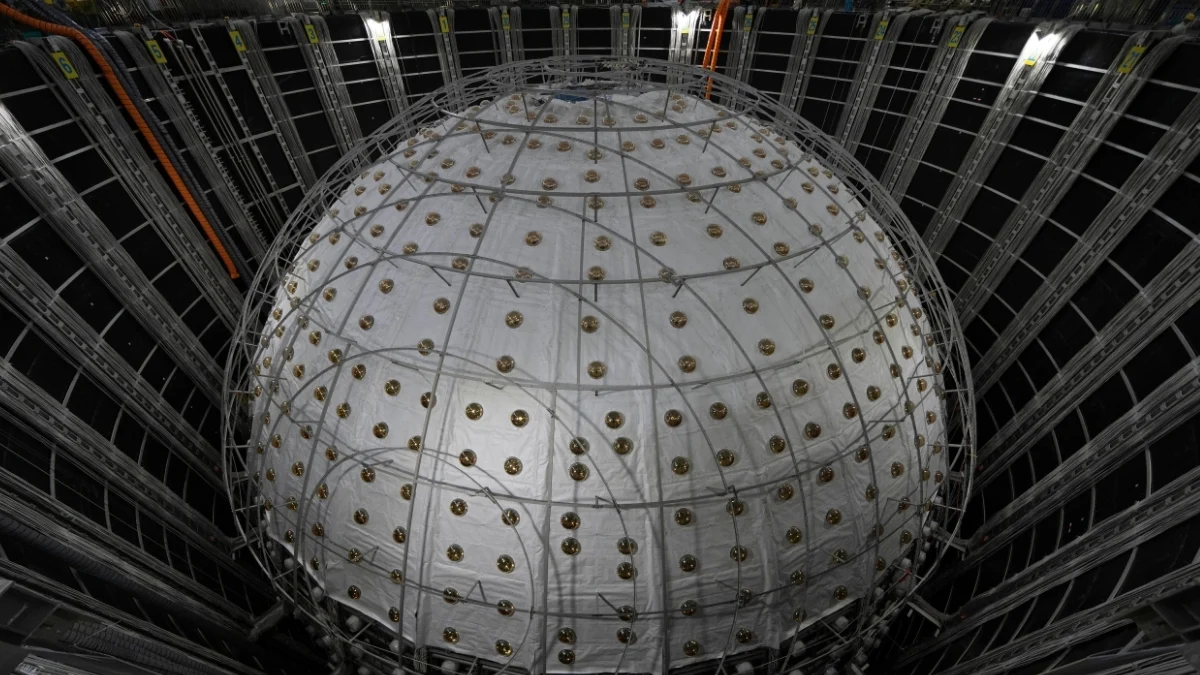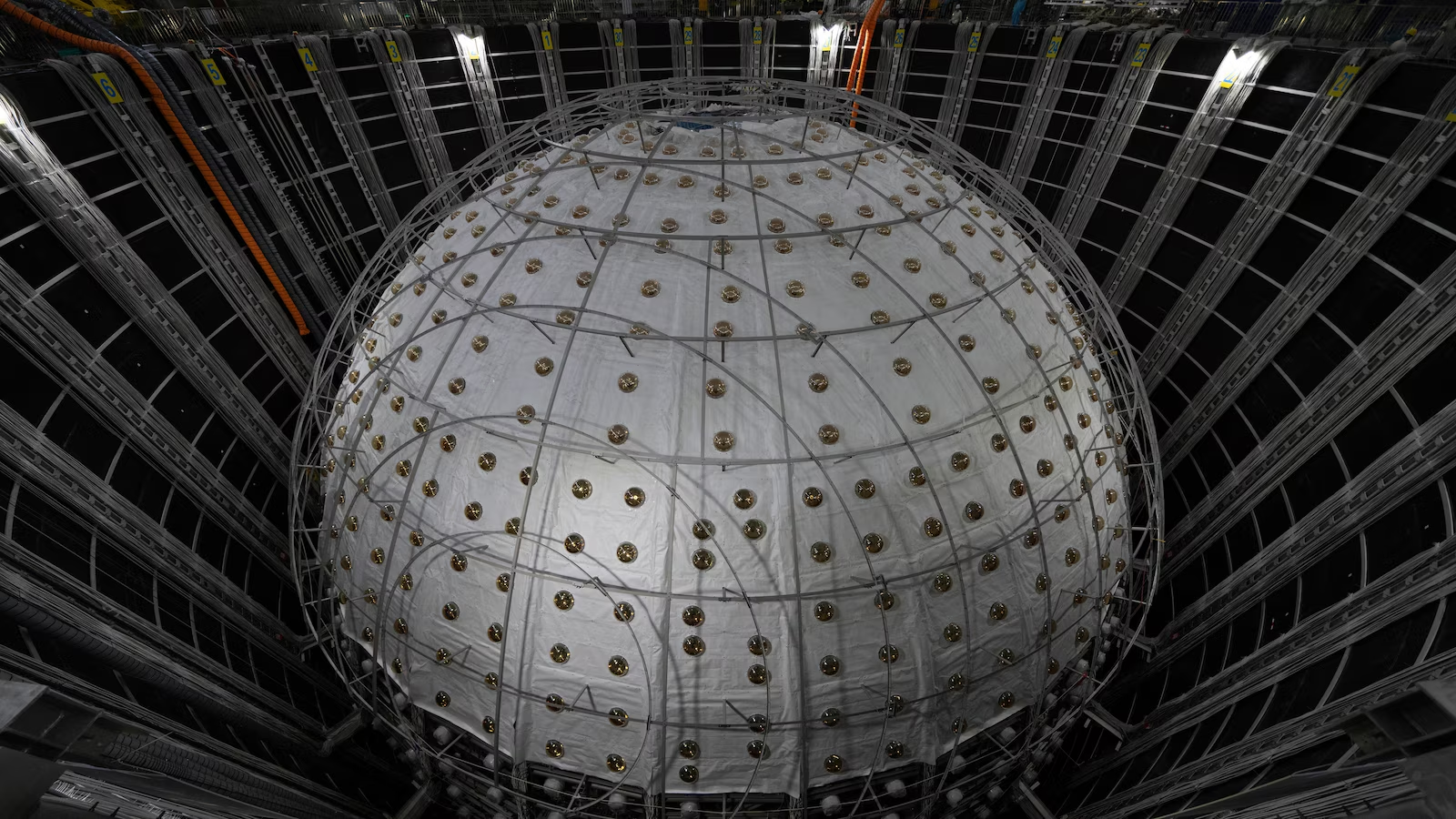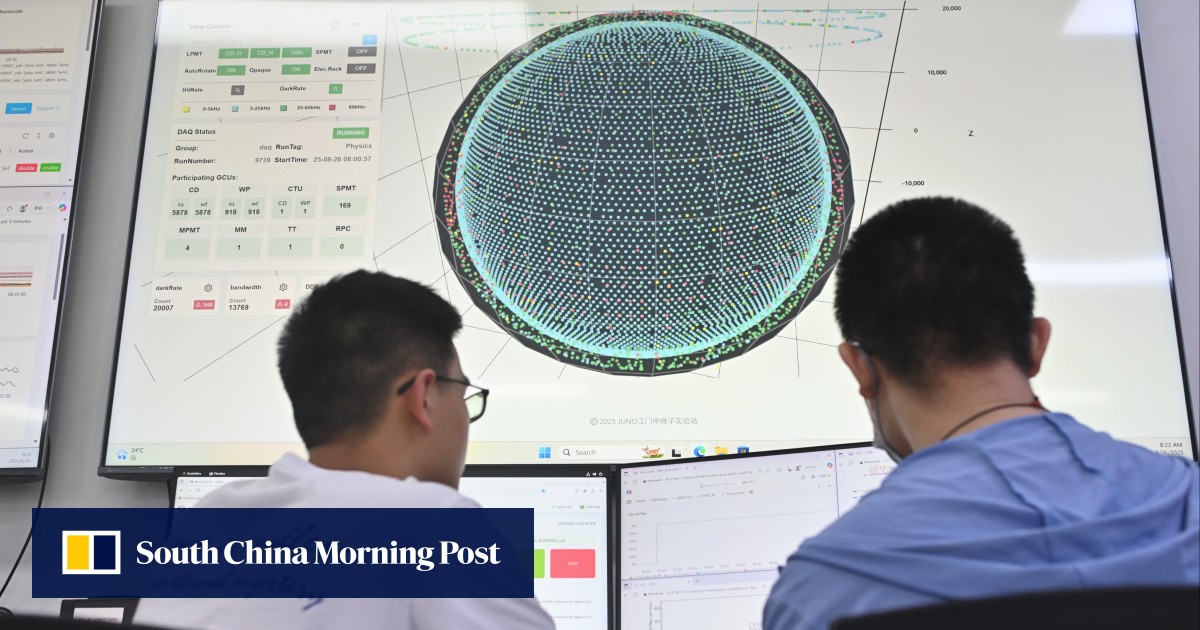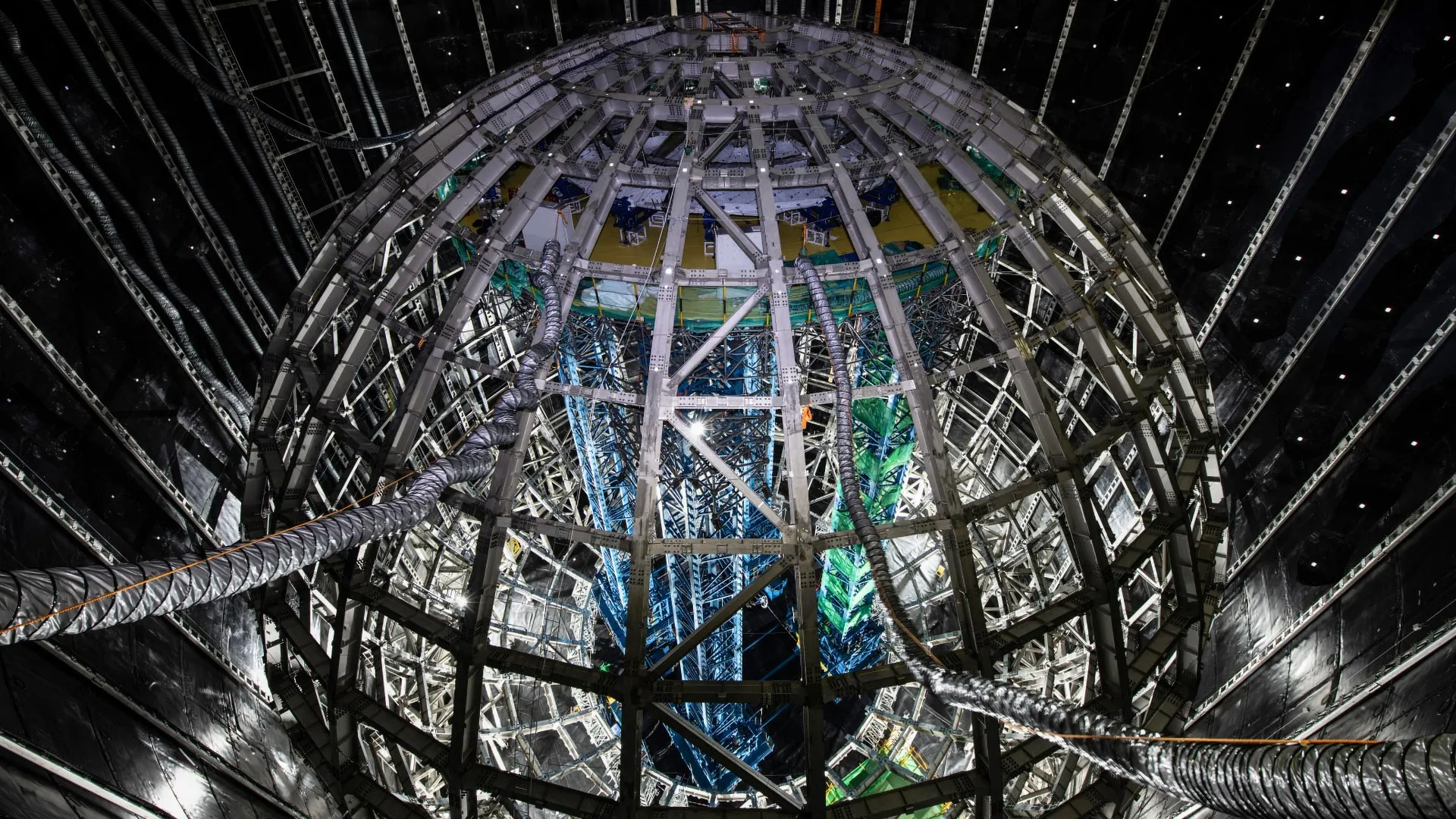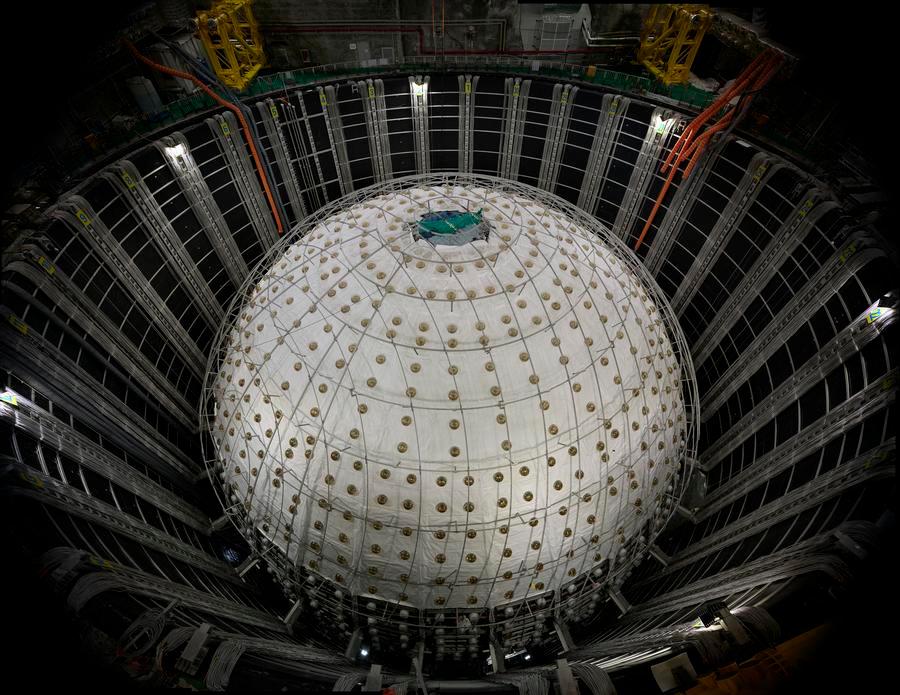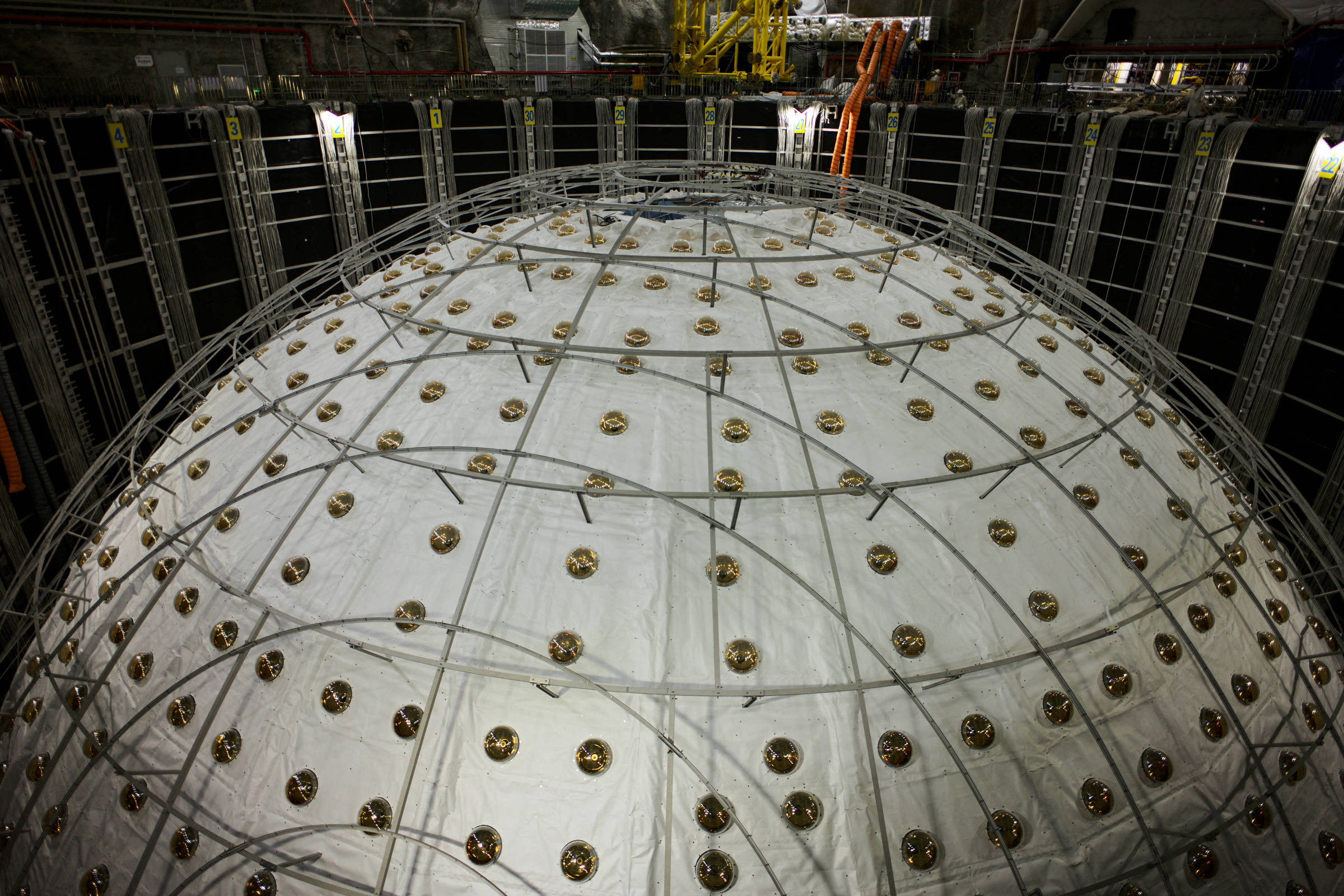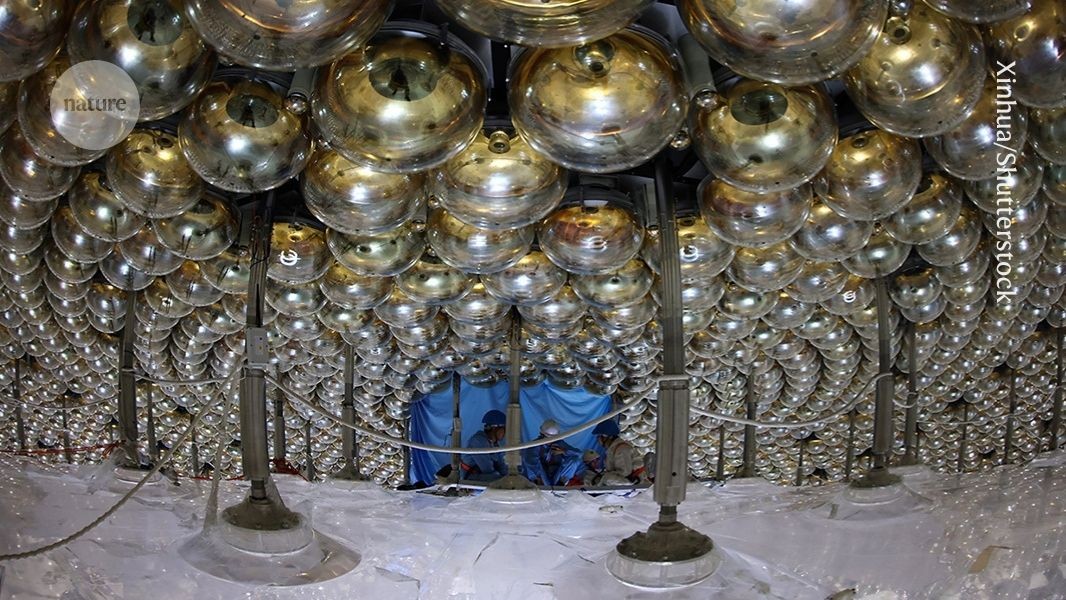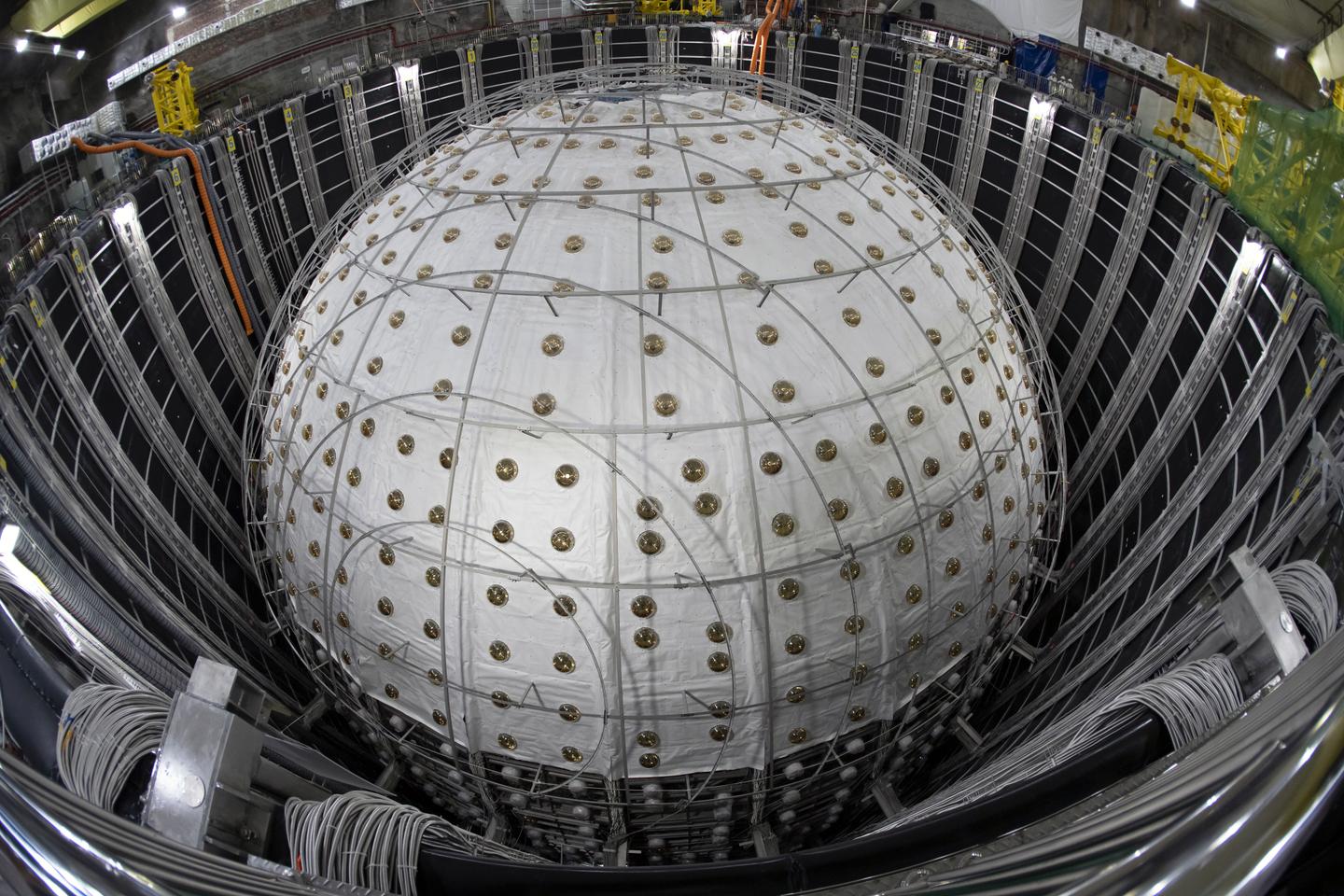
NEW YORK (AP) — A massive underground detector aimed at understanding the mysterious ghost particles in our universe released its first major results on Wednesday.The Jiangmen Underground Neutrino Observatory in China started collecting data in August with the goal of understanding neutrinos: tiny cosmic particles that date back to the Big Bang and whiz harmlessly through our bodies by the trillions every second. Yet they weigh almost nothing, making them difficult to sniff out.In a study published Wednesday in the journal Nature, the JUNO team unveiled its initial findings from two months of data collection — including some of the most precise measurements to date of how neutrinos switch between three varieties, or flavors, as they zip through space.“It really makes me look forward to more exciting results in the future,” said physicist Kate Scholberg with Duke University, who had no role in the new research.
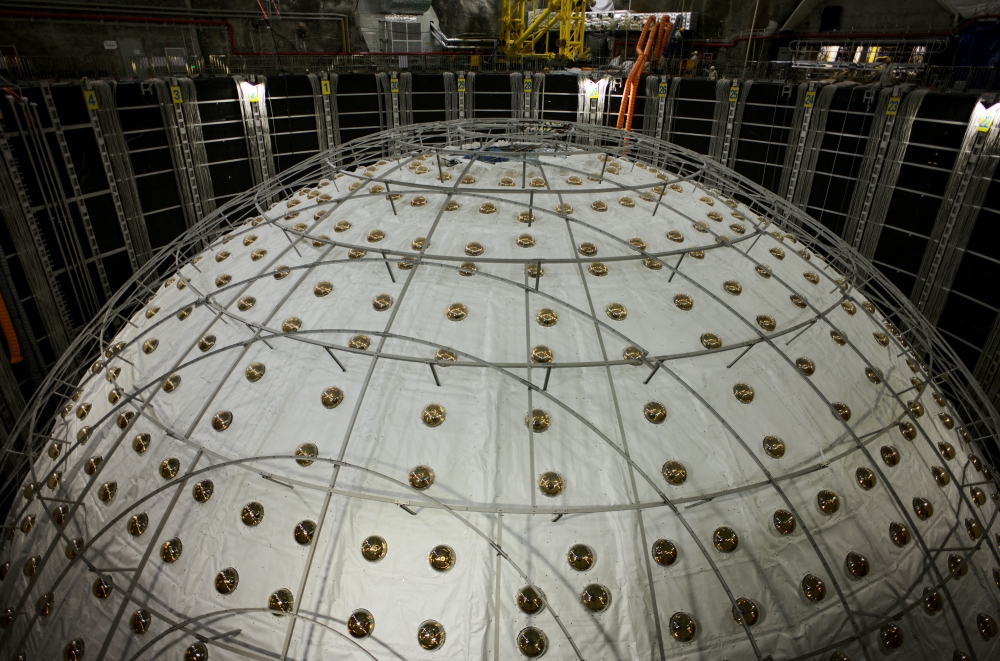
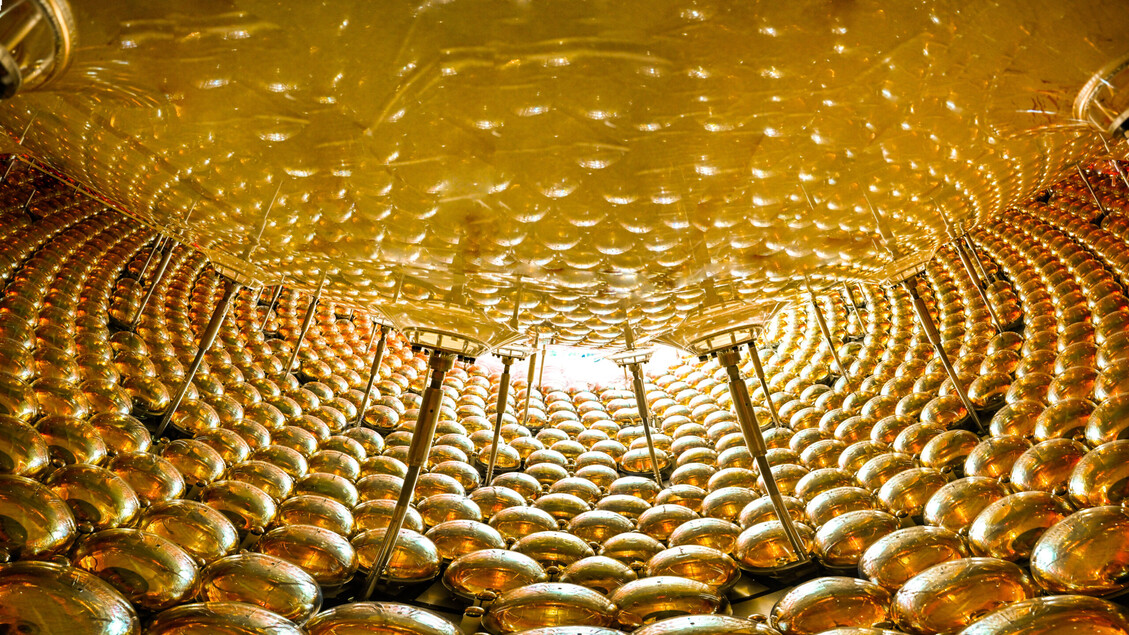
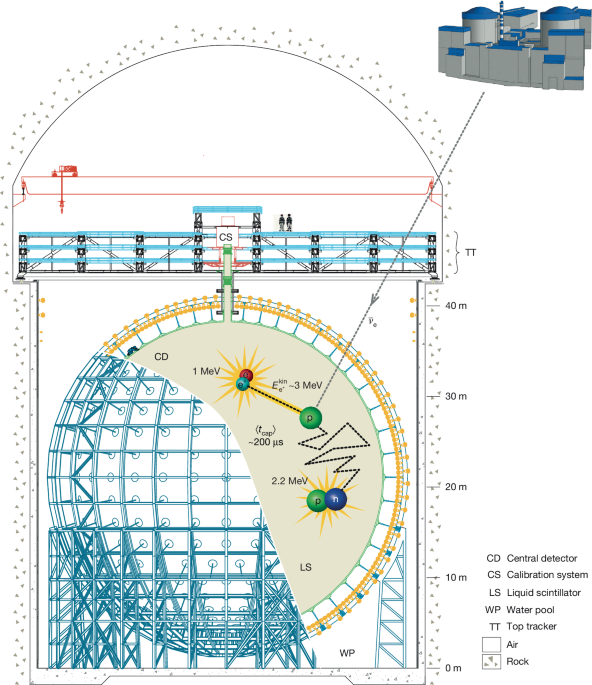
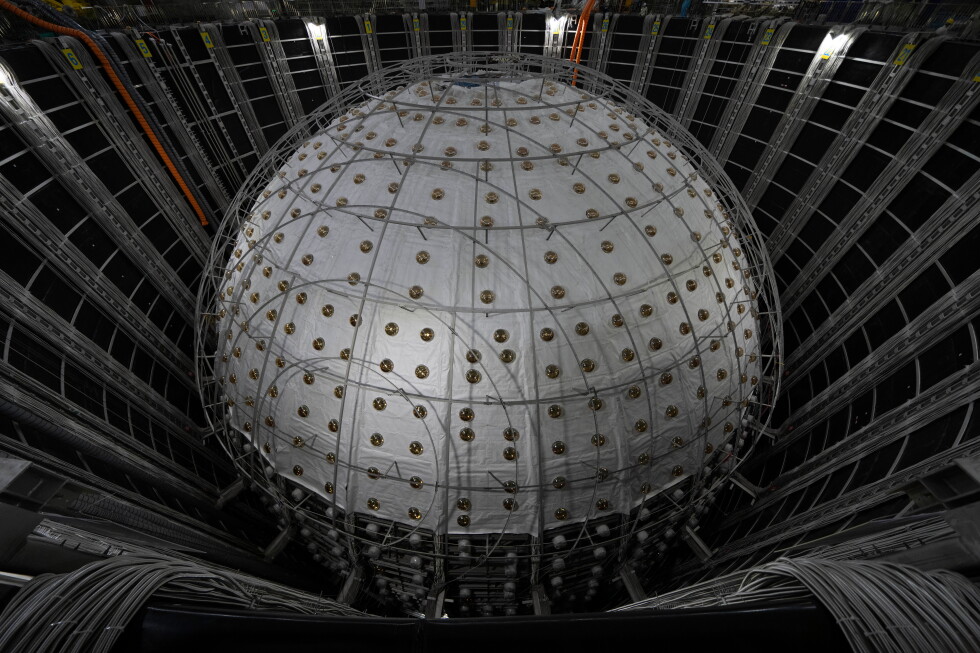
The spherical JUNO detector is located 2,297 feet (700 meters) underground. It examines antineutrinos that come from collisions inside two nearby nuclear power plants. Antineutrinos are equally mysterious, opposite versions of neutrinos that scientists can study to understand their behavior and how neutrinos work.