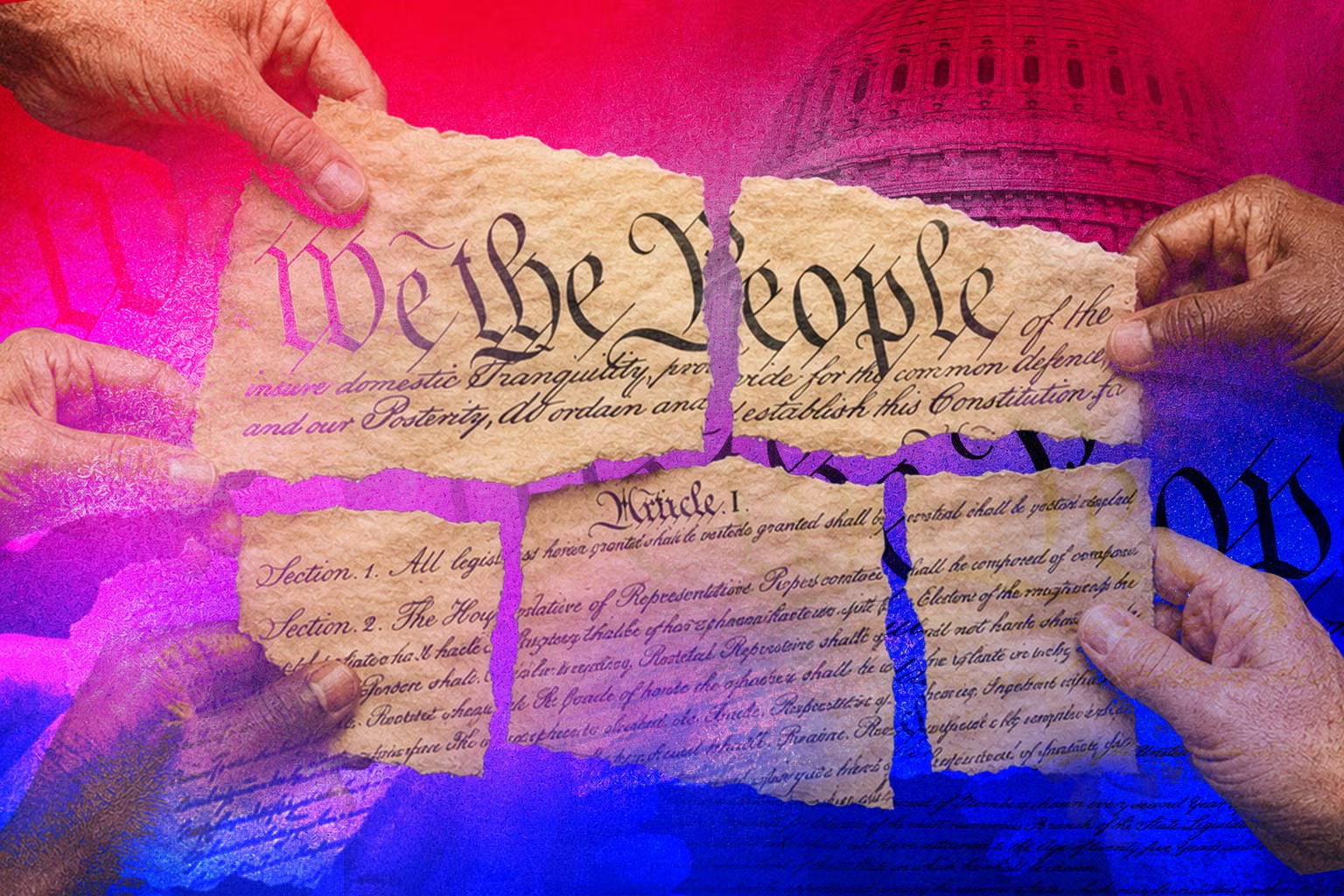
Originalism has become a Federalist Society word. That’s a problem. Not because the Federalist Society is wrong about constitutional interpretation, but because reducing a civic practice to a judicial philosophy makes it sound like something that belongs to lawyers. It never did.The founders weren’t writing for law reviews. They weren’t writing for federal judges. They were writing for citizens — specifically for the citizens of 13 newly independent states who were being asked to ratify a new frame of government and who needed to understand what they were authorizing. The Federalist Papers were newspaper op-eds published under pseudonyms in New York newspapers between 1787 and 1788, addressed to general readers making a political decision. Madison, Hamilton, and Jay weren’t producing a treatise for posterity. They were trying to win a ratification vote.That context matters more than most commentary acknowledges. Originalism isn’t a conservative judicial theory invented in the 1980s. It’s the logical consequence of what the Constitution is: a ratified compact, authorized by citizens who understood its words to mean something specific. If those words meant what the ratifiers understood them to mean, the document means what they thought. If they mean whatever the current court decides, the ratifiers didn’t authorize a constitution — they signed a blank check payable to nine lawyers appointed for life.
What the founders actually meant by originalism
Originalism isn't a conservative judicial theory invented in the 1980s. It’s the logical consequence of what the Constitution is.
778 words~4 min read